The Footsteps Radical (彳): Mastering 行 (Go), 待 (Wait), 後 (Behind) & 彼 (He / Boyfriend)
Whenever you see the three left-hand strokes 彳 (called gyōninben, 'walking footsteps'), the kanji is about walking down a road, pausing at a landmark, or walking beside someone!
Beginners often confuse the 2-stroke Person radical (亻— ninben) with the 3-stroke Footsteps / Crossroads radical (彳— gyōninben). While 亻 is a single standing person, 彳 is literally the left half of 行 (Go)!
Quick Comparison: 行 (Go) vs. 待 (Wait) vs. 後 (Behind, After) vs. 彼 (He)
Compare the four core JLPT kanjis built with the 彳 footsteps radical:
| Kanji & Meaning | Primary Readings (Bold = Primary) | Shibashi Visual Mnemonic Hook | Common Compound Word |
|---|---|---|---|
| 行 — Go | On: こう, ぎょう Kun: い, ゆ |
Left footsteps (彳) + Right footsteps (亍) = a four-way street intersection to GO (iku / kō). | 銀行 (ぎんこう) — bank |
| 待 — Wait | On: たい Kun: ま |
彳 (Footsteps) + 寺 (Temple) = stopping your footsteps at the temple gate to WAIT (matsu / tai). | 待つ (まつ) — to wait |
| 後 — Behind, After | On: ご, こう Kun: — |
彳 (Footsteps) + 幺 (Tiny thread) + 夂 (Walking legs) = trailing BEHIND / AFTER (ato / ushiro / go). | 午後 (ごご) — afternoon |
| 彼 — He | On: ひ Kun: かれ, かの |
彳 (Footsteps) + 皮 (Skin/Leather jacket) = that guy walking down the street = HE / BOYFRIEND (kare / hi). | 彼女 (かのじょ) — she, her |
Side-by-Side Illustrated Kanji Flashcards (Tap Readings for Audio)
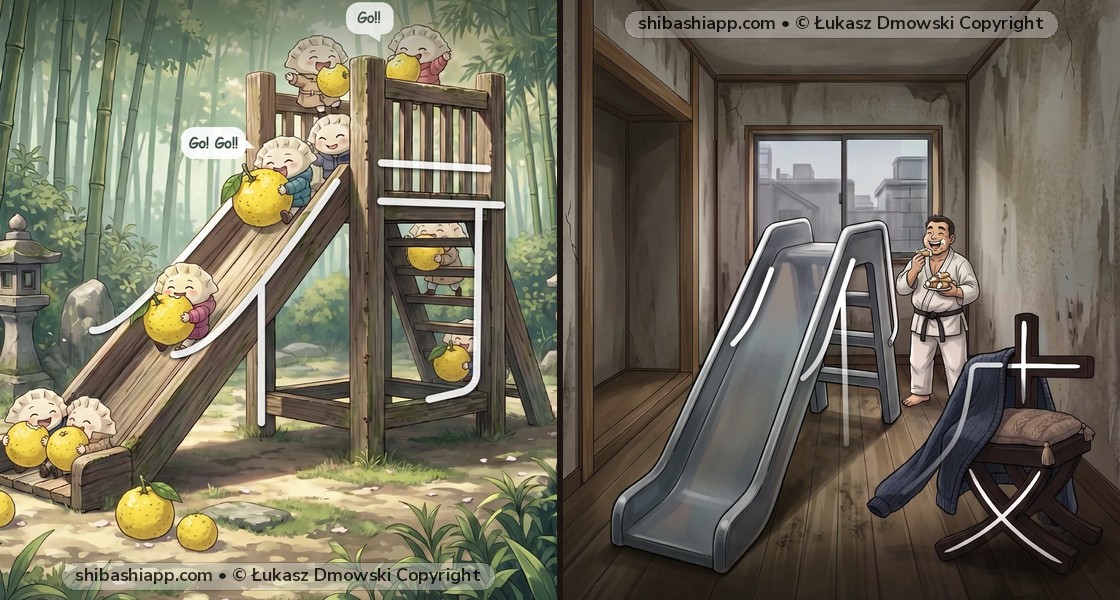
Compare the custom Shibashi artwork for 行 (Go) and 彼 (He) below. Notice how each illustration embeds both the English meaning and the primary Japanese reading directly into the scene, and tap any reading to hear native pronunciation:


Step-by-Step Visual Breakdown & Radical Rules
Trace the story on the right side of the footsteps (彳) to lock in each character:
1. 行 (Go) — Mnemonic Story & Readings
On'yomi: こう, ぎょう | Kun'yomi: い, ゆ
Shibashi Visual Story: “Just a bunch of gyozas (ぎょう) in coats (こう) eating (い) yuzu (ゆ) screaming “go!”, playing on a slide...” Key visual distinction: Left footsteps (彳) + Right footsteps (亍) = a four-way street intersection to GO (iku / kō).
2. 待 (Wait) — Mnemonic Story & Readings
On'yomi: たい | Kun'yomi: ま
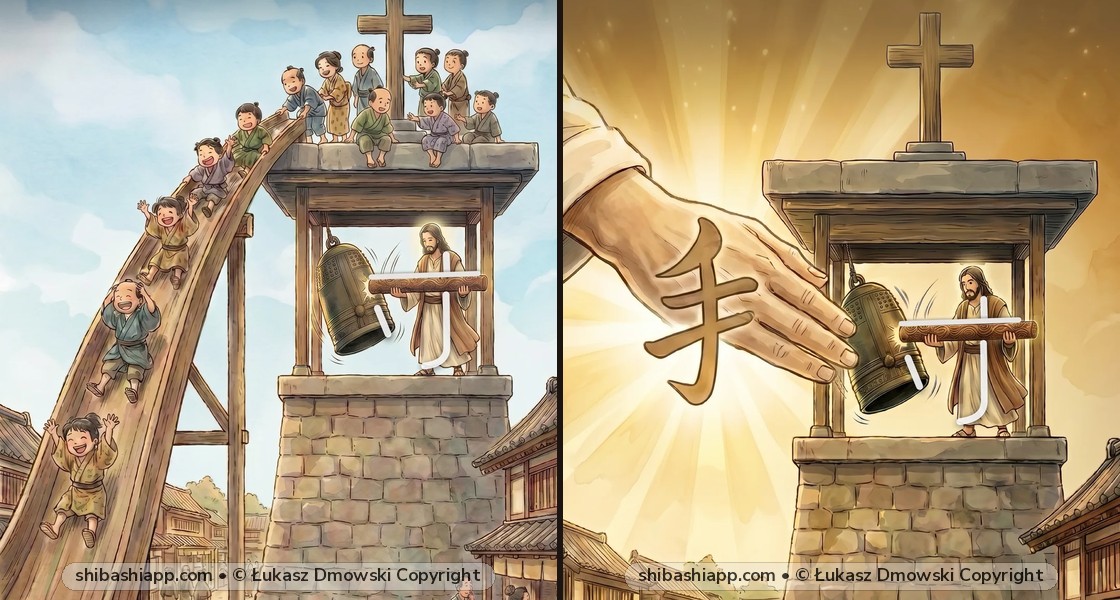
Shibashi Visual Story: “Long wait times (たい) for the bell tower slide. Moms (ま) surely did not approve this...” Key visual distinction: 彳 (Footsteps) + 寺 (Temple) = stopping your footsteps at the temple gate to WAIT (matsu / tai).
3. 後 (Behind, After) — Mnemonic Story & Readings
On'yomi: ご, こう | Kun'yomi: —
Shibashi Visual Story: “Mr. Snowman is not very happy about Godzilla (ご) in a coat (こう) skiing behind his back...” Key visual distinction: 彳 (Footsteps) + 幺 (Tiny thread) + 夂 (Walking legs) = trailing BEHIND / AFTER (ato / ushiro / go).
4. 彼 (He) — Mnemonic Story & Readings
On'yomi: ひ | Kun'yomi: かれ, かの
Shibashi Visual Story: “The single guy... he will just go to Karate (かれ), eat canoli (かの) and keep hilarious (ひ) stuff at his place...” Key visual distinction: 彳 (Footsteps) + 皮 (Skin/Leather jacket) = that guy walking down the street = HE / BOYFRIEND (kare / hi).
Essential Japanese Vocabulary Words Using 行 / 待 / 後 / 彼
Once you can recognize 行 (Go) and 待 (Wait) and 後 (Behind, After) individually, lock them into your active reading vocabulary with these high-frequency Japanese words from the Shibashi app:
| Japanese Word | Hiragana Reading | English Meaning | Level |
|---|---|---|---|
| 銀行 | ぎんこう | bank | JLPT |
| 旅行 | りょこう | travel | JLPT |
| 行く | いく | to go | JLPT |
| 待つ | まつ | to wait | JLPT |
| 期待 | きたい | expectation, anticipation, hope | JLPT |
| 午後 | ごご | afternoon | JLPT |
| 後者 | こうしゃ | the latter | JLPT |
| 今後 | こんご | from now on, hereafter | JLPT |
5-Second Memory Summary: How to Never Mix Up 行 & 待 & 後 Again
Spot 彳 (3 strokes on the left): full crossroads = 行 (Go — iku); pausing at a Temple (寺) = 待 (Wait — matsu); trailing tied legs = 後 (Behind / After — ato/ushiro); and walking in leather (皮) = 彼 (He — kare / 彼女 kanojo)!