The Hand Radical (手 / 扌 — Tehen): Mastering 手 (Hand), 持 (Hold), 打 (Hit) & 投 (Throw)
When 手 (Hand — te) moves to the left side of a kanji, its fingers compress into a sleek 3-stroke vertical hook: 扌 (tehen). Every single kanji with 扌 on the left is an action you perform with your hands!
Look at 持つ (motsu — to hold/carry), 打つ (utsu — to hit/strike), and 投げる (nageru — to throw): all three start with the 3-stroke Hand radical (扌— tehen) on the left!
Quick Comparison: 手 (Hand) vs. 持 (Hold, Carry) vs. 打 (Hit) vs. 投 (Throw)
Compare 手 and its three core action-verb kanjis below:
| Kanji & Meaning | Primary Readings (Bold = Primary) | Shibashi Visual Mnemonic Hook | Common Compound Word |
|---|---|---|---|
| 手 — Hand | On: しゅ Kun: て |
Three finger bars and a palm spine hooking left at the bottom = HAND (te / shu). | 手紙 (てがみ) — letter |
| 持 — Hold, Carry | On: じ Kun: も |
扌 (Hand) + 寺 (Temple) = holding an offering at the temple = HOLD / CARRY / HAVE (motsu / ji). | 持つ (もつ) — to hold |
| 打 — Hit | On: だ Kun: う, ぶ |
扌 (Hand) + 丁 (Iron Nail) = a hand hammering a nail = HIT / STRIKE / TYPE (utsu / da). | 打つ (うつ) — to hit |
| 投 — Throw | On: とう Kun: な |
扌 (Hand) + 殳 (whirling arm over hand 又) = winding up your arm to THROW / PITCH / CAST (nageru / tō). | 投げる (なげる) — to throw or cast away |
Side-by-Side Illustrated Kanji Flashcards (Tap Readings for Audio)
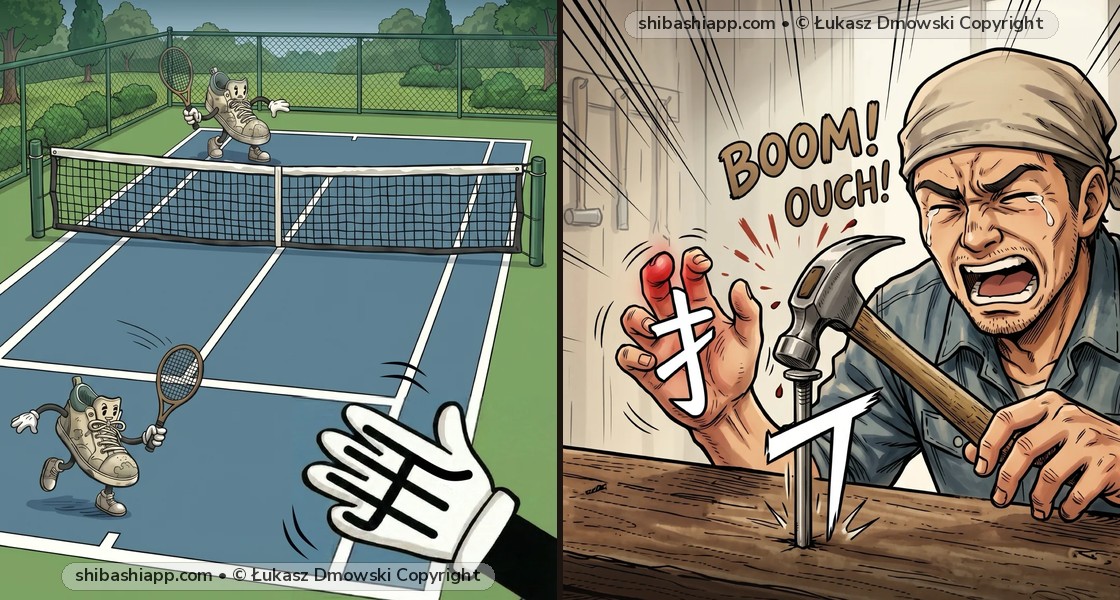
Compare the custom Shibashi artwork for 手 (Hand) and 打 (Hit) below. Notice how each illustration embeds both the English meaning and the primary Japanese reading directly into the scene, and tap any reading to hear native pronunciation:


Step-by-Step Visual Breakdown & Radical Rules
Look at what the hand (扌) is interacting with on the right side of each character:
1. 手 (Hand) — Mnemonic Story & Readings
On'yomi: しゅ | Kun'yomi: て
Shibashi Visual Story: “When you see your shoe (しゅ) friends playing tennis (て), wave your hand!” Key visual distinction: Three finger bars and a palm spine hooking left at the bottom = HAND (te / shu).
2. 持 (Hold, Carry) — Mnemonic Story & Readings
On'yomi: じ | Kun'yomi: も
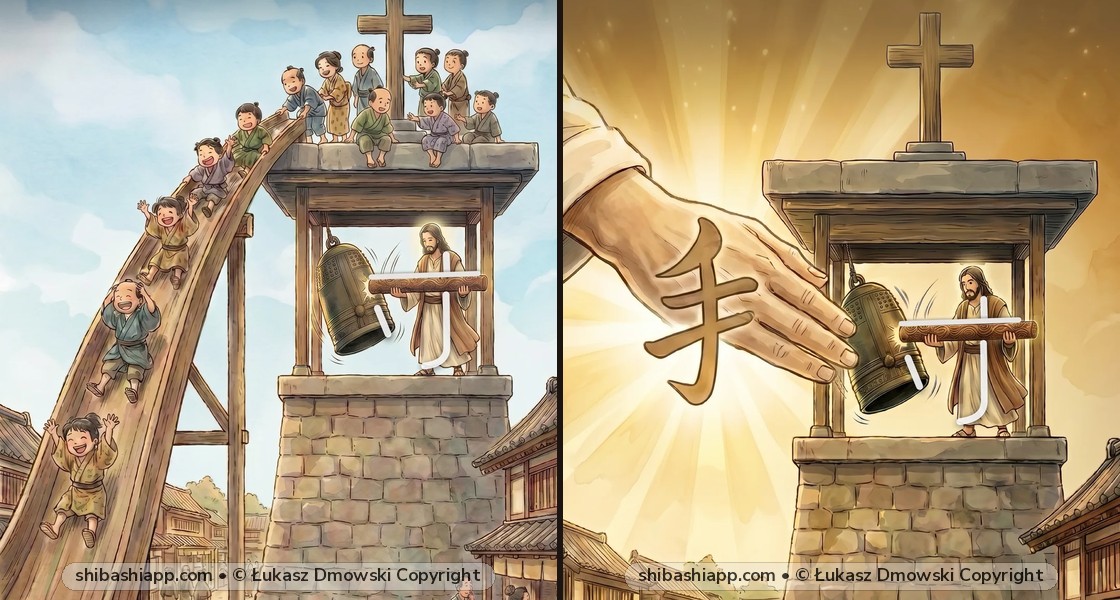
Shibashi Visual Story: “Sometimes God intervenes with Jesus (じ) work, and holds for a moment (も) the time-bell.” Key visual distinction: 扌 (Hand) + 寺 (Temple) = holding an offering at the temple = HOLD / CARRY / HAVE (motsu / ji).
- 持つ (もつ): to hold
- 気持ち (きもち): feeling, mood
- 持ち上げる (もちあげる): to raise, to lift up, to flatter
3. 打 (Hit) — Mnemonic Story & Readings
On'yomi: だ | Kun'yomi: う, ぶ
Shibashi Visual Story: “Boom! (ぶ)!! Dad (だ) hit his finger instead of the nail. Oops (う)...” Key visual distinction: 扌 (Hand) + 丁 (Iron Nail) = a hand hammering a nail = HIT / STRIKE / TYPE (utsu / da).
- 打つ (うつ): to hit
4. 投 (Throw) — Mnemonic Story & Readings
On'yomi: とう | Kun'yomi: な
Shibashi Visual Story: “Mr. Snowman, the nasty (な) guard with cold toes (とう), wants to throw out the kid enjoying the slide...” Key visual distinction: 扌 (Hand) + 殳 (whirling arm over hand 又) = winding up your arm to THROW / PITCH / CAST (nageru / tō).
- 投げる (なげる): to throw or cast away
Essential Japanese Vocabulary Words Using 手 / 持 / 打 / 投
Once you can recognize 手 (Hand) and 持 (Hold, Carry) and 打 (Hit) individually, lock them into your active reading vocabulary with these high-frequency Japanese words from the Shibashi app:
| Japanese Word | Hiragana Reading | English Meaning | Level |
|---|---|---|---|
| 手紙 | てがみ | letter | JLPT |
| 手 | て | hand | JLPT |
| 手間 | てま | time, labor | JLPT |
| 持つ | もつ | to hold | JLPT |
| 気持ち | きもち | feeling, mood | JLPT |
| 持ち上げる | もちあげる | to raise, to lift up, to flatter | JLPT |
| 打つ | うつ | to hit | JLPT |
| 投げる | なげる | to throw or cast away | JLPT |
5-Second Memory Summary: How to Never Mix Up 手 & 持 & 打 Again
Spot 扌 (Hand) on the left: + 寺 (Temple) = 持つ (motsu — Hold / Have); + 丁 (T-shaped nail) = 打つ (utsu — Hit / Strike); + 殳 (whirling arm) = 投げる (nageru — Throw / Pitch)!