待 (Wait) vs. 持 (Hold): Mastering the Temple Kanji Family
待 (Wait), 持 (Hold), 時 (Time), and 特 (Special) all share 寺 (Temple) on the right side. Once you know what the left-hand radical is doing to the temple bell tower, you will never mix up 待つ (matsu) and 持つ (motsu) again.
Ask any JLPT N5 or N4 student which verb pair they mix up the most on vocabulary quizzes, and the answer is almost always 待つ (まつ matsu — to wait) vs. 持つ (もつ motsu — to hold/carry). Not only do their Japanese readings differ by just a single vowel (ma-tsu vs. mo-tsu), both kanjis share the exact same 寺 (Temple) component on the right!
The Secret Anchor: 寺 (Temple — じ / てら)
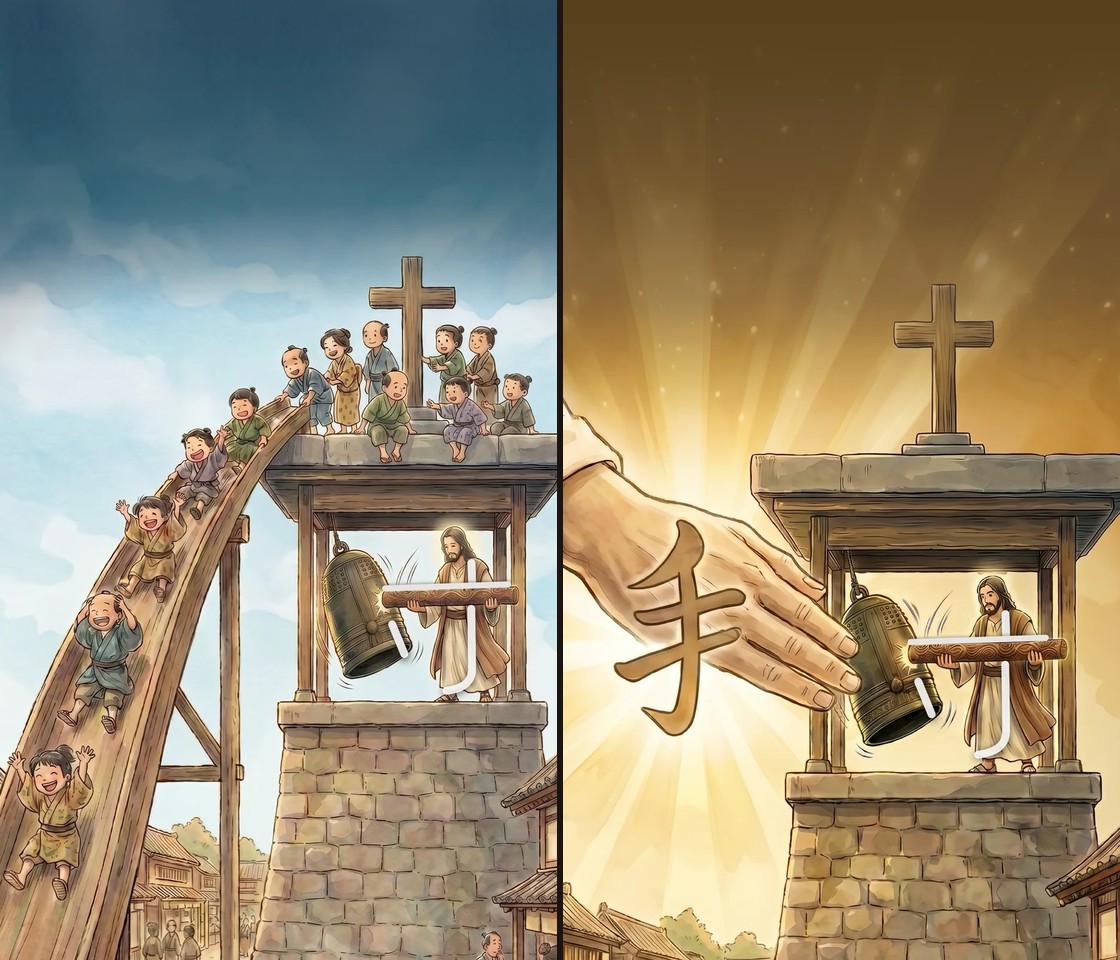
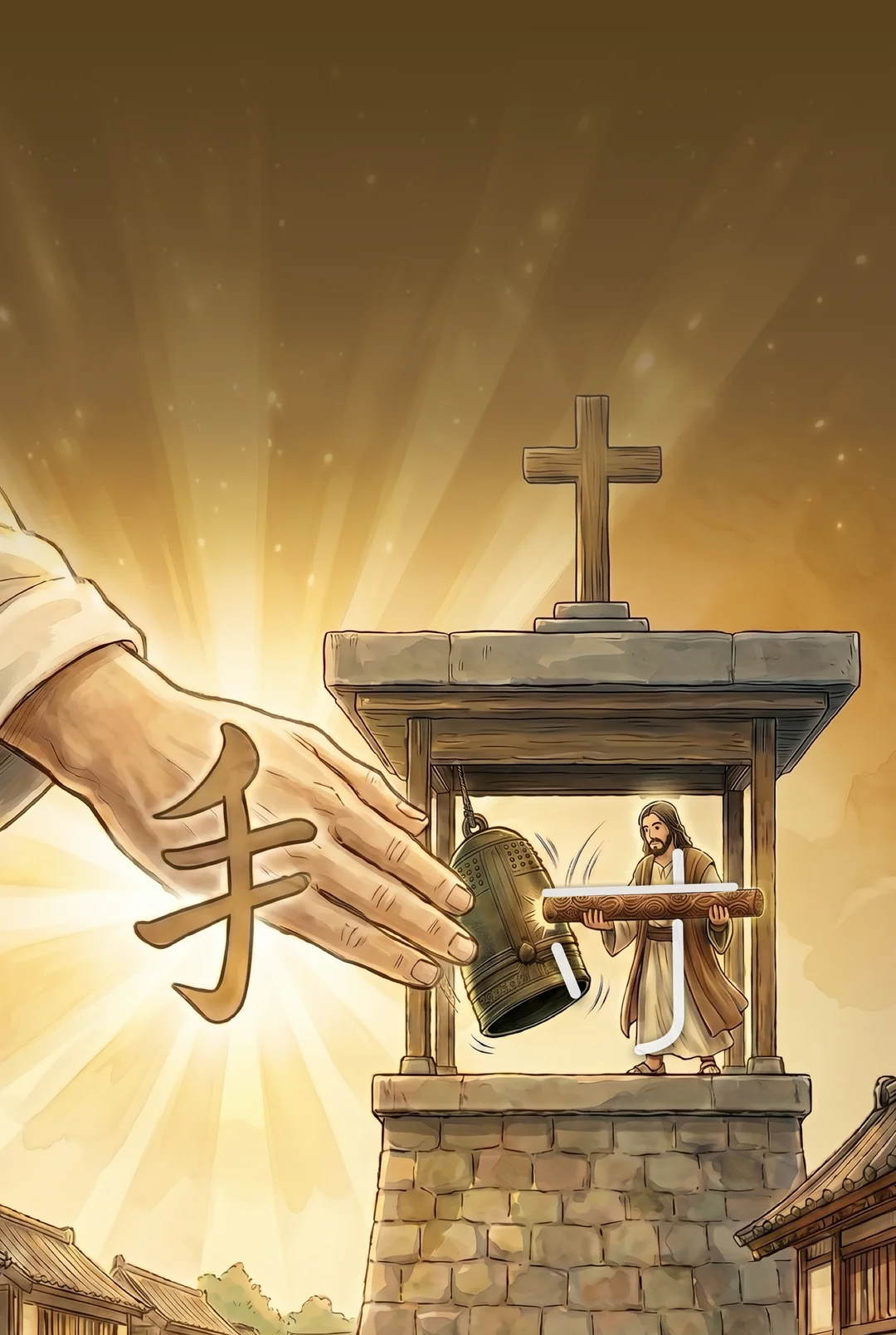
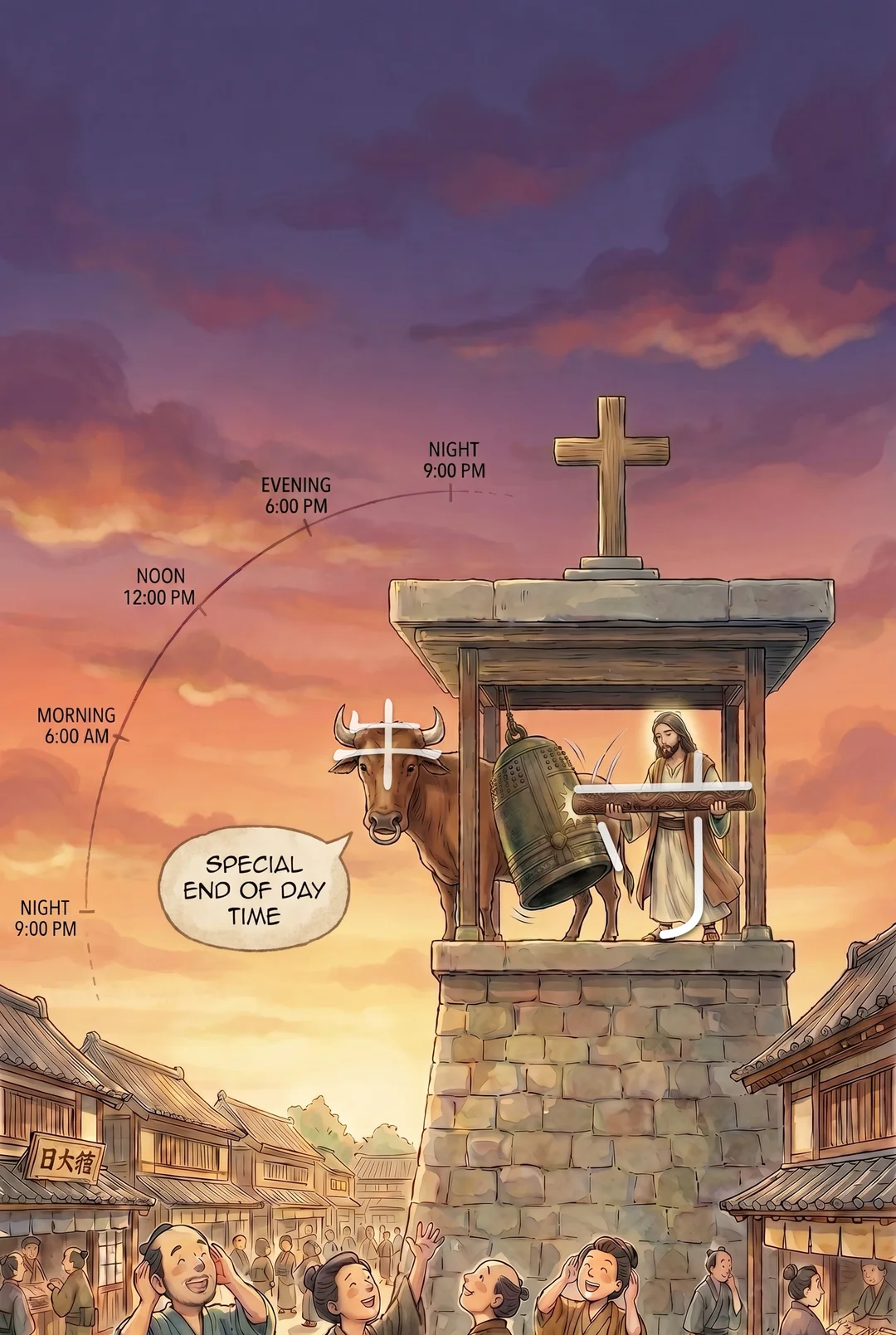
In Shibashi's Visual Family system, 寺 (Temple) is pictured as a stone bell tower on a terrace (てら tera) where Jesus (じ ji) rings the church bell. Every kanji in this family takes that exact bell tower and adds one clear visual actor on the left:
1. 待 (Wait — たい / ま) vs. 持 (Hold — じ / も): Slide Line vs. Giant Hand
Look side-by-side at how Shibashi's artwork makes the left-hand radical impossible to confuse:

- 待 (Wait — たい tai / ま ma): Left radical is the Slide (彳)! There are long wait times (たい tai) for kids standing in line for the bell-tower slide — moms (ま ma, as in 待つ matsu) definitely did not approve!
- 持 (Hold — じ ji / も mo): Left radical is the Hand (扌, from 手)! A giant hand reaches out of the sky and holds the temple time-bell for a moment (も mo, as in 持つ motsu).
2. 時 (Time — じ / とき) vs. 特 (Special — とく): Sun Bell vs. Talking Cow
Now add two more super-high-frequency JLPT kanjis that use the exact same 寺 (Temple) bell tower:
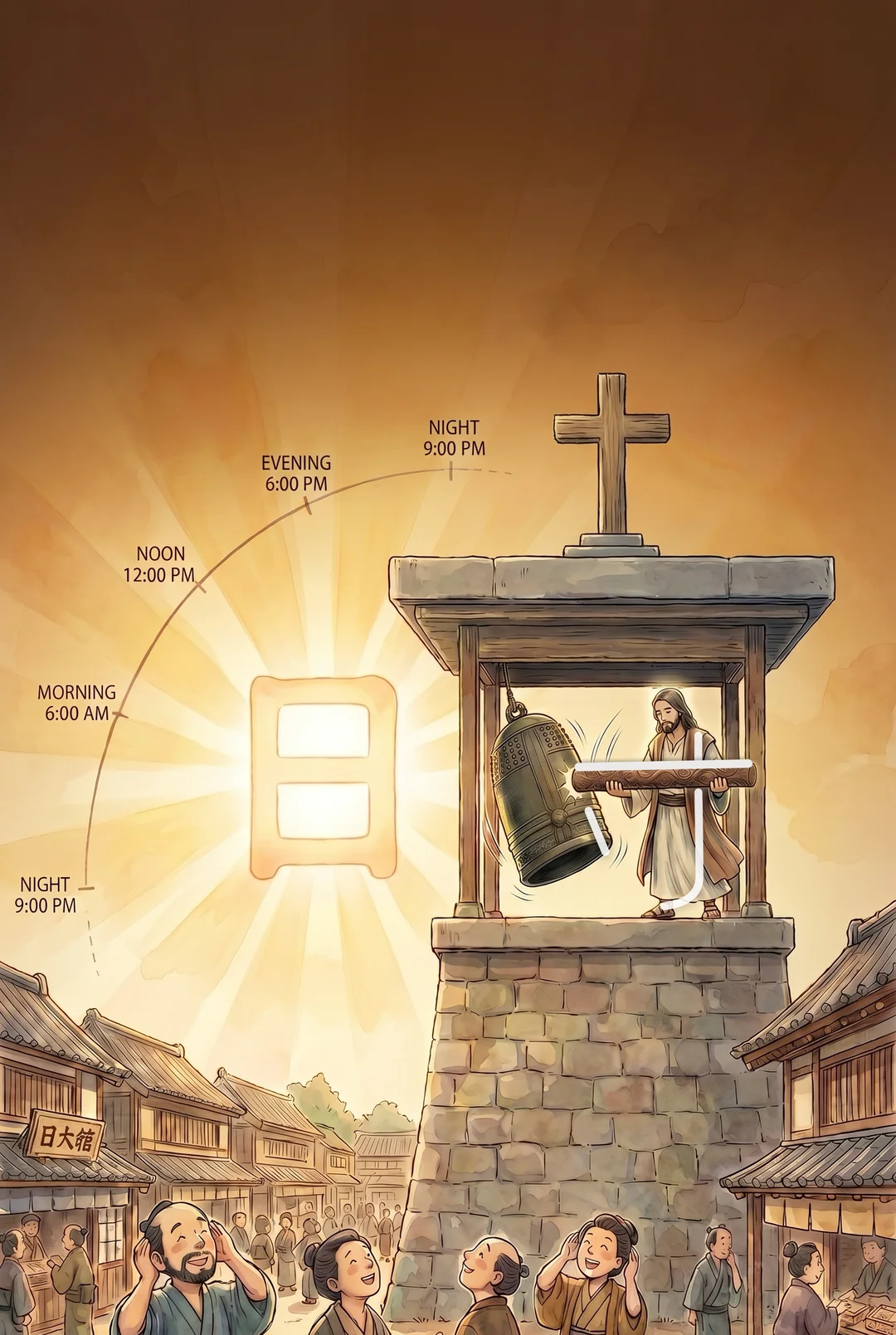
- 時 (Time — じ ji / とき toki): Left radical is Sun (日)! In old Toki-o (とき toki), Jesus (じ ji, as in 時間 jikan) rang the bell when the sun rose so everyone could tell the Time.
- 特 (Special — とく toku): Left radical is Cow (牜, from 牛)! At 6 PM, the special temple cow that can talk-u (とく toku, as in 特別 tokubetsu) announces the end of the day.