
Hiragana vs. Katakana vs. Kanji: Why Japanese Uses 3 Writing Systems (And Why Kanji Helps You Read Faster)
Every new Japanese learner asks the same question: 'Why on earth does one language need three scripts — and can I just skip Kanji?' Here is why Kanji is actually your best friend when reading Japanese.
Japanese is unique among major world languages because a single everyday sentence routinely mixes three distinct scripts: Hiragana, Katakana, and Kanji. Once you see how these three scripts divide the work, you'll realize why fluent readers actually find Kanji easier to read than all-hiragana text.
1. How Hiragana, Katakana, and Kanji Work Together in One Sentence
Take a look at a simple sentence: 私はコーヒーを飲みます (Watashi wa kōhī o nomimasu — "I drink coffee"):
- Kanji (私, 飲): Carries the core meaning blocks (nouns like "I" and verb stems like "drink").
- Hiragana (は, を, みます): Handles the grammatical glue — particles that mark subjects/objects and verb tense endings (okurigana).
- Katakana (コーヒー): Highlights foreign loanwords ("coffee"), onomatopoeia, and emphasis.
2. Why Skipping Kanji Makes Japanese Harder (The No-Spaces Problem)
Beginners often ask: "Since Hiragana can spell every sound in Japanese, why don't Japanese people just write everything in Hiragana?"
Try reading an English sentence with all spaces and capital letters removed: thetherapistwasintheroom. Your eyes have to stop and sound out every syllable just to figure
out where one word ends and the next begins.
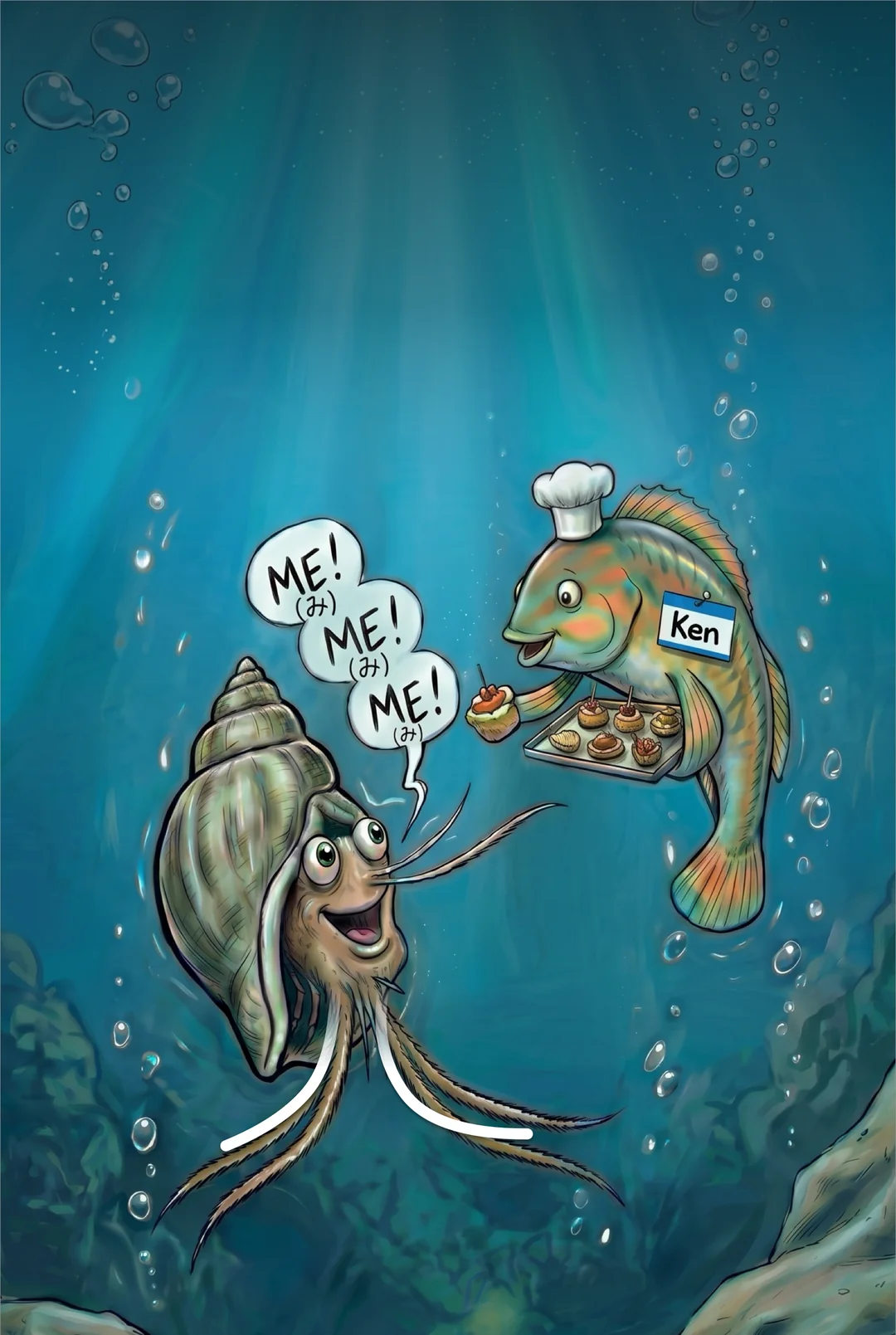
Because Japanese is written without spaces between words, an all-hiragana sentence like きょうはいしゃにいきました is ambiguous (Did you go to the dentist kyō haisha ni, or go to the company today kyō wa kaisha ni?). With Kanji — 今日は歯医者に行きました — your brain grasps the meaning in a single glance before you even subvocalize the sounds!
3. When Should You Start Learning Kanji?
Do not wait six months after learning Hiragana and Katakana to start Kanji. The longer you rely on romaji or all-hiragana textbooks, the harder it is to break the habit of reading syllable-by-syllable. Start learning 5 to 10 illustrated kanji cards per day right alongside your basic grammar!
Common Questions Answered
What is the role of Hiragana, Katakana, and Kanji?
Hiragana represents native Japanese grammar particles and verb endings (46 phonetic characters). Katakana represents foreign loanwords, names, and sound effects (46 phonetic characters). Kanji represents core meaning roots — nouns, verb stems, and adjective stems.
Why can't Japanese be written only in Hiragana?
Japanese is written without spaces between words and has hundreds of homophones (words pronounced identically, like 'kami' for paper, hair, or god). Without Kanji acting as visual word boundaries and meaning anchors, a Japanese sentence becomes an unreadable wall of phonetic syllables.