音 (Sound) vs. 声 (Voice) & 耳 (Ear) vs. 聞 (Hear): Japanese Hearing Kanji Guide
In Japanese, if a dog barks or a friend calls your name, that is 声 (koe — a living creature's Voice). If rain hits the roof or a guitar plays music (音楽 ongaku), that is 音 (oto — a non-living Sound)!
English speakers often say 'I heard a strange sound from that room' whether it was a person talking or a chair falling. Japanese draws a strict line between 音 (oto — mechanical or natural sound) and 声 (koe — human, animal, or insect voice)!
Quick Comparison: 音 (Sound) vs. 声 (Voice) vs. 耳 (Ear) vs. 聞 (Listen, Hear)
Compare the four core sound and hearing kanjis in the table below:
| Kanji & Meaning | Primary Readings (Bold = Primary) | Shibashi Visual Mnemonic Hook | Common Compound Word |
|---|---|---|---|
| 音 — Sound | On: おん Kun: おと, ね |
立 (Stand) over 日 (Sun/Mouth) = a bell vibrating in the air = non-living SOUND / NOISE / MUSIC (oto / on / ne). | 音楽 (おんがく) — music |
| 声 — Voice | On: せい Kun: こえ |
士 (Samurai top) over 尸 (an open mouth/vocal cords projecting) = a living creature's VOICE (koe / sei). | 声 (こえ) — voice |
| 耳 — Ear | On: じ Kun: みみ |
Pictograph of an outer human ear lobe with inner ridges = EAR (mimi / ji). | 耳 (みみ) — ear |
| 聞 — Listen, Hear | On: ぶん, もん Kun: き |
耳 (Ear) pressed between the doors of a 門 (Gate) = HEAR / LISTEN / ASK (kiku / bun). | 新聞 (しんぶん) — newspaper |
Side-by-Side Illustrated Kanji Flashcards (Tap Readings for Audio)
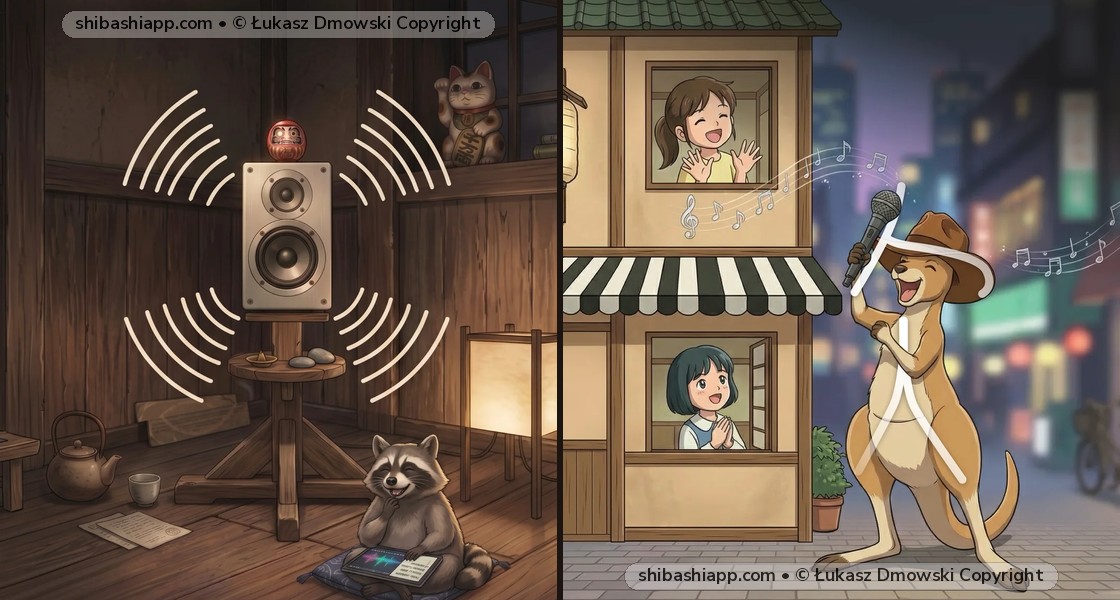
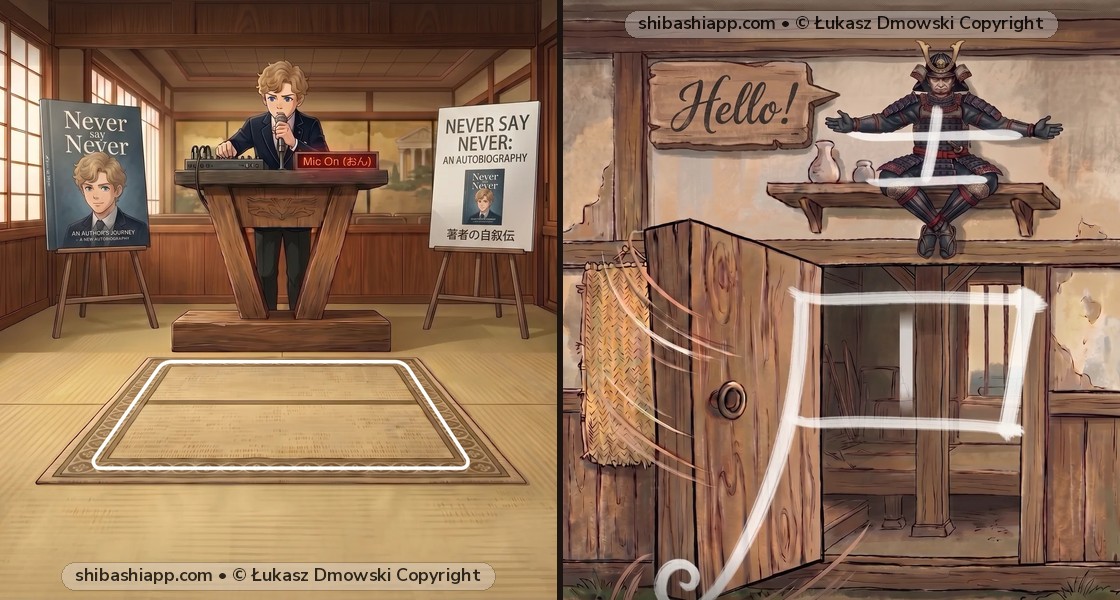
Compare the custom Shibashi artwork for 音 (Sound) and 声 (Voice) below. Notice how each illustration embeds both the English meaning and the primary Japanese reading directly into the scene, and tap any reading to hear native pronunciation:


Step-by-Step Visual Breakdown & Radical Rules
See how the radicals of 音, 声, 耳, and 聞 fit together:
1. 音 (Sound) — Mnemonic Story & Readings
On'yomi: おん | Kun'yomi: おと, ね
Shibashi Visual Story: “Mic on (おん), the boy is doing a sound check for his talk about his autobiography (おと) Never say Never (ね)...” Key visual distinction: 立 (Stand) over 日 (Sun/Mouth) = a bell vibrating in the air = non-living SOUND / NOISE / MUSIC (oto / on / ne).
2. 声 (Voice) — Mnemonic Story & Readings
On'yomi: せい | Kun'yomi: こえ
Shibashi Visual Story: “For safety (せい) you must learn to coexist (こえ) with the samurai voice greeting you at the door...” Key visual distinction: 士 (Samurai top) over 尸 (an open mouth/vocal cords projecting) = a living creature's VOICE (koe / sei).
- 声 (こえ): voice
3. 耳 (Ear) — Mnemonic Story & Readings
On'yomi: じ | Kun'yomi: みみ
Shibashi Visual Story: “When you hear Gin&Tonic (じ) with your big ear, scream me! me! (みみ)!” Key visual distinction: Pictograph of an outer human ear lobe with inner ridges = EAR (mimi / ji).
- 耳 (みみ): ear
4. 聞 (Listen, Hear) — Mnemonic Story & Readings
On'yomi: ぶん, もん | Kun'yomi: き
Shibashi Visual Story: “The man in kimono (き) is listening in on the conversation of a monster (もん) buying a bootleg necklace (ぶん).” Key visual distinction: 耳 (Ear) pressed between the doors of a 門 (Gate) = HEAR / LISTEN / ASK (kiku / bun).
- 新聞 (しんぶん): newspaper
- 聞く (きく): to hear, to listen to, to ask
- 聞こえる (きこえる): to be heard
Essential Japanese Vocabulary Words Using 音 / 声 / 耳 / 聞
Once you can recognize 音 (Sound) and 声 (Voice) and 耳 (Ear) individually, lock them into your active reading vocabulary with these high-frequency Japanese words from the Shibashi app:
| Japanese Word | Hiragana Reading | English Meaning | Level |
|---|---|---|---|
| 音楽 | おんがく | music | JLPT |
| 発音 | はつおん | pronunciation | JLPT |
| 音 | おと | sound, note | JLPT |
| 声 | こえ | voice | JLPT |
| 耳 | みみ | ear | JLPT |
| 新聞 | しんぶん | newspaper | JLPT |
| 聞く | きく | to hear, to listen to, to ask | JLPT |
| 聞こえる | きこえる | to be heard | JLPT |
5-Second Memory Summary: How to Never Mix Up 音 & 声 & 耳 Again
Did the sound come from vocal cords (a person, bird, dog, or cicada)? Use 声 (koe — Voice). Did it come from an instrument, machine, footsteps, or wind? Use 音 (oto — Sound, as in 音楽 ongaku Music)!