
The Ultimate Japanese Kanji Radicals Guide: How Visual Building Blocks Unlock Hundreds of Kanji
Fluent readers never see a 14-stroke kanji as 14 separate lines. They see two familiar building blocks snapped together like LEGO bricks. Here are the high-leverage radical families that unlock hundreds of kanji.
Imagine trying to memorize 2,000 English words if nobody ever taught you the 26 letters of the alphabet or common prefixes like un-, pre-, and trans-. That is what studying kanji without Radicals feels like. Once you learn the high-frequency building blocks, complex kanji snap into focus like LEGO sets.
The Most Powerful Meaning Radicals Every Learner Must Know
| Radical | Visual Name & Meaning | Where It Appears | Example Kanji in Shibashi |
|---|---|---|---|
| 氵 | Water Drops (Water, liquid, flow) | Left side | 海 (Sea), 泳 (Swim), 洗 (Wash), 清 (Pure) |
| 言 / 訁 | Words / Speech (Talking, language) | Left side | 話 (Talk), 語 (Language), 読 (Read), 説 (Explain) |
| 扌 | Hand (Holding, action, fingers) | Left side | 持 (Hold), 指 (Finger), 拾 (Pick up), 捨 (Throw away) |
| 亻 | Person (Human actions, roles) | Left side | 休 (Rest), 作 (Make), 住 (Live/Dwell), 使 (Use) |
| 日 | Sun / Day (Time, weather, light) | Left or top | 時 (Time), 晴 (Clear weather), 明 (Bright), 早 (Early) |
How Meaning + Sound Families Work Together: The 青 (Blue/Pure) Family
Over 80% of Japanese kanji are phonetic-semantic compounds (形声文字): one component gives you the meaning category, and the other component gives you a visual and On'yomi sound anchor!
Look at the 青 (セイ Sei) family below. Almost every member shares the right-hand 青 component and the セイ (SEI) On'yomi reading — only the left-hand meaning radical changes:
The 氵 (Water) Family in Action
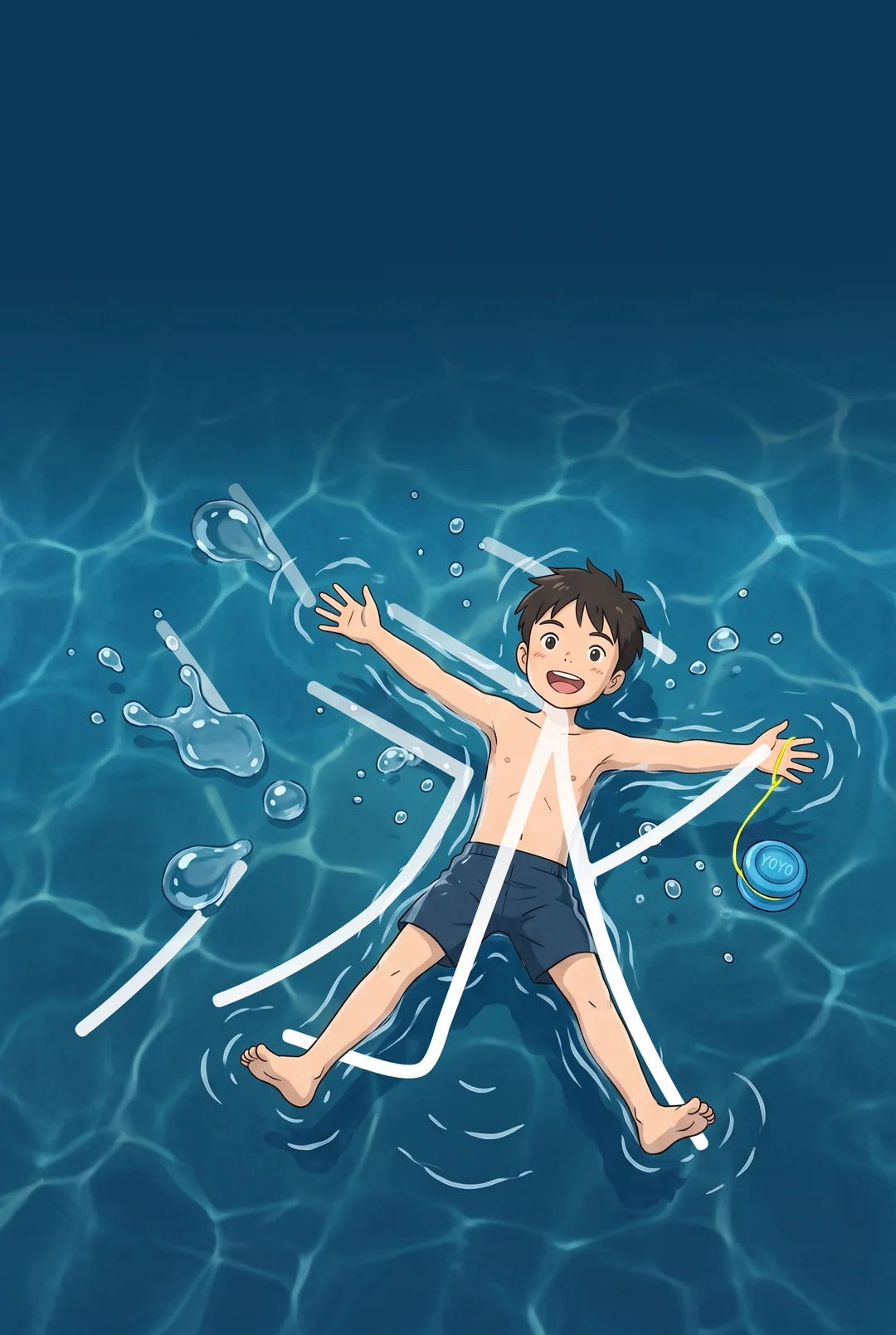
Similarly, whenever you spot three water droplets (氵) on the left of a character, you immediately know the story involves water, liquid, or washing:


Common Questions Answered
What are kanji radicals and why do they matter?
Radicals (components) are the recurring visual building blocks that make up every Japanese kanji. Often, one side gives a hint about the meaning category (like 氵 for water or 言 for speech) while the other side acts as a visual and phonetic anchor (like 青 or 寺).