The Gate Radical (門) Family: What's Inside the Saloon Doors in 間, 聞, 開 & 閉?
In rapid reading, 間, 聞, 開, and 閉 all look like a giant square frame (門 Gate) with tiny strokes inside. Once you zoom in on what sits between those swinging saloon doors, you will never misread them again.
The Gate radical (門 — mon) is one of the easiest enclosures in Japanese because it looks just like a pair of Western saloon doors. Yet on the JLPT exam, learners lose points because they only look at the outer 門 frame and ignore the center radical!
Quick Comparison: 門 (Gate) vs. 間 (Interval, Space) vs. 聞 (Listen, Hear) vs. 開 (Open)
Look straight into the center of the gate in the comparison table below:
| Kanji & Meaning | Primary Readings (Bold = Primary) | Shibashi Visual Mnemonic Hook | Common Compound Word |
|---|---|---|---|
| 門 — Gate | On: もん Kun: と, かど |
Two swinging saloon doors with nothing in between = GATE (mon / kado). | 門 (もん) — gate |
| 間 — Interval, Space | On: かん, けん Kun: あいだ, ま |
門 (Gate) with 日 (Sun) shining through the gap = INTERVAL / SPACE / TIME (aida / ma / kan). | 手間 (てま) — time, labour, labor, effort |
| 聞 — Listen, Hear | On: ぶん, もん Kun: き |
門 (Gate) with 耳 (Ear) pressed to the crack to eavesdrop = HEAR / ASK (kiku / bun). | 新聞 (しんぶん) — newspaper |
| 開 — Open | On: かい Kun: あ, ひら |
門 (Gate) with two hands (廾) pushing the bar apart = OPEN (akeru / hiraku / kai). | 開く (あく) — to open, to become open |
| 閉 — Closed | On: へい Kun: し, と |
門 (Gate) with 才 (a diagonal wooden security latch) propped inside = CLOSE / SHUT (shimeru / Tojiru / hei). | 閉める (しめる) — to close, to shut |
Side-by-Side Illustrated Kanji Flashcards (Tap Readings for Audio)
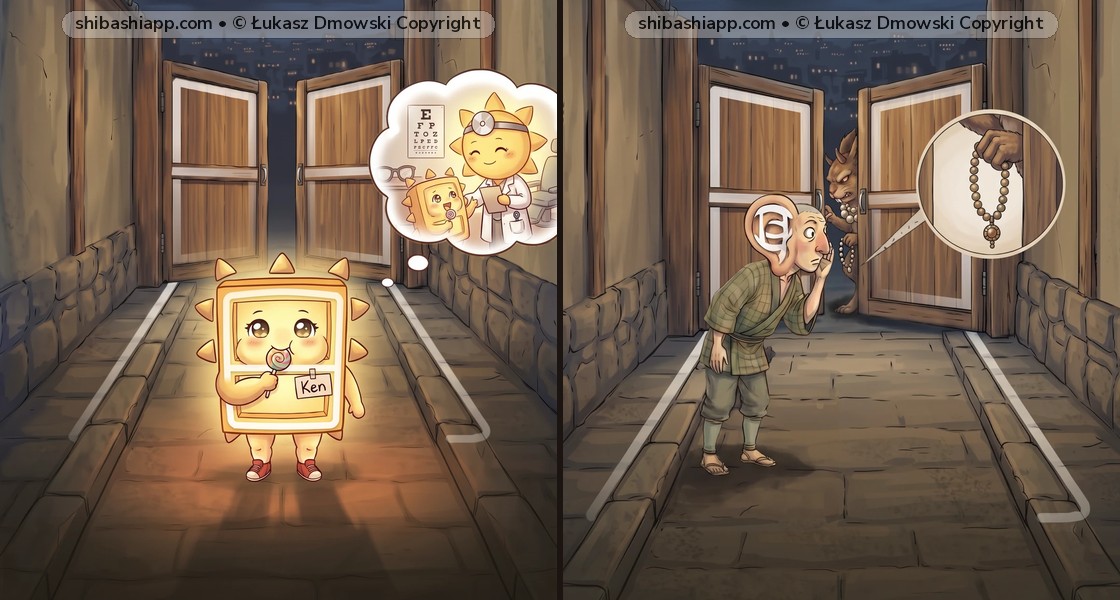
Compare the custom Shibashi artwork for 間 (Interval, Space) and 聞 (Listen, Hear) below. Notice how each illustration embeds both the English meaning and the primary Japanese reading directly into the scene, and tap any reading to hear native pronunciation:


Step-by-Step Visual Breakdown & Radical Rules
Every character in the 門 family tells a vivid story about what is happening at the gate:
1. 門 (Gate) — Mnemonic Story & Readings
On'yomi: もん | Kun'yomi: と, かど
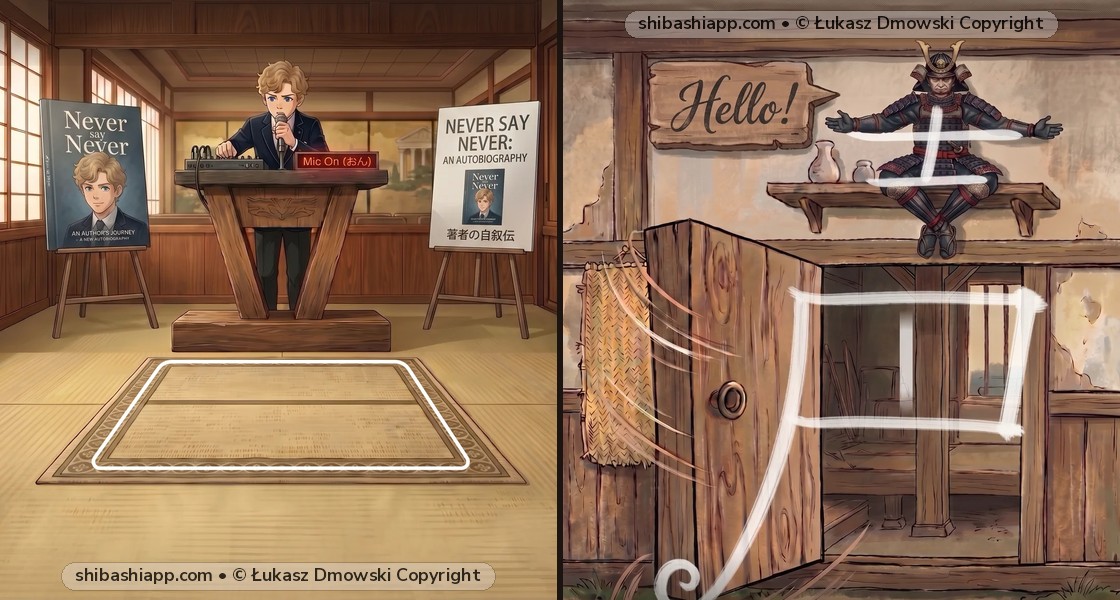
Shibashi Visual Story: “A friendly monster (もん) is guarding the toll (と) gate, so you can pay with card (かど).” Key visual distinction: Two swinging saloon doors with nothing in between = GATE (mon / kado).
- 門 (もん): gate
2. 間 (Interval, Space) — Mnemonic Story & Readings
On'yomi: かん, けん | Kun'yomi: あいだ, ま
Shibashi Visual Story: “Ken (けん), the baby sun, is eating candy (かん) in the empty space, while waiting for his eye doctor (あいだ) ma (ま).” Key visual distinction: 門 (Gate) with 日 (Sun) shining through the gap = INTERVAL / SPACE / TIME (aida / ma / kan).
3. 聞 (Listen, Hear) — Mnemonic Story & Readings
On'yomi: ぶん, もん | Kun'yomi: き
Shibashi Visual Story: “The man in kimono (き) is listening in on the conversation of a monster (もん) buying a bootleg necklace (ぶん).” Key visual distinction: 門 (Gate) with 耳 (Ear) pressed to the crack to eavesdrop = HEAR / ASK (kiku / bun).
- 新聞 (しんぶん): newspaper
- 聞く (きく): to hear, to listen to, to ask
- 聞こえる (きこえる): to be heard
4. 開 (Open) — Mnemonic Story & Readings
On'yomi: かい | Kun'yomi: あ, ひら
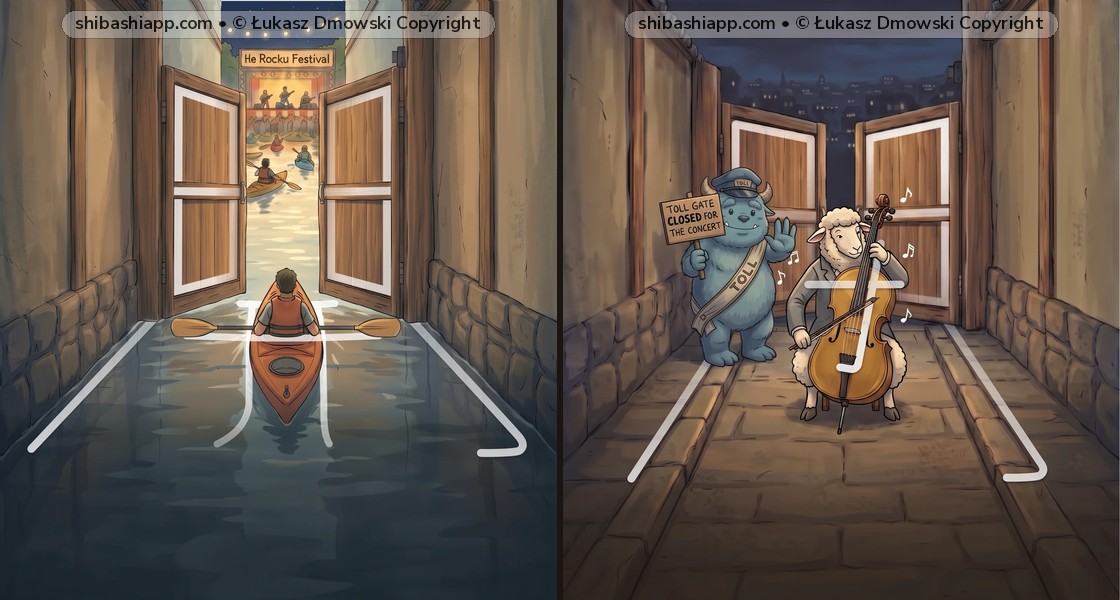
Shibashi Visual Story: “The gates to the artsy (あ) He-Rocku (ひら) Festival are now open. But remember, kayaks (かい) only!!” Key visual distinction: 門 (Gate) with two hands (廾) pushing the bar apart = OPEN (akeru / hiraku / kai).
5. 閉 (Closed) — Mnemonic Story & Readings
On'yomi: へい | Kun'yomi: し, と
Shibashi Visual Story: “The toll (と) gate was closed for the hazel (へい) cello concert by Mr. sheep (し).” Key visual distinction: 門 (Gate) with 才 (a diagonal wooden security latch) propped inside = CLOSE / SHUT (shimeru / Tojiru / hei).
Essential Japanese Vocabulary Words Using 門 / 間 / 聞 / 開
Once you can recognize 門 (Gate) and 間 (Interval, Space) and 聞 (Listen, Hear) individually, lock them into your active reading vocabulary with these high-frequency Japanese words from the Shibashi app:
| Japanese Word | Hiragana Reading | English Meaning | Level |
|---|---|---|---|
| 門 | もん | gate | JLPT |
| 手間 | てま | time, labour, labor, effort | JLPT |
| 時間 | じかん | time | JLPT |
| 間 | あいだ | a space | JLPT |
| 新聞 | しんぶん | newspaper | JLPT |
| 聞く | きく | to hear, to listen to, to ask | JLPT |
| 聞こえる | きこえる | to be heard | JLPT |
| 開く | あく | to open, to become open | JLPT |
5-Second Memory Summary: How to Never Mix Up 門 & 間 & 聞 Again
Always check the center of the gate (門): 日 (Sun) peeking through = 間 (Interval/Space); 耳 (Ear) listening = 聞 (Hear/Ask); symmetrical two hands (开) pushing = 開 (Open); diagonal latch bar (才) locking = 閉 (Close)!