帰る (Kaeru — Go Home) vs. 戻る (Modoru — Return / Go Back): Which 'Return' Kanji to Use?
In Japanese, going back to your home or home country is 帰る (kaeru), while stepping back to a previous spot, seat, or topic is 戻る (modoru). Their kanjis make telling them apart effortless.
Look at the difference between Japan's two core 'return' verbs: 帰る (kaeru) means returning all the way to your home base, hotel, or home country (帰国 kikoku), whereas 戻る (modoru — 戸 Door over 大) means stepping back to a previous spot, your office desk, or a previous state!
Quick Comparison: 帰 (Return Home) vs. 戻 (To Return) vs. 婦 (Lady) vs. 家 (Home)
Compare the four kanjis and their readings in the table below:
| Kanji & Meaning | Primary Readings (Bold = Primary) | Shibashi Visual Mnemonic Hook | Common Compound Word |
|---|---|---|---|
| 帰 — Return Home | On: き Kun: かえ |
刂 (Sword/Knife) + 帚 (Broom over apron) = hanging up your sword and picking up a house broom = RETURN HOME (kaeru / ki). | 帰る (かえる) — to go back |
| 戻 — To Return | On: れい Kun: もど |
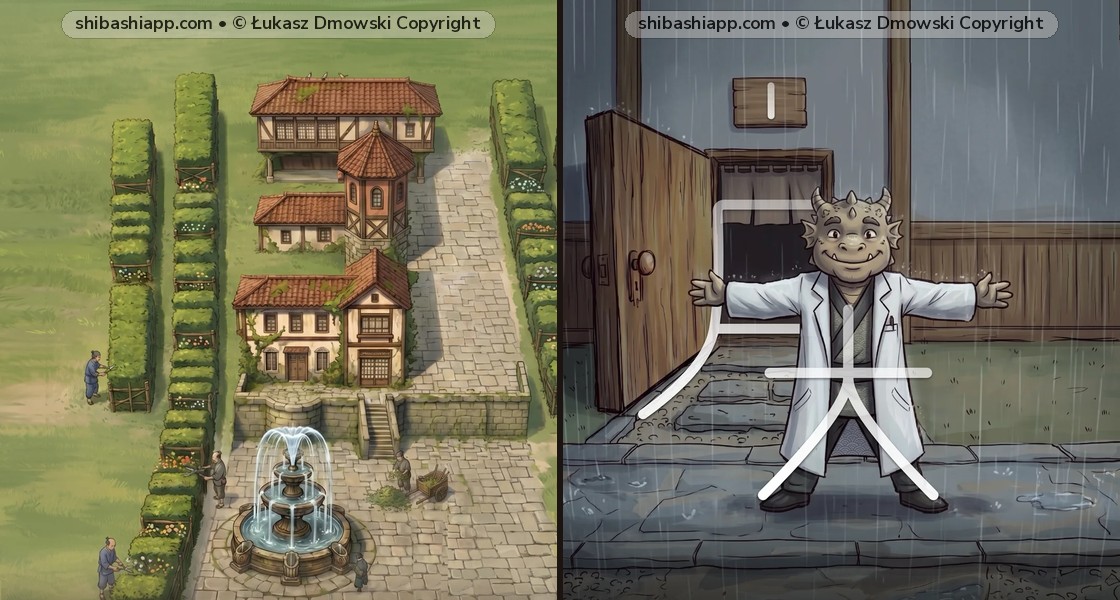
戸 (One-leaf Door) over 大 (Big dog/person) = squeezing back under the door = RETURN / GO BACK / PUT BACK (modoru / modosu). | 戻る (もどる) — to turn back |
| 婦 — Lady | On: ふ Kun: — |
女 (Woman) + 帚 (House broom — same right half as 帰!) = WIFE / LADY / BRIDE (fu, as in 主婦 shufu). | 主婦 (しゅふ) — housewife, homemaker |
| 家 — Home | On: か Kun: いえ, や, うち |
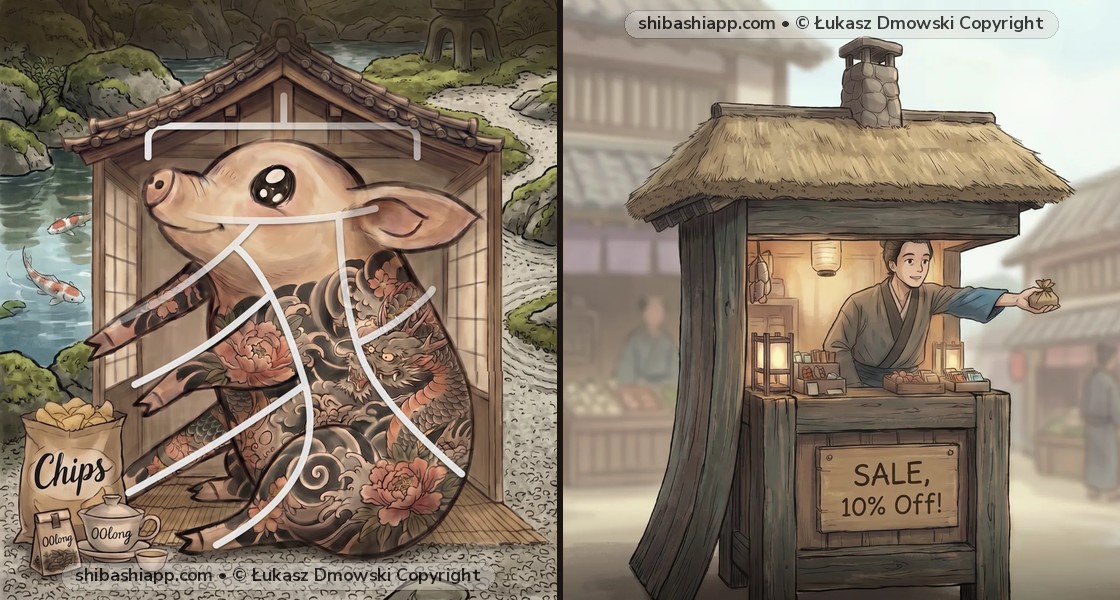
宀 (Roof) over 豕 (Pig) = HOUSE / HOME (ie / uchi / ka). | 家 (いえ) — house |
Side-by-Side Illustrated Kanji Flashcards (Tap Readings for Audio)
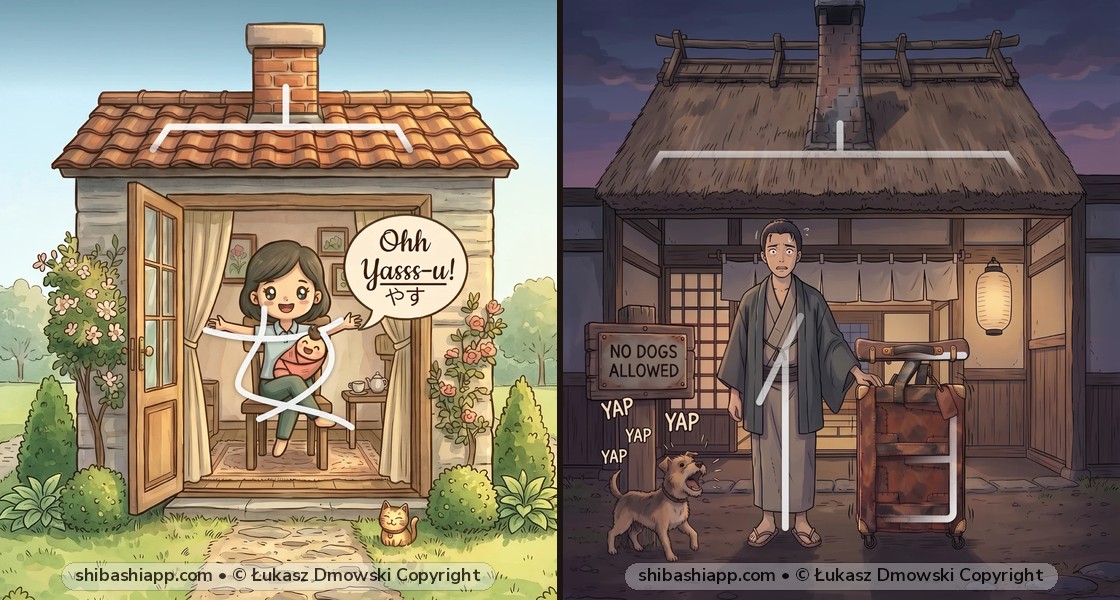
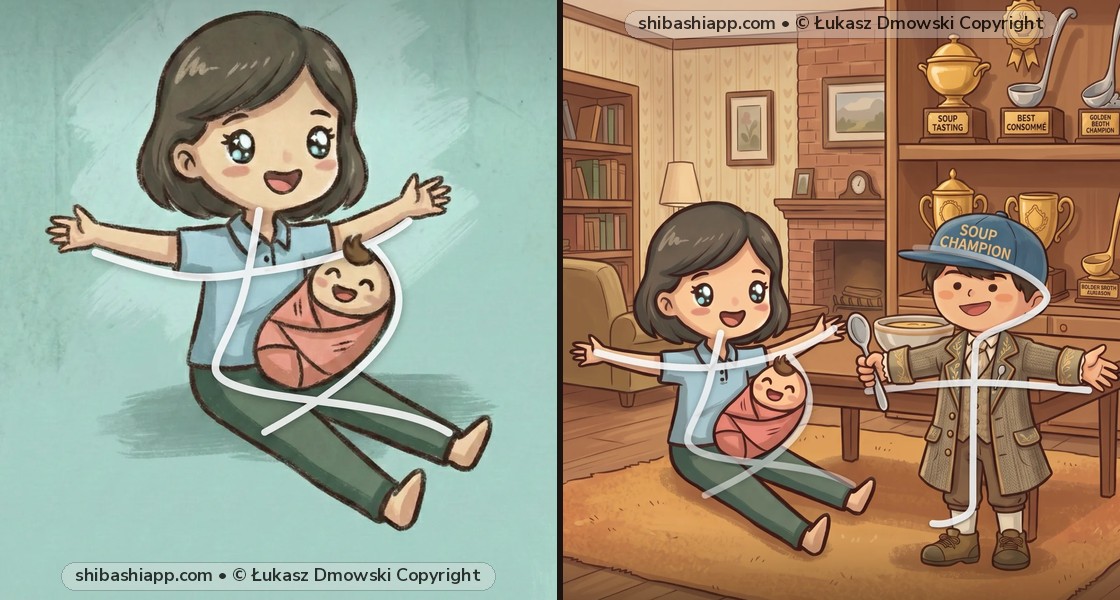
Compare the custom Shibashi artwork for 帰 (Return Home) and 戻 (To Return) below. Notice how each illustration embeds both the English meaning and the primary Japanese reading directly into the scene, and tap any reading to hear native pronunciation:


Step-by-Step Visual Breakdown & Radical Rules
Notice that 帰 (Return home) and 婦 (Lady/Wife) share the exact same 帚 (Broom) component on the right:
1. 帰 (Return Home) — Mnemonic Story & Readings
On'yomi: き | Kun'yomi: かえ
Shibashi Visual Story: “Returning home to your Country-Energy (かえ) mansion, is key (き) to your mental health...” Key visual distinction: 刂 (Sword/Knife) + 帚 (Broom over apron) = hanging up your sword and picking up a house broom = RETURN HOME (kaeru / ki).
2. 戻 (To Return) — Mnemonic Story & Readings
On'yomi: れい | Kun'yomi: もど
Shibashi Visual Story: “Even on a rainy (れい) day, the friendly monster doctor (もど) is so relieved to return home...” Key visual distinction: 戸 (One-leaf Door) over 大 (Big dog/person) = squeezing back under the door = RETURN / GO BACK / PUT BACK (modoru / modosu).
3. 婦 (Lady) — Mnemonic Story & Readings
On'yomi: ふ | Kun'yomi: —
Shibashi Visual Story: “Living in a grand house like this, the lady clearly does not lack food (ふ)...” Key visual distinction: 女 (Woman) + 帚 (House broom — same right half as 帰!) = WIFE / LADY / BRIDE (fu, as in 主婦 shufu).
4. 家 (Home) — Mnemonic Story & Readings
On'yomi: か | Kun'yomi: いえ, や, うち
Shibashi Visual Story: “The yakuza (や) pig named Ian (いえ) is resting at his cabin (か) home with oolong & chips (うち).” Key visual distinction: 宀 (Roof) over 豕 (Pig) = HOUSE / HOME (ie / uchi / ka).
Essential Japanese Vocabulary Words Using 帰 / 戻 / 婦 / 家
Once you can recognize 帰 (Return Home) and 戻 (To Return) and 婦 (Lady) individually, lock them into your active reading vocabulary with these high-frequency Japanese words from the Shibashi app:
| Japanese Word | Hiragana Reading | English Meaning | Level |
|---|---|---|---|
| 帰る | かえる | to go back | JLPT |
| 帰り | かえり | return | JLPT |
| 帰宅 | きたく | returning home | JLPT |
| 戻る | もどる | to turn back | JLPT |
| 戻す | もどす | to restore, to put back, to return | JLPT |
| 主婦 | しゅふ | housewife, homemaker | JLPT |
| 婦人 | ふじん | woman, lady | JLPT |
| 新婦 | しんぷ | bride | JLPT |
5-Second Memory Summary: How to Never Mix Up 帰 & 戻 & 婦 Again
Going back to your home base or country? Always use 帰る (kaeru — 帰国 kikoku). Going back to your desk after lunch or hitting the 'Back' button on a website? Use 戻る (modoru — 戸 Door over 大)!