Transitive vs. Intransitive Japanese Verbs: 始める/始まる, 開ける/開く, 集める/集まる & 止める/止まる
One of the biggest 'aha!' moments in Japanese is realizing that verb pairs like 止める (tomeru — stop something) and 止まる (tomaru — something stops) use the EXACT SAME KANJI! Only the trailing hiragana changes.
Look at these five high-frequency JLPT kanjis: 始 (Begin), 止 (Stop), 集 (Gather), 開 (Open), and 決 (Decide). Every single one follows the golden -ARU vs. -ERU rule of Japanese transitive and intransitive verbs!
Quick Comparison: 始 (Begin) vs. 止 (Stop) vs. 集 (Gather) vs. 開 (Open)
Compare the five kanjis and their transitive (を o) vs. intransitive (が ga) verb pairs below:
| Kanji & Meaning | Primary Readings (Bold = Primary) | Shibashi Visual Mnemonic Hook | Common Compound Word |
|---|---|---|---|
| 始 — Begin | On: し Kun: はじ |
女 (Woman) + 台 (Pedestal/Platform) = where life begins = BEGIN / START (hajimeru [trans.] / hajimaru [intrans.] / shi). | 開始 (かいし) — start, commencement, begi... |
| 止 — Stop | On: し Kun: と, や |
A footprint planted on the ground = STOP (tomeru [trans.] / tomaru [intrans.] / shi). | 中止 (ちゅうし) — interruption, discontinua... |
| 集 — Gather | On: しゅう Kun: あつ |
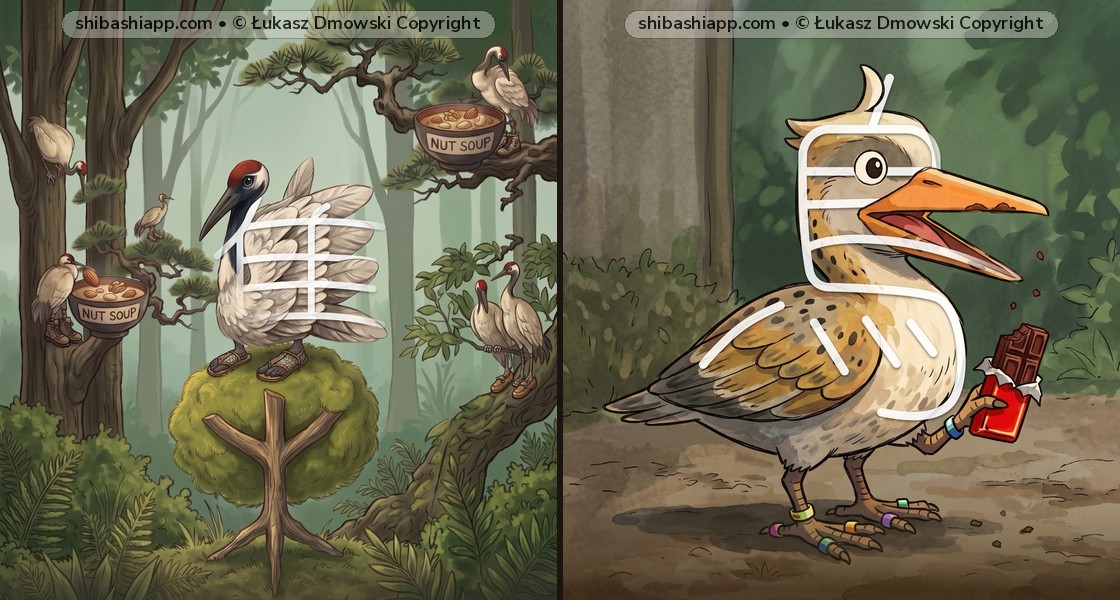
隹 (Bird) perched atop 木 (a Tree) = birds flocking together in a tree = GATHER / COLLECT (atsumeru [trans.] / atsumaru [intrans.] / shū). | 集団 (しゅうだん) — group, mass, collective body |
| 開 — Open | On: かい Kun: あ, ひら |
Hands pushing open a 門 (Gate) = OPEN (akeru [trans.] / aku [intrans.] / kai). | 開く (あく) — to open, to become open |
| 決 — Decide | On: けつ Kun: き |
氵 (Water bursting through a levee) = DECIDE (kimeru [trans.] / kimaru [intrans.] / ketsu). | 決める (きめる) — to decide |
Side-by-Side Illustrated Kanji Flashcards (Tap Readings for Audio)
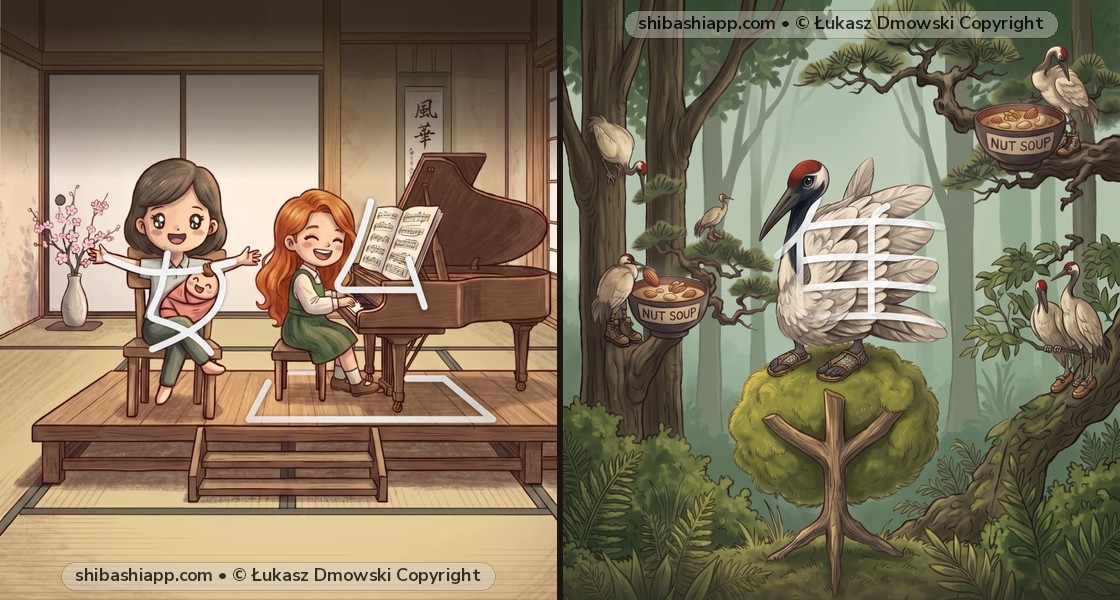
Compare the custom Shibashi artwork for 始 (Begin) and 集 (Gather) below. Notice how each illustration embeds both the English meaning and the primary Japanese reading directly into the scene, and tap any reading to hear native pronunciation:


Step-by-Step Visual Breakdown & Radical Rules
Here is the 5-second rule that solves dozens of JLPT verb pairs at once:
1. 始 (Begin) — Mnemonic Story & Readings
On'yomi: し | Kun'yomi: はじ
Shibashi Visual Story: “With music sheets (し) in front, and her mom by her side, the happy ginger (はじ) girl is about to begin...” Key visual distinction: 女 (Woman) + 台 (Pedestal/Platform) = where life begins = BEGIN / START (hajimeru [trans.] / hajimaru [intrans.] / shi).
- 開始 (かいし): start, commencement, beginning, initiation
- 始まる (はじまる): to begin
- 始める (はじめる): to begin
2. 止 (Stop) — Mnemonic Story & Readings
On'yomi: し | Kun'yomi: と, や
Shibashi Visual Story: “A big yankee (や) sheep (し) policeman, stops you because of a tornado (と).” Key visual distinction: A footprint planted on the ground = STOP (tomeru [trans.] / tomaru [intrans.] / shi).
- 中止 (ちゅうし): interruption, discontinuance, suspension, stoppage
- 止まる (とまる): to come to a halt
- 止む (やむ): to stop
3. 集 (Gather) — Mnemonic Story & Readings
On'yomi: しゅう | Kun'yomi: あつ
Shibashi Visual Story: “Birds in shoes (しゅう) love to gather on top of trees, and eat nut soup (あつ)...” Key visual distinction: 隹 (Bird) perched atop 木 (a Tree) = birds flocking together in a tree = GATHER / COLLECT (atsumeru [trans.] / atsumaru [intrans.] / shū).
- 集団 (しゅうだん): group, mass, collective body
- 集める (あつめる): to collect something
- 集まり (あつまり): gathering, meeting, assembly, collection
4. 開 (Open) — Mnemonic Story & Readings
On'yomi: かい | Kun'yomi: あ, ひら
Shibashi Visual Story: “The gates to the artsy (あ) He-Rocku (ひら) Festival are now open. But remember, kayaks (かい) only!!” Key visual distinction: Hands pushing open a 門 (Gate) = OPEN (akeru [trans.] / aku [intrans.] / kai).
5. 決 (Decide) — Mnemonic Story & Readings
On'yomi: けつ | Kun'yomi: き
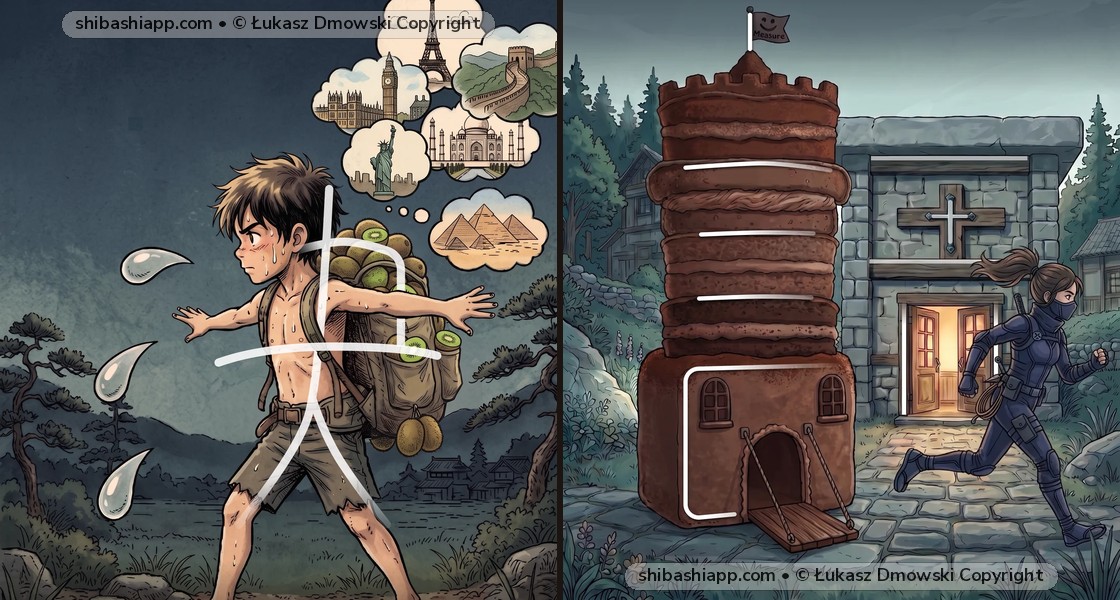
Shibashi Visual Story: “With no jacket(su) (けつ) and a bagpack full of kiwis (き) the kid decided to go and see the world...” Key visual distinction: 氵 (Water bursting through a levee) = DECIDE (kimeru [trans.] / kimaru [intrans.] / ketsu).
- 決める (きめる): to decide
- 決して (けっして): never
- 解決 (かいけつ): settlement, solution, resolution
Essential Japanese Vocabulary Words Using 始 / 止 / 集 / 開
Once you can recognize 始 (Begin) and 止 (Stop) and 集 (Gather) individually, lock them into your active reading vocabulary with these high-frequency Japanese words from the Shibashi app:
| Japanese Word | Hiragana Reading | English Meaning | Level |
|---|---|---|---|
| 開始 | かいし | start, commencement, beginning, initiation | JLPT |
| 始まる | はじまる | to begin | JLPT |
| 始める | はじめる | to begin | JLPT |
| 中止 | ちゅうし | interruption, discontinuance, suspension, stoppage | JLPT |
| 止まる | とまる | to come to a halt | JLPT |
| 止む | やむ | to stop | JLPT |
| 集団 | しゅうだん | group, mass, collective body | JLPT |
| 集める | あつめる | to collect something | JLPT |
5-Second Memory Summary: How to Never Mix Up 始 & 止 & 集 Again
When a kanji has an -ARU vs. -ERU pair: -ARU (始まる hajimaru, 止まる tomaru, 集まる atsumaru, 決まる kimaru) sounds like ある (aru — to exist on its own), so it is Intransitive (が ga)! -ERU (始める hajimeru, 止める tomeru, 集める atsumeru, 決める kimeru) is Transitive (を o — someone does it)!