Japanese Signs Survival Guide: Entrance vs. Exit & Open vs. Closed
Every train ticket gate in Japan flashes 入口 (Entrance) or 出口 (Exit), and every elevator has 開 (Open) and 閉 (Closed) buttons. Here is how to read them effortlessly without freezing up.
If you ever stand inside a Japanese elevator while someone rushes toward the doors, you have about half a second to decide whether to press 開 or 閉. And when walking through a crowded train station, you constantly scan for 入口 (Entrance) and 出口 (Exit). Here is how to lock all four signs into instant visual memory.
1. Entrance (入口 — いりぐち) vs. Exit (出口 — でぐち)
Both signs end with 口 (くち kuchi / ぐち guchi), which means "mouth" or "opening." Everything comes down to the first kanji: 入 (Enter) vs. 出 (Exit):

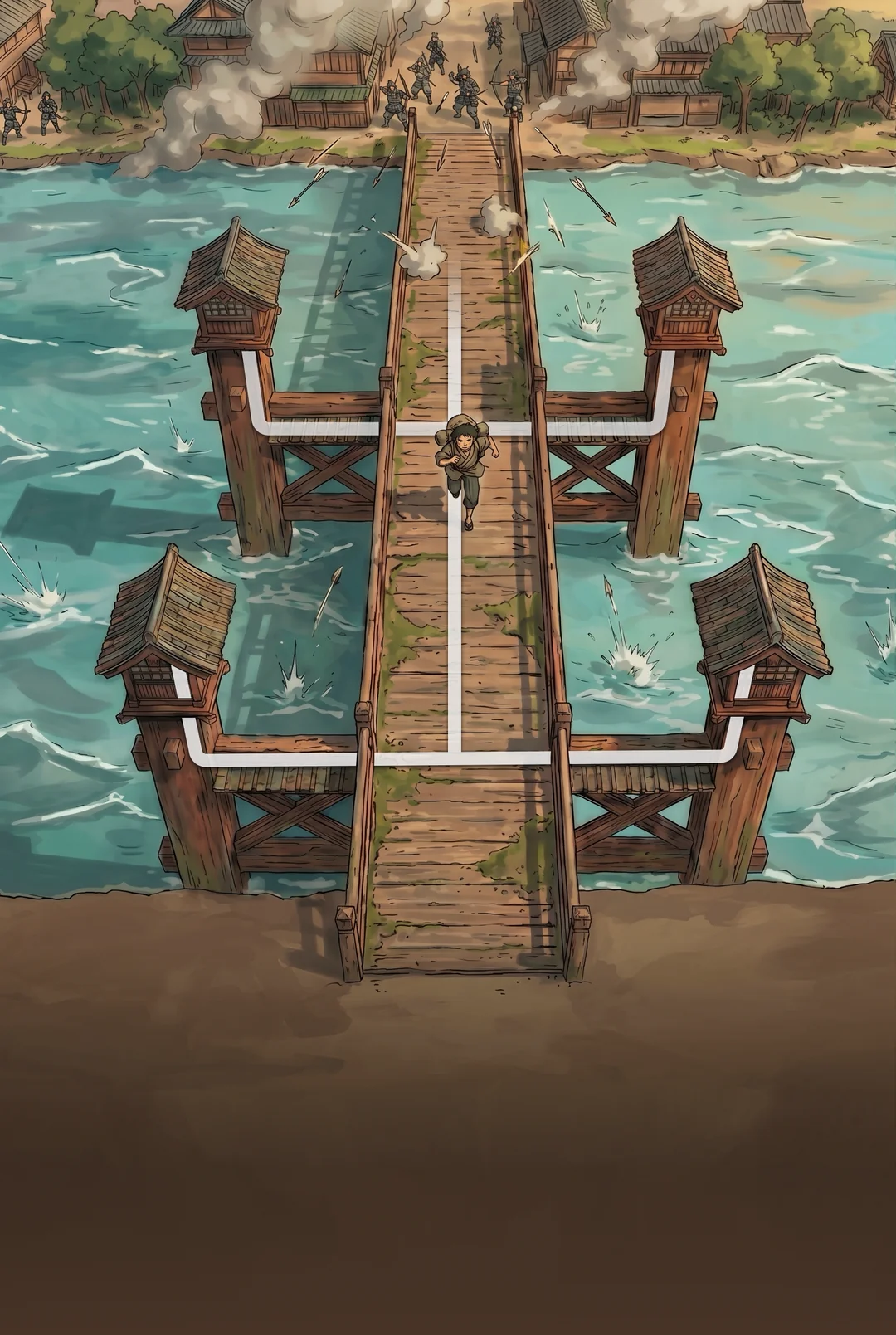
- 入 (Enter — はい / い / にゅう): Shaped like the peaked flap of a new (にゅう nyū) tent with an eagle (い i) design — make sure to say "hi" (はい hai) when entering! Add 口 and you get 入口 (いりぐち iriguchi — Entrance).
- 出 (Exit — で / だ / しゅつ): Two stacked mountain peaks that our cornered hero is desperately trying to exit while pleading: "I'm exiting! Don't shoots-u (しゅつ shutsu)!" while the dark (だ da) samurai wants him dead (で de). Add 口 and you get 出口 (でぐち deguchi — Exit).
2. Elevator & Train Doors: Open (開) vs. Closed (閉)
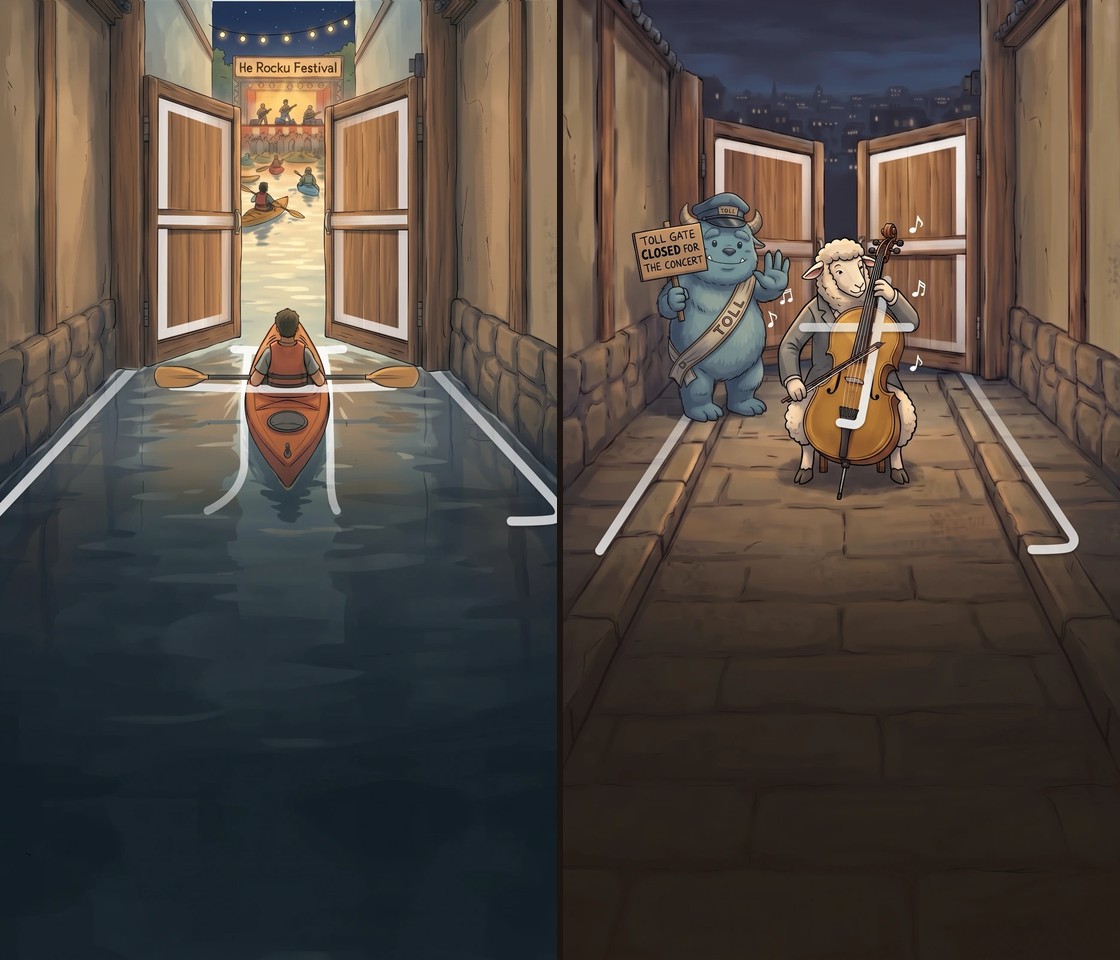
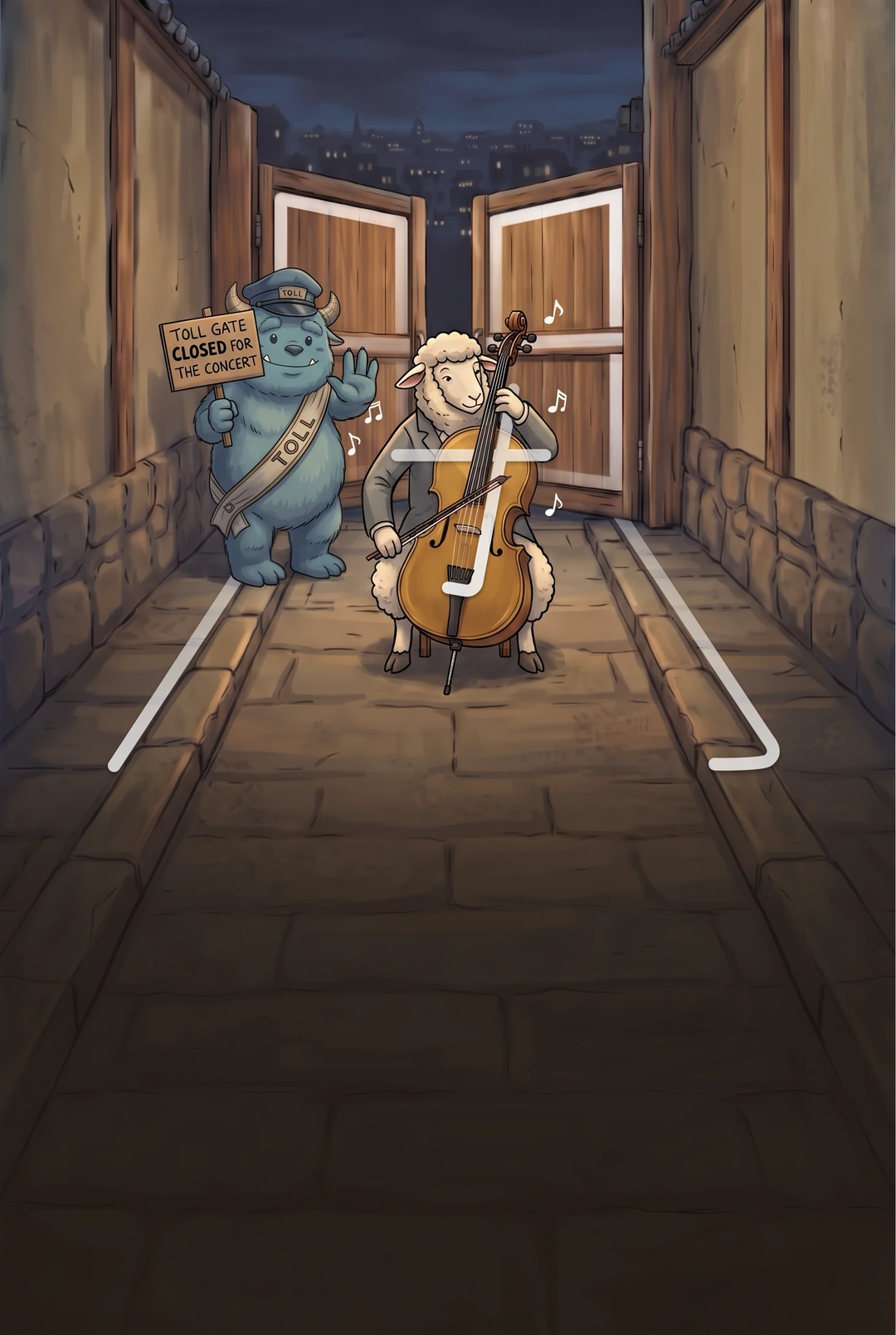
Both 開 (Open) and 閉 (Closed) use the Gate (門) frame on the outside. To tell them apart in a split second, look at what is happening between the gate doors:

| Sign / Button | What's Inside the Gate (門)? | Visual Story | Common Words on Signs |
|---|---|---|---|
| 開 (Open) | Symmetric open frame (two hands pulling back the latch) | The gates to the artsy (あ a) He-Rocku (ひら hira) Festival are wide OPEN — kayaks (かい kai) only! | 開く (あく / ひらく) — to open 開店 (かいてん) — shop opening |
| 閉 (Closed) | 才 with a diagonal slash blocking the gate shut | The toll (と to) gate is CLOSED for the hazel (へい hei) cello concert by Mr. Sheep (し shi). | 閉まる (しまる) — to close 閉店 (へいてん) — shop closed |