
仕事 (Shigoto) vs. 作業 (Sagyō) vs. 使う (Tsukau): Japanese Work & Business Kanji Explained
Why does 仕事 (shigoto, job/work) combine 仕 and 事, while school classes (授業 jugyō) and industry/overtime (残業 zangyō) use 業? Plus how to never mix up 仕 (Serve) with 使 (Use)!
Look at 仕 (Serve) and 使 (Use): both start with the Person radical (亻) on the left and share the exact same On'yomi reading シ (shi)! Meanwhile, 事 (ji / koto) and 業 (gyō) power nearly every compound word for work and business.
Quick Comparison: 仕 (Serve, Do) vs. 事 (Thing, Matter) vs. 使 (Use) vs. 業 (Work, Business)
Compare the four core work and action kanjis in the table below:
| Kanji & Meaning | Primary Readings (Bold = Primary) | Shibashi Visual Mnemonic Hook | Common Compound Word |
|---|---|---|---|
| 仕 — Serve, Do | On: し Kun: つか |
亻 (Person) + 士 (Samurai with wide top shoulders) = a samurai serving his lord = SERVE / OFFICIAL WORK (shi). | 仕方 (しかた) — method |
| 事 — Thing, Matter | On: じ Kun: こと, つか |
A hand holding a brush recording official business on a vertical scroll = MATTER / THING / BUSINESS (koto / ji). | 仕事 (しごと) — job |
| 使 — Use | On: し Kun: つか |
亻 (Person) + 吏 (official holding a scroll) = sending an envoy to USE / EMPLOY (tsukau / shi). | 大使館 (たいしかん) — embassy |
| 業 — Work, Business | On: ぎょう Kun: — |
A grand multi-tiered ceremonial stand over 木 (Tree) = BUSINESS / INDUSTRY / WORK / KARMA (gyō / waza). | 作業 (さぎょう) — work, operation, task |
Side-by-Side Illustrated Kanji Flashcards (Tap Readings for Audio)
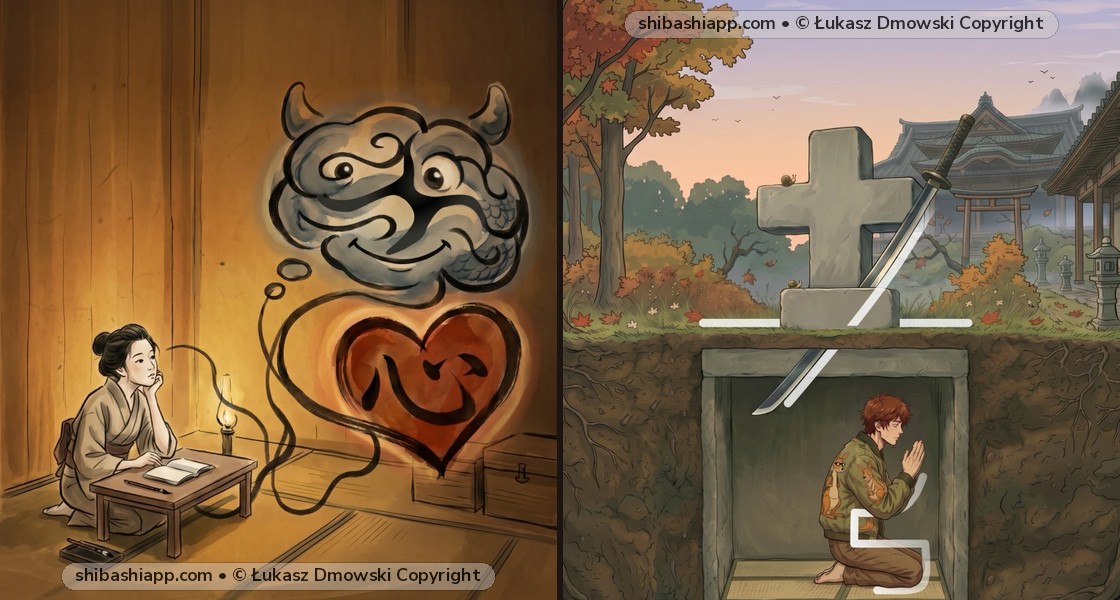
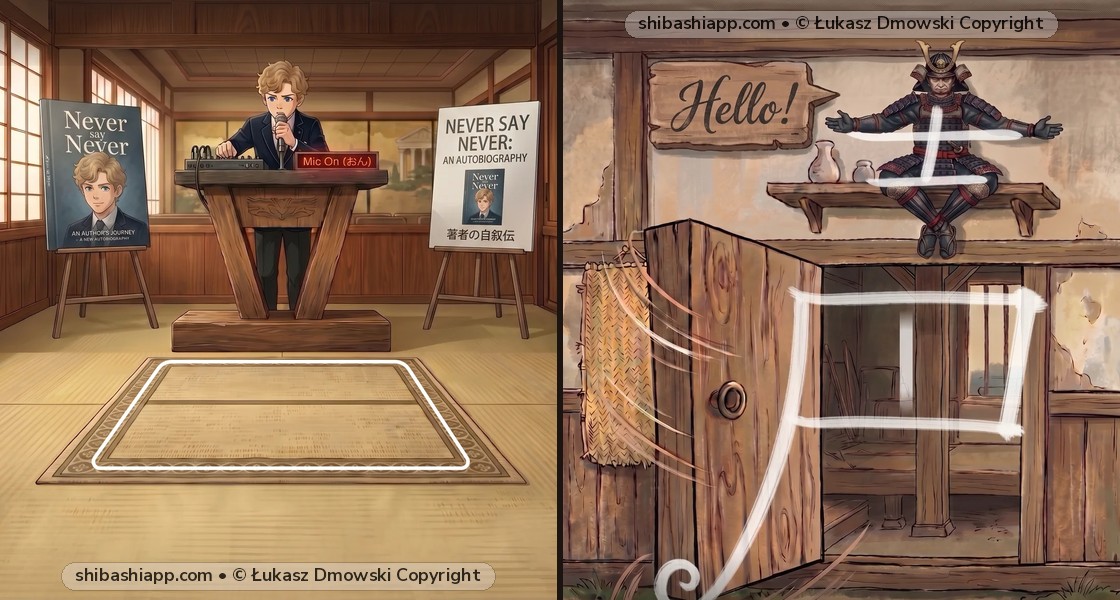
Compare the custom Shibashi artwork for 仕 (Serve, Do) and 業 (Work, Business) below. Notice how each illustration embeds both the English meaning and the primary Japanese reading directly into the scene, and tap any reading to hear native pronunciation:


Step-by-Step Visual Breakdown & Radical Rules
Here is how to separate both the visual shapes and the real-world vocabulary:
1. 仕 (Serve, Do) — Mnemonic Story & Readings
On'yomi: し | Kun'yomi: つか
Shibashi Visual Story: “The nun, well, she (し) serves Jesus and will help him distribute tsunami cards (つか).” Key visual distinction: 亻 (Person) + 士 (Samurai with wide top shoulders) = a samurai serving his lord = SERVE / OFFICIAL WORK (shi).
- 仕方 (しかた): method
2. 事 (Thing, Matter) — Mnemonic Story & Readings
On'yomi: じ | Kun'yomi: こと, つか
Shibashi Visual Story: “The Jeans (じ) King gets a tsunami of cash (つか) from his cotton (こと) field. The thing is, he must first pick the cotton with his golden harpoon.” Key visual distinction: A hand holding a brush recording official business on a vertical scroll = MATTER / THING / BUSINESS (koto / ji).
3. 使 (Use) — Mnemonic Story & Readings
On'yomi: し | Kun'yomi: つか
Shibashi Visual Story: “The sheep (し) is using a payphone to talk about tsunami casualties (つか)...” Key visual distinction: 亻 (Person) + 吏 (official holding a scroll) = sending an envoy to USE / EMPLOY (tsukau / shi).
- 大使館 (たいしかん): embassy
- 使う (つかう): to use
- 大使 (たいし): ambassador
4. 業 (Work, Business) — Mnemonic Story & Readings
On'yomi: ぎょう | Kun'yomi: —
Shibashi Visual Story: “A gyoza (ぎょう) restaurant on top of a cell tower is certainly an “interesting” business...” Key visual distinction: A grand multi-tiered ceremonial stand over 木 (Tree) = BUSINESS / INDUSTRY / WORK / KARMA (gyō / waza).
- 作業 (さぎょう): work, operation, task
Essential Japanese Vocabulary Words Using 仕 / 事 / 使 / 業
Once you can recognize 仕 (Serve, Do) and 事 (Thing, Matter) and 使 (Use) individually, lock them into your active reading vocabulary with these high-frequency Japanese words from the Shibashi app:
| Japanese Word | Hiragana Reading | English Meaning | Level |
|---|---|---|---|
| 仕方 | しかた | method | JLPT |
| 仕事 | しごと | job | JLPT |
| 食事 | しょくじ | to have a meal | JLPT |
| 火事 | かじ | fire | JLPT |
| 大使館 | たいしかん | embassy | JLPT |
| 使う | つかう | to use | JLPT |
| 大使 | たいし | ambassador | JLPT |
| 作業 | さぎょう | work, operation, task | JLPT |
5-Second Memory Summary: How to Never Mix Up 仕 & 事 & 使 Again
Visual rule: 亻 + simple 3-stroke 士 (Samurai) = 仕 (Serve — 仕事 shigoto); 亻 + boxed 吏 = 使 (Use — tsukau); top crown +羊+木 = 業 (Business / Industry / Class — 授業 jugyō, 作業 sagyō)!