思う (Omou) vs. 考える (Kangaeru): What Is the Difference Between the Two 'Think' Kanji?
'What is the difference between 思う (omou) and 考える (kangaeru)?' is one of the most-asked Japanese vocabulary questions online. Look at the bottom of each kanji and the difference becomes crystal clear.
In English, we use the single verb 'to think' for both spontaneous feelings ('I think it will rain tomorrow') and deep analytical problem-solving ('Let me think carefully about this math puzzle'). Japanese splits these into two distinct verbs — and their kanjis show you why!
Quick Comparison: 思 (Think) vs. 考 (Think) vs. 心 (Heart) vs. 教 (Teach)
Compare 思 (omou) and 考 (kangaeru) side-by-side below:
| Kanji & Meaning | Primary Readings (Bold = Primary) | Shibashi Visual Mnemonic Hook | Common Compound Word |
|---|---|---|---|
| 思 — Think | On: し Kun: おも |
田 (Field/Brain) over 心 (Heart) = spontaneous feelings, opinions, and impressions rising from the HEART = THINK / FEEL (omou / shi). | 思う (おもう) — to think, to feel |
| 考 — Think | On: こう Kun: かんが |
耂 (Wise old Elder with cane) over 丂 (pondering hook) = analytical, step-by-step mental problem-solving = CONSIDER / PONDER (kangaeru / kō). | 考える (かんがえる) — to consider |
| 心 — Heart | On: しん Kun: こころ |
The Heart / emotional mind radical. | 心 (こころ) — core, heart |
| 教 — Teach | On: きょう Kun: おし, おそ |
Shares the exact same 耂 (Elder) top radical as 考 — an elder teaching a child! | 教える (おしえる) — to teach, to instruct |
Side-by-Side Illustrated Kanji Flashcards (Tap Readings for Audio)
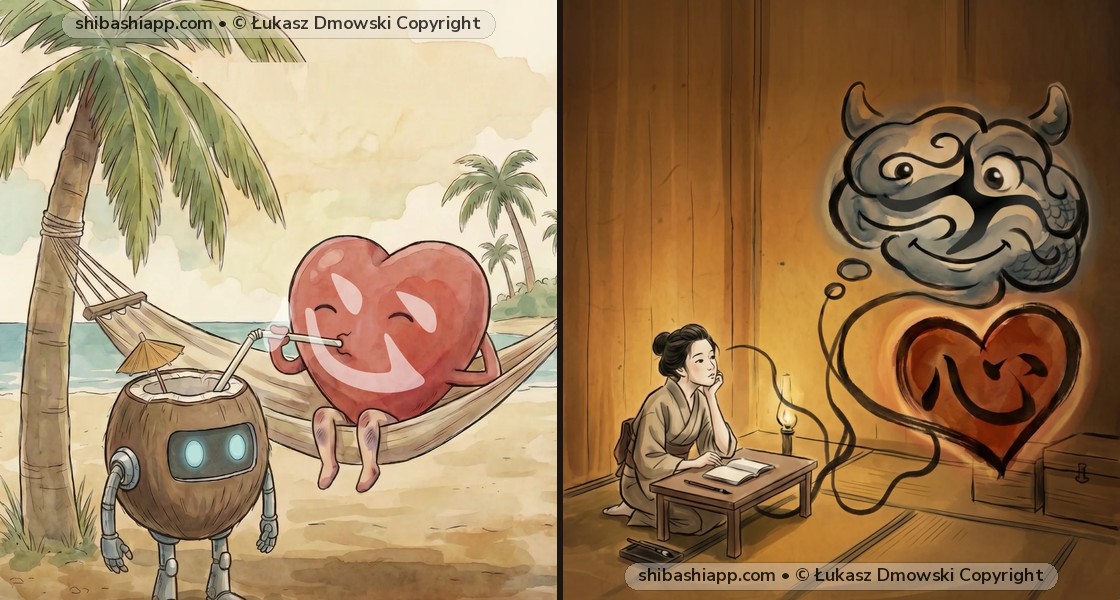
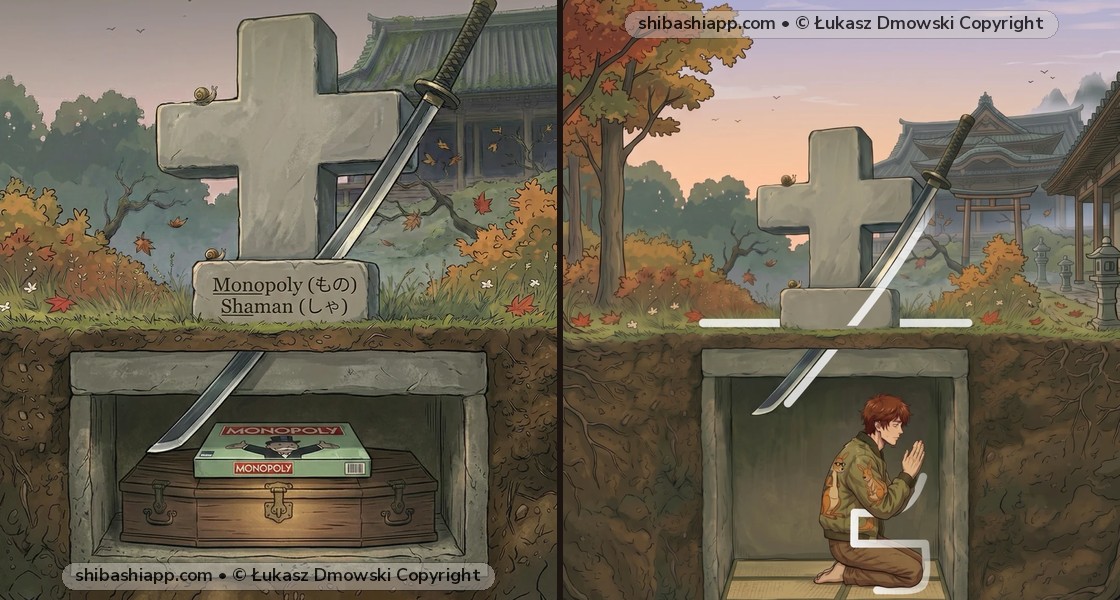
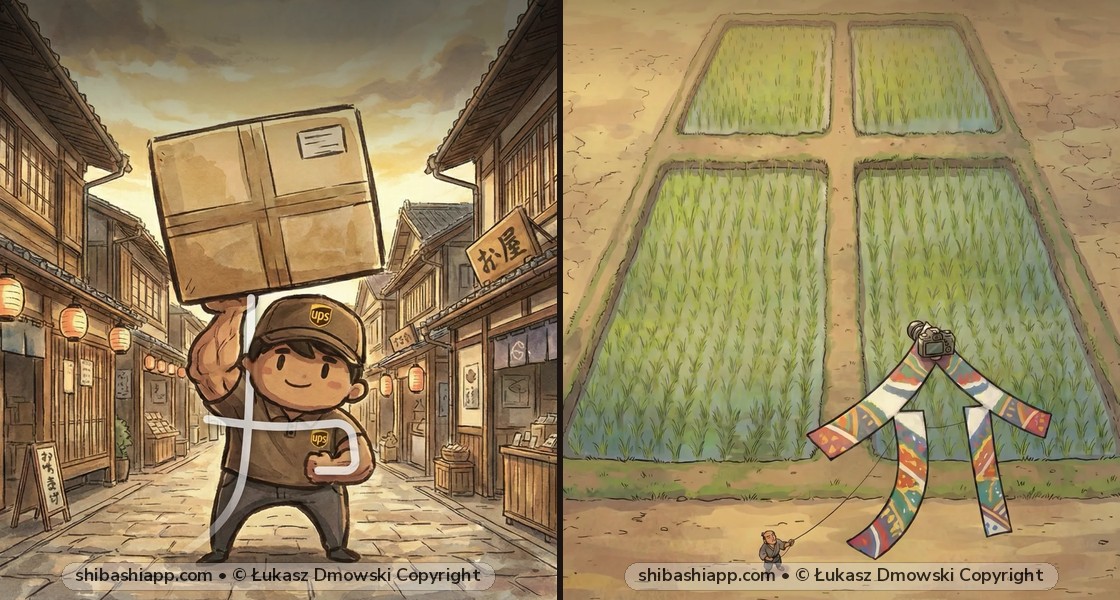
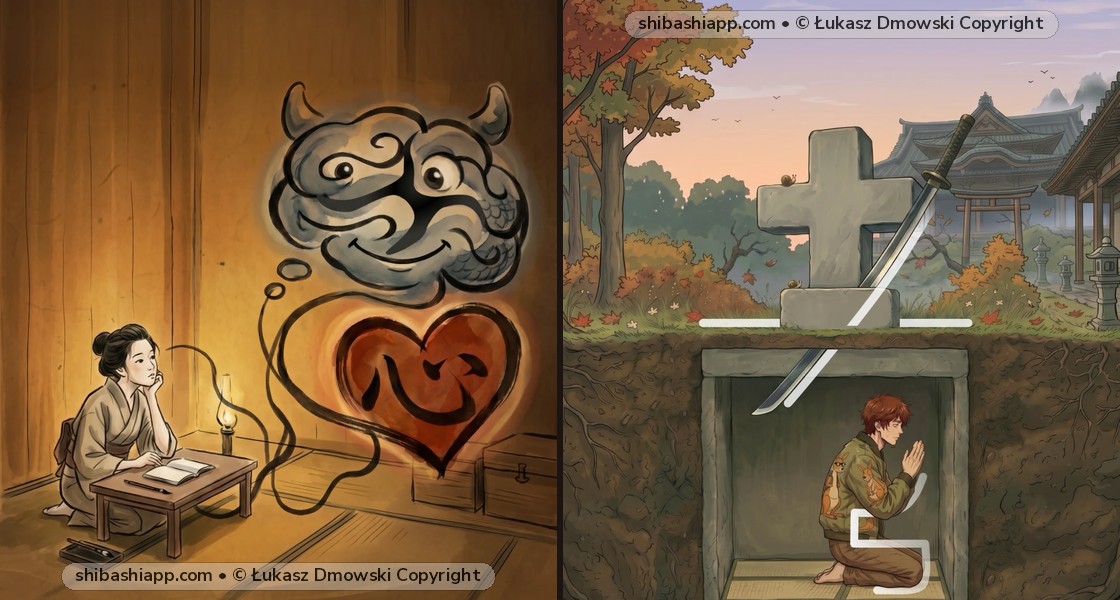
Compare the custom Shibashi artwork for 思 (Think) and 考 (Think) below. Notice how each illustration embeds both the English meaning and the primary Japanese reading directly into the scene, and tap any reading to hear native pronunciation:


Step-by-Step Visual Breakdown & Radical Rules
Look at the radicals inside 思 versus 考:
1. 思 (Think) — Mnemonic Story & Readings
On'yomi: し | Kun'yomi: おも
Shibashi Visual Story: “She (し) is always thinking with her heart before her oval monster (おも) brain interferes...” Key visual distinction: 田 (Field/Brain) over 心 (Heart) = spontaneous feelings, opinions, and impressions rising from the HEART = THINK / FEEL (omou / shi).
- 思う (おもう): to think, to feel
- 思い出す (おもいだす): to remember
- 意思 (いし): intention, purpose
2. 考 (Think) — Mnemonic Story & Readings
On'yomi: こう | Kun'yomi: かんが
Shibashi Visual Story: “For some reason, the man in the kangaroo (かんが) coat (こう) thinks praying will still help him now...” Key visual distinction: 耂 (Wise old Elder with cane) over 丂 (pondering hook) = analytical, step-by-step mental problem-solving = CONSIDER / PONDER (kangaeru / kō).
- 考える (かんがえる): to consider
- 考え (かんがえ): thinking, thought, ideas, intention
3. 心 (Heart) — Mnemonic Story & Readings
On'yomi: しん | Kun'yomi: こころ
Shibashi Visual Story: “The heart has bruised its shins (しん), and is now resting, with a coco-robot (こころ) drink.” Key visual distinction: The Heart / emotional mind radical.
4. 教 (Teach) — Mnemonic Story & Readings
On'yomi: きょう | Kun'yomi: おし, おそ
Shibashi Visual Story: “The workout-dad (父) took his son to Kyoto (きょう) to teach him about his awesome (おそ) grandpa Hiroshi (おし).” Key visual distinction: Shares the exact same 耂 (Elder) top radical as 考 — an elder teaching a child!
- 教える (おしえる): to teach, to instruct
- 教室 (きょうしつ): classroom, lecture room
- 教会 (きょうかい): church, congregation
Essential Japanese Vocabulary Words Using 思 / 考 / 心 / 教
Once you can recognize 思 (Think) and 考 (Think) and 心 (Heart) individually, lock them into your active reading vocabulary with these high-frequency Japanese words from the Shibashi app:
| Japanese Word | Hiragana Reading | English Meaning | Level |
|---|---|---|---|
| 思う | おもう | to think, to feel | JLPT |
| 思い出す | おもいだす | to remember | JLPT |
| 意思 | いし | intention, purpose | JLPT |
| 考える | かんがえる | to consider | JLPT |
| 考え | かんがえ | thinking, thought, ideas, intention | JLPT |
| 心 | こころ | core, heart | JLPT |
| 心配 | しんぱい | to worry | JLPT |
| 安心 | あんしん | relief | JLPT |
5-Second Memory Summary: How to Never Mix Up 思 & 考 & 心 Again
思 (思う omou) has a Heart (心) at the bottom: use it for personal opinions, intuitions, and feelings (〜と思います to omoimasu). 考 (考える kangaeru) has a wise Elder (耂) on top: use it when using logic to figure out a plan, decision, or test answer!