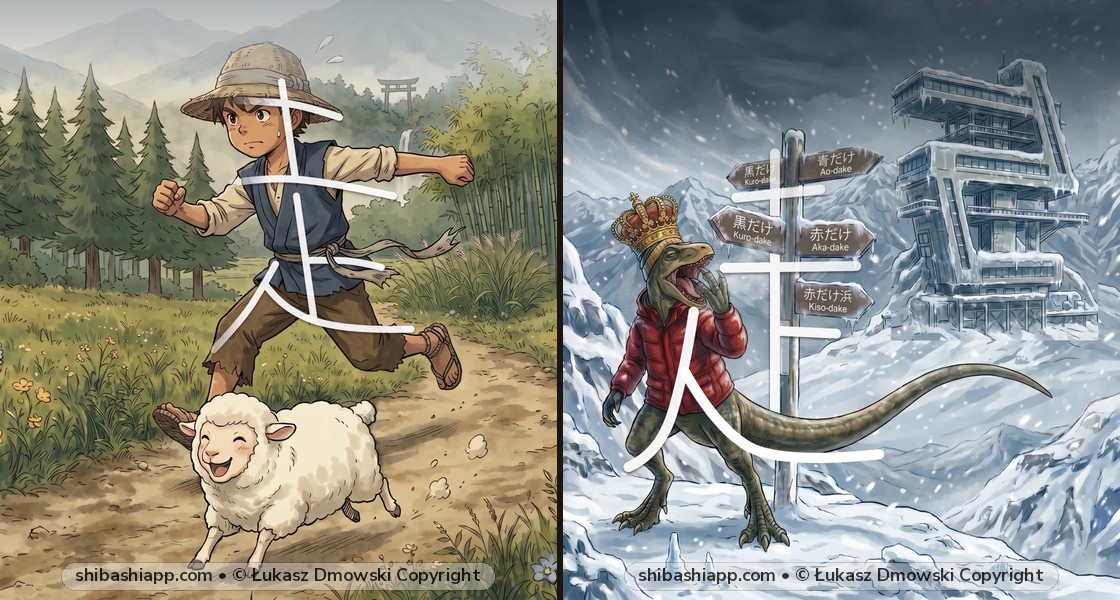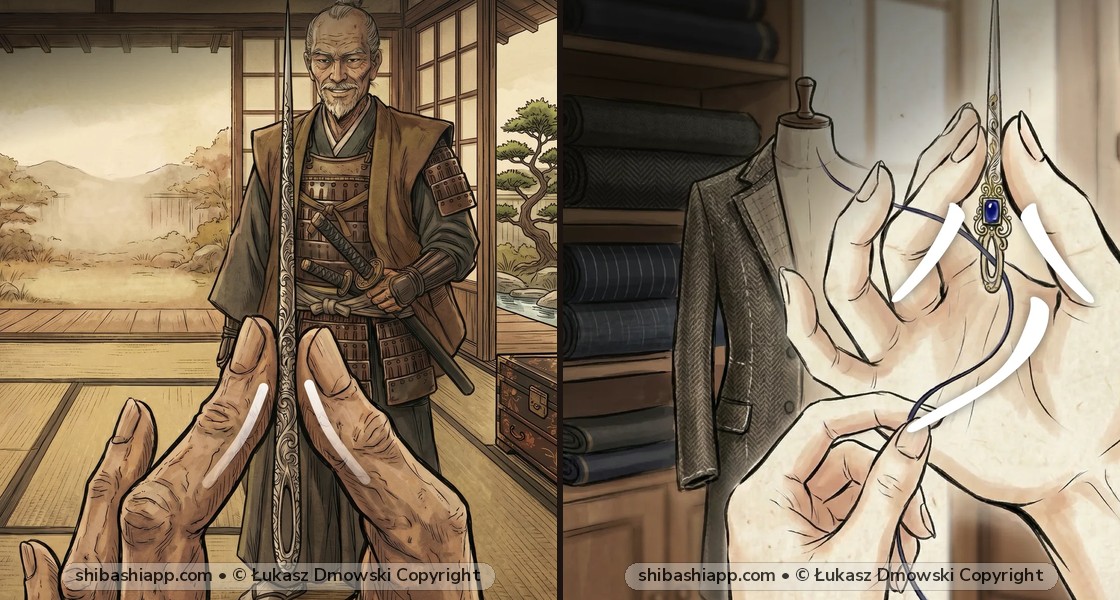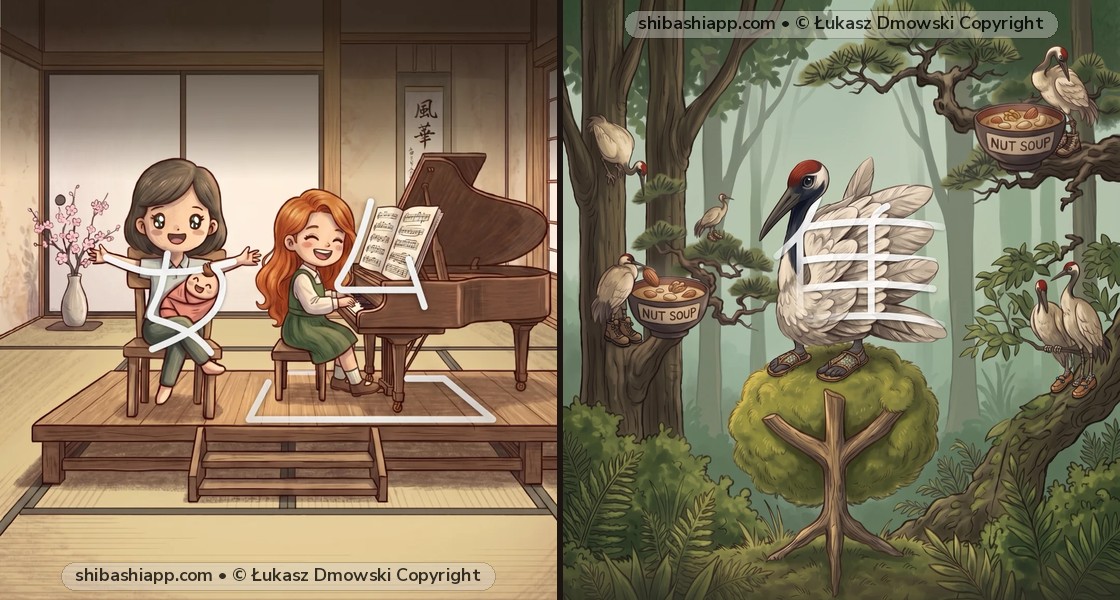
From 上 (Up) & 下 (Down) to 止 (Stop), 正 (Correct) & 歩 (Walk): The Footprint Kanji Chain
Start with a T-stick above the ground (上 Up). Add a little left toe-stub and it becomes 止 (Stop — seen on every red octagonal traffic sign in Japan!). Cap 止 with a ceiling bar for 正 (Correct), or put it over 少 (Few) for 歩 (Walk)!
Every red traffic stop sign in Japan reads 止まれ (Tomare — Stop!). Look at the shape of 止: it looks almost like 上 (Up), except it has an extra vertical line on the left representing a footprint planted firmly on the ground.
Quick Comparison: 上 (Up, Above) vs. 下 (Below) vs. 止 (Stop) vs. 正 (Correct)
Trace how each character in this 5-kanji chain builds directly onto the previous one:
| Kanji & Meaning | Primary Readings (Bold = Primary) | Shibashi Visual Mnemonic Hook | Common Compound Word |
|---|---|---|---|
| 上 — Up, Above | On: じょう Kun: うえ, あ |
Vertical pole rising ABOVE the baseline = UP / ABOVE (ue / jō). | 以上 (いじょう) — not less than ..., ... an... |
| 下 — Below | On: か, げ Kun: した, くだ, お |
Vertical pole hanging BELOW the ceiling line = DOWN / BELOW (shita / ka). | 下 (した) — below |
| 止 — Stop | On: し Kun: と, や |
上 with an extra left vertical toe line = a footprint planted flat to STOP (tomaru / shi). | 中止 (ちゅうし) — interruption, discontinua... |
| 正 — Correct | On: せい, しょう Kun: ただ, まさ |
一 (One ceiling line) + 止 (Stop) = stopping right at the #1 mark = CORRECT / RIGHT (tadashii / sei). | 正しい (ただしい) — correct |
| 歩 — Walk | On: ほ Kun: ある |
止 (Stop) on top + 少 (Few) on the bottom = stopping only a few times as you WALK (aruku / ho). | 歩く (あるく) — to walk |
Side-by-Side Illustrated Kanji Flashcards (Tap Readings for Audio)
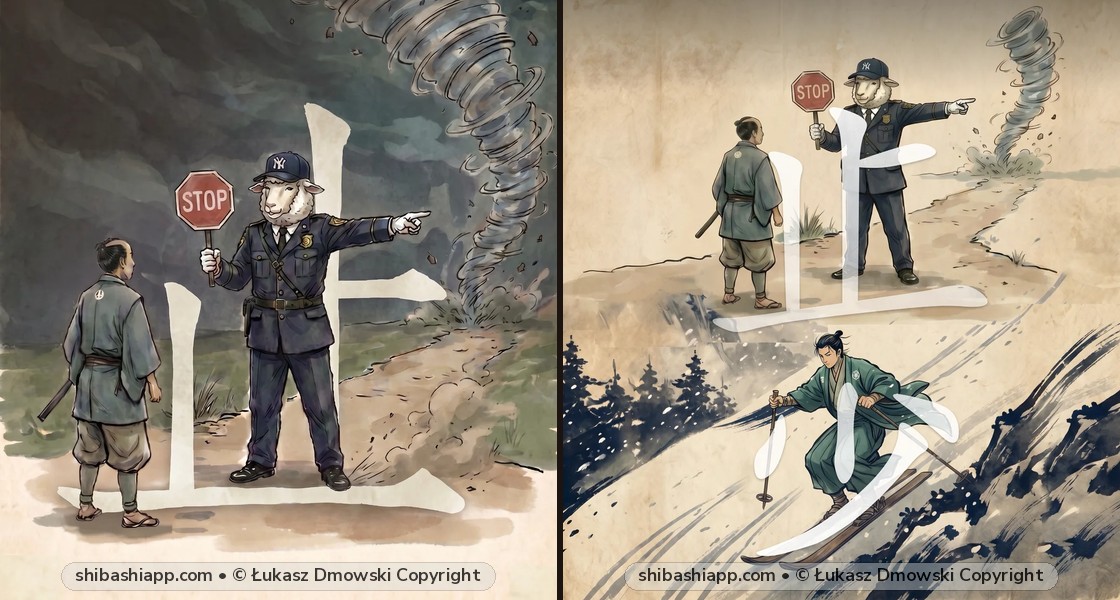
Compare the custom Shibashi artwork for 止 (Stop) and 歩 (Walk) below. Notice how each illustration embeds both the English meaning and the primary Japanese reading directly into the scene, and tap any reading to hear native pronunciation:


Step-by-Step Visual Breakdown & Radical Rules
Here is how each added stroke transforms the meaning:
1. 上 (Up, Above) — Mnemonic Story & Readings
On'yomi: じょう | Kun'yomi: うえ, あ
Shibashi Visual Story: “Ever since the plant grew above (あ) ground, it’s been way (うえ) too many jokes (じょう)...” Key visual distinction: Vertical pole rising ABOVE the baseline = UP / ABOVE (ue / jō).
- 以上 (いじょう): not less than ..., ... and over, ... and above, ... and upwards, ... or more
- 上げる (あげる): to give
- 上 (うえ): on top of, upper
2. 下 (Below) — Mnemonic Story & Readings
On'yomi: か, げ | Kun'yomi: した, くだ, お
Shibashi Visual Story: “Just a cool dark (くだ) cat (か) in awesome (お) shittake (した) hat drinking from a geyser (げ) deep below the ground...” Key visual distinction: Vertical pole hanging BELOW the ceiling line = DOWN / BELOW (shita / ka).
3. 止 (Stop) — Mnemonic Story & Readings
On'yomi: し | Kun'yomi: と, や
Shibashi Visual Story: “A big yankee (や) sheep (し) policeman, stops you because of a tornado (と).” Key visual distinction: 上 with an extra left vertical toe line = a footprint planted flat to STOP (tomaru / shi).
- 中止 (ちゅうし): interruption, discontinuance, suspension, stoppage
- 止まる (とまる): to come to a halt
- 止む (やむ): to stop
4. 正 (Correct) — Mnemonic Story & Readings
On'yomi: せい, しょう | Kun'yomi: ただ, まさ
Shibashi Visual Story: “When a talented dark (ただ) shogun (しょう) with a light saber (せい) and a book of his ma’s savvy (まさ) advice tells you to go right, you know this must be correct...” Key visual distinction: 一 (One ceiling line) + 止 (Stop) = stopping right at the #1 mark = CORRECT / RIGHT (tadashii / sei).
- 正しい (ただしい): correct
- 正 (せい): (logical) true, regular
- 正午 (しょうご): noon, mid-day
5. 歩 (Walk) — Mnemonic Story & Readings
On'yomi: ほ | Kun'yomi: ある
Shibashi Visual Story: “Ever since the man was told to stop (止) walking, he didn’t argue (ある), just started skiing home (ほ)...” Key visual distinction: 止 (Stop) on top + 少 (Few) on the bottom = stopping only a few times as you WALK (aruku / ho).
Essential Japanese Vocabulary Words Using 上 / 下 / 止 / 正
Once you can recognize 上 (Up, Above) and 下 (Below) and 止 (Stop) individually, lock them into your active reading vocabulary with these high-frequency Japanese words from the Shibashi app:
| Japanese Word | Hiragana Reading | English Meaning | Level |
|---|---|---|---|
| 以上 | いじょう | not less than ..., ... and over, ... and above, ... and upwards, ... or more | JLPT |
| 上げる | あげる | to give | JLPT |
| 上 | うえ | on top of, upper | JLPT |
| 下 | した | below | JLPT |
| 下宿 | げしゅく | lodging | JLPT |
| 以下 | いか | less than | JLPT |
| 中止 | ちゅうし | interruption, discontinuance, suspension, stoppage | JLPT |
| 止まる | とまる | to come to a halt | JLPT |
5-Second Memory Summary: How to Never Mix Up 上 & 下 & 止 Again
上 (Up) + a left toe line = 止 (Stop). Add a flat top ceiling bar (一) over 止 to get 正 (Correct — tadashii). Put 止 (Stop) over 少 (Few) to get 歩 (Walk — aruku): when you walk, you take a few steps and stop!