走 (Run) & 起 (Wake Up / Happen): Why 起きる (Okiru) Has a Runner on the Left
Look at the left and bottom sweep of 起 (Wake Up / Happen): it is literally 走 (Run) carrying 己 (Oneself)! You pull yourself (己) up and start running (走) at the start of the day.
Look closely at 走 (Run — hashiru): on top is 土 (Earth), and on the bottom is a foot kicking off the ground with a long sweeping stride. When 走 acts as a wrapping radical (called sōnyō), its bottom stride stretches out to carry another component — creating 起 (Wake Up / Happen)!
Quick Comparison: 走 (Run) vs. 起 (Wake up) vs. 歩 (Walk) vs. 早 (Early)
Compare 走, 起, 歩, and 早 in the table below:
| Kanji & Meaning | Primary Readings (Bold = Primary) | Shibashi Visual Mnemonic Hook | Common Compound Word |
|---|---|---|---|
| 走 — Run | On: そう Kun: はし |
土 (Earth) on top + 龰 (running footprint with swinging arms) = RUN (hashiru / sō). | 走る (はしる) — to run |
| 起 — Wake up | On: き Kun: お |
走 (Run) wrapping around 己 (Self/Snake) = getting yourself up and moving = WAKE UP / OCCUR (okiru / okoru / ki). | 起きる (おきる) — to wake up, to get up |
| 歩 — Walk | On: ほ Kun: ある |
止 (Stop) over 少 (Few) = stopping a few times = WALK (aruku / ho). | 歩く (あるく) — to walk |
| 早 — Early | On: そう Kun: はや, さ |
日 (Sun) over 十 (stem) = EARLY / FAST (hayai / sō). | 早い (はやい) — early |
Side-by-Side Illustrated Kanji Flashcards (Tap Readings for Audio)
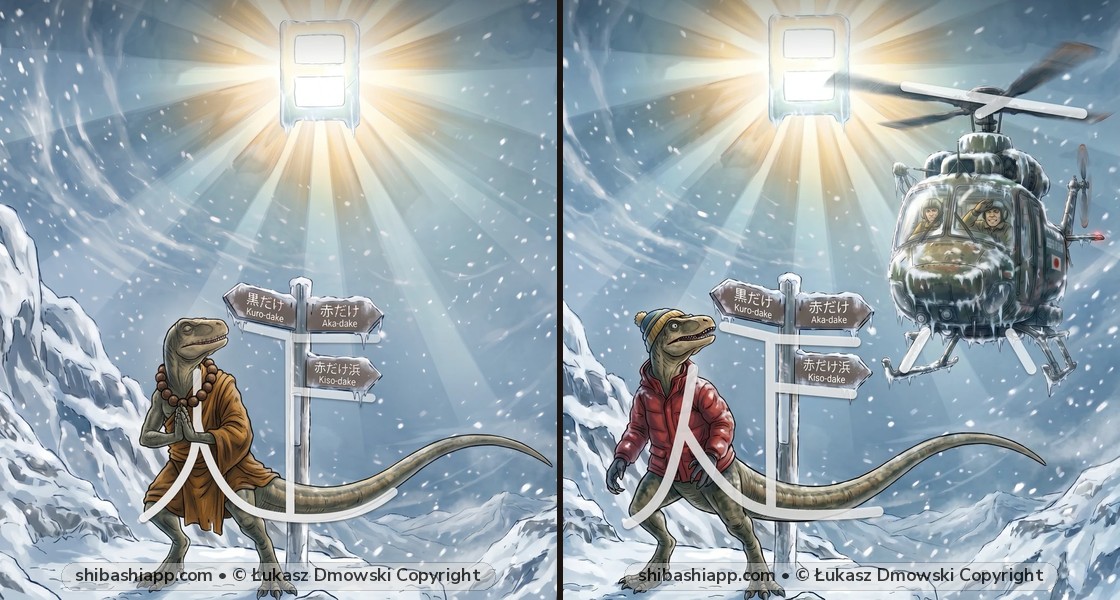
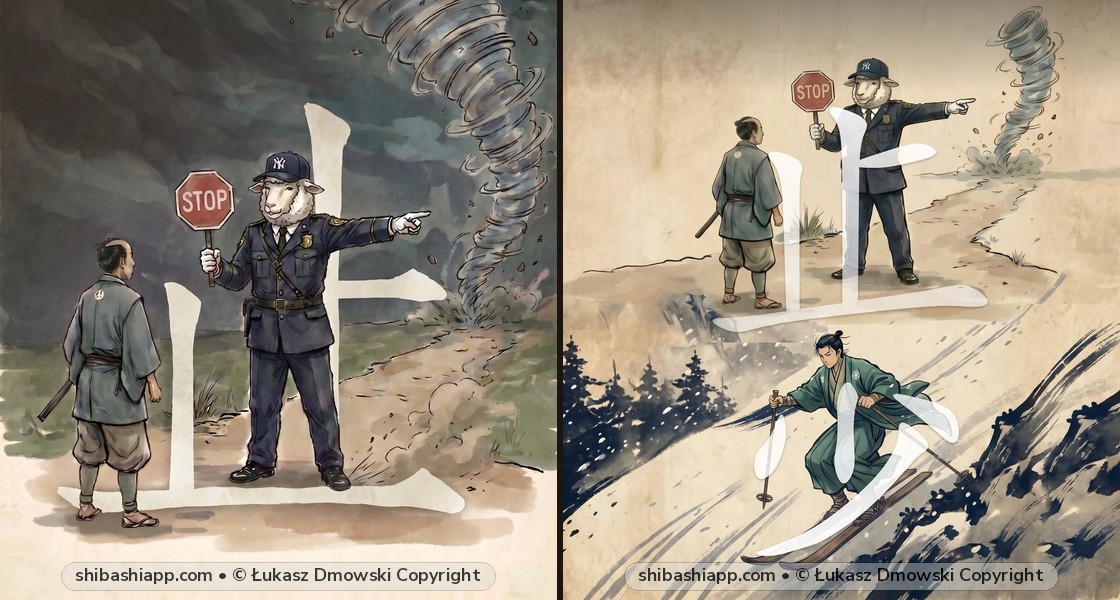
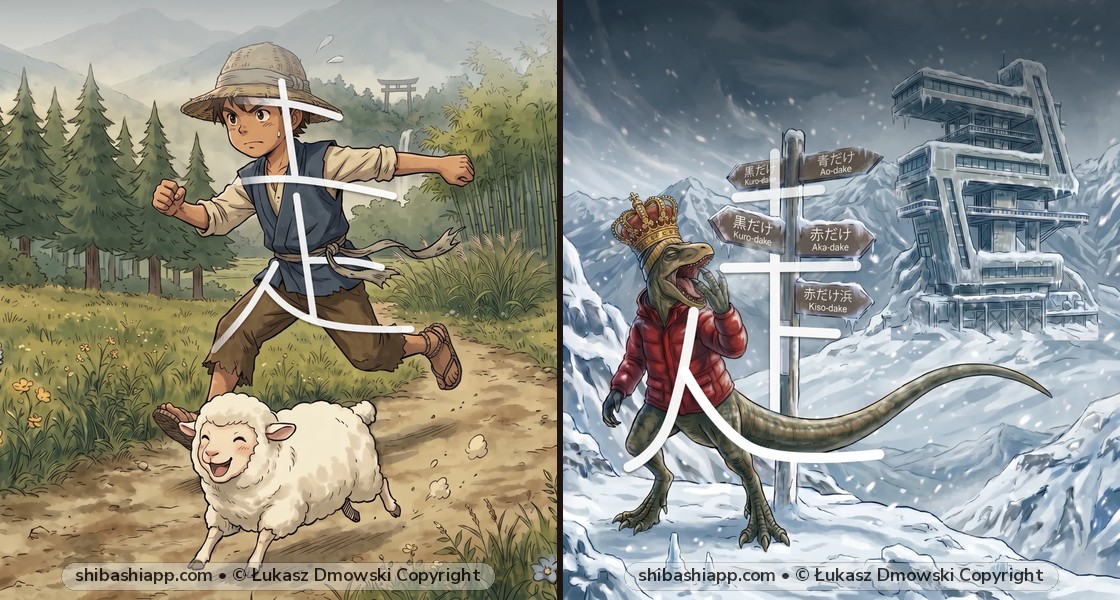
Compare the custom Shibashi artwork for 走 (Run) and 起 (Wake up) below. Notice how each illustration embeds both the English meaning and the primary Japanese reading directly into the scene, and tap any reading to hear native pronunciation:


Step-by-Step Visual Breakdown & Radical Rules
Plus, learn how the trailing hiragana separates 起きる (okiru) from 起こる (okoru):
1. 走 (Run) — Mnemonic Story & Readings
On'yomi: そう | Kun'yomi: はし
Shibashi Visual Story: “The boy hates running solo (そう), so he took his happy sheep (はし) with him.” Key visual distinction: 土 (Earth) on top + 龰 (running footprint with swinging arms) = RUN (hashiru / sō).
- 走る (はしる): to run
2. 起 (Wake up) — Mnemonic Story & Readings
On'yomi: き | Kun'yomi: お
Shibashi Visual Story: “King (き) Dinosaur just woke up. He took a thousand-year-long nap and now, he may be the only (お) one left...” Key visual distinction: 走 (Run) wrapping around 己 (Self/Snake) = getting yourself up and moving = WAKE UP / OCCUR (okiru / okoru / ki).
- 起きる (おきる): to wake up, to get up
- 起こる (おこる): to occur, to happen
- 起こす (おこす): to raise; to cause; to wake someone
3. 歩 (Walk) — Mnemonic Story & Readings
On'yomi: ほ | Kun'yomi: ある
Shibashi Visual Story: “Ever since the man was told to stop (止) walking, he didn’t argue (ある), just started skiing home (ほ)...” Key visual distinction: 止 (Stop) over 少 (Few) = stopping a few times = WALK (aruku / ho).
4. 早 (Early) — Mnemonic Story & Readings
On'yomi: そう | Kun'yomi: はや, さ
Shibashi Visual Story: “Peculiar Mr. Sun (日), the Happy Yankee (はや), loves to rise early, wash with soap (そう) and eat salsa (さ)...” Key visual distinction: 日 (Sun) over 十 (stem) = EARLY / FAST (hayai / sō).
- 早い (はやい): early
Essential Japanese Vocabulary Words Using 走 / 起 / 歩 / 早
Once you can recognize 走 (Run) and 起 (Wake up) and 歩 (Walk) individually, lock them into your active reading vocabulary with these high-frequency Japanese words from the Shibashi app:
| Japanese Word | Hiragana Reading | English Meaning | Level |
|---|---|---|---|
| 走る | はしる | to run | JLPT |
| 起きる | おきる | to wake up, to get up | JLPT |
| 起こる | おこる | to occur, to happen | JLPT |
| 起こす | おこす | to raise; to cause; to wake someone | JLPT |
| 歩く | あるく | to walk | JLPT |
| 歩道 | ほどう | footpath, walkway, sidewalk | JLPT |
| 進歩 | しんぽ | progress, development | JLPT |
| 早い | はやい | early | JLPT |
5-Second Memory Summary: How to Never Mix Up 走 & 起 & 歩 Again
走 (Run) + 己 (Self) = 起. When written 起きる (okiru), a person physically wakes up or gets out of bed. When written 起こる (okoru), an event, accident, or problem happens / occurs!