
いい (Ii) vs. よい (Yoi): How to Read & Conjugate 良い (Good), Plus 悪い (Bad), 正しい (Right) & 美しい (Beautiful)
Every beginner asks: 'Why do we say いい (ii) for Good, but よかった (yokatta) for Was Good?' Here is the complete guide to 良い (ii/yoi) and its core evaluative peers: 悪い (Bad), 正しい (Correct), and 美しい (Beautiful).
In everyday conversation, 'good' is almost always pronounced いい (ii). Yet the moment you conjugate it into the past (was good) or negative (not good), いい disappears and turns into よい (yoi) → よかった (yokatta) / よくない (yokunai)!
Quick Comparison: 良 (Good) vs. 悪 (Bad) vs. 正 (Correct) vs. 美 (Beauty)
Compare Japan's four core value-judgment adjectives (良, 悪, 正, 美) in the table below:
| Kanji & Meaning | Primary Readings (Bold = Primary) | Shibashi Visual Mnemonic Hook | Common Compound Word |
|---|---|---|---|
| 良 — Good | On: りょう Kun: よ, い |
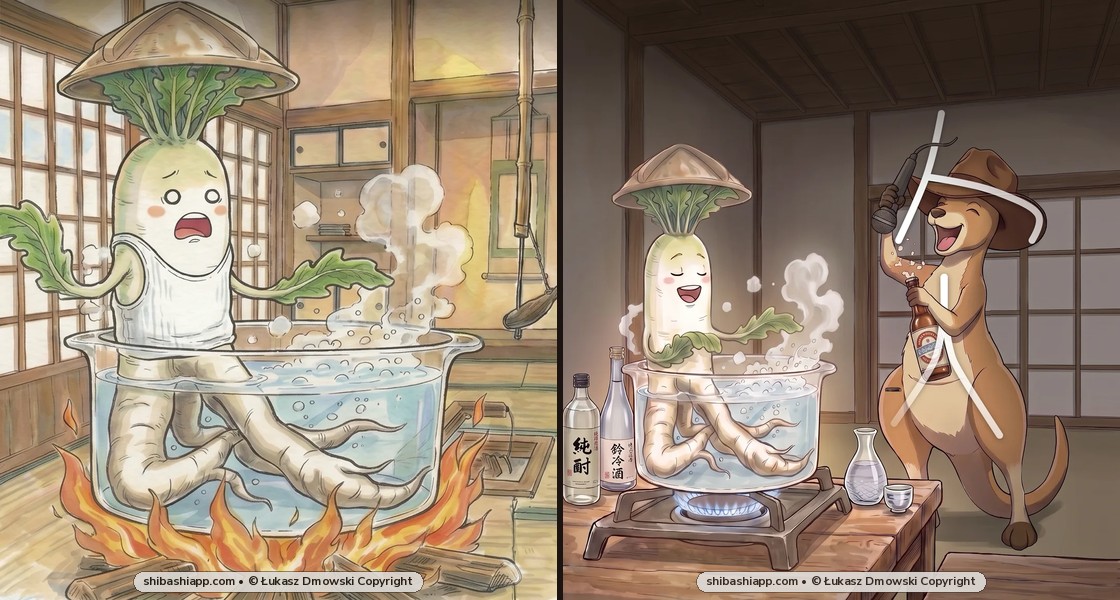
A top drop over a white grain/radish (白) with deep roots = GOOD / FINE (yoi / ii / ryō). | 良い (いい) — good |
| 悪 — Bad | On: あく, お Kun: わる |
亜 (Heavy cross weight) crushing 心 (Heart) at the bottom = BAD / EVIL / WRONG (warui / aku). | 悪い (わるい) — bad |
| 正 — Correct | On: せい, しょう Kun: ただ, まさ |
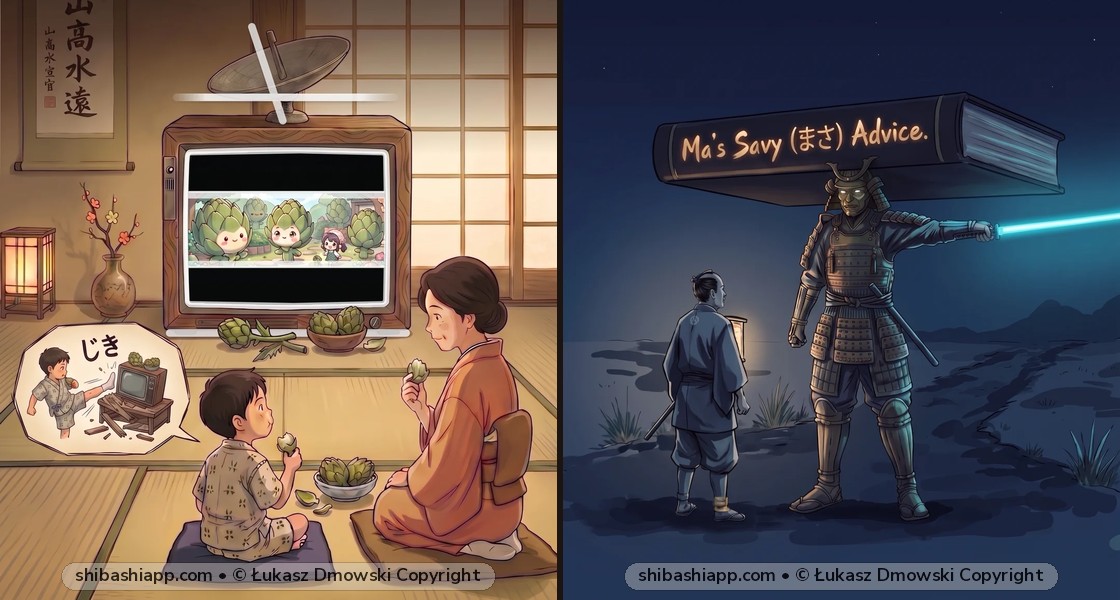
一 (Target line) over 止 (Footprint stopping right on the mark) = CORRECT / RIGHT / PROPER (tadashii / sei / shō). | 正しい (ただしい) — correct |
| 美 — Beauty | On: び, み Kun: — |
羊 (Fluffy sheep) over 大 (Big) = a big prize sheep = BEAUTIFUL (utsukushii / bi). | 美人 (びじん) — beautiful person; beauty |
Side-by-Side Illustrated Kanji Flashcards (Tap Readings for Audio)
Compare the custom Shibashi artwork for 良 (Good) and 悪 (Bad) below. Notice how each illustration embeds both the English meaning and the primary Japanese reading directly into the scene, and tap any reading to hear native pronunciation:


Step-by-Step Visual Breakdown & Radical Rules
Learn the conjugation rule for 良い (ii / yoi) and the visual stories of 悪い, 正しい, and 美しい:
1. 良 (Good) — Mnemonic Story & Readings
On'yomi: りょう | Kun'yomi: よ, い
Shibashi Visual Story: “When Mr. Daikon started e-ating (い) Oreos (よ or りょう), he couldn’t believe how good they taste...” Key visual distinction: A top drop over a white grain/radish (白) with deep roots = GOOD / FINE (yoi / ii / ryō).
- 良い (いい): good
2. 悪 (Bad) — Mnemonic Story & Readings
On'yomi: あく, お | Kun'yomi: わる
Shibashi Visual Story: “One rude (わる) octopus (お) in your catamaran j-accuzzi (あく) is well... pretty bad.” Key visual distinction: 亜 (Heavy cross weight) crushing 心 (Heart) at the bottom = BAD / EVIL / WRONG (warui / aku).
3. 正 (Correct) — Mnemonic Story & Readings
On'yomi: せい, しょう | Kun'yomi: ただ, まさ
Shibashi Visual Story: “When a talented dark (ただ) shogun (しょう) with a light saber (せい) and a book of his ma’s savvy (まさ) advice tells you to go right, you know this must be correct...” Key visual distinction: 一 (Target line) over 止 (Footprint stopping right on the mark) = CORRECT / RIGHT / PROPER (tadashii / sei / shō).
- 正しい (ただしい): correct
- 正 (せい): (logical) true, regular
- 正午 (しょうご): noon, mid-day
4. 美 (Beauty) — Mnemonic Story & Readings
On'yomi: び, み | Kun'yomi: —
Shibashi Visual Story: “Ancient beauty was simple. Big belly filled with meat (み), beads (び ), and sheep horns...” Key visual distinction: 羊 (Fluffy sheep) over 大 (Big) = a big prize sheep = BEAUTIFUL (utsukushii / bi).
Essential Japanese Vocabulary Words Using 良 / 悪 / 正 / 美
Once you can recognize 良 (Good) and 悪 (Bad) and 正 (Correct) individually, lock them into your active reading vocabulary with these high-frequency Japanese words from the Shibashi app:
| Japanese Word | Hiragana Reading | English Meaning | Level |
|---|---|---|---|
| 良い | いい | good | JLPT |
| 悪い | わるい | bad | JLPT |
| 悪口 | わるくち | abuse, insult, slander, evil speaking | JLPT |
| 正しい | ただしい | correct | JLPT |
| 正 | せい | (logical) true, regular | JLPT |
| 正午 | しょうご | noon, mid-day | JLPT |
| 美人 | びじん | beautiful person; beauty | JLPT |
| 美女 | びじょ | beautiful woman | JLPT |
5-Second Memory Summary: How to Never Mix Up 良 & 悪 & 正 Again
Grammar rule for 良い (Good): Use いい (ii) ONLY in the dictionary non-past form ('いい天気ですね'). For ALL conjugations — past (よかった yokatta), negative (よくない yokunai), and adverb (よく yoku) — you MUST use the よ (yo-) stem! Opposite: 悪い (warui — Bad, with Heart 心 at the bottom)!