石 (Stone) vs. 右 (Right) vs. 研 (Polish / Study 研究) & 名 (Name): The Cliff vs. Hand Rule
Between 石 (Stone) and 右 (Right), literally the only difference is whether the slanted left stroke stops flat under the top cliff bar or pokes up through it like a hand!
Look closely at 石 (Stone) and 右 (Right): both have a horizontal bar at the top, a sweeping left-diagonal stroke, and a square box (口) tucked underneath.
Quick Comparison: 石 (Stone) vs. 右 (Right) vs. 研 (Polish, Sharpen) vs. 名 (Name)
Check the top intersection of each character in the table below:
| Kanji & Meaning | Primary Readings (Bold = Primary) | Shibashi Visual Mnemonic Hook | Common Compound Word |
|---|---|---|---|
| 石 — Stone | On: せき Kun: いし |
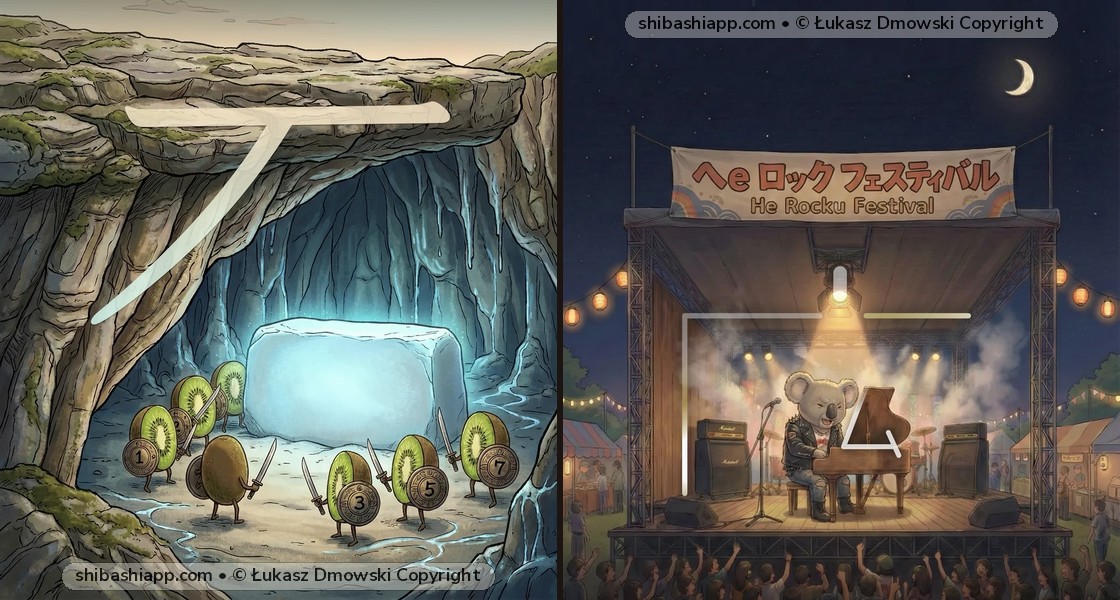
Left slanted stroke stops UNDER the flat top cliff line = a boulder under a cliff (STONE — ishi / seki). | 石 (いし) — stone |
| 右 — Right | On: ゆう Kun: みぎ |
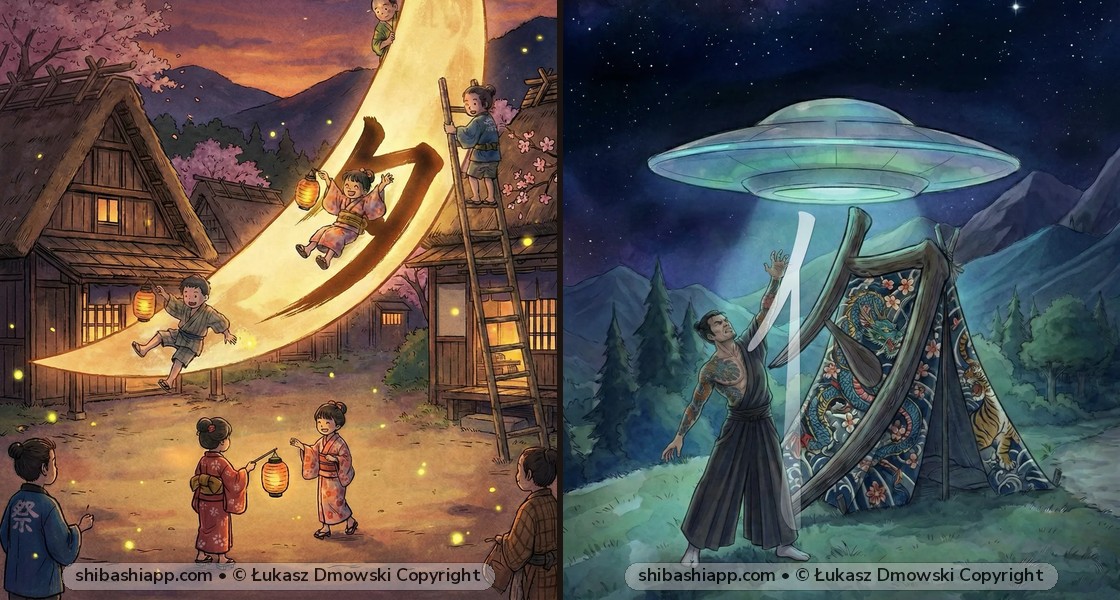
Slanted hand stroke pokes UP THROUGH the horizontal bar above 口 = RIGHT hand (migi / u / yū). | 右 (みぎ) — right side |
| 研 — Polish, Sharpen | On: けん Kun: と |
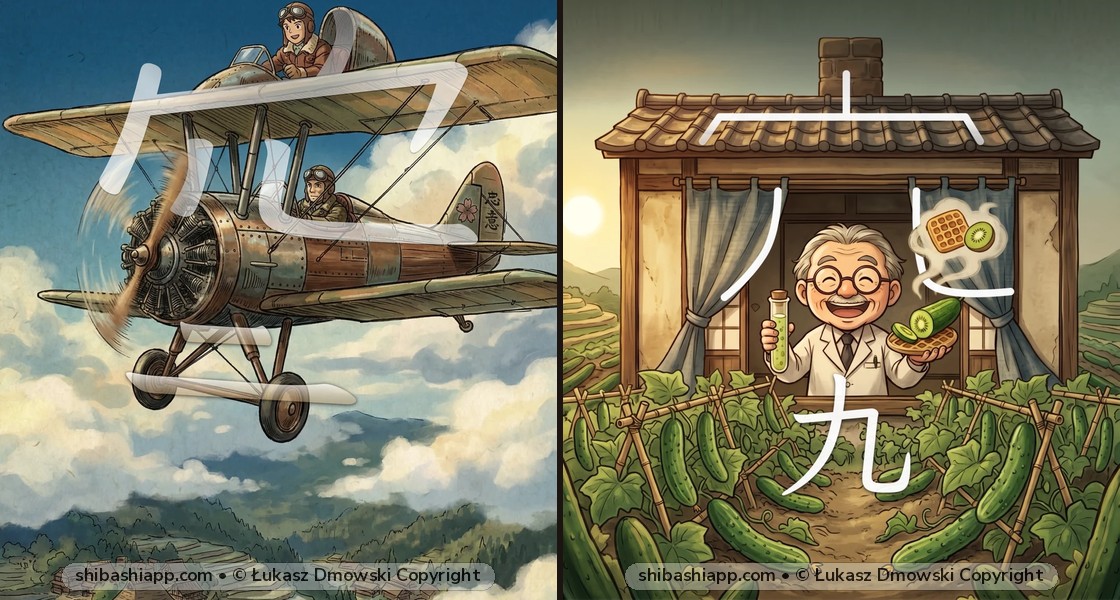
石 (Whetstone on the left) + 开 (two hands sharpening a blade) = POLISH / SHARPEN / STUDY (ken, as in 研究 kenkyū). | 研究室 (けんきゅうしつ) — study room, laboratory |
| 名 — Name | On: めい Kun: な |
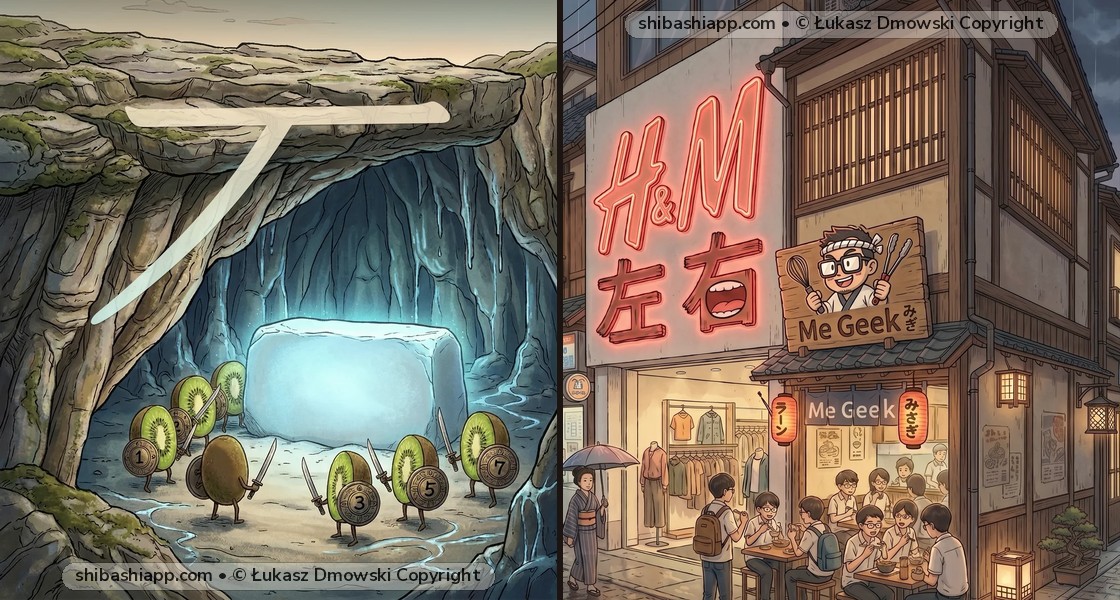
夕 (Evening moon) on top of 口 (Mouth) = calling out your NAME in the dark (na / mei). | 有名 (ゆうめい) — famous |
Side-by-Side Illustrated Kanji Flashcards (Tap Readings for Audio)
Compare the custom Shibashi artwork for 石 (Stone) and 右 (Right) below. Notice how each illustration embeds both the English meaning and the primary Japanese reading directly into the scene, and tap any reading to hear native pronunciation:


Step-by-Step Visual Breakdown & Radical Rules
Once you know 石 (Stone), you also immediately unlock 研 (Polish / Study — 研究 kenkyū):
1. 石 (Stone) — Mnemonic Story & Readings
On'yomi: せき | Kun'yomi: いし
Shibashi Visual Story: “Seven kiwis (せき) is an i-nvincible shield (いし) for the sacred stone.” Key visual distinction: Left slanted stroke stops UNDER the flat top cliff line = a boulder under a cliff (STONE — ishi / seki).
- 石 (いし): stone
2. 右 (Right) — Mnemonic Story & Readings
On'yomi: ゆう | Kun'yomi: みぎ
Shibashi Visual Story: “Geeky youths (ゆう) really love the Me Geek (みぎ) restaurant, just right of H&M.” Key visual distinction: Slanted hand stroke pokes UP THROUGH the horizontal bar above 口 = RIGHT hand (migi / u / yū).
3. 研 (Polish, Sharpen) — Mnemonic Story & Readings
On'yomi: けん | Kun'yomi: と
Shibashi Visual Story: “Old men was surprised to find a toddler (と) polishing historic Kennedy (けん) stone head.” Key visual distinction: 石 (Whetstone on the left) + 开 (two hands sharpening a blade) = POLISH / SHARPEN / STUDY (ken, as in 研究 kenkyū).
- 研究室 (けんきゅうしつ): study room, laboratory
- 研究 (けんきゅう): research
4. 名 (Name) — Mnemonic Story & Readings
On'yomi: めい | Kun'yomi: な
Shibashi Visual Story: “It’s May (めい) the ninth (な), and you’re about to sign your name on a very important document.” Key visual distinction: 夕 (Evening moon) on top of 口 (Mouth) = calling out your NAME in the dark (na / mei).
Essential Japanese Vocabulary Words Using 石 / 右 / 研 / 名
Once you can recognize 石 (Stone) and 右 (Right) and 研 (Polish, Sharpen) individually, lock them into your active reading vocabulary with these high-frequency Japanese words from the Shibashi app:
| Japanese Word | Hiragana Reading | English Meaning | Level |
|---|---|---|---|
| 石 | いし | stone | JLPT |
| 右 | みぎ | right side | JLPT |
| 左右 | さゆう | (1) left and right, both sides, (2) influence, control, domination | JLPT |
| 研究室 | けんきゅうしつ | study room, laboratory | JLPT |
| 研究 | けんきゅう | research | JLPT |
| 有名 | ゆうめい | famous | JLPT |
| 名前 | なまえ | name | JLPT |
| 名 | な | name, reputation | JLPT |
5-Second Memory Summary: How to Never Mix Up 石 & 右 & 研 Again
For 石 vs. 右: a flat overhanging cliff roof (no poke-through at the top) drops a 石 (Stone — ishi), and putting 石 on the left of 开 gives 研 (Polish a stone — 研究 kenkyū 'research')! If the stroke pokes up through the top bar, it is your 右 (Right — migi) hand!