厂 (Cliff Overhang — No Top Dot) vs. 广 (Roof Awning — With Top Dot): 石, 研 vs. 広, 店 & 度
One of the most common handwriting and reading questions in Japanese is: 'Does this top-left overhang have a chimney dot on top (广) or is it flat (厂)?' Here is the 100% foolproof rule.
Why do 石 (Stone — ishi), 研 (Polish/Research), and 原 (Meadow) have a flat top line with NO dot, while 広 (Wide), 店 (Shop), and 度 (Degree) all have a chimney dot on top (广)?
Quick Comparison: 石 (Stone) vs. 研 (Polish, Sharpen) vs. 広 (Wide) vs. 店 (Store)
Look at the comparison table below to see the exact pattern:
| Kanji & Meaning | Primary Readings (Bold = Primary) | Shibashi Visual Mnemonic Hook | Common Compound Word |
|---|---|---|---|
| 石 — Stone | On: せき Kun: いし |
A flat natural Cliff overhang (NO top dot!) with a boulder (口) fallen at the base = STONE / ROCK (ishi / seki). | 石 (いし) — stone |
| 研 — Polish, Sharpen | On: けん Kun: と |
石 (Stone/Whetstone — flat cliff top) + 开 (polishing hands) = POLISH / GRIND / RESEARCH (ken, as in 研究 kenkyū). | 研究室 (けんきゅうしつ) — study room, laboratory |
| 広 — Wide | On: こう Kun: ひろ |
广 (WITH top chimney dot = human Building Roof) + 厶 (open floor space) = WIDE / SPACIOUS (hiroi / kō). | 広い (ひろい) — spacious, wide |
| 店 — Store | On: てん Kun: みせ |
广 (Building roof with chimney dot) + 占 (counter stand) = STORE / SHOP (mise / ten). | 店員 (てんいん) — employee (of a store), sh... |
| 度 — Degree | On: ど, たく Kun: たび |
广 (Building roof with chimney dot) + 廿 (20) + 又 (measuring hand) = measuring inside a hall = DEGREE / COUNTER FOR TIMES (do / tabi). | 一度 (いちど) — once, one time, on one oc... |
Side-by-Side Illustrated Kanji Flashcards (Tap Readings for Audio)
Compare the custom Shibashi artwork for 石 (Stone) and 広 (Wide) below. Notice how each illustration embeds both the English meaning and the primary Japanese reading directly into the scene, and tap any reading to hear native pronunciation:


Step-by-Step Visual Breakdown & Radical Rules
The secret is Wild Nature / Raw Rock (flat cliff top) vs. Man-Made Architecture (广 Roof with a Chimney Dot):
1. 石 (Stone) — Mnemonic Story & Readings
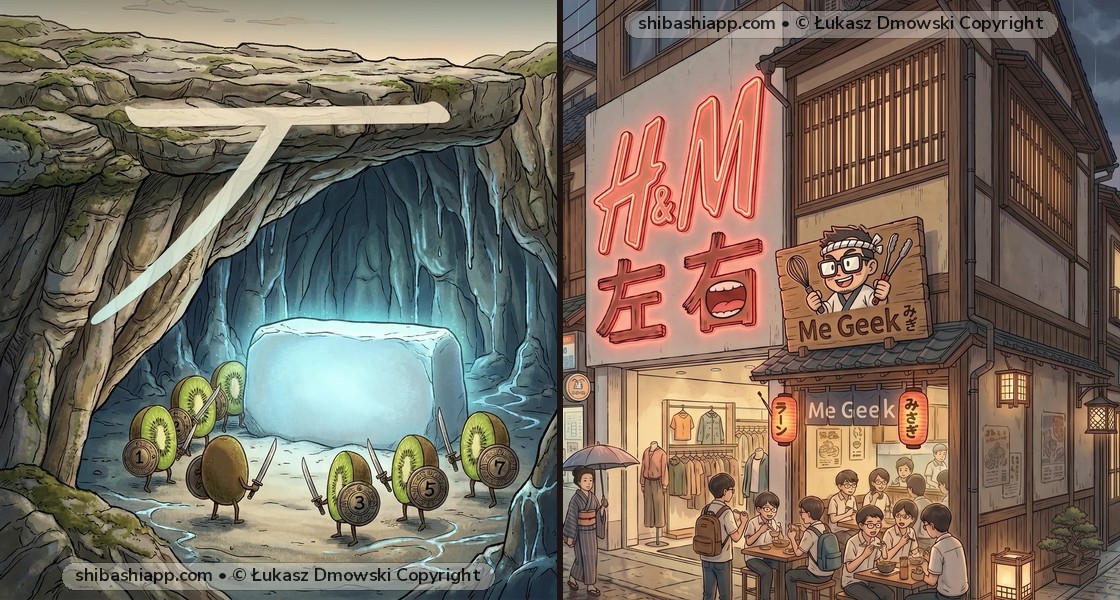
On'yomi: せき | Kun'yomi: いし
Shibashi Visual Story: “Seven kiwis (せき) is an i-nvincible shield (いし) for the sacred stone.” Key visual distinction: A flat natural Cliff overhang (NO top dot!) with a boulder (口) fallen at the base = STONE / ROCK (ishi / seki).
- 石 (いし): stone
2. 研 (Polish, Sharpen) — Mnemonic Story & Readings
On'yomi: けん | Kun'yomi: と
Shibashi Visual Story: “Old men was surprised to find a toddler (と) polishing historic Kennedy (けん) stone head.” Key visual distinction: 石 (Stone/Whetstone — flat cliff top) + 开 (polishing hands) = POLISH / GRIND / RESEARCH (ken, as in 研究 kenkyū).
- 研究室 (けんきゅうしつ): study room, laboratory
- 研究 (けんきゅう): research
3. 広 (Wide) — Mnemonic Story & Readings
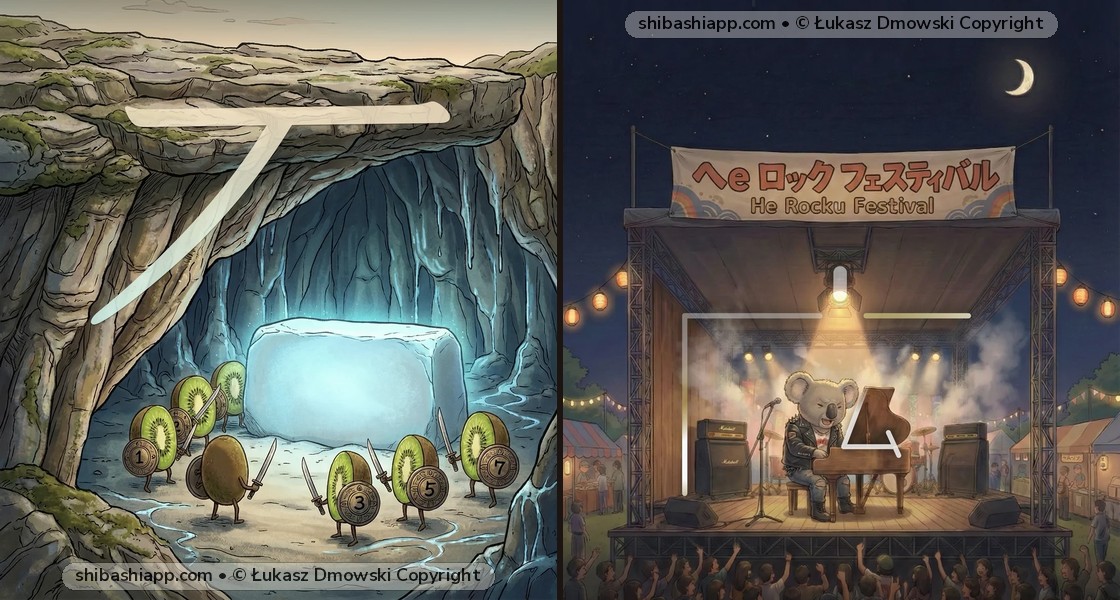
On'yomi: こう | Kun'yomi: ひろ
Shibashi Visual Story: “The wide-head koala (こう) rocks piano at the He-Rocku (ひろ) Festival!” Key visual distinction: 广 (WITH top chimney dot = human Building Roof) + 厶 (open floor space) = WIDE / SPACIOUS (hiroi / kō).
- 広い (ひろい): spacious, wide
- 広がる (ひろがる): to spread (out), to extend, to stretch, to reach to, to get around
4. 店 (Store) — Mnemonic Story & Readings
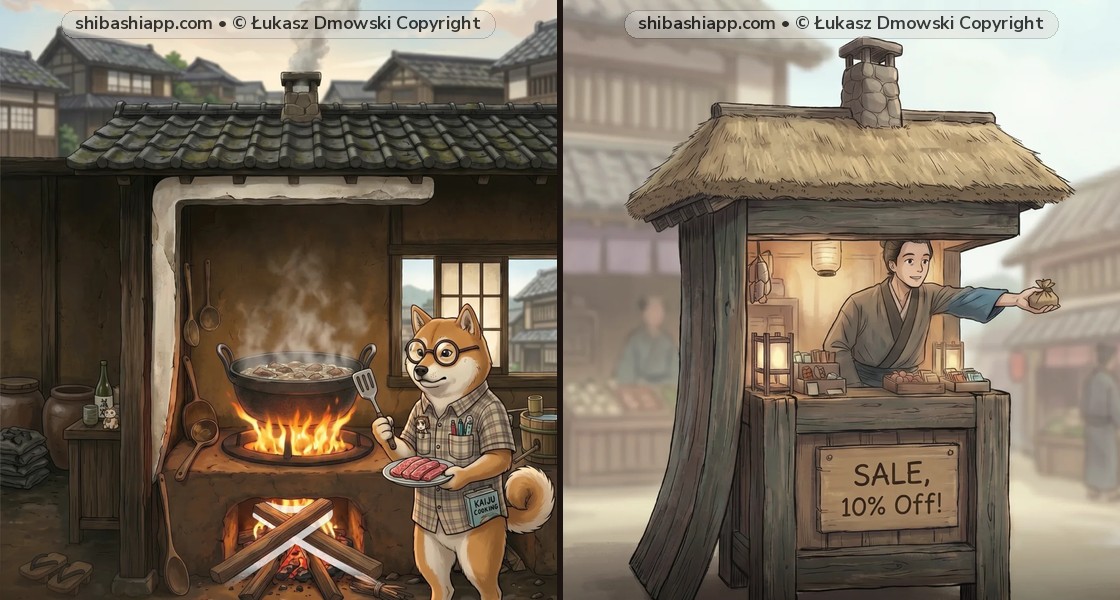
On'yomi: てん | Kun'yomi: みせ
Shibashi Visual Story: “This store has a ten (てん) percent sale; Don’t miss it (みせ)!!” Key visual distinction: 广 (Building roof with chimney dot) + 占 (counter stand) = STORE / SHOP (mise / ten).
- 店員 (てんいん): employee (of a store), shop assistant, clerk, salesperson
- 閉店 (へいてん): closing shop, going out of business
5. 度 (Degree) — Mnemonic Story & Readings
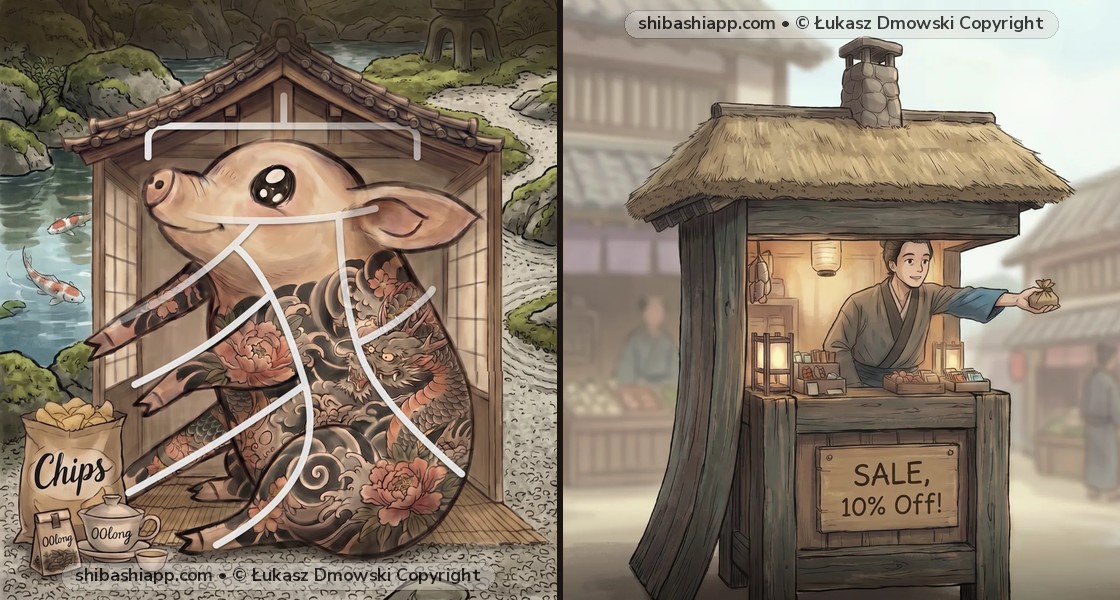
On'yomi: ど, たく | Kun'yomi: たび
Shibashi Visual Story: “Otaku (たく) dog (ど) cooking up some taco beef (たび) with “a million” degrees...” Key visual distinction: 广 (Building roof with chimney dot) + 廿 (20) + 又 (measuring hand) = measuring inside a hall = DEGREE / COUNTER FOR TIMES (do / tabi).
- 一度 (いちど): once, one time, on one occasion
- 支度 (したく): preparation, arrangements
- 度 (たび): counter for occurrences
Essential Japanese Vocabulary Words Using 石 / 研 / 広 / 店
Once you can recognize 石 (Stone) and 研 (Polish, Sharpen) and 広 (Wide) individually, lock them into your active reading vocabulary with these high-frequency Japanese words from the Shibashi app:
| Japanese Word | Hiragana Reading | English Meaning | Level |
|---|---|---|---|
| 石 | いし | stone | JLPT |
| 研究室 | けんきゅうしつ | study room, laboratory | JLPT |
| 研究 | けんきゅう | research | JLPT |
| 広い | ひろい | spacious, wide | JLPT |
| 広がる | ひろがる | to spread (out), to extend, to stretch, to reach to, to get around | JLPT |
| 店員 | てんいん | employee (of a store), shop assistant, clerk, salesperson | JLPT |
| 閉店 | へいてん | closing shop, going out of business | JLPT |
| 一度 | いちど | once, one time, on one occasion | JLPT |
5-Second Memory Summary: How to Never Mix Up 石 & 研 & 広 Again
Is it raw stone or a natural cliff (a rock under a cliff in 石 ishi, polishing a stone in 研究 kenkyū, or a natural meadow in 原 hara)? NO chimney dot! Is it a man-made building, hall, or shop (広 Wide hall, 店 Shop, 度 Measure)? Put the chimney dot on the roof (广)!