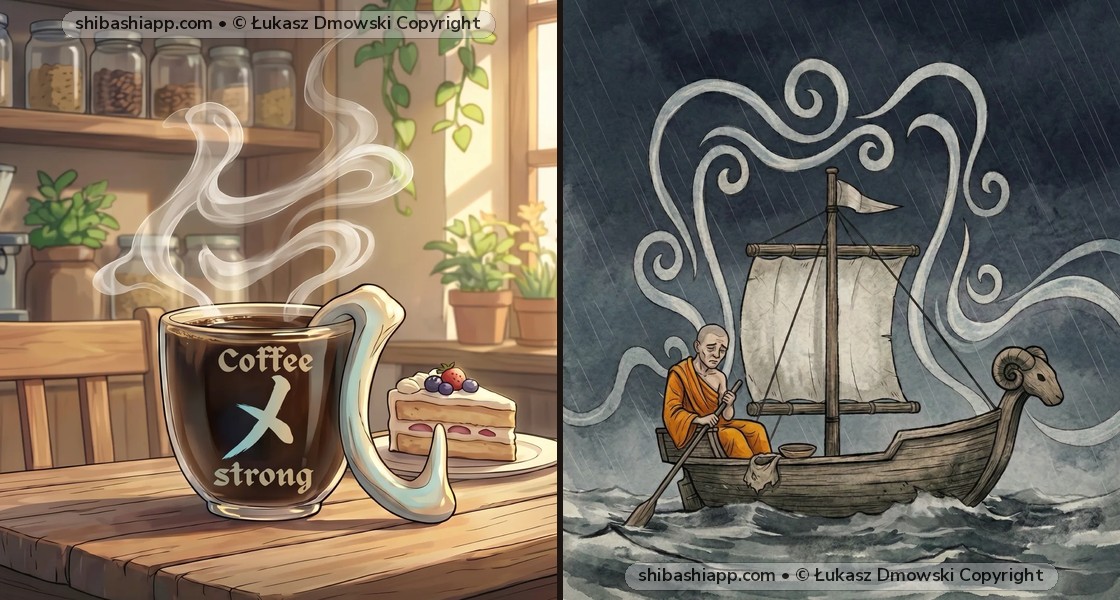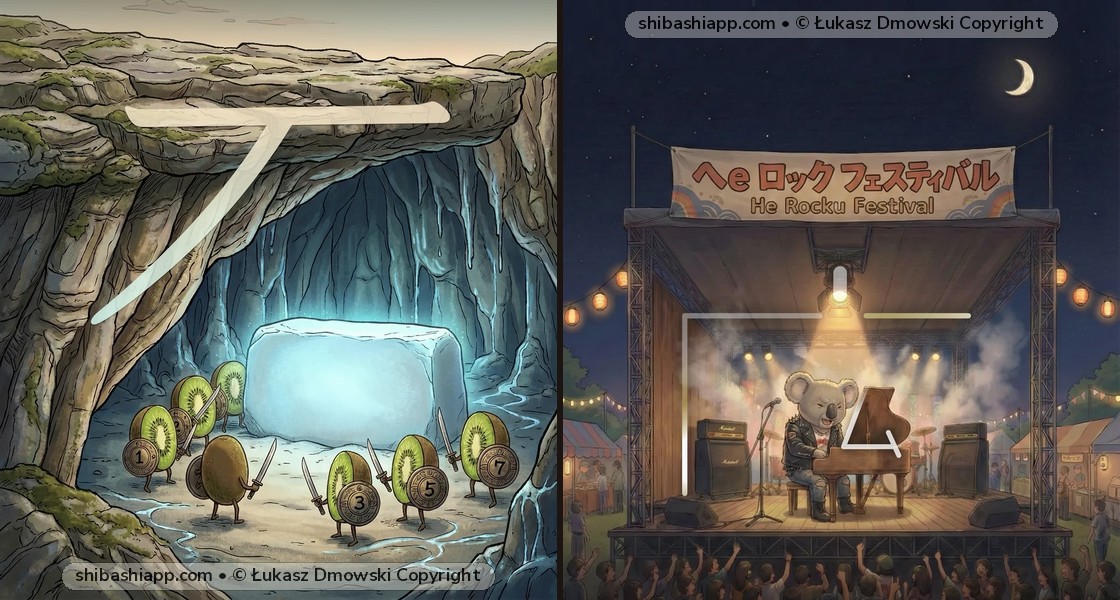
Why 空 (Sky / Empty) Has a Cave Roof on Top: Mastering 空 (Sora / Kara) & 究 (Research — Kenkyū)
How did 空 come to mean 'Sky' (そら sora), 'Empty' (から kara), 'Air' (空気 kūki), 'Airport' (空港 kūkō), AND 'Empty Hand' (空手 karate)? Look at the Cave/Hole radical (穴) at the top!
Look at the top of 空 (Sky / Empty) and 究 (Research): both wear a house roof (宀) with two little legs (八) underneath. That 5-stroke top is 穴 (ana — Hole / Cave)!
Quick Comparison: 空 (Sky) vs. 究 (Research) vs. 研 (Polish, Sharpen) vs. 天 (Heaven)
Compare 空, 究, 研, and 天 in the table below:
| Kanji & Meaning | Primary Readings (Bold = Primary) | Shibashi Visual Mnemonic Hook | Common Compound Word |
|---|---|---|---|
| 空 — Sky | On: くう Kun: そら, あ, す |
穴 (Cave/Hole roof = 宀 + 八) over 工 (Craft/Drill) = excavating an open void = SKY / EMPTY / VACANT (sora / kara / aku / kū). | 空 (そら) — sky |
| 究 — Research | On: きゅう Kun: きわ |
穴 (Cave roof) over 九 (Nine — exploring all 9 corners of a cave) = RESEARCH / INVESTIGATE DEEPLY (kyū, as in 研究 kenkyū). | 研究 (けんきゅう) — research, study, investig... |
| 研 — Polish, Sharpen | On: けん Kun: と |
石 (Whetstone) + 开 (polishing) = sharpening & polishing a stone = POLISH / STUDY (ken, combines into 研究 kenkyū). | 研究室 (けんきゅうしつ) — study room, laboratory |
| 天 — Heaven | On: てん Kun: あま |
一 (Highest sky line) above 大 (a great Person) = HEAVEN / SKY (ten / ama). | 天気 (てんき) — weather |
Side-by-Side Illustrated Kanji Flashcards (Tap Readings for Audio)
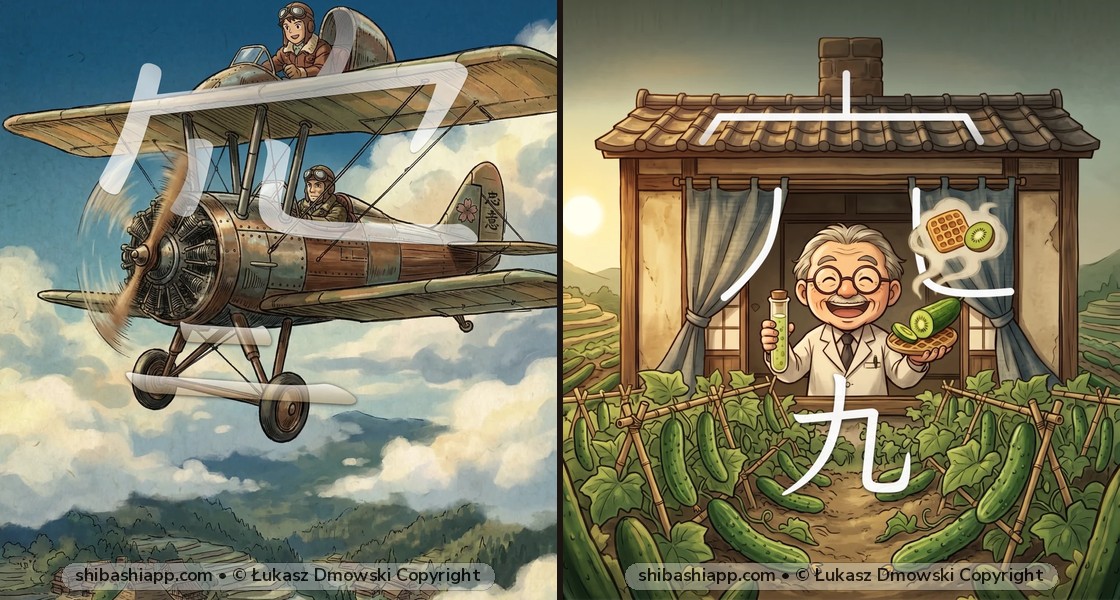
Compare the custom Shibashi artwork for 空 (Sky) and 究 (Research) below. Notice how each illustration embeds both the English meaning and the primary Japanese reading directly into the scene, and tap any reading to hear native pronunciation:


Step-by-Step Visual Breakdown & Radical Rules
See why digging a hole with a tool (穴 + 工) connects 'Empty' and 'Sky':
1. 空 (Sky) — Mnemonic Story & Readings
On'yomi: くう | Kun'yomi: そら, あ, す
Shibashi Visual Story: “When the Wright brothers finally soared (そら) above (あ) in the sky, they must have felt super (す) cool (くう).” Key visual distinction: 穴 (Cave/Hole roof = 宀 + 八) over 工 (Craft/Drill) = excavating an open void = SKY / EMPTY / VACANT (sora / kara / aku / kū).
2. 究 (Research) — Mnemonic Story & Readings
On'yomi: きゅう | Kun'yomi: きわ
Shibashi Visual Story: “It took the mad scientist nine (九) years of research to create cucumbers (きゅう) with kiwi-waffle (きわ) flavor...” Key visual distinction: 穴 (Cave roof) over 九 (Nine — exploring all 9 corners of a cave) = RESEARCH / INVESTIGATE DEEPLY (kyū, as in 研究 kenkyū).
- 研究 (けんきゅう): research, study, investigation
3. 研 (Polish, Sharpen) — Mnemonic Story & Readings
On'yomi: けん | Kun'yomi: と
Shibashi Visual Story: “Old men was surprised to find a toddler (と) polishing historic Kennedy (けん) stone head.” Key visual distinction: 石 (Whetstone) + 开 (polishing) = sharpening & polishing a stone = POLISH / STUDY (ken, combines into 研究 kenkyū).
- 研究室 (けんきゅうしつ): study room, laboratory
- 研究 (けんきゅう): research
4. 天 (Heaven) — Mnemonic Story & Readings
On'yomi: てん | Kun'yomi: あま
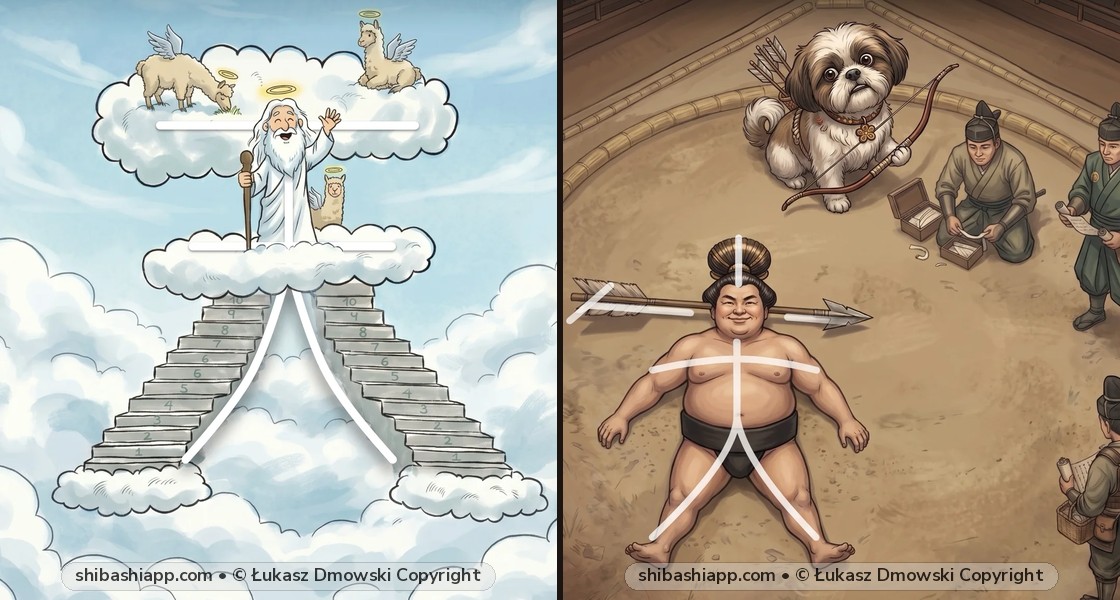
Shibashi Visual Story: “God and his angel llamas (あま) are always waiting on top of the ten (てん) step staircase to heaven.” Key visual distinction: 一 (Highest sky line) above 大 (a great Person) = HEAVEN / SKY (ten / ama).
Essential Japanese Vocabulary Words Using 空 / 究 / 研 / 天
Once you can recognize 空 (Sky) and 究 (Research) and 研 (Polish, Sharpen) individually, lock them into your active reading vocabulary with these high-frequency Japanese words from the Shibashi app:
| Japanese Word | Hiragana Reading | English Meaning | Level |
|---|---|---|---|
| 空 | そら | sky | JLPT |
| 空気 | くうき | air, atmosphere | JLPT |
| 空く | あく | to open, to become empty | JLPT |
| 研究 | けんきゅう | research, study, investigation | JLPT |
| 研究室 | けんきゅうしつ | study room, laboratory | JLPT |
| 天気 | てんき | weather | JLPT |
| 天然 | てんねん | nature, spontaneity | JLPT |
5-Second Memory Summary: How to Never Mix Up 空 & 究 & 研 Again
穴 (Cave hole) + 工 (Tool) = 空: an excavated space is Empty (から kara, 空手 karate 'empty hand', 空く aku 'become vacant'), and the vast open void above Earth is the Sky (そら sora, 空港 kūkō 'airport', 空気 kūki 'air')! Replace 工 with 九 (Nine) and you get 究 (Research — 研究 kenkyū)!