How to Remember 右 (Right) vs. 左 (Left) with the H&M Trick
Even intermediate Japanese learners freeze for a second when reading 左 (Left) and 右 (Right) on street signs. Here is how a single neon H&M storefront sign locks both kanjis — and all four of their readings — into permanent memory.
Ask any JLPT student which two beginner kanjis still trip them up at a Tokyo train station, and the answer is almost always 左 (Left) and 右 (Right). Both characters are taught in week one of JLPT N5, yet because their top-left strokes are identical, learners constantly second-guess which is which.
Why Your Brain Mixes Up 左 (Left) and 右 (Right)
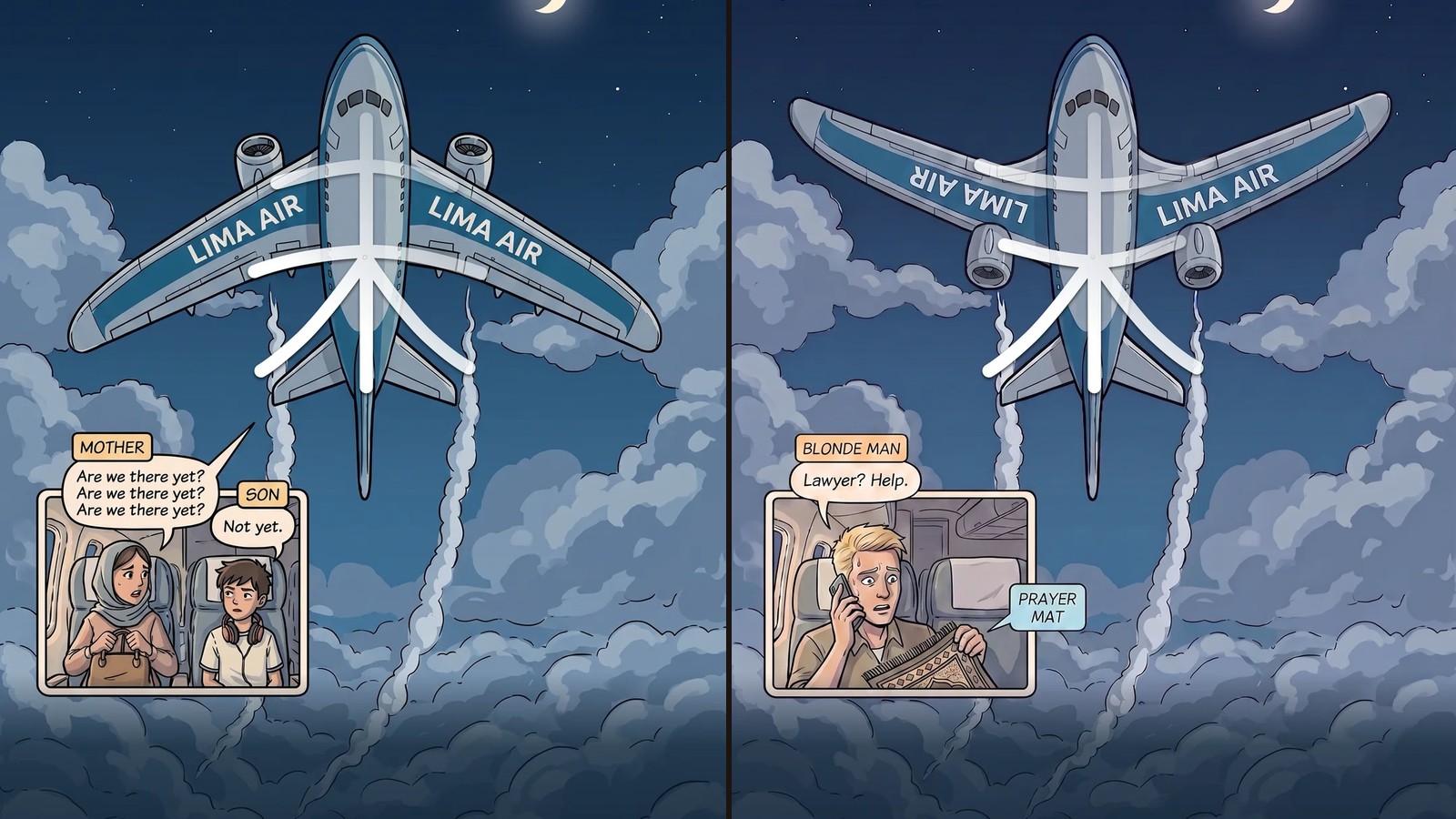
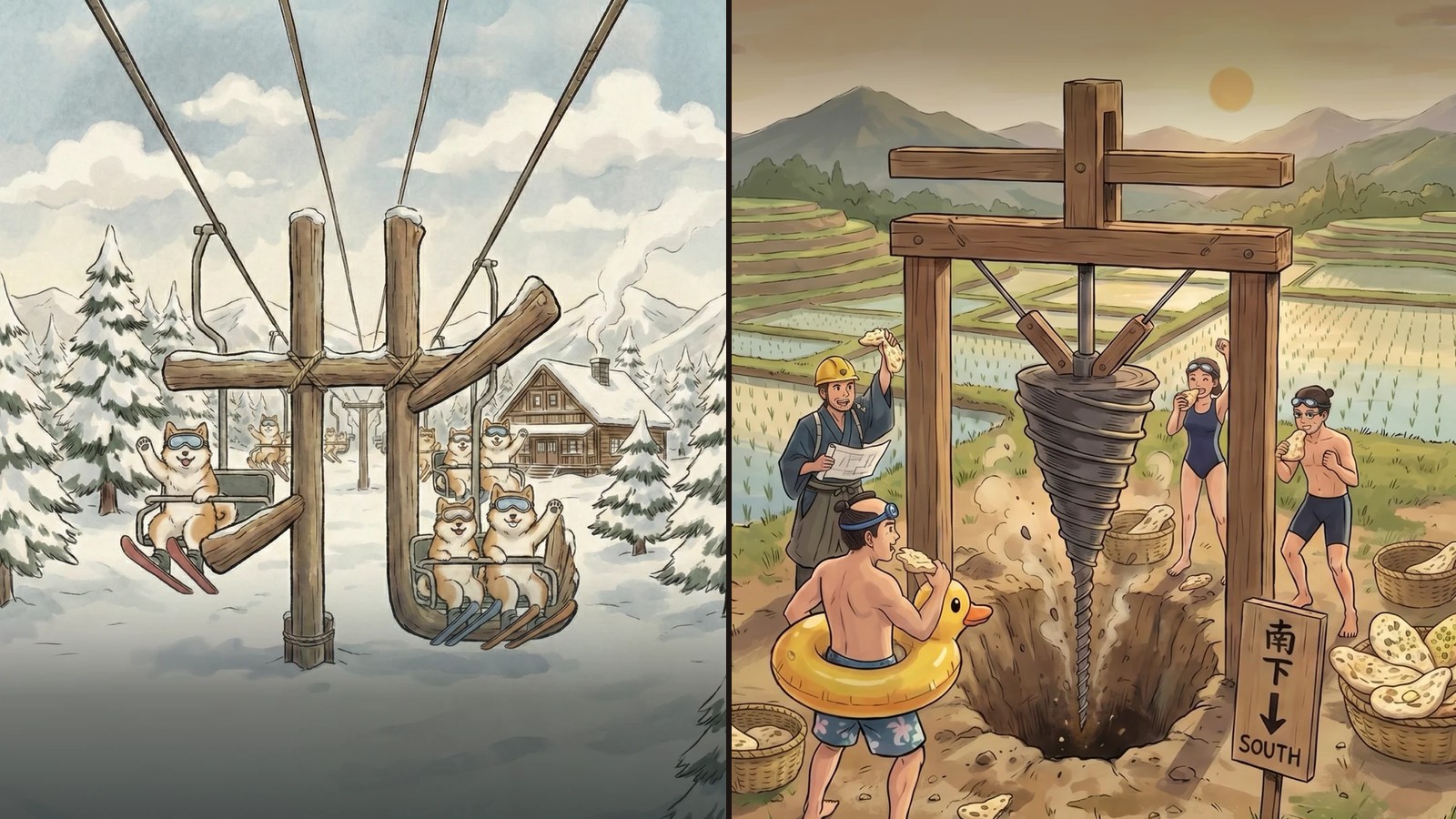
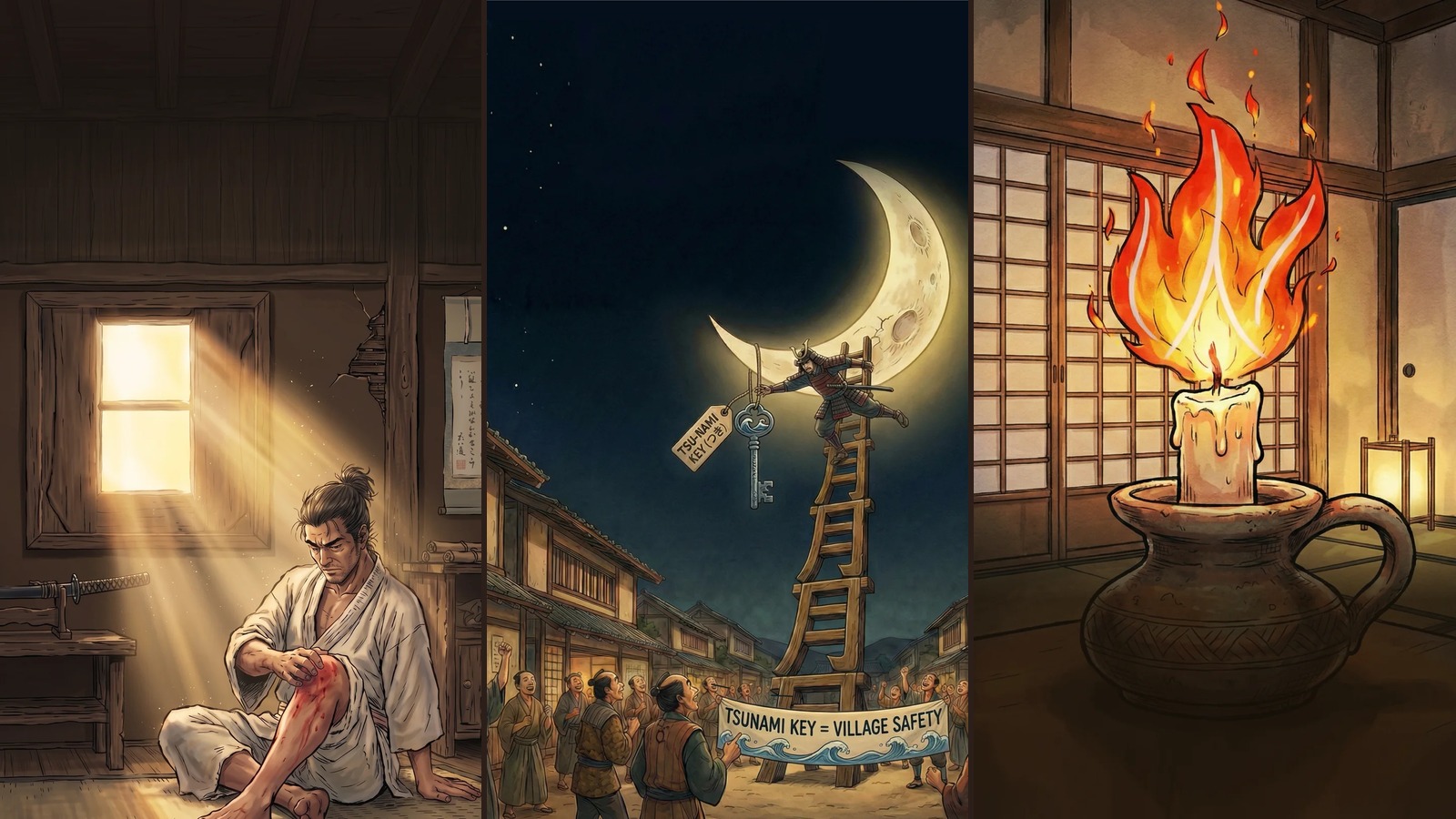
Both 左 (Left) and 右 (Right) begin with the exact same two-stroke cross at the top-left (originally a pictograph of a hand reaching out). The only visual difference sits nestled in the bottom-right corner:
- 左 (Left) has 工 (craft / I-beam) tucked underneath.
- 右 (Right) has 口 (mouth) tucked underneath.
Traditional textbooks tell you to memorize historical etymology ("a hand holding a carpenter's square vs. a hand bringing food to the mouth"), or to memorize stroke order differences. Under real-world reading pressure, those multi-step explanations are way too slow.
The 3-Second H&M Trick: H on the Left, M (Mouth) on the Right
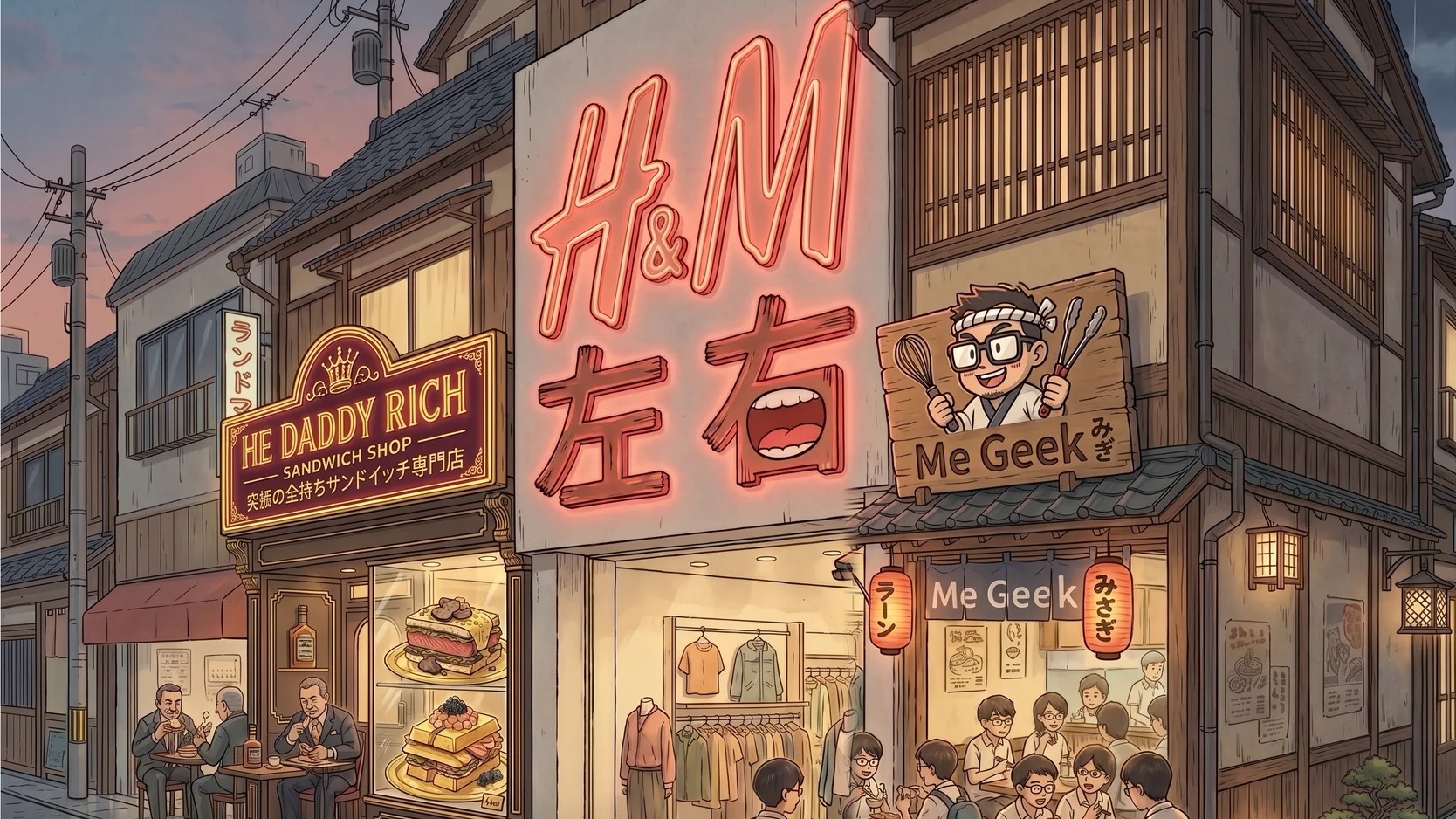
At Shibashi, we wanted a visual hook that any English speaker can recall in under half a second. So we built a two-card panoramic street scene anchored around a glowing H&M storefront sign:
| Side of H&M Sign | Kanji & Bottom Component | Why You Can Never Unsee It | Kun'yomi & On'yomi in the Scene |
|---|---|---|---|
| LEFT Letter: H | 左 (Left) — bottom is 工 | H is on the LEFT of H&M, and 工 is literally a capital H rotated on its side! | ひだり (hidari) & さ (sa) — "He Daddy Rich Sandwich Shop" on the left of H&M |
| RIGHT Letter: M | 右 (Right) — bottom is 口 (Mouth) | M is on the RIGHT of H&M, and M stands for Mouth (口)! | みぎ (migi) & ゆう (yū) — Geeky youths at the "Me Geek" restaurant on the right of H&M |
How Shibashi Encodes Both Readings Into the Same Panoramic Street
Recognizing which character means "Left" and which means "Right" is only half the battle — you also need to pronounce them effortlessly in both standalone Japanese (ひだり hidari / みぎ migi) and compound words like 左右 (さゆう sayū).
Instead of forcing you to memorize separate text paragraphs for the Kun'yomi and On'yomi, Shibashi places two unforgettable shops directly to the left and right of the H&M store. Click the audio buttons on both flashcards below to hear how the stories work:
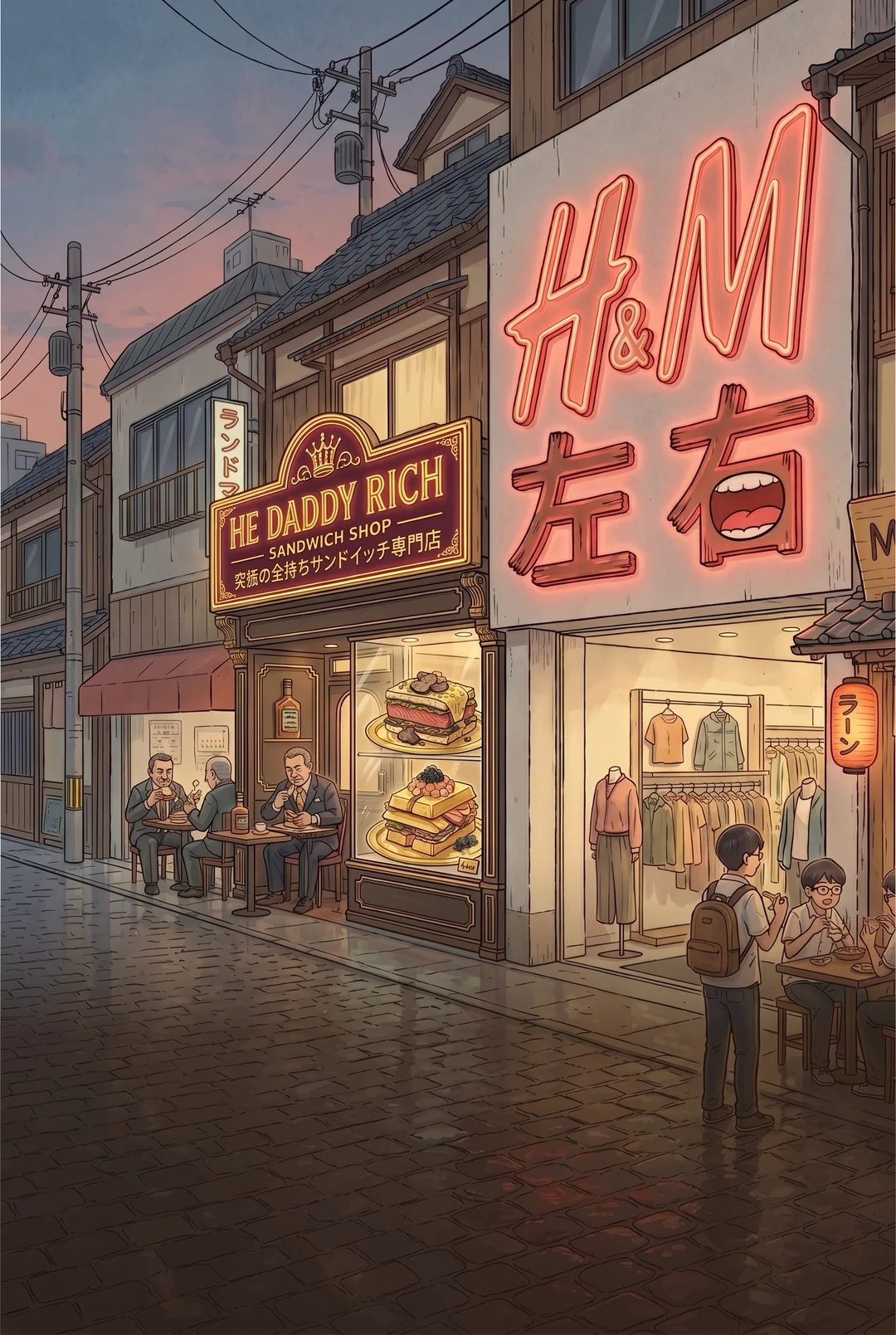

1. Just LEFT of H&M: 左 (Left — ひだり / さ)
Look to the left of the glowing H&M sign: wealthy dads in tailored suits are dining outside the "He Daddy Rich (ひだり) Sandwich (さ) Shop".
- Visual Anchor: Directly beneath the H on the left side of H&M sits 左 (whose bottom 工 looks like a tilted H).
- Kun'yomi (ひだり hidari): "He Daddy Rich" → ひだり.
- On'yomi (さ sa): "Sandwich Shop" → さ.
2. Just RIGHT of H&M: 右 (Right — みぎ / ゆう)
Now look to the right of the H&M sign: a group of geeky youths in glasses are slurping ramen outside the "Me Geek (みぎ)" restaurant.
- Visual Anchor: Directly beneath the M on the right side of H&M sits 右, with its wide-open Mouth (口).
- Kun'yomi (みぎ migi): "Me Geek" restaurant → みぎ.
- On'yomi (ゆう yū): Geeky "youths" → ゆう.
Bonus Compound Word: 左右 (さゆう — Left and Right / Both Sides)
Look closely at the neon sign right underneath the H&M logo: 左右. In Japanese, when you put Left and Right together, you always write them in the same order you read English from left to right — 左 (さ sa) first, 右 (ゆう yū) second:
- 左右 (さゆう sayū): Literally "left and right" or "both sides" (e.g., looking left and right before crossing the street), and by extension "influence" or "control."
- Because you already remember the Sandwich shop on the left (さ) and the geeky youths on the right (ゆう), reading 左右 (さゆう) is completely automatic!