The Evening Crescent Radical (夕): 夕 (Evening), 名 (Name), 多 (Many), 外 (Outside) & 夜 (Night)
Look at 夕 (Evening): it looks just like katakana タ (ta) and represents a crescent moon rising at dusk. Stack two of them for 多 (Many), add a mouth for 名 (Name), or tuck one under a roof for 夜 (Night)!
Why do five of the most common JLPT N5 kanjis all contain a shape that looks like katakana タ (ta)? Because 夕 (Evening) is the ancient drawing of a crescent moon appearing at dusk!
Quick Comparison: 夕 (Evening, Dusk) vs. 名 (Name) vs. 多 (Many) vs. 外 (Outside)
Compare all five members of the 夕 (Evening Crescent) family below:
| Kanji & Meaning | Primary Readings (Bold = Primary) | Shibashi Visual Mnemonic Hook | Common Compound Word |
|---|---|---|---|
| 夕 — Evening, Dusk | On: — Kun: ゆう |
A rising crescent moon with a single star dot inside = EVENING (yū / seki). | 夕方 (ゆうがた) — evening |
| 名 — Name | On: めい Kun: な |
夕 (Evening) over 口 (Mouth) = calling out your NAME so people recognize you in the dark (na / mei). | 有名 (ゆうめい) — famous |
| 多 — Many | On: た Kun: おお |
Two Evening moons (夕 + 夕) stacked = night after night = MANY / MUCH (ōi / ta). | 多い (おおい) — many |
| 外 — Outside | On: がい, げ Kun: そと, ほか, と |
夕 (Evening) + ト (divination crack/wall) = staying out past evening curfew = OUTSIDE / FOREIGN (soto / gai). | 以外 (いがい) — except, other than |
| 夜 — Night | On: や Kun: よる, よ |
亠 (Top roof) + 亻 (Person) + 夕 (Evening moon tucked under the arm) = full NIGHT (yoru / ya). | 今夜 (こんや) — tonight |
Side-by-Side Illustrated Kanji Flashcards (Tap Readings for Audio)
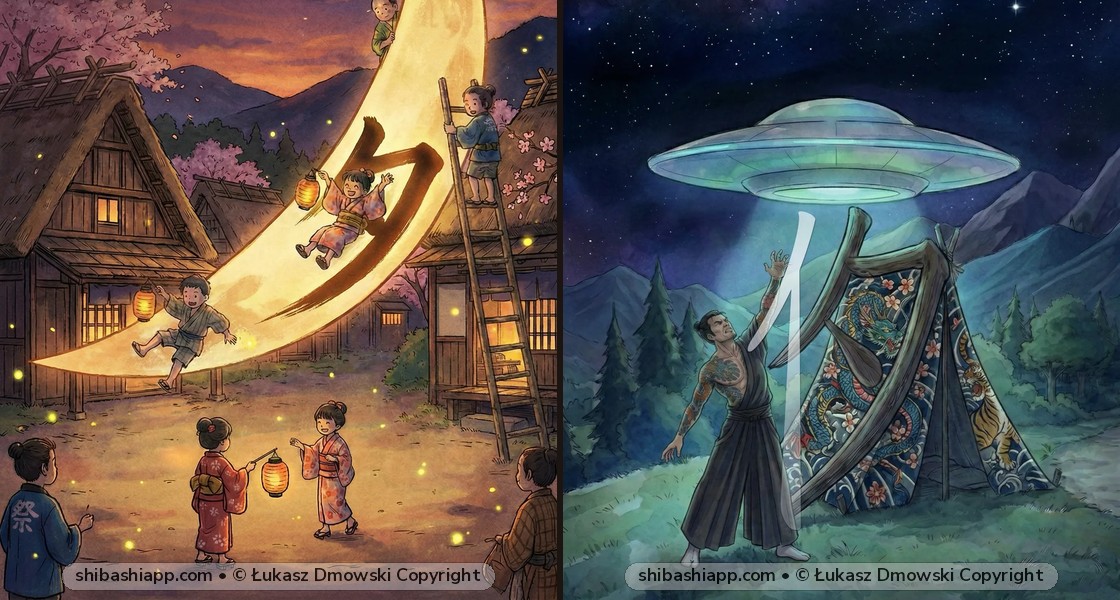
Compare the custom Shibashi artwork for 夕 (Evening, Dusk) and 夜 (Night) below. Notice how each illustration embeds both the English meaning and the primary Japanese reading directly into the scene, and tap any reading to hear native pronunciation:


Step-by-Step Visual Breakdown & Radical Rules
Notice how each partner radical builds a story around dusk and darkness:
1. 夕 (Evening, Dusk) — Mnemonic Story & Readings
On'yomi: — | Kun'yomi: ゆう
Shibashi Visual Story: “In the evening all the youths (ゆう) come out to play on the moon.” Key visual distinction: A rising crescent moon with a single star dot inside = EVENING (yū / seki).
2. 名 (Name) — Mnemonic Story & Readings
On'yomi: めい | Kun'yomi: な
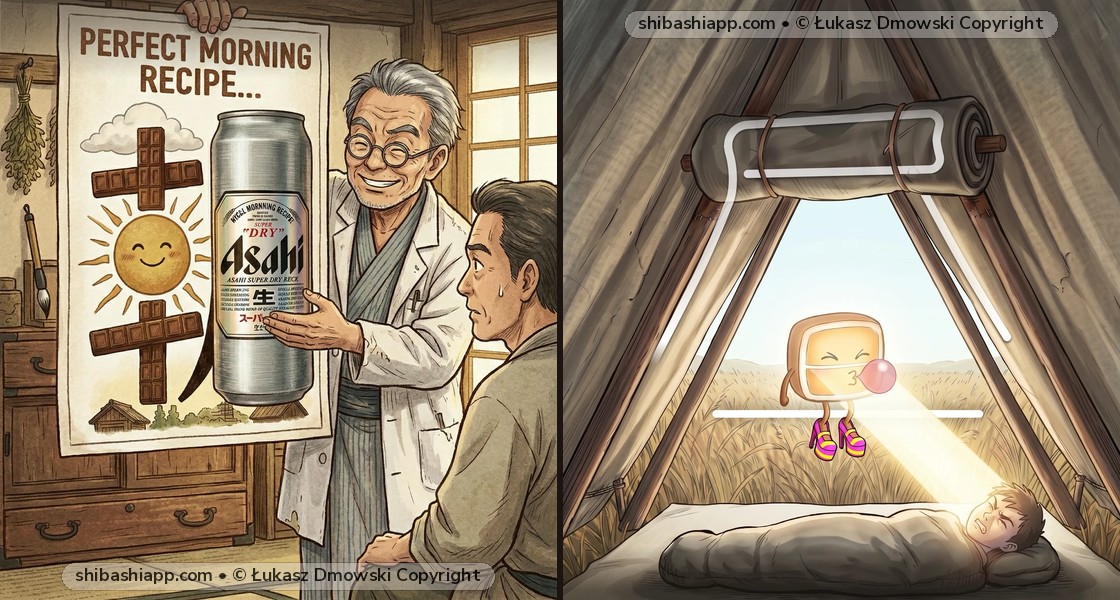
Shibashi Visual Story: “It’s May (めい) the ninth (な), and you’re about to sign your name on a very important document.” Key visual distinction: 夕 (Evening) over 口 (Mouth) = calling out your NAME so people recognize you in the dark (na / mei).
3. 多 (Many) — Mnemonic Story & Readings
On'yomi: た | Kun'yomi: おお
Shibashi Visual Story: “Wooah (おお), so many birds eating tacos (た). What’s going on?” Key visual distinction: Two Evening moons (夕 + 夕) stacked = night after night = MANY / MUCH (ōi / ta).
4. 外 (Outside) — Mnemonic Story & Readings
On'yomi: がい, げ | Kun'yomi: そと, ほか, と
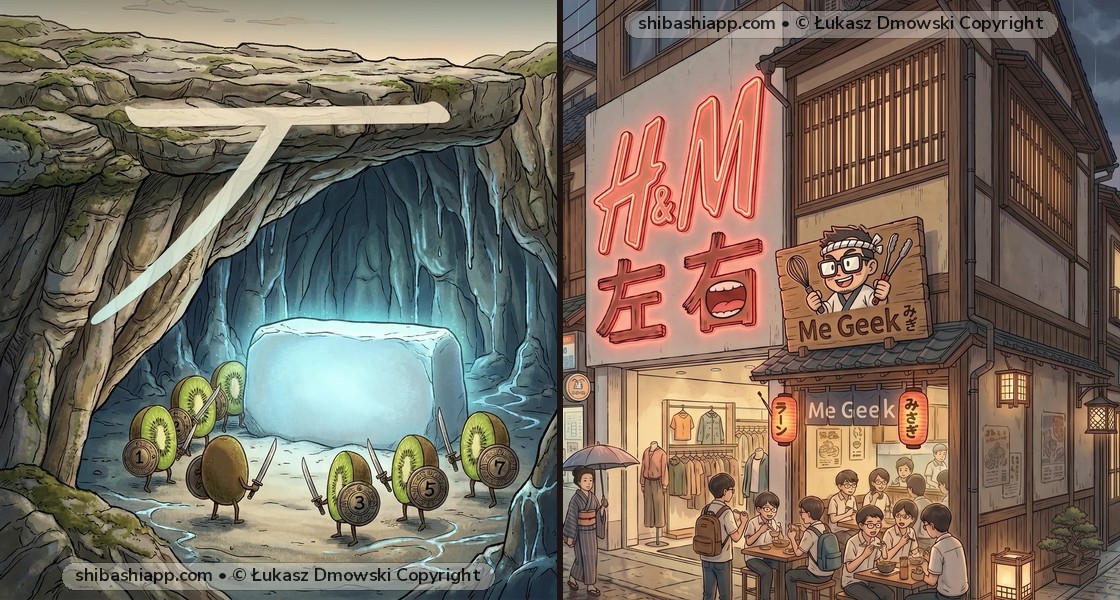
Shibashi Visual Story: “Outside his tent, a chill gay (げ) guy (がい) with a sore toe (と or そと), is doing yoga with his hot cat (ほか)...” Key visual distinction: 夕 (Evening) + ト (divination crack/wall) = staying out past evening curfew = OUTSIDE / FOREIGN (soto / gai).
5. 夜 (Night) — Mnemonic Story & Readings
On'yomi: や | Kun'yomi: よる, よ
Shibashi Visual Story: “Even with aliens watching, your (よ or よる) yakuza (や) friend is not scared to do yoga at night.” Key visual distinction: 亠 (Top roof) + 亻 (Person) + 夕 (Evening moon tucked under the arm) = full NIGHT (yoru / ya).
Essential Japanese Vocabulary Words Using 夕 / 名 / 多 / 外
Once you can recognize 夕 (Evening, Dusk) and 名 (Name) and 多 (Many) individually, lock them into your active reading vocabulary with these high-frequency Japanese words from the Shibashi app:
| Japanese Word | Hiragana Reading | English Meaning | Level |
|---|---|---|---|
| 夕方 | ゆうがた | evening | JLPT |
| 夕飯 | ゆうはん | dinner | JLPT |
| 有名 | ゆうめい | famous | JLPT |
| 名前 | なまえ | name | JLPT |
| 名 | な | name, reputation | JLPT |
| 多い | おおい | many | JLPT |
| 多少 | たしょう | more or less, somewhat, a little, some | JLPT |
| 多分 | たぶん | perhaps, probably | JLPT |
5-Second Memory Summary: How to Never Mix Up 夕 & 名 & 多 Again
1 crescent moon = 夕 (Evening — yū). 2 stacked moons = 多 (Many — ōi, reading タ ta!). Moon + Mouth = 名 (Name — na). Moon + wall (ト) = 外 (Outside — soto/gai). Person under a roof with the moon = 夜 (Night — yoru)!