The 者 (Person / -er) & 耂 (Elder) Kanji Family: 者 (Someone), 医者 (Doctor), 考 (Think) & 古 (Old)
Look at the top of 者 (Someone / -er suffix) and 考 (Think): both wear 耂 (土 Earth + a long diagonal cane slash)! Whenever 者 attaches to a compound like 医者 (doctor), it means 'the person who does X'!
In English, we add -er or -ist to create professions (teach → teacher, medicine → doctor). In Japanese, that exact suffix is 者 (sha / mono): combine 医 (Medicine) + 者 (Person) = 医者 (isha — Doctor)!
Quick Comparison: 者 (Someone) vs. 医 (Medicine) vs. 考 (Think) vs. 古 (Old)
Compare the four kanjis in the 者 / 耂 visual and vocabulary family below:
| Kanji & Meaning | Primary Readings (Bold = Primary) | Shibashi Visual Mnemonic Hook | Common Compound Word |
|---|---|---|---|
| 者 — Someone | On: しゃ Kun: もの |
耂 (Elder with a long diagonal cane) over 日 (Sun/Mouth) = SOMEONE / PERSON / -ER SUFFIX (mono / sha). | 記者 (きしゃ) — reporter, journalist |
| 医 — Medicine | On: い Kun: — |
匚 (Medical cabinet box) holding 矢 (an Arrow/Needle) = MEDICINE / DOCTOR (i, as in 医者 isha). | 医者 (いしゃ) — medical doctor |
| 考 — Think | On: こう Kun: かんが |
耂 (Elder with a long diagonal cane) over 丂 (bent hook pondering) = THINK / CONSIDER (kangaeru / kō). | 考える (かんがえる) — to consider |
| 古 — Old | On: こ Kun: ふる |
十 (Ten generations) over 口 (Mouth) = OLD (furui / ko). | 中古 (ちゅうこ) — used, second-hand, old |
Side-by-Side Illustrated Kanji Flashcards (Tap Readings for Audio)
Compare the custom Shibashi artwork for 者 (Someone) and 考 (Think) below. Notice how each illustration embeds both the English meaning and the primary Japanese reading directly into the scene, and tap any reading to hear native pronunciation:


Step-by-Step Visual Breakdown & Radical Rules
See how the diagonal-slashed top (耂) connects 者 (Person) and 考 (Think):
1. 者 (Someone) — Mnemonic Story & Readings
On'yomi: しゃ | Kun'yomi: もの
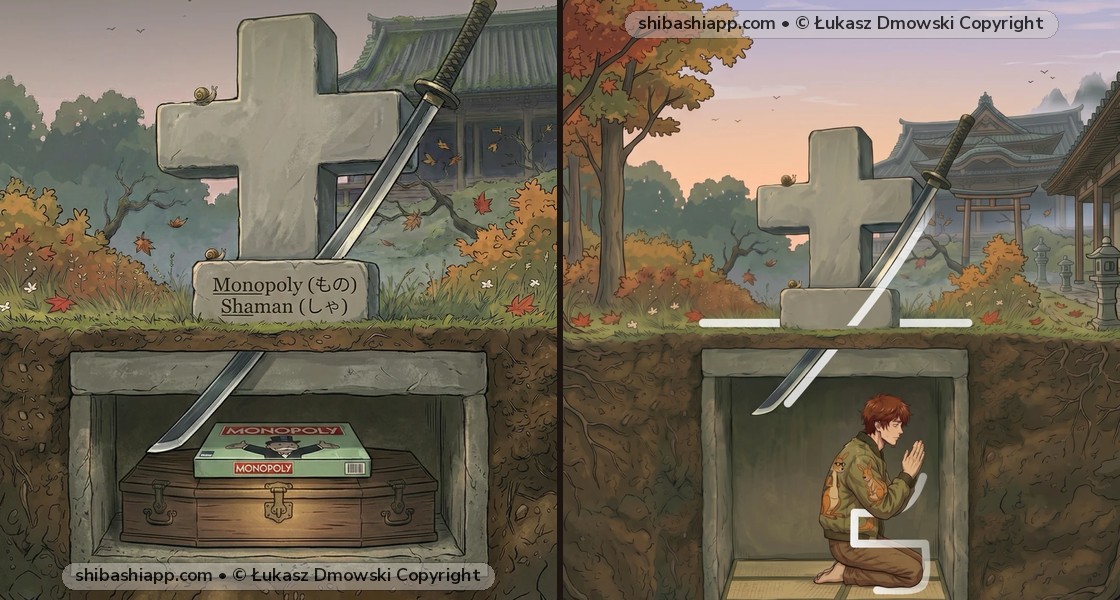
Shibashi Visual Story: “A sword in the ground means someone important, like the monopoly (もの) shaman (しゃ) is buried here.” Key visual distinction: 耂 (Elder with a long diagonal cane) over 日 (Sun/Mouth) = SOMEONE / PERSON / -ER SUFFIX (mono / sha).
2. 医 (Medicine) — Mnemonic Story & Readings
On'yomi: い | Kun'yomi: —
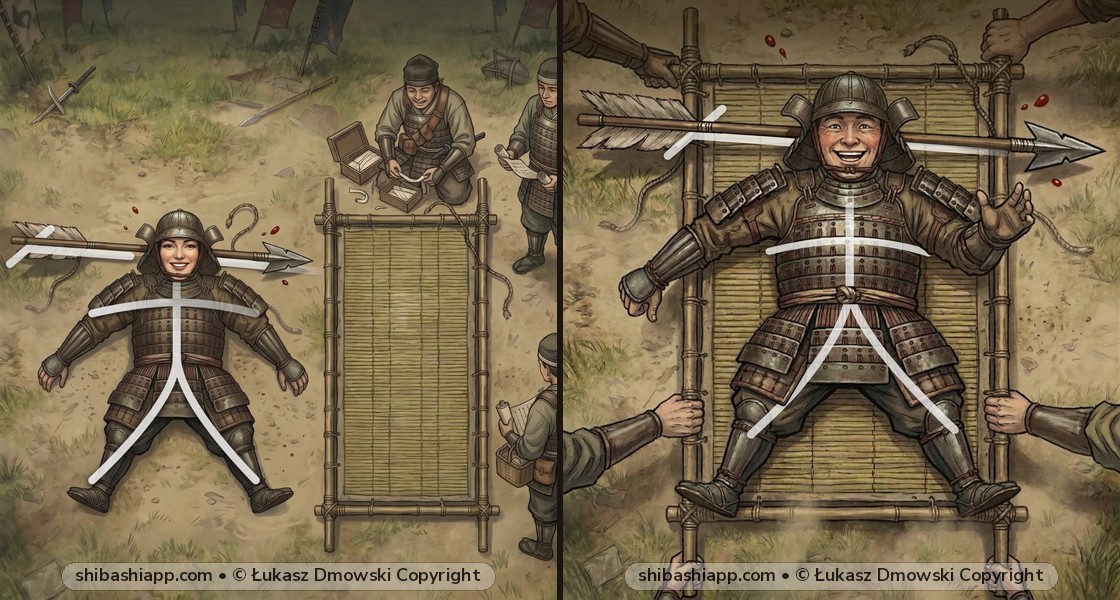
Shibashi Visual Story: “An arrow wound from ear to ear (い) will need some world-class medicine, but somehow the warrior doesn’t seem too worried.” Key visual distinction: 匚 (Medical cabinet box) holding 矢 (an Arrow/Needle) = MEDICINE / DOCTOR (i, as in 医者 isha).
3. 考 (Think) — Mnemonic Story & Readings
On'yomi: こう | Kun'yomi: かんが
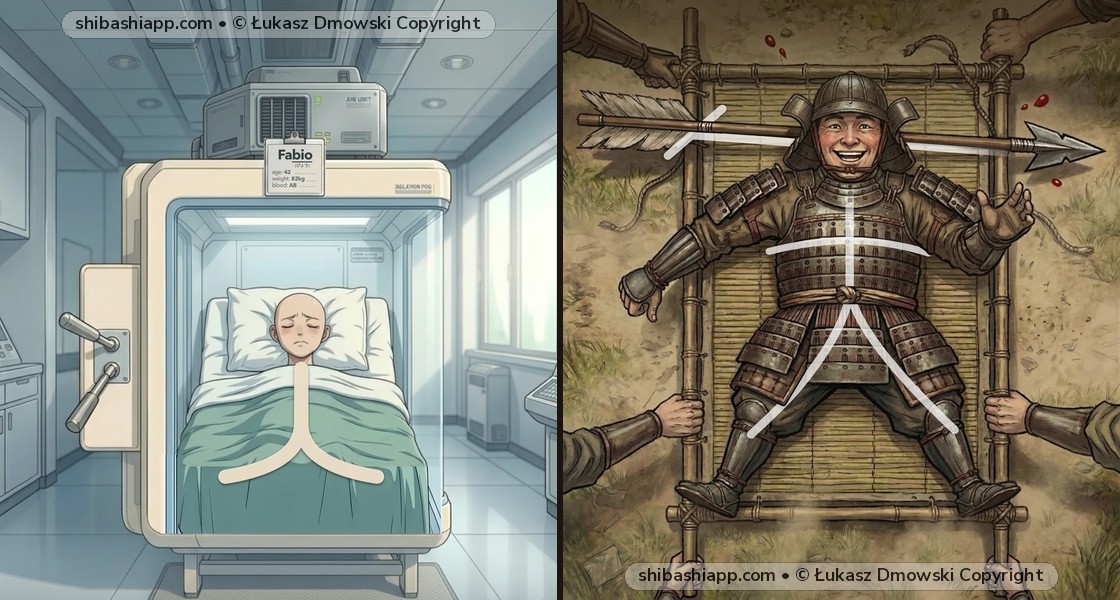
Shibashi Visual Story: “For some reason, the man in the kangaroo (かんが) coat (こう) thinks praying will still help him now...” Key visual distinction: 耂 (Elder with a long diagonal cane) over 丂 (bent hook pondering) = THINK / CONSIDER (kangaeru / kō).
- 考える (かんがえる): to consider
- 考え (かんがえ): thinking, thought, ideas, intention
4. 古 (Old) — Mnemonic Story & Readings
On'yomi: こ | Kun'yomi: ふる
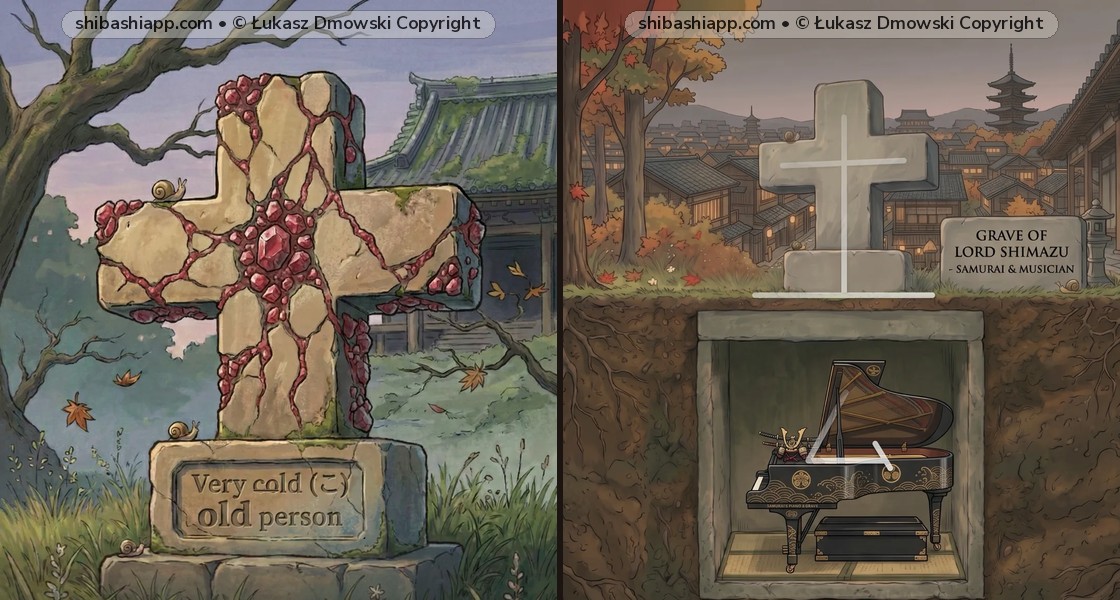
Shibashi Visual Story: “For some reason, this old tombstone of a very cold (こ) person is full of rubies (ふる).” Key visual distinction: 十 (Ten generations) over 口 (Mouth) = OLD (furui / ko).
Essential Japanese Vocabulary Words Using 者 / 医 / 考 / 古
Once you can recognize 者 (Someone) and 医 (Medicine) and 考 (Think) individually, lock them into your active reading vocabulary with these high-frequency Japanese words from the Shibashi app:
| Japanese Word | Hiragana Reading | English Meaning | Level |
|---|---|---|---|
| 記者 | きしゃ | reporter, journalist | JLPT |
| 者 | もの | person | JLPT |
| 医者 | いしゃ | medical doctor | JLPT |
| 医学 | いがく | medical science | JLPT |
| 考える | かんがえる | to consider | JLPT |
| 考え | かんがえ | thinking, thought, ideas, intention | JLPT |
| 中古 | ちゅうこ | used, second-hand, old | JLPT |
| 古い | ふるい | old (not used for people) | JLPT |
5-Second Memory Summary: How to Never Mix Up 者 & 医 & 考 Again
Under the diagonal-slashed top (耂 = 土 + slash): put a Sun box (日) underneath to get 者 (Person / Professional — 医者 isha 'doctor', 学者 gakusha 'scholar'); put a pondering hook (丂) underneath to get 考 (Think — 考える kangaeru)!