The Heart Radical (心) Beneath Kanji: 思 (Think), 意 (Idea), 感 (Feel) & 悪 (Bad)
In traditional Japanese and Chinese thought, the Heart (心 kokoro) is the seat of both emotions AND intellect. That is why every kanji for thinking, feeling, meaning, and mood rests on a base of 心!
Whenever you spot 心 (Heart — kokoro) acting as a dish or cushion at the bottom of a kanji, you immediately know the character describes an inner mental state, thought, or emotion.
Quick Comparison: 心 (Heart) vs. 思 (Think) vs. 意 (Meaning) vs. 感 (Feeling)
Look at what sits on top of the 心 (Heart) base in each of these five high-frequency characters:
| Kanji & Meaning | Primary Readings (Bold = Primary) | Shibashi Visual Mnemonic Hook | Common Compound Word |
|---|---|---|---|
| 心 — Heart | On: しん Kun: こころ |
A curved heart chamber with 3 beating blood drops = HEART / MIND (kokoro / shin). | 心 (こころ) — core, heart |
| 思 — Think | On: し Kun: おも |
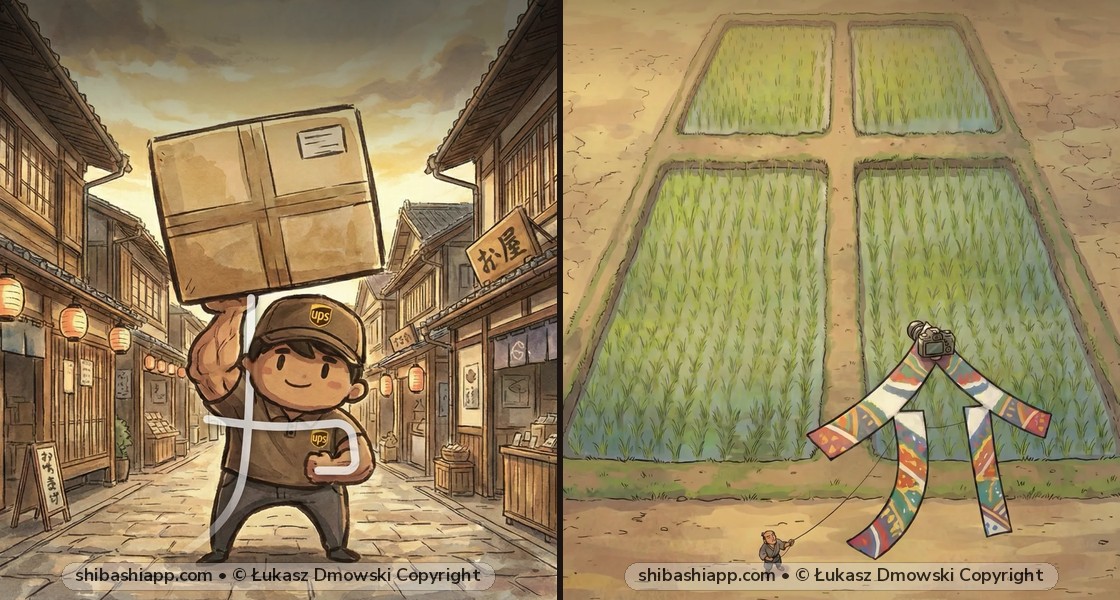
田 (Brain / Rice field grid) over 心 (Heart) = when brain and heart work together to THINK (omou). | 思う (おもう) — to think, to feel |
| 意 — Meaning | On: い Kun: — |
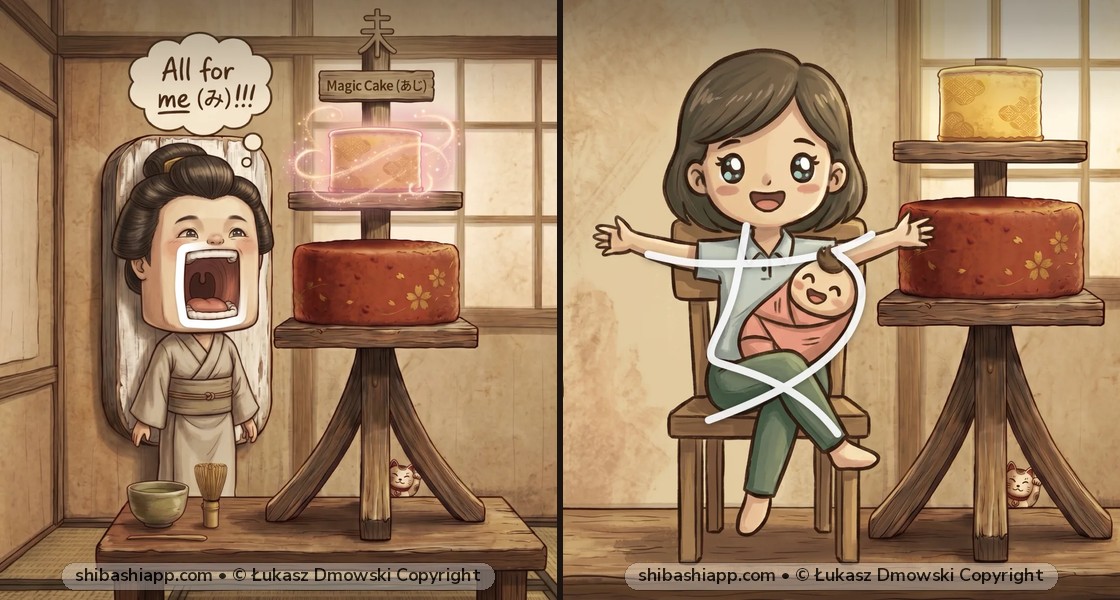
音 (Sound) over 心 (Heart) = the sound of what is inside your heart = IDEA / MEANING (i). | 意味 (いみ) — meaning |
| 感 — Feeling | On: かん Kun: — |
咸 (Halberd blade piercing a mouth) over 心 (Heart) = a deep emotional strike = FEEL / EMOTION (kan). | 感じ (かんじ) — feeling, sense, impression |
| 悪 — Bad | On: あく, お Kun: わる |
亜 (crushed/twisted cross) over 心 (Heart) = a heavy weight on your heart = BAD / EVIL (warui / aku). | 悪い (わるい) — bad |
Side-by-Side Illustrated Kanji Flashcards (Tap Readings for Audio)
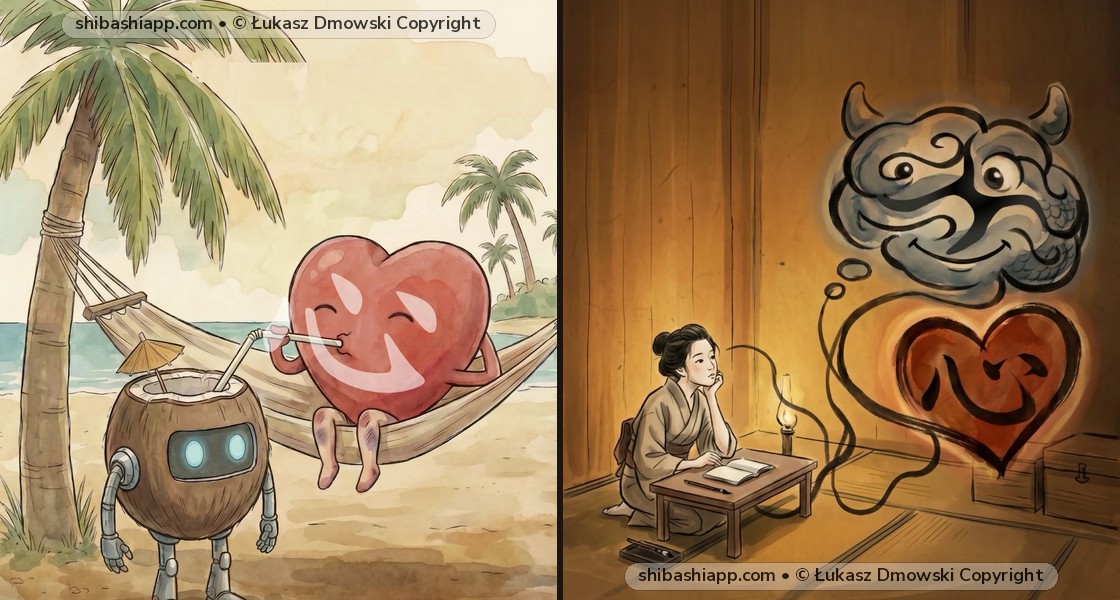
Compare the custom Shibashi artwork for 心 (Heart) and 思 (Think) below. Notice how each illustration embeds both the English meaning and the primary Japanese reading directly into the scene, and tap any reading to hear native pronunciation:


Step-by-Step Visual Breakdown & Radical Rules
Each top component tells you what kind of thought or feeling is inside the heart:
1. 心 (Heart) — Mnemonic Story & Readings
On'yomi: しん | Kun'yomi: こころ
Shibashi Visual Story: “The heart has bruised its shins (しん), and is now resting, with a coco-robot (こころ) drink.” Key visual distinction: A curved heart chamber with 3 beating blood drops = HEART / MIND (kokoro / shin).
2. 思 (Think) — Mnemonic Story & Readings
On'yomi: し | Kun'yomi: おも
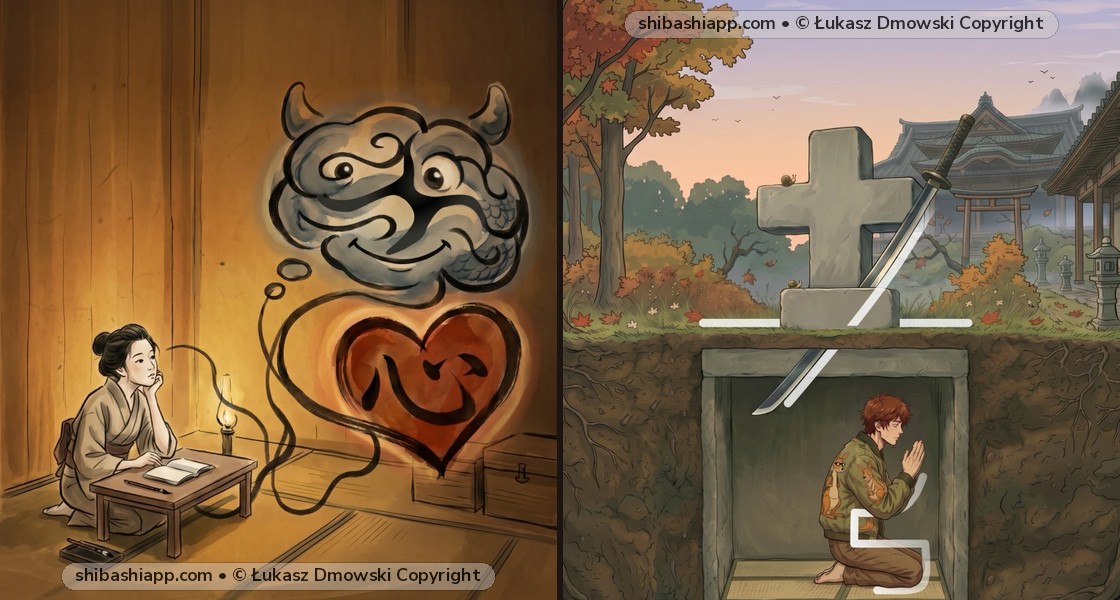
Shibashi Visual Story: “She (し) is always thinking with her heart before her oval monster (おも) brain interferes...” Key visual distinction: 田 (Brain / Rice field grid) over 心 (Heart) = when brain and heart work together to THINK (omou).
- 思う (おもう): to think, to feel
- 思い出す (おもいだす): to remember
- 意思 (いし): intention, purpose
3. 意 (Meaning) — Mnemonic Story & Readings
On'yomi: い | Kun'yomi: —
Shibashi Visual Story: “Each (い) day the boy talks to his heart, hoping to find the meaning...” Key visual distinction: 音 (Sound) over 心 (Heart) = the sound of what is inside your heart = IDEA / MEANING (i).
- 意味 (いみ): meaning
4. 感 (Feeling) — Mnemonic Story & Readings
On'yomi: かん | Kun'yomi: —
Shibashi Visual Story: “The new Congressman (かん) turned out to be a robot. Don't know how I feel about that...” Key visual distinction: 咸 (Halberd blade piercing a mouth) over 心 (Heart) = a deep emotional strike = FEEL / EMOTION (kan).
- 感じ (かんじ): feeling, sense, impression
- 感じる (かんじる): to feel, to sense, to experience
5. 悪 (Bad) — Mnemonic Story & Readings
On'yomi: あく, お | Kun'yomi: わる
Shibashi Visual Story: “One rude (わる) octopus (お) in your catamaran j-accuzzi (あく) is well... pretty bad.” Key visual distinction: 亜 (crushed/twisted cross) over 心 (Heart) = a heavy weight on your heart = BAD / EVIL (warui / aku).
Essential Japanese Vocabulary Words Using 心 / 思 / 意 / 感
Once you can recognize 心 (Heart) and 思 (Think) and 意 (Meaning) individually, lock them into your active reading vocabulary with these high-frequency Japanese words from the Shibashi app:
| Japanese Word | Hiragana Reading | English Meaning | Level |
|---|---|---|---|
| 心 | こころ | core, heart | JLPT |
| 心配 | しんぱい | to worry | JLPT |
| 安心 | あんしん | relief | JLPT |
| 思う | おもう | to think, to feel | JLPT |
| 思い出す | おもいだす | to remember | JLPT |
| 意思 | いし | intention, purpose | JLPT |
| 意味 | いみ | meaning | JLPT |
| 感じ | かんじ | feeling, sense, impression | JLPT |
5-Second Memory Summary: How to Never Mix Up 心 & 思 & 意 Again
Check what rests on top of 心 (Heart): a 田 (Field/Brain grid) = 思 (Think); 音 (Sound) = 意 (Idea/Meaning, as in 意味 imi); a blade & mouth (咸) = 感 (Feel); and a twisted cross (亜) = 悪 (Bad)!