
Japanese Negative Prefixes in Kanji: 無 (Mu — Free 無料) vs. 不 (Fu — Inconvenient 不便 / Anxious 不安)
Just like English uses 'un-', 'in-', and '-less' (unhappy, inconvenient, free/costless), Japanese uses 不 (fu — Not/Un-) and 無 (mu — Nothing/Without) at the front of compound words. Master them and you double your vocabulary overnight!
Every vending machine, app, and shop sign in Japan uses 無料 (muryō — Free of charge), while train stations and hotels highlight what is 便利 (benri — Convenient) vs. 不便 (fuben — Inconvenient).
Quick Comparison: 無 (Nothing) vs. 不 (Not) vs. 便 (Convenience) vs. 利 (Profit)
Compare 無, 不, 便, and 利 in the table below:
| Kanji & Meaning | Primary Readings (Bold = Primary) | Shibashi Visual Mnemonic Hook | Common Compound Word |
|---|---|---|---|
| 無 — Nothing | On: む, ぶ Kun: な |
A bundle of wood/fence burned down to 4 fire ashes (灬) at the bottom = NOTHING left / WITHOUT / FREE OF (nai / mu / bu). | 無理 (むり) — unreasonable, unnatural... |
| 不 — Not | On: ふ, ぶ Kun: — |
A bird soaring up into the sky ceiling bar (一) and refusing to come down = NOT / UN- / IN- (fu / bu). | 不幸 (ふこう) — unhappiness, sorrow, misf... |
| 便 — Convenience | On: べん, びん Kun: — |
亻 (Person) + 更 (changing/renewing smoothly) = CONVENIENCE / MAIL / FLIGHT (ben / bin / tayori). | 便利 (べんり) — convenient; handy; useful |
| 利 — Profit | On: り Kun: き |
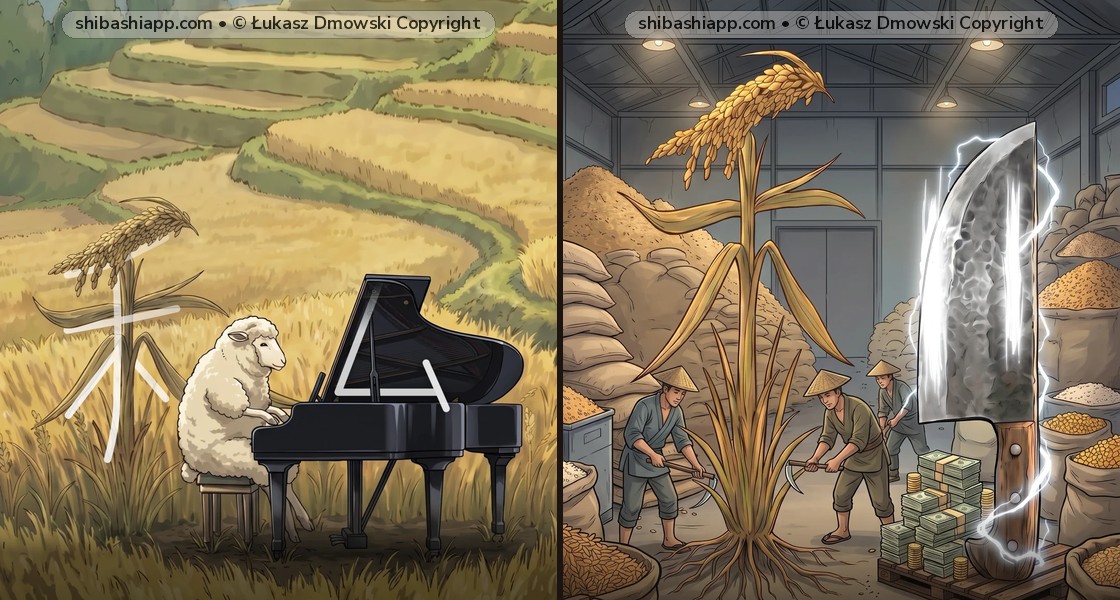
禾 (Grain harvest) + 刂 (Sharp sickle knife on the right) = a sharp blade reaping a harvest = PROFIT / ADVANTAGE / EFFECTIVE (ri / kiku, combines into 便利 benri). | 利用 (りよう) — utilization |
Side-by-Side Illustrated Kanji Flashcards (Tap Readings for Audio)
Compare the custom Shibashi artwork for 無 (Nothing) and 不 (Not) below. Notice how each illustration embeds both the English meaning and the primary Japanese reading directly into the scene, and tap any reading to hear native pronunciation:


Step-by-Step Visual Breakdown & Radical Rules
Here is the exact rule for when Japanese uses 無 (mu) vs. 不 (fu):
1. 無 (Nothing) — Mnemonic Story & Readings
On'yomi: む, ぶ | Kun'yomi: な
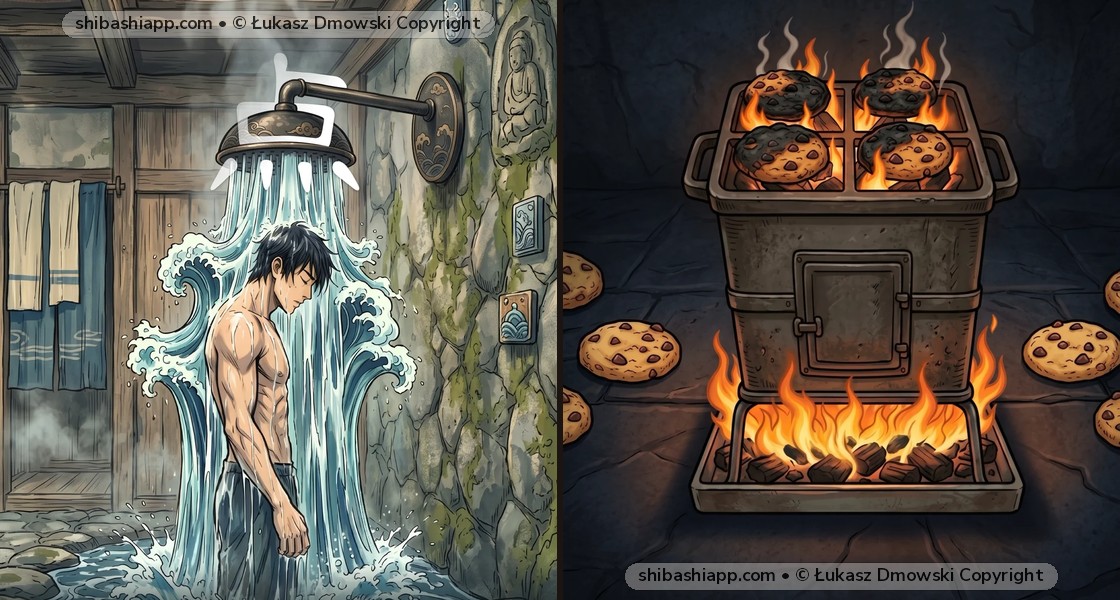
Shibashi Visual Story: “With nothing (な) to do during the day, the moon (む) just stays at home reading books (ぶ)...” Key visual distinction: A bundle of wood/fence burned down to 4 fire ashes (灬) at the bottom = NOTHING left / WITHOUT / FREE OF (nai / mu / bu).
- 無理 (むり): unreasonable, unnatural, unjustifiable
- 無くす (なくす): to lose something
- 無くなる (なくなる): to disappear, to get lost
2. 不 (Not) — Mnemonic Story & Readings
On'yomi: ふ, ぶ | Kun'yomi: —
Shibashi Visual Story: “Mr. Stick has no boots (ぶ) and can NOT get any food (ふ).” Key visual distinction: A bird soaring up into the sky ceiling bar (一) and refusing to come down = NOT / UN- / IN- (fu / bu).
- 不幸 (ふこう): unhappiness, sorrow, misfortune, disaster, accident, death
- 不 (ふ): un, non, negative prefix
- 不可 (ふか): wrong, bad, improper, unjustifiable, inadvisable
3. 便 (Convenience) — Mnemonic Story & Readings
On'yomi: べん, びん | Kun'yomi: —
Shibashi Visual Story: “The sheep in a beanie (びん) loves the convenience of the new square pay phone behind a bent (べん) glass.” Key visual distinction: 亻 (Person) + 更 (changing/renewing smoothly) = CONVENIENCE / MAIL / FLIGHT (ben / bin / tayori).
4. 利 (Profit) — Mnemonic Story & Readings
On'yomi: り | Kun'yomi: き
Shibashi Visual Story: “Kitchens (き) need grain so we cut it to make profit... simple reason (り).” Key visual distinction: 禾 (Grain harvest) + 刂 (Sharp sickle knife on the right) = a sharp blade reaping a harvest = PROFIT / ADVANTAGE / EFFECTIVE (ri / kiku, combines into 便利 benri).
- 利用 (りよう): utilization
- 利口 (りこう): clever, shrewd, bright, sharp, wise, intelligent
- 有利 (ゆうり): advantageous, better, profitable, lucrative
Essential Japanese Vocabulary Words Using 無 / 不 / 便 / 利
Once you can recognize 無 (Nothing) and 不 (Not) and 便 (Convenience) individually, lock them into your active reading vocabulary with these high-frequency Japanese words from the Shibashi app:
| Japanese Word | Hiragana Reading | English Meaning | Level |
|---|---|---|---|
| 無理 | むり | unreasonable, unnatural, unjustifiable | JLPT |
| 無くす | なくす | to lose something | JLPT |
| 無くなる | なくなる | to disappear, to get lost | JLPT |
| 不幸 | ふこう | unhappiness, sorrow, misfortune, disaster, accident, death | JLPT |
| 不 | ふ | un, non, negative prefix | JLPT |
| 不可 | ふか | wrong, bad, improper, unjustifiable, inadvisable | JLPT |
| 便利 | べんり | convenient; handy; useful | JLPT |
| 不便 | ふべん | inconvenient | JLPT |
5-Second Memory Summary: How to Never Mix Up 無 & 不 & 便 Again
無 (mu / nai — has 4 fire ashes 灬 at the bottom) means 'Zero / Non-existent / Without X': 無料 (muryō — zero fee / free), 無理 (muri — zero logic / impossible). 不 (fu / bu — 4 strokes) means 'Not / Bad quality of X': 不便 (fuben — inconvenient), 不安 (fuan — uneasy/anxious, opposite of 安心 anshin)!