The 4 Fire Sparks Radical (灬 — Rekka): 点 (Point/Light), 然 (Nature), 黒 (Black) & 無 (Nothing/Free)
When 火 (Fire) moves to the bottom of a kanji, it transforms into four roaring embers: 灬 (called rekka or rengagashira). Anything sitting above those four dots is being heated, lit, or burned over an open flame!
Beginners often mistake the four dots at the bottom of 点, 然, 黒, and 無 for raindrops or animal feet. In reality, 灬 (rekka) is the compressed bottom form of 火 (Fire) — representing four glowing coals or rising sparks of soot!
Quick Comparison: 火 (Fire) vs. 点 (Point) vs. 然 (Like That) vs. 黒 (Black)
See how the four roaring fire embers (灬) explain the meaning of all five characters:
| Kanji & Meaning | Primary Readings (Bold = Primary) | Shibashi Visual Mnemonic Hook | Common Compound Word |
|---|---|---|---|
| 火 — Fire | On: か Kun: ひ, ほ |
A central campfire flame with two sparks flying off the sides = FIRE (hi / ka). | 火 (ひ) — fire |
| 点 — Point | On: てん Kun: つ |
占 (Fortune-teller's divination rod) over 灬 (4 fire sparks) = lighting a lamp / a decimal POINT / SCORE (ten). | 点 (てん) — point, dot |
| 然 — Like That | On: ぜん, ねん Kun: さ |
月/肉 (Meat) + 犬 (Dog) over 灬 (4 fire sparks) = roasting camp meat just as it naturally is = NATURE / SORT OF (zen / nen, as in 自然 shizen). | 天然 (てんねん) — nature, spontaneity |
| 黒 — Black | On: こく Kun: くろ |
里 (Village window) over 灬 (4 fire soot sparks) = a chimney window blackened by soot = BLACK (kuroi / koku). | 黒 (くろ) — black |
| 無 — Nothing | On: む, ぶ Kun: な |
A bundle of wood/fence burned down to 4 fire ashes (灬) = NOTHING LEFT / WITHOUT / FREE (nai / mu / bu, as in 無料 muryō). | 無理 (むり) — unreasonable, unnatural... |
Side-by-Side Illustrated Kanji Flashcards (Tap Readings for Audio)
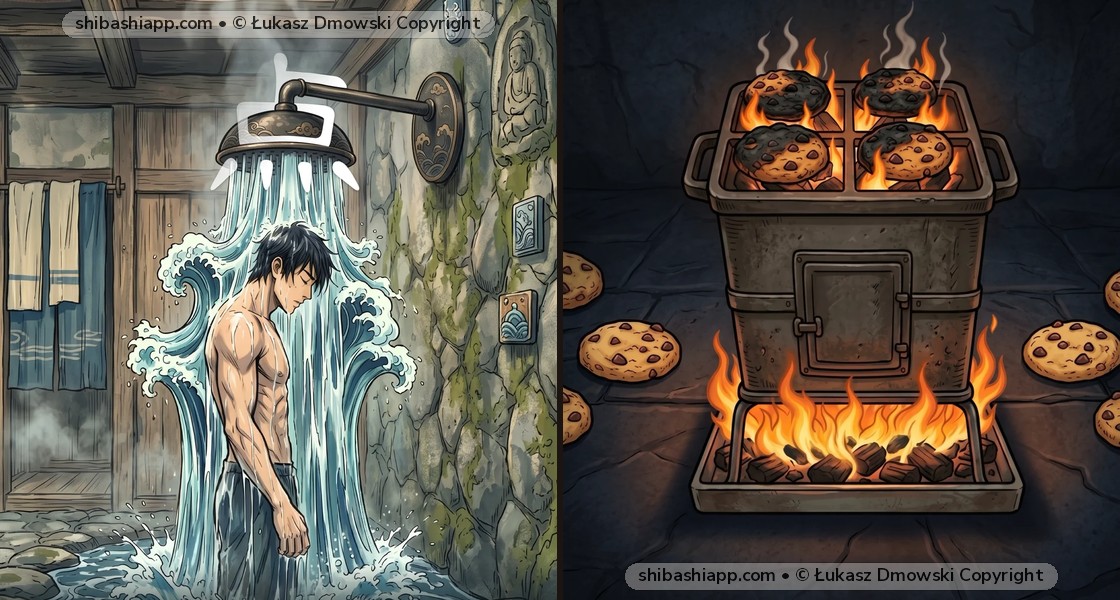
Compare the custom Shibashi artwork for 点 (Point) and 黒 (Black) below. Notice how each illustration embeds both the English meaning and the primary Japanese reading directly into the scene, and tap any reading to hear native pronunciation:


Step-by-Step Visual Breakdown & Radical Rules
Look at what is being lit, blackened, or burned to ashes above the four fire sparks (灬):
1. 火 (Fire) — Mnemonic Story & Readings
On'yomi: か | Kun'yomi: ひ, ほ
Shibashi Visual Story: “Fire from a candle (か) is so hot (ほ) it generates a ton of heat (ひ)!!” Key visual distinction: A central campfire flame with two sparks flying off the sides = FIRE (hi / ka).
2. 点 (Point) — Mnemonic Story & Readings
On'yomi: てん | Kun'yomi: つ
Shibashi Visual Story: “Ten (てん) liters a minute, meaning.. a tsunami (つ) of water comes from a single point on this shower head...” Key visual distinction: 占 (Fortune-teller's divination rod) over 灬 (4 fire sparks) = lighting a lamp / a decimal POINT / SCORE (ten).
3. 然 (Like That) — Mnemonic Story & Readings
On'yomi: ぜん, ねん | Kun'yomi: さ
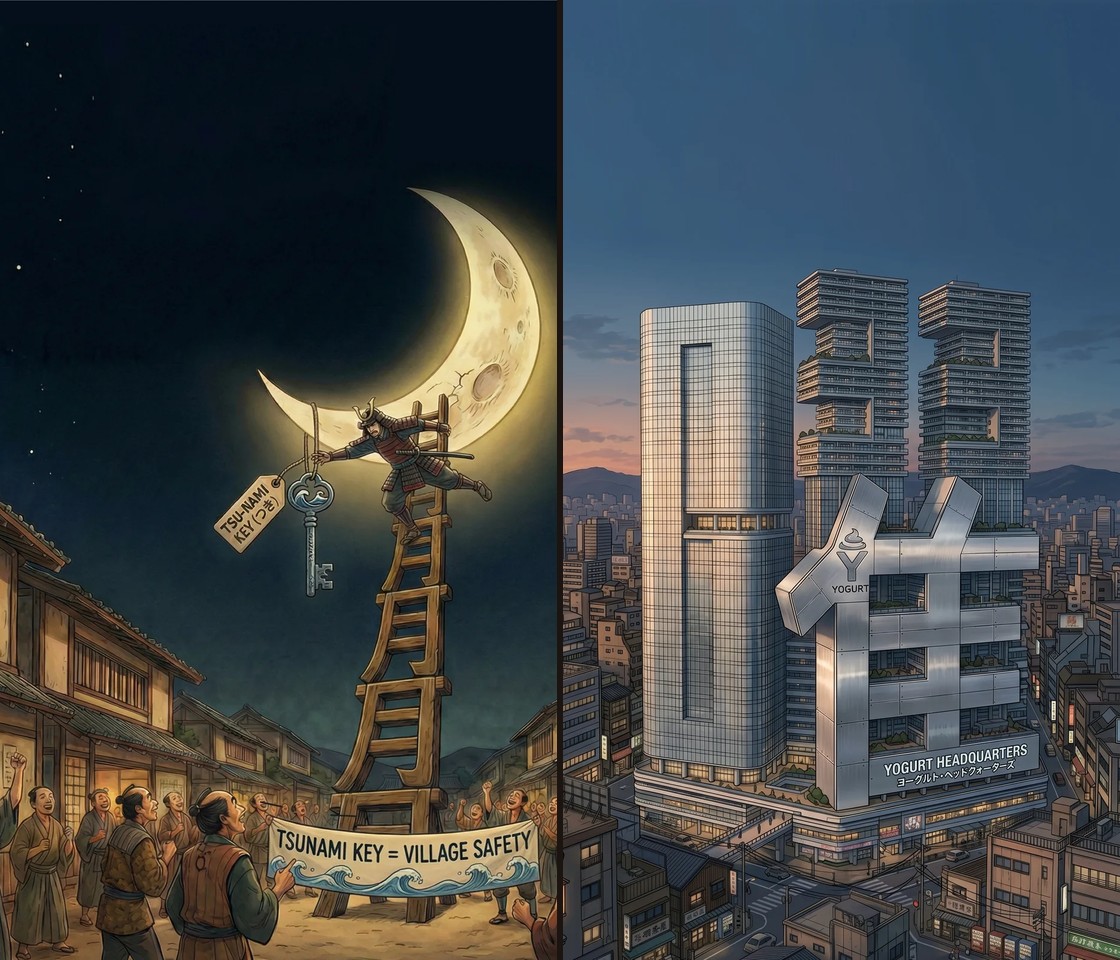
Shibashi Visual Story: “A zen (ぜん) samurai (さ) in linen (ねん) is crossing the street with his moon friend. Who knew zen people rolled like that...” Key visual distinction: 月/肉 (Meat) + 犬 (Dog) over 灬 (4 fire sparks) = roasting camp meat just as it naturally is = NATURE / SORT OF (zen / nen, as in 自然 shizen).
- 天然 (てんねん): nature, spontaneity
- 全然 (ぜんぜん): (1) wholly, entirely, completely, (2) not at all (with neg. verb)
- 自然 (しぜん): nature, spontaneous
4. 黒 (Black) — Mnemonic Story & Readings
On'yomi: こく | Kun'yomi: くろ
Shibashi Visual Story: “Cookie Roast (くろ) for cold cookies (こく) may not have been the best idea. They turned out completely black...” Key visual distinction: 里 (Village window) over 灬 (4 fire soot sparks) = a chimney window blackened by soot = BLACK (kuroi / koku).
5. 無 (Nothing) — Mnemonic Story & Readings
On'yomi: む, ぶ | Kun'yomi: な
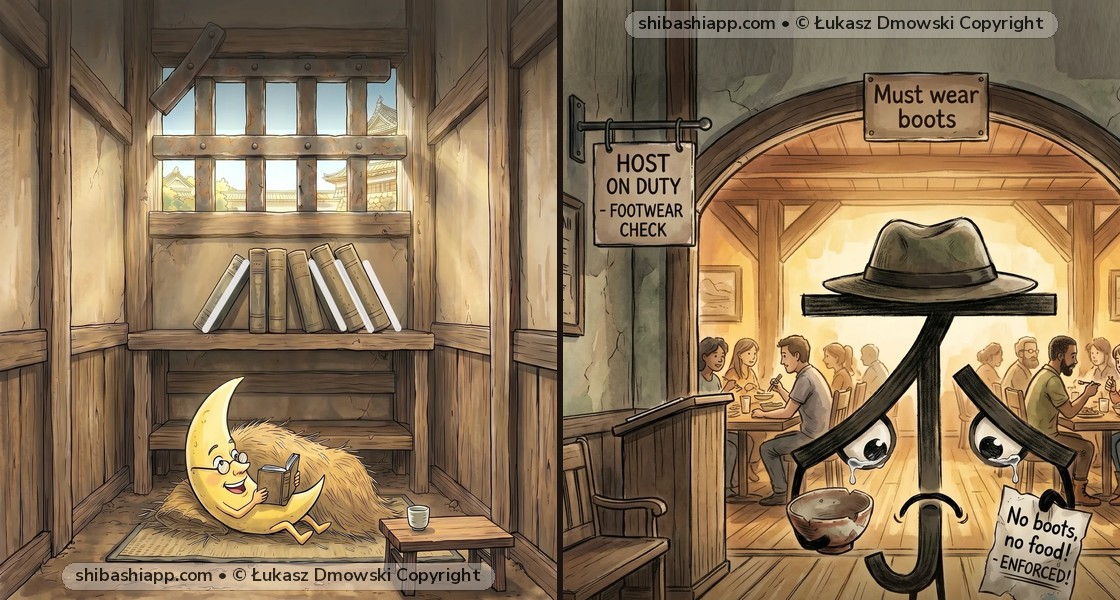
Shibashi Visual Story: “With nothing (な) to do during the day, the moon (む) just stays at home reading books (ぶ)...” Key visual distinction: A bundle of wood/fence burned down to 4 fire ashes (灬) = NOTHING LEFT / WITHOUT / FREE (nai / mu / bu, as in 無料 muryō).
- 無理 (むり): unreasonable, unnatural, unjustifiable
- 無くす (なくす): to lose something
- 無くなる (なくなる): to disappear, to get lost
Essential Japanese Vocabulary Words Using 火 / 点 / 然 / 黒
Once you can recognize 火 (Fire) and 点 (Point) and 然 (Like That) individually, lock them into your active reading vocabulary with these high-frequency Japanese words from the Shibashi app:
| Japanese Word | Hiragana Reading | English Meaning | Level |
|---|---|---|---|
| 火 | ひ | fire | JLPT |
| 火曜 | かよう | (abbr) Tuesday | JLPT |
| 点 | てん | point, dot | JLPT |
| 欠点 | けってん | faults, defect, weakness | JLPT |
| 天然 | てんねん | nature, spontaneity | JLPT |
| 全然 | ぜんぜん | (1) wholly, entirely, completely, (2) not at all (with neg. verb) | JLPT |
| 自然 | しぜん | nature, spontaneous | JLPT |
| 黒 | くろ | black | JLPT |
5-Second Memory Summary: How to Never Mix Up 火 & 点 & 然 Again
Whenever you see 4 dots along the bottom floor (灬), think Fire, Soot & Ashes: lighting a rod (占) = 点 (Point / Turn on light); a chimney window (里) covered in soot = 黒 (Black — kuroi); and a wooden fence burned down to ashes = 無 (Nothing left / Free — 無料 muryō)!