Times of Day in Japanese Kanji: 朝 (Morning), 昼 (Daytime/Noon), 夕 (Evening), 夜 (Night) & 晩 (Night)
From 朝ご飯 (breakfast) and 昼休み (lunch break) to 今夜 (tonight) and 晩ご飯 (dinner), these five kanjis divide every 24-hour day in Japan. Plus: what is the actual difference between 夜 (yoru) and 晩 (ban)?
Follow the sun and moon across the sky: at dawn, the sun rises while the moon is still visible (朝 Morning); at midday, the sun stands high above the ground line (昼 Noon); at dusk, the crescent moon appears (夕 Evening); and after dark, we enter 夜 (yoru) and 晩 (ban).
Quick Comparison: 朝 (Morning) vs. 昼 (Noon, Daytime) vs. 夕 (Evening, Dusk) vs. 夜 (Night)
Compare all five times of day and their primary readings below:
| Kanji & Meaning | Primary Readings (Bold = Primary) | Shibashi Visual Mnemonic Hook | Common Compound Word |
|---|---|---|---|
| 朝 — Morning | On: ちょう Kun: あさ |
Rising Sun (十日十) on the left + fading Moon (月) on the right = MORNING (asa / chō). | 朝 (あさ) — morning |
| 昼 — Noon, Daytime | On: ちゅう Kun: ひる |
尺 (Measuring stick) over 日 (Sun) + 一 (Ground horizon) = measuring the sun high above the horizon at NOON / DAYTIME (hiru / chū). | 昼 (ひる) — noon, daytime |
| 夕 — Evening, Dusk | On: — Kun: ゆう |
A crescent moon appearing at dusk = EVENING / DUSK (yū / seki). | 夕方 (ゆうがた) — evening |
| 夜 — Night | On: や Kun: よる, よ |
Person (亻) under a roof (亠) with the evening moon (夕) = NIGHT as a period of time (yoru / ya). | 今夜 (こんや) — tonight |
| 晩 — Late Evening | On: ばん Kun: — |
Sun (日) escaping (免) = NIGHT / EVENING used for meals (晩ご飯) and counting nights (毎晩) (ban). | 晩 (ばん) — evening |
Side-by-Side Illustrated Kanji Flashcards (Tap Readings for Audio)
Compare the custom Shibashi artwork for 朝 (Morning) and 昼 (Noon, Daytime) below. Notice how each illustration embeds both the English meaning and the primary Japanese reading directly into the scene, and tap any reading to hear native pronunciation:


Step-by-Step Visual Breakdown & Radical Rules
Here is how to remember each character AND when to use 夜 (yoru) vs. 晩 (ban):
1. 朝 (Morning) — Mnemonic Story & Readings
On'yomi: ちょう | Kun'yomi: あさ
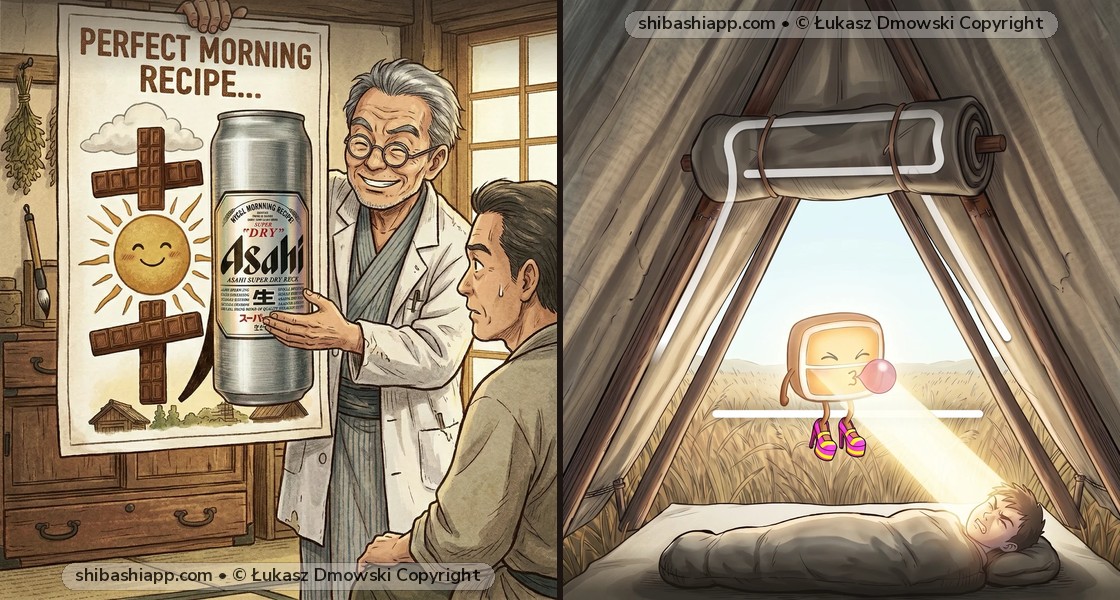
Shibashi Visual Story: “According to this Japanese doctor, the recipe for a perfect morning is chocolate (ちょう) ++ Asahi (あさ) beer.” Key visual distinction: Rising Sun (十日十) on the left + fading Moon (月) on the right = MORNING (asa / chō).
- 朝 (あさ): morning
- 朝ごはん (あさごはん): breakfast
2. 昼 (Noon, Daytime) — Mnemonic Story & Readings
On'yomi: ちゅう | Kun'yomi: ひる
Shibashi Visual Story: “Impossible to sleep at noon when the sun is out with its fancy heels (ひる), shining, chewing (ちゅう) gum.” Key visual distinction: 尺 (Measuring stick) over 日 (Sun) + 一 (Ground horizon) = measuring the sun high above the horizon at NOON / DAYTIME (hiru / chū).
- 昼 (ひる): noon, daytime
- 昼間 (ひるま): daytime, during the day
- 昼休み (ひるやすみ): noon break
3. 夕 (Evening, Dusk) — Mnemonic Story & Readings
On'yomi: — | Kun'yomi: ゆう
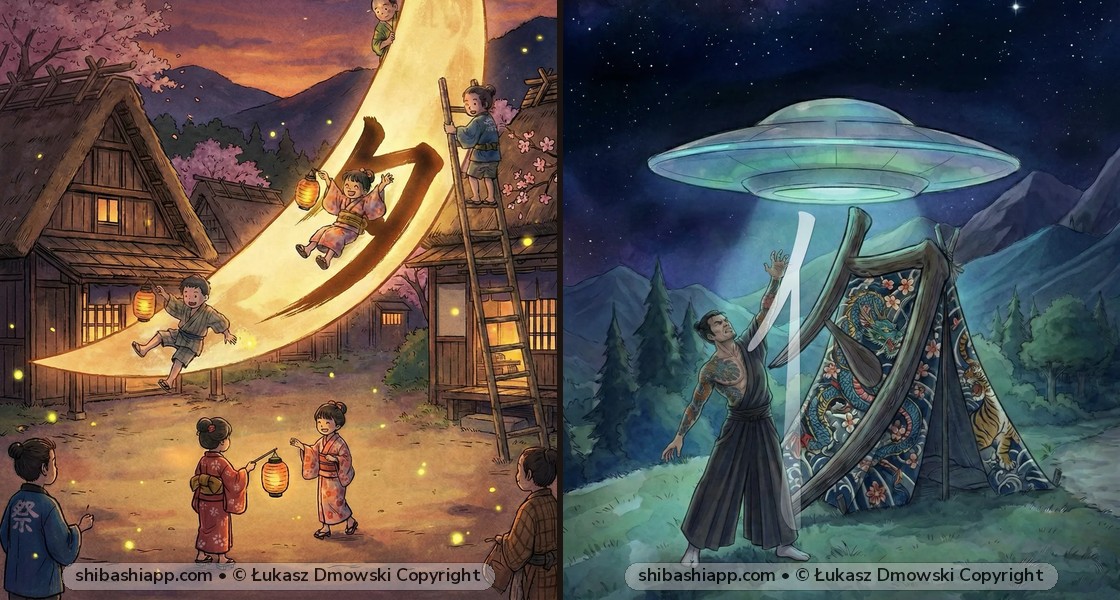
Shibashi Visual Story: “In the evening all the youths (ゆう) come out to play on the moon.” Key visual distinction: A crescent moon appearing at dusk = EVENING / DUSK (yū / seki).
4. 夜 (Night) — Mnemonic Story & Readings
On'yomi: や | Kun'yomi: よる, よ
Shibashi Visual Story: “Even with aliens watching, your (よ or よる) yakuza (や) friend is not scared to do yoga at night.” Key visual distinction: Person (亻) under a roof (亠) with the evening moon (夕) = NIGHT as a period of time (yoru / ya).
5. 晩 (Late Evening) — Mnemonic Story & Readings
On'yomi: ばん | Kun'yomi: —
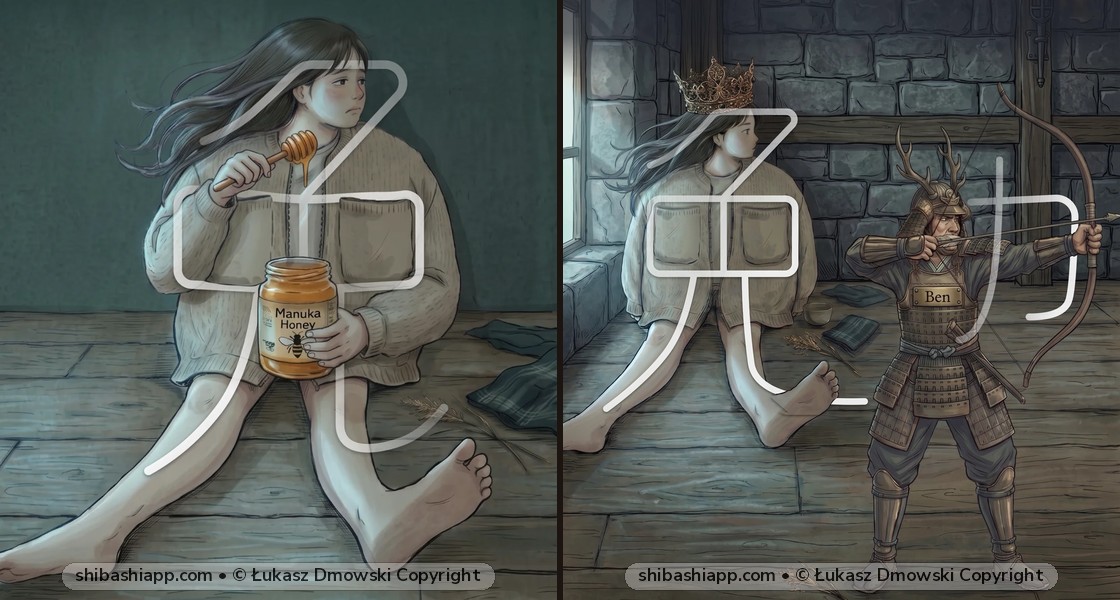
Shibashi Visual Story: “Ever since the girl got banned (ばん), she just sits at home all evening, staring into the wall.” Key visual distinction: Sun (日) escaping (免) = NIGHT / EVENING used for meals (晩ご飯) and counting nights (毎晩) (ban).
Essential Japanese Vocabulary Words Using 朝 / 昼 / 夕 / 夜
Once you can recognize 朝 (Morning) and 昼 (Noon, Daytime) and 夕 (Evening, Dusk) individually, lock them into your active reading vocabulary with these high-frequency Japanese words from the Shibashi app:
| Japanese Word | Hiragana Reading | English Meaning | Level |
|---|---|---|---|
| 朝 | あさ | morning | JLPT |
| 朝ごはん | あさごはん | breakfast | JLPT |
| 昼 | ひる | noon, daytime | JLPT |
| 昼間 | ひるま | daytime, during the day | JLPT |
| 昼休み | ひるやすみ | noon break | JLPT |
| 夕方 | ゆうがた | evening | JLPT |
| 夕飯 | ゆうはん | dinner | JLPT |
| 今夜 | こんや | tonight | JLPT |
5-Second Memory Summary: How to Never Mix Up 朝 & 昼 & 夕 Again
夜 (yoru) vs. 晩 (ban): 夜 (yoru) is the standalone noun for nighttime (opposite of 昼 hiru, daytime — e.g., 夜に勉強する 'study at night'). 晩 (ban) is used primarily in compounds like 晩ご飯 (bangohan — dinner), 今晩 (konban — this evening), and 毎晩 (maiban — every night)!