Why 意 (Idea / Mind) Appears Everywhere in JLPT N4: 意味 (Meaning), 注意 (Caution), 意見 (Opinion) & 用意 (Prepare)
Stack 音 (Sound) on top of 心 (Heart) and you get 意 (i — the inner voice and intention of your mind). That single kanji powers four of the most common two-kanji words in everyday Japanese.
Look at how fast your Japanese vocabulary grows when you understand the literal visual building blocks of compound words (jukugo) built with 意 (Mind / Intention — i):
Quick Comparison: 意 (Meaning) vs. 味 (Taste, Flavor) vs. 注 (Pour) vs. 用 (Use, Utilize)
Compare the four building-block kanjis and their compound meanings below:
| Kanji & Meaning | Primary Readings (Bold = Primary) | Shibashi Visual Mnemonic Hook | Common Compound Word |
|---|---|---|---|
| 意 — Meaning | On: い Kun: — |
音 (Sound) over 心 (Heart) = the sound of your heart = IDEA / MIND / INTENTION (i). | 意味 (いみ) — meaning |
| 味 — Taste, Flavor | On: み Kun: あじ |
口 (Mouth) + 未 (Not yet) = TASTE / FLAVOR (aji / mi, combines into 意味 imi 'Meaning'). | 意味 (いみ) — meaning, significance, sense |
| 注 — Pour | On: ちゅう Kun: つ |
氵 (Water) + 主 (Target) = POUR / FOCUS (chū, combines into 注意 chūi 'Attention/Caution'). | 注意 (ちゅうい) — caution |
| 用 — Use, Utilize | On: よう Kun: もち |
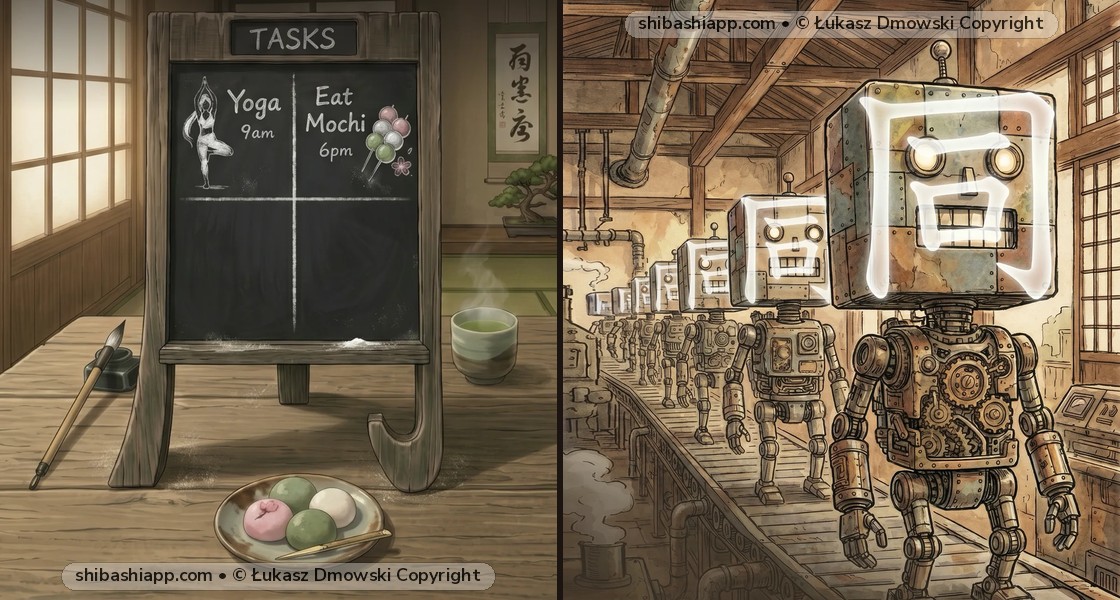
A sturdy grid fence/tool rack = USE / TASK / BUSINESS (tsukau / yō, combines into 用意 yōi 'Preparation'). | 用 (よう) — use |
Side-by-Side Illustrated Kanji Flashcards (Tap Readings for Audio)
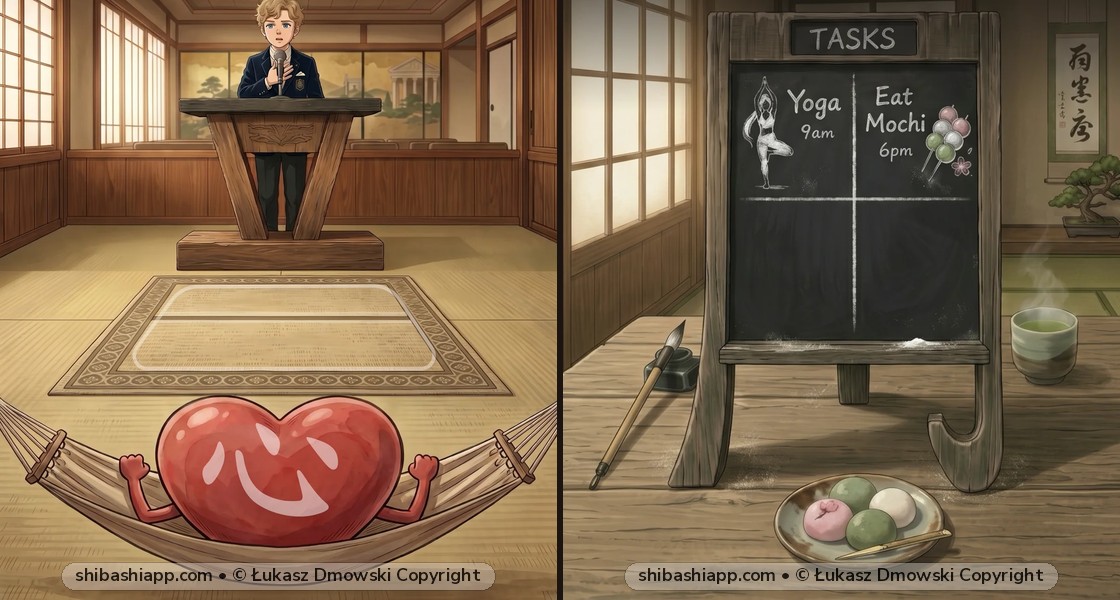
Compare the custom Shibashi artwork for 意 (Meaning) and 用 (Use, Utilize) below. Notice how each illustration embeds both the English meaning and the primary Japanese reading directly into the scene, and tap any reading to hear native pronunciation:


Step-by-Step Visual Breakdown & Radical Rules
See the literal logic behind all four everyday N4 compounds:
1. 意 (Meaning) — Mnemonic Story & Readings
On'yomi: い | Kun'yomi: —
Shibashi Visual Story: “Each (い) day the boy talks to his heart, hoping to find the meaning...” Key visual distinction: 音 (Sound) over 心 (Heart) = the sound of your heart = IDEA / MIND / INTENTION (i).
- 意味 (いみ): meaning
2. 味 (Taste, Flavor) — Mnemonic Story & Readings
On'yomi: み | Kun'yomi: あじ
Shibashi Visual Story: “All for me!! (み) The girl loves the taste of the magic (あじ) cake so much, she does not share it...” Key visual distinction: 口 (Mouth) + 未 (Not yet) = TASTE / FLAVOR (aji / mi, combines into 意味 imi 'Meaning').
3. 注 (Pour) — Mnemonic Story & Readings
On'yomi: ちゅう | Kun'yomi: つ
Shibashi Visual Story: “If a temple is on fire, you must choose (ちゅう) to pour a tsunami (つ) of water on it...” Key visual distinction: 氵 (Water) + 主 (Target) = POUR / FOCUS (chū, combines into 注意 chūi 'Attention/Caution').
- 注意 (ちゅうい): caution
- 注目 (ちゅうもく): notice, attention, observation
- 注文 (ちゅうもん): order, request
4. 用 (Use, Utilize) — Mnemonic Story & Readings
On'yomi: よう | Kun'yomi: もち
Shibashi Visual Story: “Japanese really love to use their task boards. Plan for today: yoga (よう) and mochi (もち).” Key visual distinction: A sturdy grid fence/tool rack = USE / TASK / BUSINESS (tsukau / yō, combines into 用意 yōi 'Preparation').
- 用 (よう): use
- 用意 (ようい): preparation
- 用いる (もちいる): to use, to make use of
Essential Japanese Vocabulary Words Using 意 / 味 / 注 / 用
Once you can recognize 意 (Meaning) and 味 (Taste, Flavor) and 注 (Pour) individually, lock them into your active reading vocabulary with these high-frequency Japanese words from the Shibashi app:
| Japanese Word | Hiragana Reading | English Meaning | Level |
|---|---|---|---|
| 意味 | いみ | meaning | JLPT |
| 味 | あじ | flavour | JLPT |
| 注意 | ちゅうい | caution | JLPT |
| 注目 | ちゅうもく | notice, attention, observation | JLPT |
| 注文 | ちゅうもん | order, request | JLPT |
| 用 | よう | use | JLPT |
| 用意 | ようい | preparation | JLPT |
| 用いる | もちいる | to use, to make use of | JLPT |
5-Second Memory Summary: How to Never Mix Up 意 & 味 & 注 Again
1) 意 (Mind) + 味 (Flavor) = 意味 (imi — Meaning). 2) 注 (Pour) + 意 (Mind) = 注意 (chūi — Attention/Caution). 3) 意 (Mind) + 見 (View) = 意見 (iken — Opinion). 4) 用 (Use/Task) + 意 (Mind) = 用意 (yōi — Preparation)!