The 主 (Master / Candle) & 王 (King) Kanji Family: 主 (Main), 注 (Pour / Attention 注意), 王 & 理
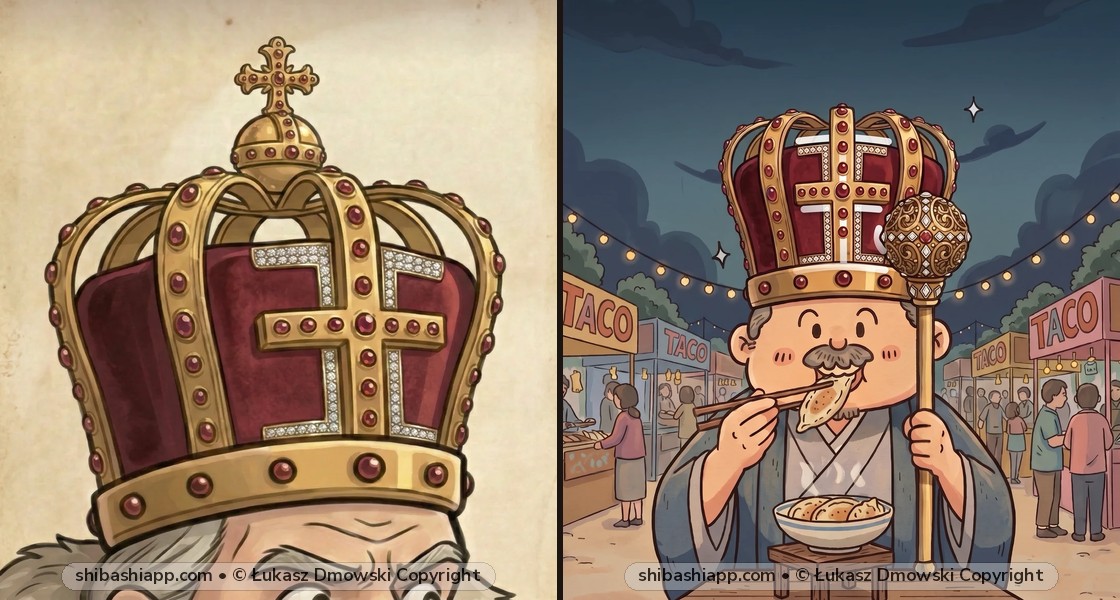
Picture 主 as a tall brass candlestick (王) with a glowing flame dot at the top. Pouring water from a kettle spout onto a target is 注 (Pour / Attention 注意), and where a person sets their candle is 住 (Live)!
Look at 主 (Master / Main — omo / nushi / shu): it is simply 王 (King) with a single glowing flame dot (丶) on top! Add 氵 (Water) to the left of 主 and you get 注 (Pour / Attention — sosogu / chū).
Quick Comparison: 主 (Master) vs. 注 (Pour) vs. 王 (King) vs. 理 (Reason)
Compare all four members of the 主 / 王 family below:
| Kanji & Meaning | Primary Readings (Bold = Primary) | Shibashi Visual Mnemonic Hook | Common Compound Word |
|---|---|---|---|
| 主 — Master | On: しゅ Kun: — |
A glowing flame dot (丶) on top of 王 (King/Stand) = MASTER / MAIN / OWNER (nushi / omo / shu). | 主要 (しゅよう) — chief, main, principal, m... |
| 注 — Pour | On: ちゅう Kun: つ |
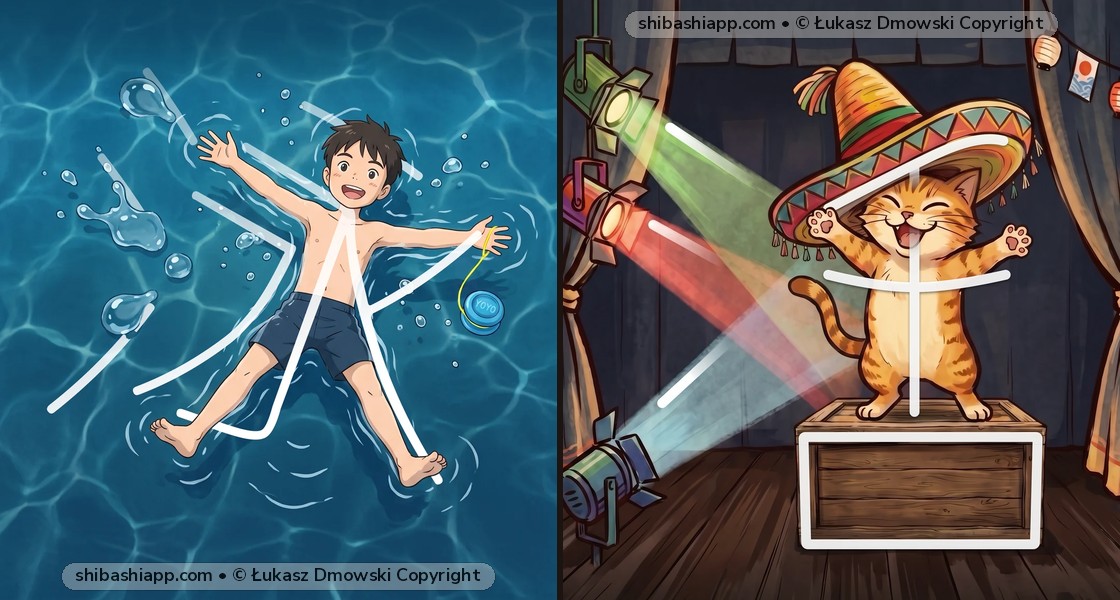
氵 (Water splash) + 主 (Target stand) = pouring water into one spot = POUR / FOCUS ATTENTION (sosogu / chū). | 注意 (ちゅうい) — caution |
| 王 — King | On: おう Kun: — |
Three horizontal tiers (Heaven, Humanity, Earth) linked by one vertical spine = KING / ROYAL JEWEL (ō). | 王 (おう) — king, ruler, sovereign, m... |
| 理 — Reason | On: り Kun: — |
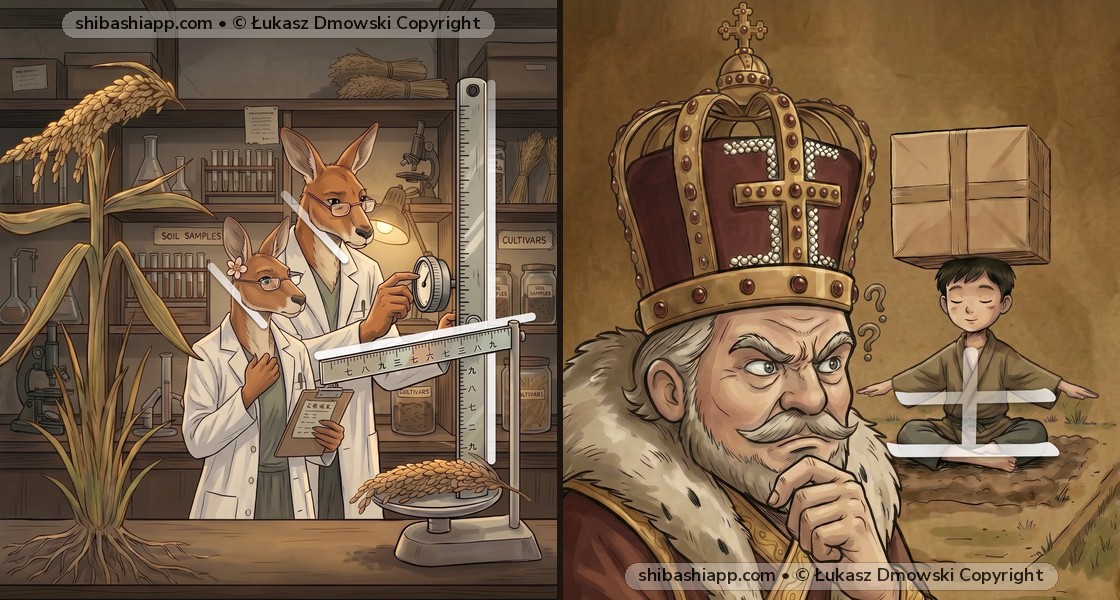
王 (Polished jade jewel on the left) + 里 (Village grid) = REASON / LOGIC / PRINCIPLE (ri). | 無理 (むり) — impossible |
Side-by-Side Illustrated Kanji Flashcards (Tap Readings for Audio)
Compare the custom Shibashi artwork for 主 (Master) and 注 (Pour) below. Notice how each illustration embeds both the English meaning and the primary Japanese reading directly into the scene, and tap any reading to hear native pronunciation:


Step-by-Step Visual Breakdown & Radical Rules
Why does 注意 (chūi — Caution / Watch Out!) on Japanese warning signs use a kanji with the Water radical (注)?
1. 主 (Master) — Mnemonic Story & Readings
On'yomi: しゅ | Kun'yomi: —
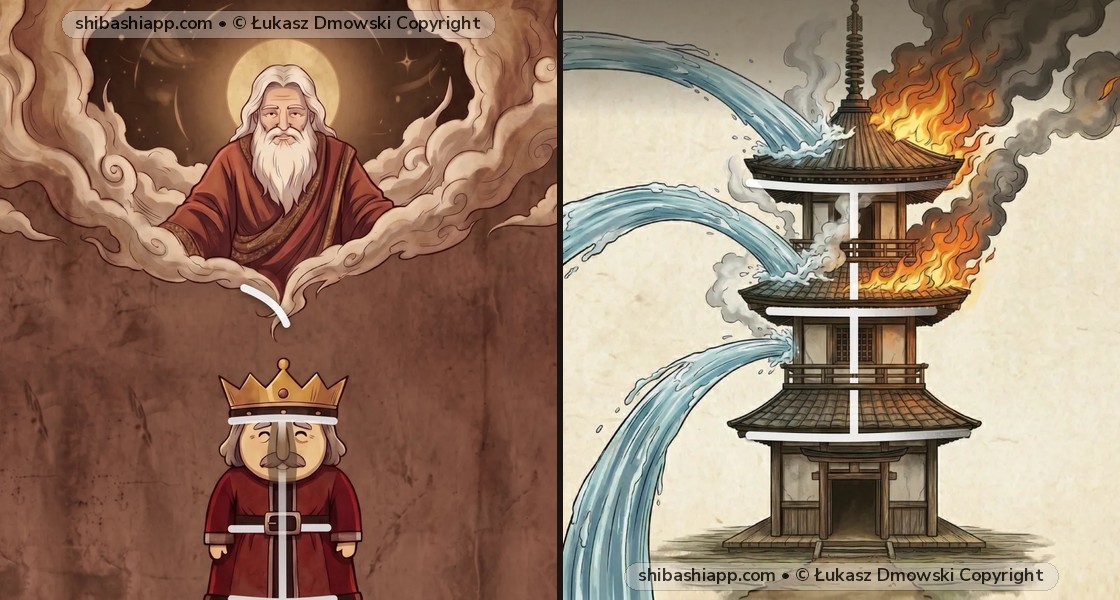
Shibashi Visual Story: “Every smart king was always sure (しゅ) to follow the true master above him...” Key visual distinction: A glowing flame dot (丶) on top of 王 (King/Stand) = MASTER / MAIN / OWNER (nushi / omo / shu).
2. 注 (Pour) — Mnemonic Story & Readings
On'yomi: ちゅう | Kun'yomi: つ
Shibashi Visual Story: “If a temple is on fire, you must choose (ちゅう) to pour a tsunami (つ) of water on it...” Key visual distinction: 氵 (Water splash) + 主 (Target stand) = pouring water into one spot = POUR / FOCUS ATTENTION (sosogu / chū).
- 注意 (ちゅうい): caution
- 注目 (ちゅうもく): notice, attention, observation
- 注文 (ちゅうもん): order, request
3. 王 (King) — Mnemonic Story & Readings
On'yomi: おう | Kun'yomi: —
Shibashi Visual Story: “King’s crown is all about fancy O-shaped jewels, so you go “Ohhh!! (おう)” when you see it...” Key visual distinction: Three horizontal tiers (Heaven, Humanity, Earth) linked by one vertical spine = KING / ROYAL JEWEL (ō).
- 王 (おう): king, ruler, sovereign, monarch
4. 理 (Reason) — Mnemonic Story & Readings
On'yomi: り | Kun'yomi: —
Shibashi Visual Story: “The king trying to figure out the reason (り) why the boy meditates with a big box on his head...” Key visual distinction: 王 (Polished jade jewel on the left) + 里 (Village grid) = REASON / LOGIC / PRINCIPLE (ri).
Essential Japanese Vocabulary Words Using 主 / 注 / 王 / 理
Once you can recognize 主 (Master) and 注 (Pour) and 王 (King) individually, lock them into your active reading vocabulary with these high-frequency Japanese words from the Shibashi app:
| Japanese Word | Hiragana Reading | English Meaning | Level |
|---|---|---|---|
| 主要 | しゅよう | chief, main, principal, major | JLPT |
| 主婦 | しゅふ | housewife, homemaker | JLPT |
| 注意 | ちゅうい | caution | JLPT |
| 注目 | ちゅうもく | notice, attention, observation | JLPT |
| 注文 | ちゅうもん | order, request | JLPT |
| 王 | おう | king, ruler, sovereign, monarch | JLPT |
| 無理 | むり | impossible | JLPT |
| 地理 | ちり | geography | JLPT |
5-Second Memory Summary: How to Never Mix Up 主 & 注 & 王 Again
Because 注 (sosogu / chū) means to pour water in a focused stream onto a single spot! When you 'pour (注) your mind (意)' onto one spot, you pay close 注意 (chūi — Attention / Caution)! And adding 亻 (Person) to 主 creates 住 (Live/Reside — 住む sumu).