The J-Hook Kanji Family: 可 (Possible) vs. 何 (What) & 寸 (Measure) vs. 付 (Attach) vs. 対 (Versus)
Look at 何 (What — nani): remove the Person radical (亻) on the left and you are left with 可 (Possible — ka)! And swap the mouth box for a dot to unlock 寸 (Measure), 付 (Attach), and 対 (Versus).
Look at the parallel between these two pairs: 可 (Possible) → add 亻 (Person) = 何 (What), and 寸 (Measure) → add 亻 (Person) = 付 (Attach)!
Quick Comparison: 可 (Possible) vs. 何 (What) vs. 寸 (Measurement) vs. 付 (Attach)
Compare all five J-hook characters in the breakdown table below:
| Kanji & Meaning | Primary Readings (Bold = Primary) | Shibashi Visual Mnemonic Hook | Common Compound Word |
|---|---|---|---|
| 可 — Possible | On: か Kun: — |
A T-bar hook with a Mouth (口) singing 'Can do!' = POSSIBLE / PASSABLE / OKAY (ka). | 可 (か) — passable |
| 何 — What | On: — Kun: なに, なん |
亻 (Person) on the left + 可 (ka) on the right = a person asking a question = WHAT / HOW MANY (nani / nan / ka). | 何か (なにか) — something |
| 寸 — Measurement | On: すん Kun: — |
Crossed J-hook with a pulse dot in the middle = MEASUREMENT / INCH (sun). | 寸前 (すんぜん) — just before; on the verge of |
| 付 — Attach | On: ふ Kun: つ |
亻 (Person) on the left + 寸 (hand with dot) on the right = a person handing/sticking something on = ATTACH / STICK TO (tsuku / tsukeru / fu). | 付く (つく) — to be attached |
| 対 — Versus | On: たい Kun: — |
文 (Crossed X with top lid) on the left + 寸 (Measure) on the right = two sides squared off = VERSUS / OPPOSITE / PAIR (tai / tsui). | 対する (たいする) — to face, to confront, to... |
Side-by-Side Illustrated Kanji Flashcards (Tap Readings for Audio)
Compare the custom Shibashi artwork for 可 (Possible) and 何 (What) below. Notice how each illustration embeds both the English meaning and the primary Japanese reading directly into the scene, and tap any reading to hear native pronunciation:


Step-by-Step Visual Breakdown & Radical Rules
See how the Mouth box (口) vs. the single Dot (丶) separates these two branches:
1. 可 (Possible) — Mnemonic Story & Readings
On'yomi: か | Kun'yomi: —
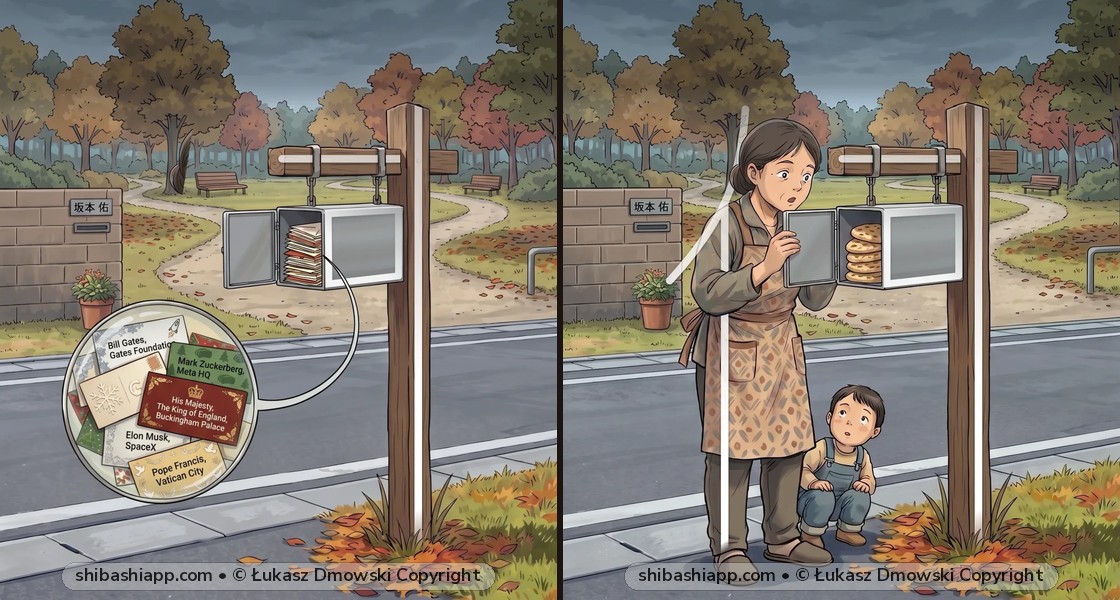
Shibashi Visual Story: “Sometimes anything is possible if you just send out a few holiday cards (か).” Key visual distinction: A T-bar hook with a Mouth (口) singing 'Can do!' = POSSIBLE / PASSABLE / OKAY (ka).
- 可 (か): passable
2. 何 (What) — Mnemonic Story & Readings
On'yomi: — | Kun'yomi: なに, なん
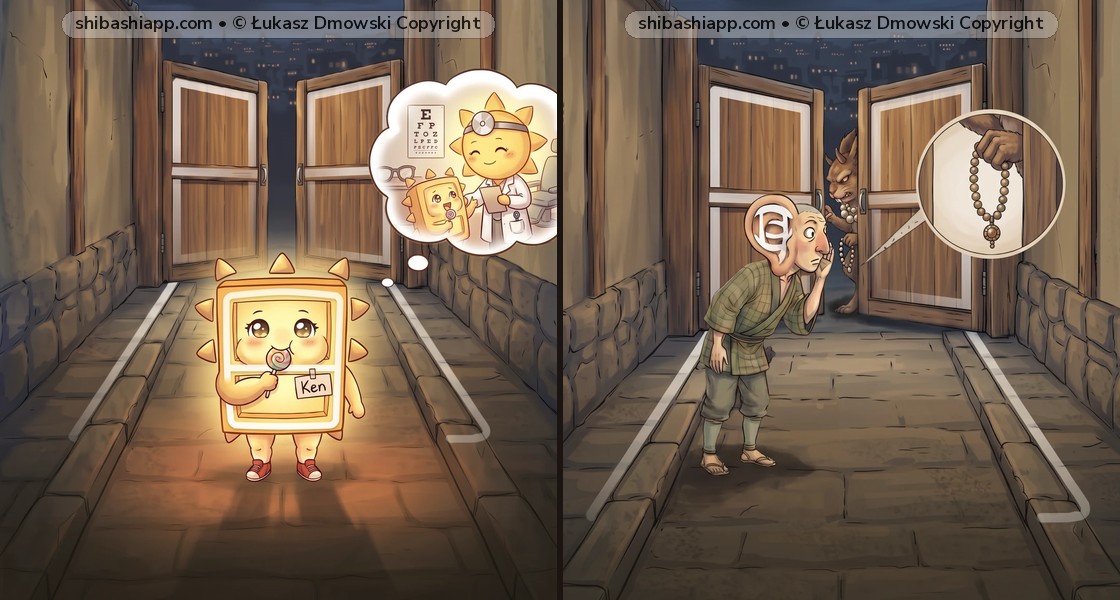
Shibashi Visual Story: “Nanny (なに) leaned-in to see what’s inside the mailbox. Turns out, it was just naan (なん) bread...” Key visual distinction: 亻 (Person) on the left + 可 (ka) on the right = a person asking a question = WHAT / HOW MANY (nani / nan / ka).
- 何か (なにか): something
- 何とか (なんとか): somehow, anyhow, one way or another
- 何 (なに): what
3. 寸 (Measurement) — Mnemonic Story & Readings
On'yomi: すん | Kun'yomi: —
Shibashi Visual Story: “As soon (すん) as proper measurements are taken, the mailbox can be fixed.” Key visual distinction: Crossed J-hook with a pulse dot in the middle = MEASUREMENT / INCH (sun).
4. 付 (Attach) — Mnemonic Story & Readings
On'yomi: ふ | Kun'yomi: つ
Shibashi Visual Story: “After a tsunami (つ) the mailbox needs to be fully (ふ) attached again.” Key visual distinction: 亻 (Person) on the left + 寸 (hand with dot) on the right = a person handing/sticking something on = ATTACH / STICK TO (tsuku / tsukeru / fu).
5. 対 (Versus) — Mnemonic Story & Readings
On'yomi: たい | Kun'yomi: —
Shibashi Visual Story: “A tiger (たい) mailman versus a broken mailbox... looks like no mail will get delivered today...” Key visual distinction: 文 (Crossed X with top lid) on the left + 寸 (Measure) on the right = two sides squared off = VERSUS / OPPOSITE / PAIR (tai / tsui).
- 対する (たいする): to face, to confront, to oppose
Essential Japanese Vocabulary Words Using 可 / 何 / 寸 / 付
Once you can recognize 可 (Possible) and 何 (What) and 寸 (Measurement) individually, lock them into your active reading vocabulary with these high-frequency Japanese words from the Shibashi app:
| Japanese Word | Hiragana Reading | English Meaning | Level |
|---|---|---|---|
| 可 | か | passable | JLPT |
| 何か | なにか | something | JLPT |
| 何とか | なんとか | somehow, anyhow, one way or another | JLPT |
| 何 | なに | what | JLPT |
| 寸前 | すんぜん | just before; on the verge of | JLPT |
| 一寸 | いっすん | one sun (approx. 3.03 cm); short time/distance | JLPT |
| 付く | つく | to be attached | JLPT |
| 付ける | つける | to attach, to join, to add, to append | JLPT |
5-Second Memory Summary: How to Never Mix Up 可 & 何 & 寸 Again
Hook + 口 (Mouth) = 可 (Possible — ka), and adding 亻 (Person) on the left makes 何 (What — nani / nan)! Hook + dot (丶) = 寸 (Measure), adding 亻 (Person) makes 付 (Attach — 付く tsuku), and adding 文 on the left makes 対 (Versus / Pair — 反対 hantai)!