29 Must-Know JLPT N4 & N3 Kanji Visual Mnemonics (Ability, Certain, Ritual, Dawn, Fish & More)
Master 29 high-frequency JLPT N4 & N3 kanjis (能, 才, 必, 式, 予, 成, 平, 要, 当, 以, 的, 公, 品, 魚, 図, 問, 豚, 死, 川, 園, 旦, 干, 斤, 皮, 介, 眠, 備, 因, 館) with custom Shibashi cards.
Moving from JLPT N5 into N4 and N3 is where abstract concepts like 能 (Ability), 必 (Certain), 式 (Ritual/Ceremony), 予 (Beforehand), and 備 (Provide/Prepare) appear. Instead of drilling stroke order, Shibashi turns each of these 29 kanjis into a concrete visual scene.
Quick Comparison: 能 (Ability) vs. 才 (Talent) vs. 必 (Certain) vs. 式 (Ritual)
Explore the visual hooks, bolded primary readings, and inline flashcards for all 29 kanjis below:
| Kanji & Meaning | Primary Readings (Bold = Primary) | Shibashi Visual Mnemonic Hook | Common Compound Word |
|---|---|---|---|
| 能 — Ability | On: のう Kun: — |
Ladder (月) + spoons = Ability / Talent (のう in 能力) | 才能 (さいのう) — talent, ability |
| 才 — Talent | On: さい Kun: — |
Boy performing before a huge crowd _si_ze (さい) = Talent (天才) | 才能 (さいのう) — talent, ability |
| 必 — Certain | On: ひつ Kun: かなら |
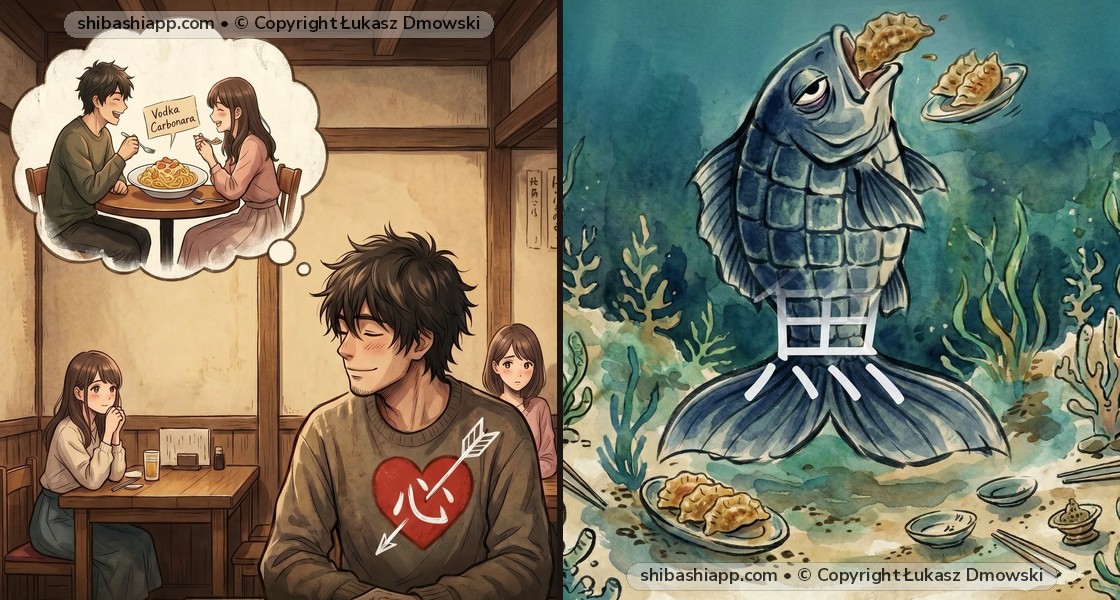
Cupid's arrow _hits(u)_ (ひつ) the Heart (心) = Certain (かならず) | 必要 (ひつよう) — necessary, needed, essent... |
| 式 — Ritual | On: しき Kun: — |
Wedding arch (弋) + craft (工) = Ritual / Ceremony (しき) | 正式 (せいしき) — due form, official, forma... |
| 予 — Beforehand | On: よ Kun: あらかじ |
_Yo_ko (よ) booked Beforehand (あらかじめ / 予定) | 予習 (よしゅう) — preparation for a lesson |
| 成 — Become | On: せい, じょう Kun: な |
Soldier with a light _sa_ber (せい) and _ja_wline (じょう) = Become (なる) | 成る (なる) — to become |
| 平 — Flat | On: へい, ひょう, びょう Kun: たい |
Fa_bio_ (びょう) and _yo_gi (ひょう) _ti_ger (たい) on Flat hay bales (へい) | 不平 (ふへい) — complaint, discontent, di... |
| 要 — Need | On: よう Kun: い, かなめ |
Woman (女) doing _yo_ga (よう) = Need / Essential (いる) | 要る (いる) — to need |
| 当 — Hit, Correct | On: とう Kun: あ |
Hitting the _a_pple (あ) target or teacher's _toe_ (とう) = Hit / Right | 当時 (とうじ) — at that time, in those days |
| 以 — From | On: い Kun: — |
Person looking in a mirror From (い) now on (以上 / 以下) | 以上 (いじょう) — more than, this is all |
| 的 — Target | On: てき Kun: まと |
White (白) + ladle = _Tequ_ila (てき) Target (まと) | 目的 (もくてき) — purpose, goal, aim, objec... |
| 公 — Public | On: こう Kun: — |
Playing piano in Public (こう) for the community (公園 park) | 公園 (こうえん) — (public) park |
| 品 — Product | On: ひん Kun: しな |
Three stacked boxes = Quality Product / Goods (しな / ひん) | 作品 (さくひん) — work (e.g. book, film, pa... |
| 魚 — fish | On: ぎょ Kun: さかな |
_Sa_lmon _ca_n't _na_p (さかな) eating _gyo_za (ぎょ) = Fish | 魚 (さかな) — fish |
| 図 — Diagram, Map | On: ず, と Kun: — |
Enclosure around treasure X = Diagram / Map (ず / と in 図書館) | 地図 (ちず) — map |
| 問 — Question | On: もん Kun: と, とん |
Monster (もん) at the _to_ll (と) Gate (門) asking a Question (問題) | 問題 (もんだい) — problem |
| 豚 — Pig, Pork | On: とん Kun: ぶた |
Meat (月) + pig (豕) = _Ton_y (とん) the Pig in _Bhuta_n (ぶた) | 豚肉 (ぶたにく) — pork |
| 死 — Death | On: し Kun: し |
Evening bones under top bar = Death (し) | 死ぬ (しぬ) — to die |
| 川 — River | On: せん Kun: かわ |
Three flowing streams = River _car-wa_sh (かわ / せん) | 川 (かわ) — river |
| 園 — Garden | On: えん Kun: その |
Enclosure around garden paths = Garden / Park (えん / その) | 公園 (こうえん) — park |
| 旦 — Dawn | On: たん, だん Kun: — |
Sun (日) over horizon (一) = Dawn (たん / だん) | 元旦 (がんたん) — New Year's Day; New Year'... |
| 干 — Dry | On: かん Kun: ほ, ひ |
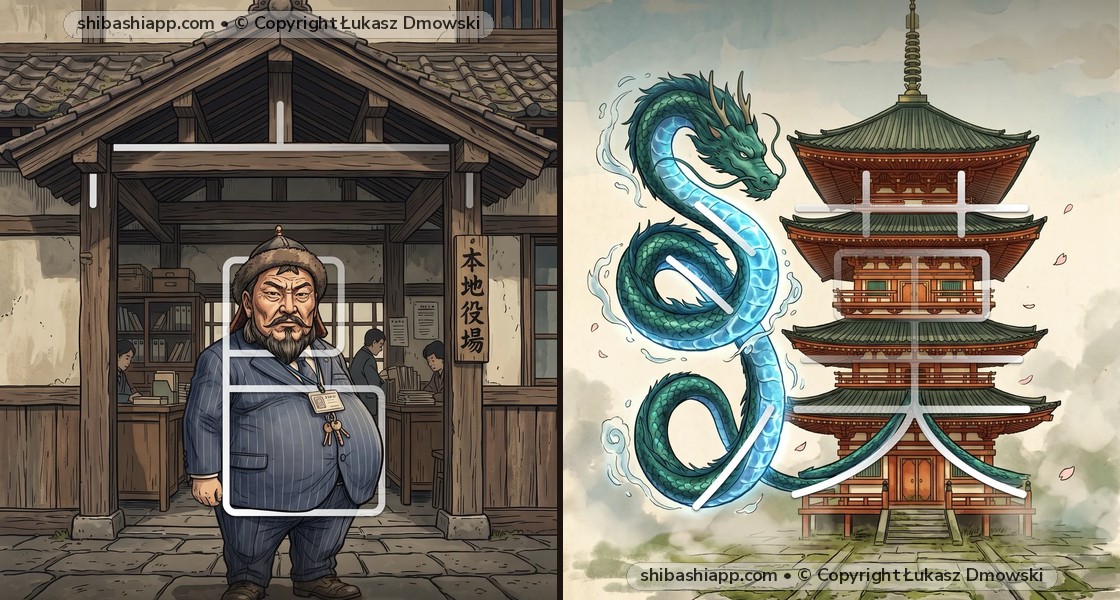
Genghis _Khan_ (かん) Drying clothes on a rack (ほす / ひ) | 干す (ほす) — to air; to dry; to desiccate |
| 斤 — Axe | On: きん Kun: — |
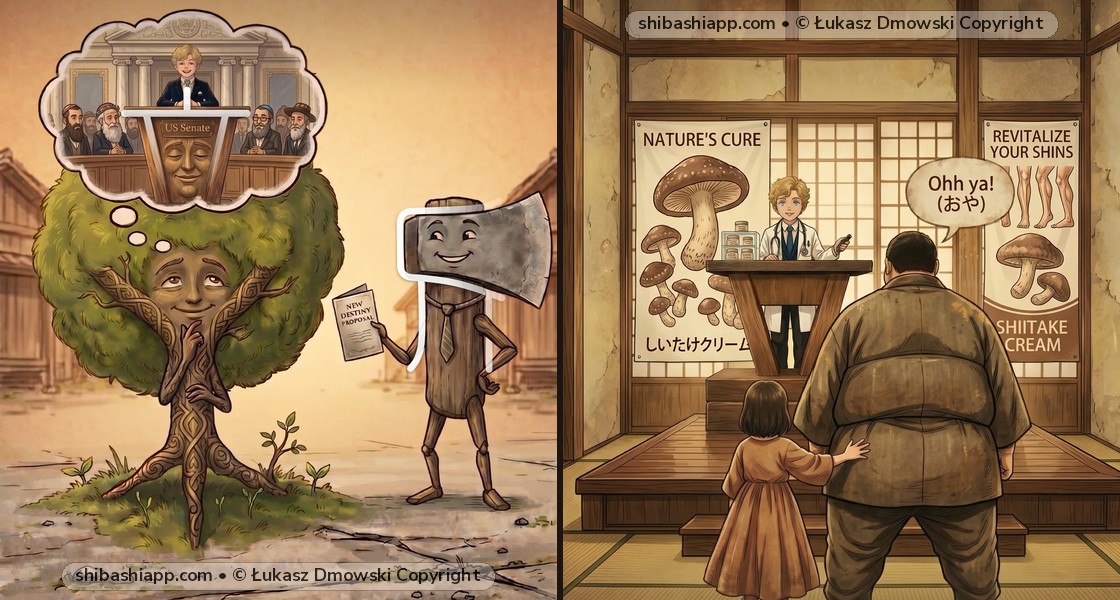
The Axe _kin_g (きん) = Axe / Loaf counter | 一斤 (いっきん) — one loaf of bread; 1 kin... |
| 皮 — Skin | On: ひ Kun: — |
Leaning leather jacket = Skin / Peel (ひ / かわ) | 皮肉 (ひにく) — irony; sarcasm; cynical |
| 介 — Middleman / Connect | On: かい Kun: — |
Roof lines connecting a man to a _ki_te (かい) = Middleman / Mediate | 介入 (かいにゅう) — intervention; interposition |
| 眠 — Sleep | On: みん Kun: ねむ |
Eye (目) + Sad Man (民) who can't Sleep (ねむる / みん) | 眠る (ねむる) — to sleep |
| 備 — Provide | On: び Kun: そな |
Person (亻) + cliff + coyote fence = Provide / Prepare (そなえる / び) | 備える (そなえる) — to prepare, to provide for |
| 因 — Cause | On: いん Kun: よ |
Person (大) sprawled inside an enclosure (囗) = Cause (いん / よる) | 要因 (よういん) — main factor, primary cause |
| 館 — Building | On: かん Kun: — |
Food/Daikon (飠) + Official (官) under a _can_opy (かん) = Public Building / Hall (映画館 / 図書館) | 旅館 (りょかん) — ryokan, traditional Japan... |
Illustrated Kanji Flashcards(Tap Readings for Audio)
Notice how every abstract meaning is grounded in a physical object: 必 (Certain — ひつ / かなら) is a Heart (心) pierced by Cupid's arrow — if it _hits(u)_ (ひつ) your heart, you will *certainly* fall in love! 品 (Product — ひん / しな) stacks three boxes like quality _hin_du (ひん) _shin_ (しな) guards. 魚 (Fish — ぎょ / さかな) shows a salmon that can't nap (さかな) eating _gyo_za (ぎょ). And 旦 (Dawn — たん / だん) shows the sun (日) rising over the horizon line (一) when the night is _done_ (だん) so you can get a _tan_ (たん)!


Essential Japanese Vocabulary Words Using 能 / 才 / 必 / 式
Once you can recognize 能 (Ability) and 才 (Talent) and 必 (Certain) individually, lock them into your active reading vocabulary with these high-frequency Japanese words from the Shibashi app:
| Japanese Word | Hiragana Reading | English Meaning | Level |
|---|---|---|---|
| 才能 | さいのう | talent, ability | JLPT |
| 可能 | かのう | possible, practicable, feasible | JLPT |
| 有能 | ゆうのう | able, capable, efficient, skill | JLPT |
| 必要 | ひつよう | necessary, needed, essential, indispensable | JLPT |
| 必ず | かならず | certainly, necessarily | JLPT |
| 必ずしも | かならずしも | (not) always, (not) necessarily, (not) all, (not) entirely | JLPT |
| 正式 | せいしき | due form, official, formality | JLPT |
| 式 | しき | equation, formula, ceremony | JLPT |
5-Second Memory Summary: How to Never Mix Up 能 & 才 & 必 Again
Click any inline flashcard below to hear native Japanese pronunciation and see all compound words for that kanji.