新 (New) vs. 親 (Parent): The Axe (斤) vs. See (見) Kanji Trick
Both 新 (New) and 親 (Parent) have the exact same left half (立 Stand + 木 Tree) and even share the exact same On'yomi reading (シン shin). The secret to telling them apart lives entirely on the right side.
Few kanji pairs confuse JLPT N5 and N4 students more than 新 (New) and 親 (Parent). Not only do they share the exact same left-hand radical stack (立 Stand over 木 Tree), they also share the identical On'yomi pronunciation シン (shin)!
Quick Comparison: 新 (New) vs. 親 (Parent) vs. 立 (Stand) vs. 見 (See)
Look at the right-hand component of each character in the comparison table below to see why they mean completely different things:
| Kanji & Meaning | Primary Readings (Bold = Primary) | Shibashi Visual Mnemonic Hook | Common Compound Word |
|---|---|---|---|
| 新 — New | On: しん Kun: あたら, あら |
Left: 立+木 (Standing Tree) + Right: 斤 (Axe) chopping fresh, NEW firewood. | 新聞 (しんぶん) — newspaper |
| 親 — Parent | On: しん Kun: おや, した |
Left: 立+木 (Standing on a Tree) + Right: 見 (See) — a PARENT watching over their child. | 親 (おや) — parents |
| 立 — Stand | On: りつ, りゅう Kun: た |
A person standing firmly on the ground line. | 立つ (たつ) — to stand |
| 見 — See | On: けん Kun: み |
An Eye (目) on two legs walking around to SEE. | 見せる (みせる) — to show |
Side-by-Side Illustrated Kanji Flashcards (Tap Readings for Audio)
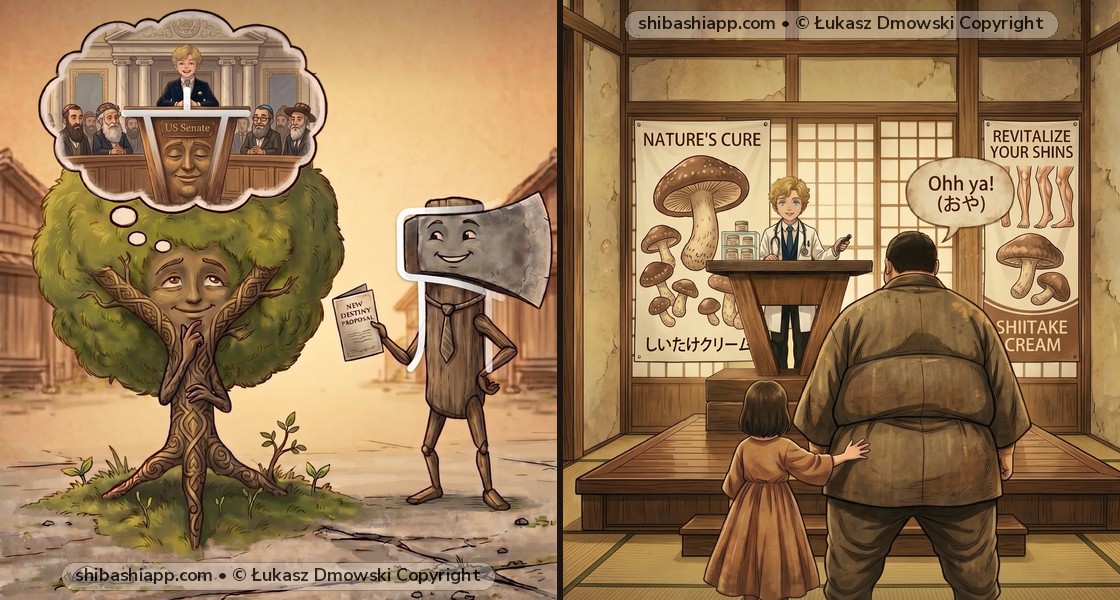
Compare the custom Shibashi artwork for 新 (New) and 親 (Parent) below. Notice how each illustration embeds both the English meaning and the primary Japanese reading directly into the scene, and tap any reading to hear native pronunciation:


Step-by-Step Visual Breakdown & Radical Rules
Because the left side (立 + 木, a tree standing tall) is identical in both kanjis, your eyes only need to check the right side:
1. 新 (New) — Mnemonic Story & Readings
On'yomi: しん | Kun'yomi: あたら, あら
Shibashi Visual Story: “The arabic (あら) tree is thinking of a new life as a podium for artsy talented rabbis (あたら) in Wa-shington (しん)...” Key visual distinction: Left: 立+木 (Standing Tree) + Right: 斤 (Axe) chopping fresh, NEW firewood.
- 新聞 (しんぶん): newspaper
- 新しい (あたらしい): new
- 新た (あらた): new, fresh, novel
2. 親 (Parent) — Mnemonic Story & Readings
On'yomi: しん | Kun'yomi: おや, した
Shibashi Visual Story: “A proud parent watches his son present his revolutionary shiitake (した) cream for shins (しん). O ya!! (おや)” Key visual distinction: Left: 立+木 (Standing on a Tree) + Right: 見 (See) — a PARENT watching over their child.
- 親 (おや): parents
- 親しい (したしい): intimate, close (e.g. friend)
- 親友 (しんゆう): close friend, buddy
3. 立 (Stand) — Mnemonic Story & Readings
On'yomi: りつ, りゅう | Kun'yomi: た
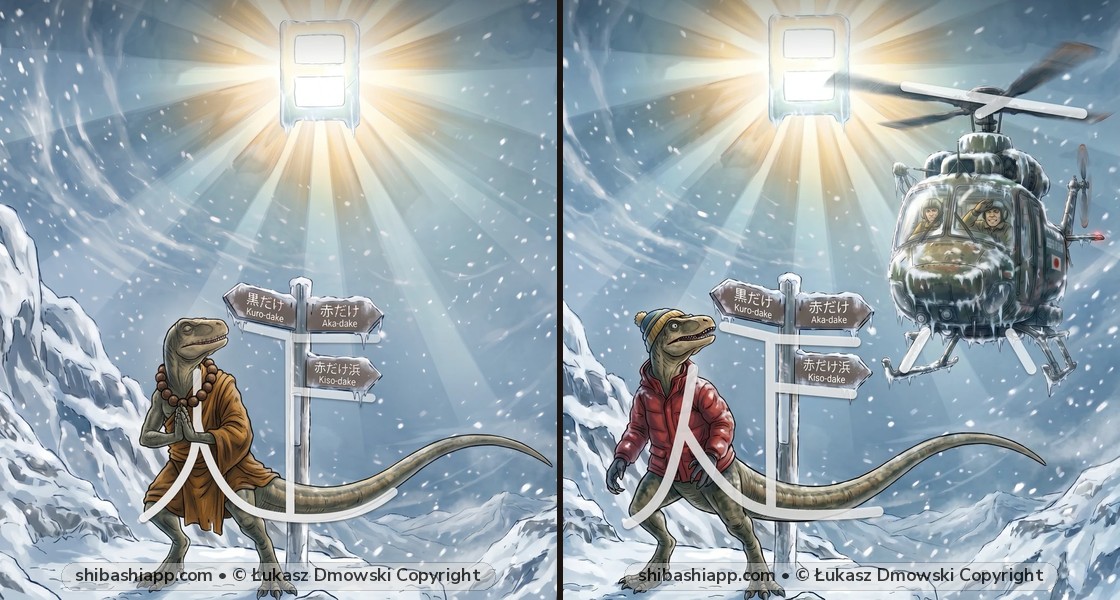
Shibashi Visual Story: “A rich European (りゅう) kid took a stand at the Ritz(u) (りつ) Hotel to discuss the importance of great tacos (た).” Key visual distinction: A person standing firmly on the ground line.
- 立つ (たつ): to stand
- 役に立つ (やくにたつ): to be helpful
- 立てる (たてる): to stand something up
4. 見 (See) — Mnemonic Story & Readings
On'yomi: けん | Kun'yomi: み
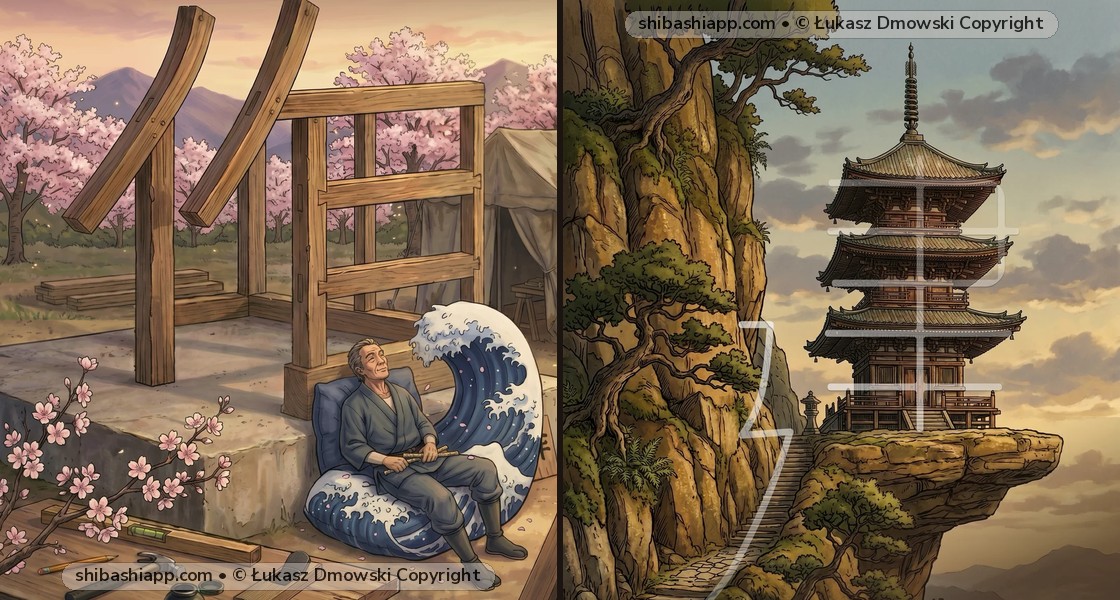
Shibashi Visual Story: “When you See Mr. Ken (けん) giving out free samples, scream: “me! me! me! (み)”” Key visual distinction: An Eye (目) on two legs walking around to SEE.
- 見せる (みせる): to show
- 見つかる (みつかる): to be discovered
- 見つける (みつける): to discover
Essential Japanese Vocabulary Words Using 新 / 親 / 立 / 見
Once you can recognize 新 (New) and 親 (Parent) and 立 (Stand) individually, lock them into your active reading vocabulary with these high-frequency Japanese words from the Shibashi app:
| Japanese Word | Hiragana Reading | English Meaning | Level |
|---|---|---|---|
| 新聞 | しんぶん | newspaper | JLPT |
| 新しい | あたらしい | new | JLPT |
| 新た | あらた | new, fresh, novel | JLPT |
| 親 | おや | parents | JLPT |
| 親しい | したしい | intimate, close (e.g. friend) | JLPT |
| 親友 | しんゆう | close friend, buddy | JLPT |
| 立つ | たつ | to stand | JLPT |
| 役に立つ | やくにたつ | to be helpful | JLPT |
5-Second Memory Summary: How to Never Mix Up 新 & 親 & 立 Again
Spot the right-hand radical: an Axe (斤) chops fresh 新 (New) wood, while an Eye on legs (見) is a caring 親 (Parent) watching over their kids in the tree!