How to Tell 未 (Not Yet) vs. 末 (End) Apart in 2 Seconds
The only difference between 未 (Not Yet) and 末 (End) is whether the top horizontal line is shorter or longer than the second line. Here is the airplane wing visual trick that makes mixing them up impossible.
On Reddit's r/LearnJapanese, no kanji pair causes more collective frustration than 未 (Not Yet) and 末 (End). Both characters consist of the exact same five strokes — a tree (木) with an extra horizontal bar across the top. The only difference is which horizontal line is longer.
Why 未 (Not Yet) and 末 (End) Trip Up Even JLPT N2 Readers
In everyday Japanese, these two characters appear in two of the most common words in the language:
- 未来 (みらい mirai): Future (literally "not yet come" — using 未).
- 週末 (しゅうまつ shūmatsu): Weekend (literally "week end" — using 末).
Traditional textbooks tell you that 未 represents "short new branches still growing at the top of a tree" while 末 represents "long full branches at the end of growth." In the middle of a timed JLPT reading section, nobody has time to calculate tree botany!
The 2-Second Lima Air Trick: Normal Canard Wings vs. Upside-Down Wings
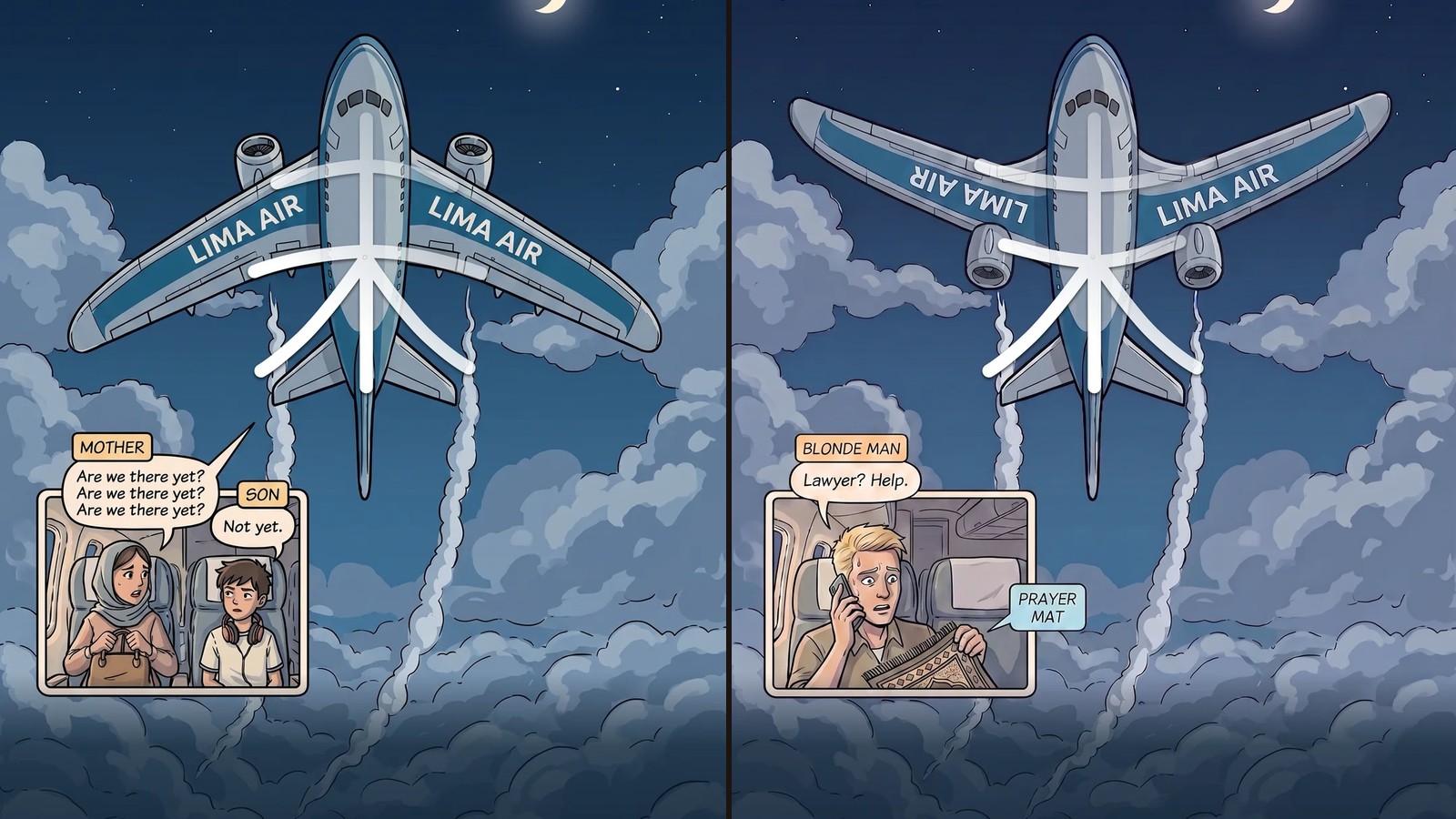
Instead of thinking about tree branches, Shibashi turns both characters into an overhead view of a Lima Air passenger jet flying through the clouds. Compare the two flashcards below and click their audio pills:
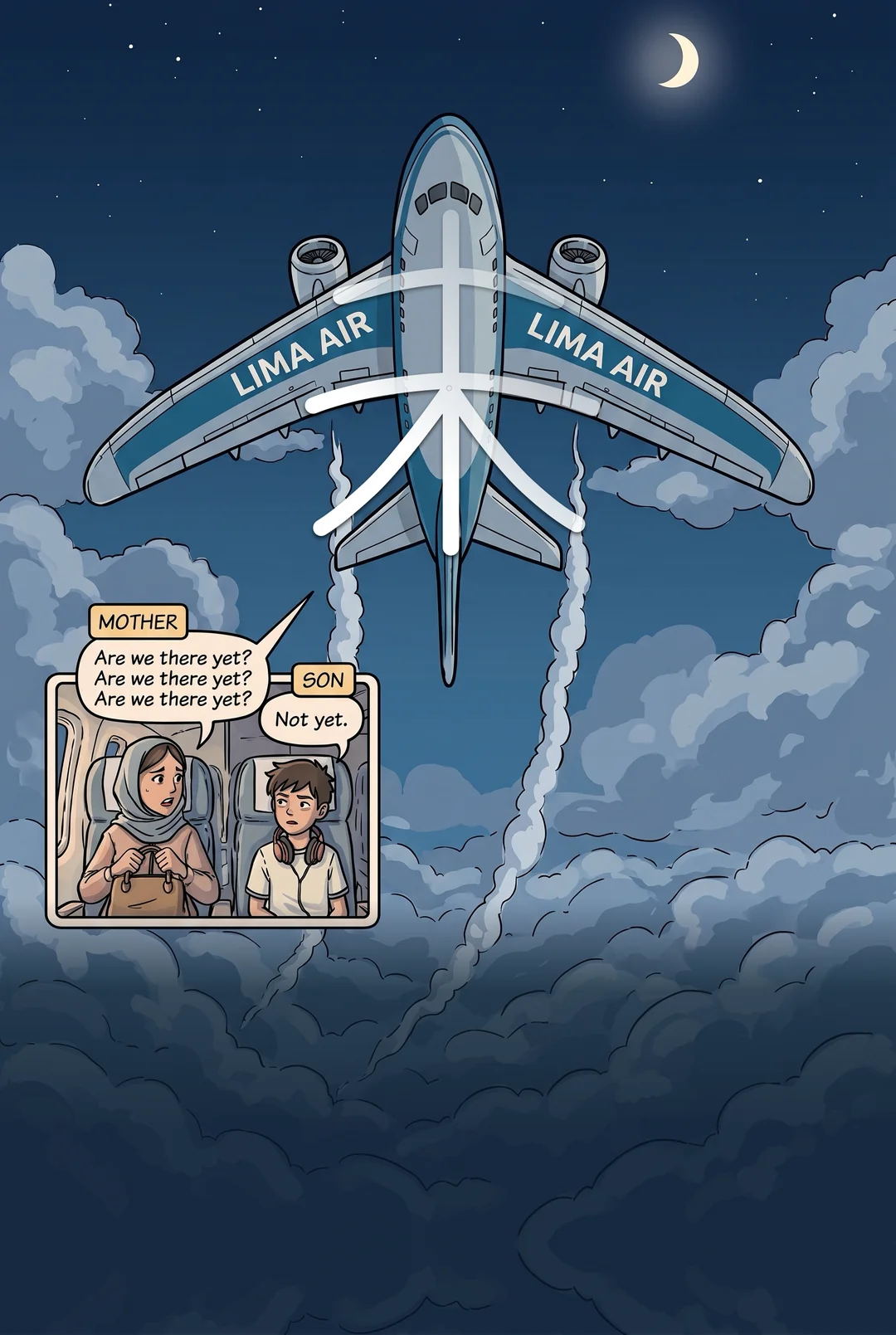

| Kanji | Wing Shape (Top vs. Middle Bar) | Visual Story & Meaning | Readings Encoded in the Scene |
|---|---|---|---|
| 未 (Not Yet) | Top bar is SHORTER (normal front canard wings, wide main wings) | Flying smoothly on a mini Lima Air jet while your mom keeps asking: "Are we there yet?" — "Not yet, maa!" | み (mi) — mini jet いま (ima) — Lima Air ま (ma) — maa asking |
| 末 (End) | Top bar is LONGER (the main wings are flipped upside-down!) | If your plane's main wings are flipped backward at the nose, your END is near! Grab your prayer mats-u or call your lawyer to sue everyone! | まつ (matsu) — prayer mats-u すえ (sue) — sue everyone |
Locking In the Top Compound Words: 未来 (mirai) vs. 週末 (shūmatsu)
- 未来 (みらい mirai — Future): 未 (み mi, Not Yet) + 来 (らい rai, Come) = What has not yet come is the Future.
- 週末 (しゅうまつ shūmatsu — Weekend): 週 (しゅう shū, Week) + 末 (まつ matsu, End) = The end of the week is the Weekend.