How 'Genghis Khan' Unlocks 7 Kanji Readings (かん KAN & げん GEN) in 1 Trick
Stop memorizing On'yomi readings by rote. See how Shibashi uses one recurring character — Genghis Khan — to lock in the KAN (かん) and GEN (げん) readings across 7 kanji.
Why is memorizing On'yomi readings so frustrating in traditional textbooks? Because syllables like かん (kan) and げん (gen) feel like abstract noise. In Shibashi, every time a kanji has a primary reading of かん (Khan) or げん (Genghis), the same unmistakable character — Genghis Khan — walks right into the illustration!
Quick Comparison: 官 (Government) vs. 漢 (Chinese) vs. 干 (Dry) vs. 寒 (Cold)
Meet the 7 Shibashi flashcards where Genghis Khan anchors either かん (Khan) or げん (Genghis):
| Kanji & Meaning | Primary Readings (Bold = Primary) | Shibashi Visual Mnemonic Hook | Common Compound Word |
|---|---|---|---|
| 官 — Government | On: かん Kun: — |
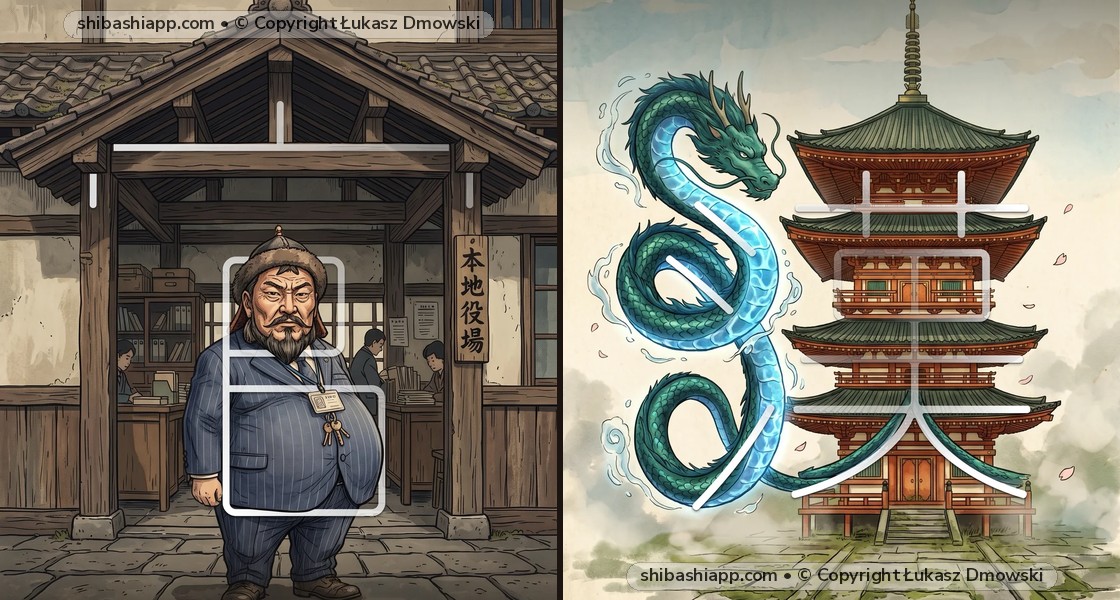
Genghis _Khan_ (かん) working as a Government official | 外交官 (がいこうかん) — diplomat |
| 漢 — Chinese | On: かん Kun: — |
Genghis _Khan_ (かん) admiring a Chinese temple | 漢文 (かんぶん) — Chinese classics, classic... |
| 干 — Dry | On: かん Kun: ほ, ひ |
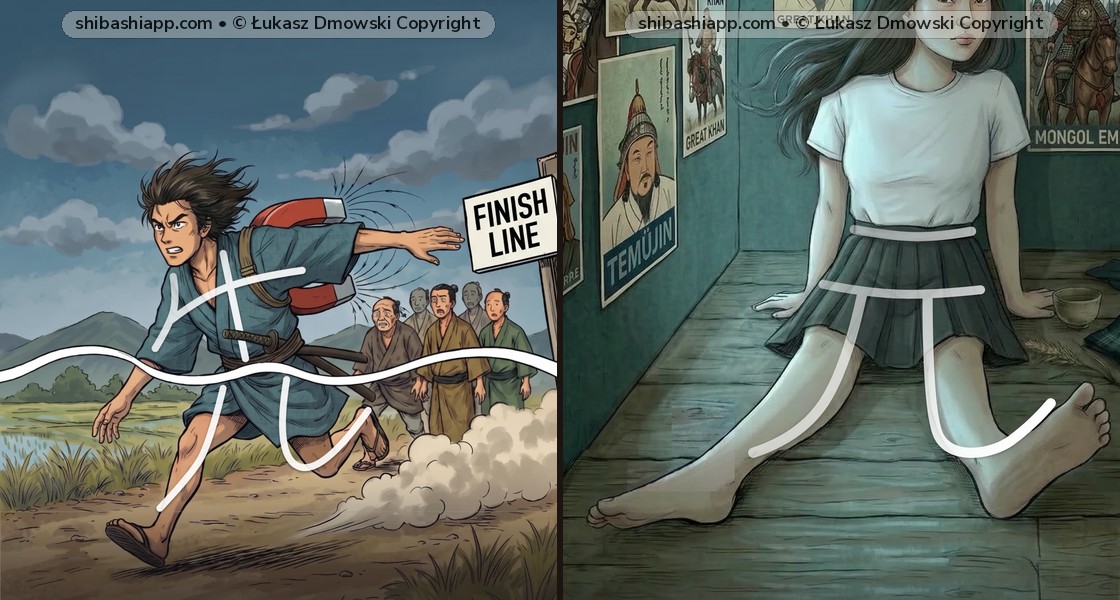
Genghis _Khan_ (かん) drying clothes on a rack in the heat (ほ / ひ) | 干す (ほす) — to air; to dry; to desiccate |
| 寒 — Cold | On: かん Kun: さむ |
Freezing Cold (さむ / かん) under an icy roof | 寒い (さむい) — cold (e.g. weather) |
| 現 — Present Time | On: げん Kun: あらわ |
Present Time _Gen_ghis (げん) Khan appearing (あらわ) | 現れ (あらわれ) — embodiment, materialization |
| 言 — Say | On: げん, ごん Kun: い |
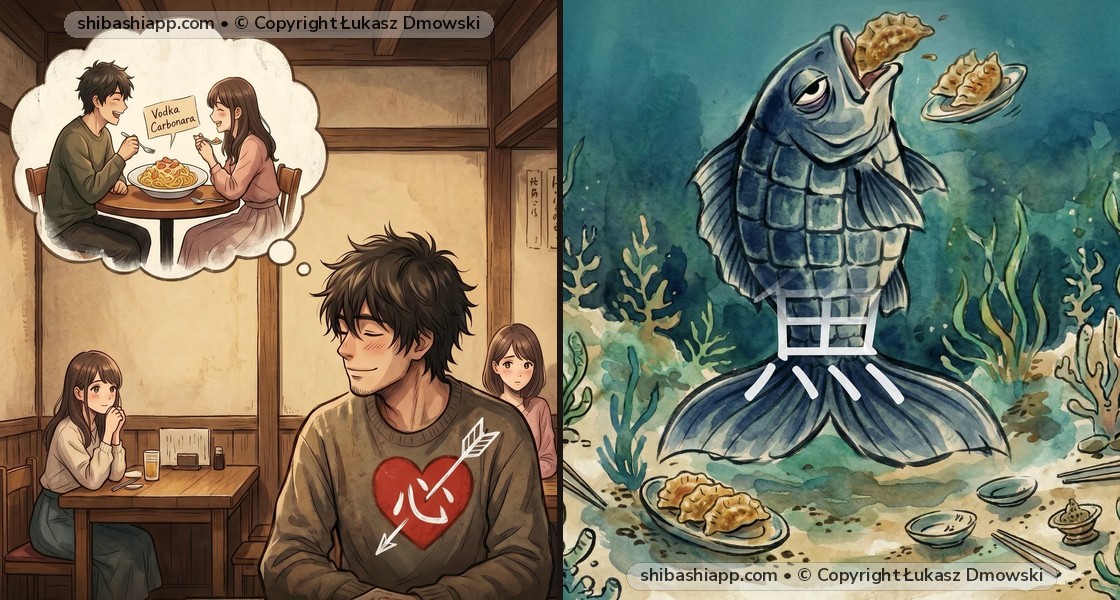
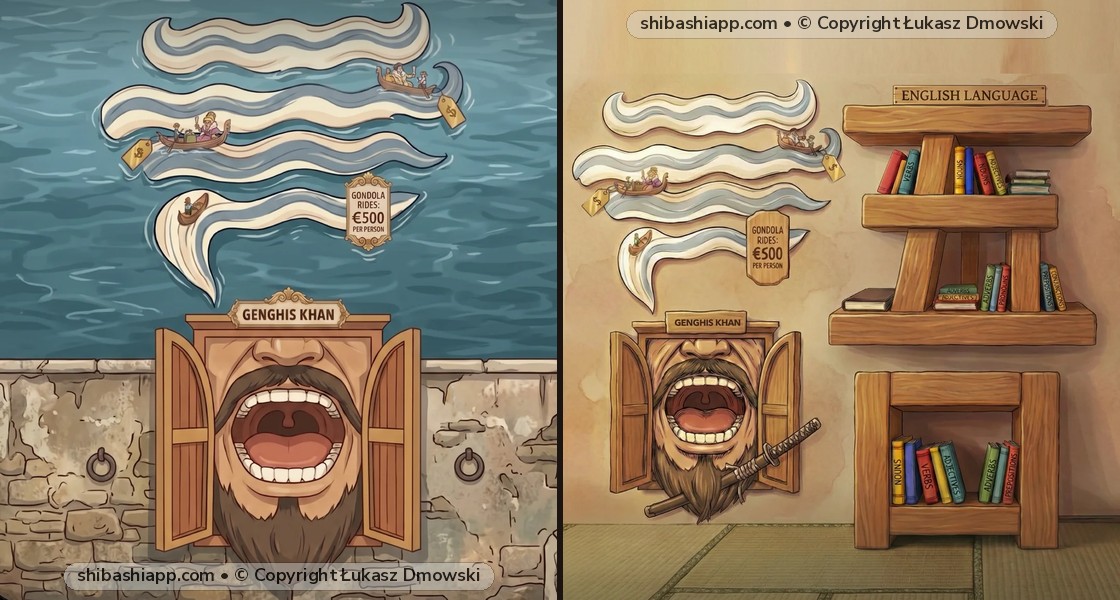
_Gen_ghis (げん) Khan speaking words = Say (い / こと) | 言語 (げんご) — language |
| 元 — Origin | On: げん, がん Kun: — |
_Gen_ghis (げん) at the Origin / starting line (もと) | 元気 (げんき) — health, vitality |
Illustrated Kanji Flashcards(Tap Readings for Audio)
When you focus on the surname _Khan_ (かん), you immediately recall 官 (かん — Government employee Genghis Khan), 漢 (かん — Chinese temple admired by Khan), 干 (かん — Khan drying his laundry in the heat), and 寒 (かん — Cold winter warrior). When you focus on his first name _Gen_ghis (げん), you unlock 現 (げん — Present Time Genghis Khan), 言 (げん — Say), and 元 (げん — Origin)!


Essential Japanese Vocabulary Words Using 官 / 漢 / 干 / 寒
Once you can recognize 官 (Government) and 漢 (Chinese) and 干 (Dry) individually, lock them into your active reading vocabulary with these high-frequency Japanese words from the Shibashi app:
| Japanese Word | Hiragana Reading | English Meaning | Level |
|---|---|---|---|
| 外交官 | がいこうかん | diplomat | JLPT |
| 漢文 | かんぶん | Chinese classics, classical Chinese writing | JLPT |
| 漢方 | かんぽう | traditional Chinese medicine, herbal medicine | JLPT |
| 干す | ほす | to air; to dry; to desiccate | JLPT |
| 飲み干す | のみほす | to drink up; to drain (cup) | JLPT |
| 日干し | ひぼし | sun-drying; dried in the sun | JLPT |
| 寒い | さむい | cold (e.g. weather) | JLPT |
| 現れ | あらわれ | embodiment, materialization | JLPT |
5-Second Memory Summary: How to Never Mix Up 官 & 漢 & 干 Again
Whenever you see Genghis Khan in a Shibashi card scene, the On'yomi is either かん (Khan) or げん (Genghis)!