食 (Eat) vs. 飲 (Drink) vs. 飯 (Meal) vs. 館 (Building): Mr. Daikon's Food Kanji Family
Walk down any street in Tokyo and half the shop signs contain 食 (Eat), 飲 (Drink), 飯 (Meal), or 館 (Hall/Building). In Shibashi, all of them star the exact same character: Mr. Daikon (良). Here is how to tell every single one apart.
Whether you are reading an izakaya menu (飲み放題 nomihōdai — all-you-can-drink; 食べ放題 tabehōdai — all-you-can-eat), ordering fried rice (炒飯 chāhan), or visiting an aquarium (水族館 suizokukan), you are looking at Shibashi's Mr. Daikon (良 / 食) Visual Family!
1. Meet the Root Character: 良 (Good — りょう / よ / い)
Every character in this family is built around 良 (Good), pictured in Shibashi as Mr. Daikon (a cheerful white Japanese radish): when Mr. Daikon started e-ating (い i, as in いい ii 'good') Oreos (よ yo / りょう ryō), he couldn't believe how good they taste!

2. 食 (Food / Eat — しょく / た / く) vs. 飲 (Drink — いん / の)
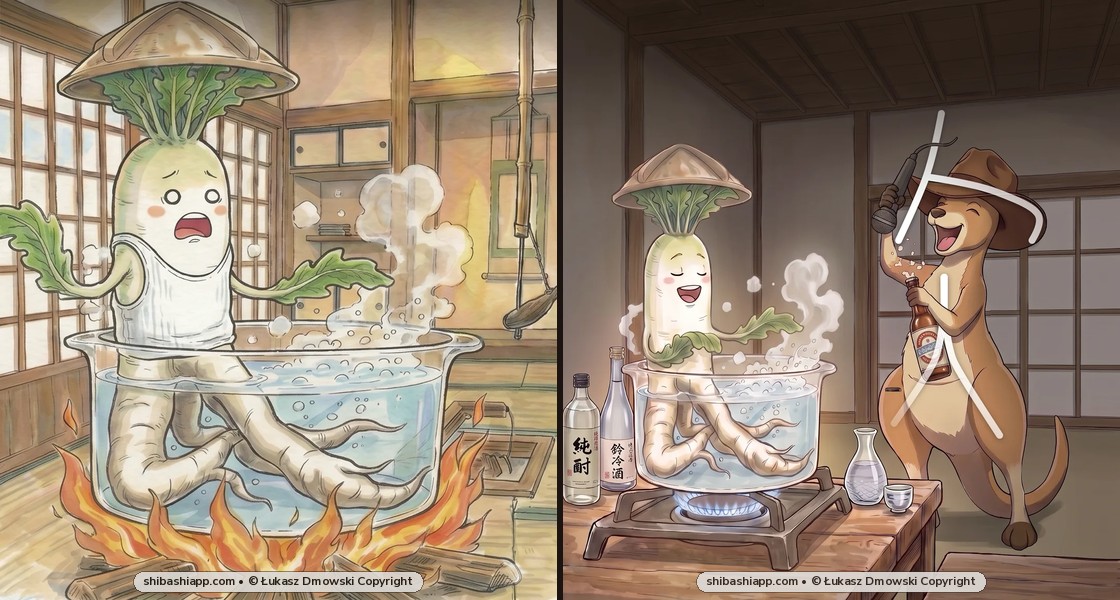
Put a roof hat on top of Mr. Daikon and he becomes 食 (Food / Eat). Add a singing mouth (欠) on the right and you get 飲 (Drink):
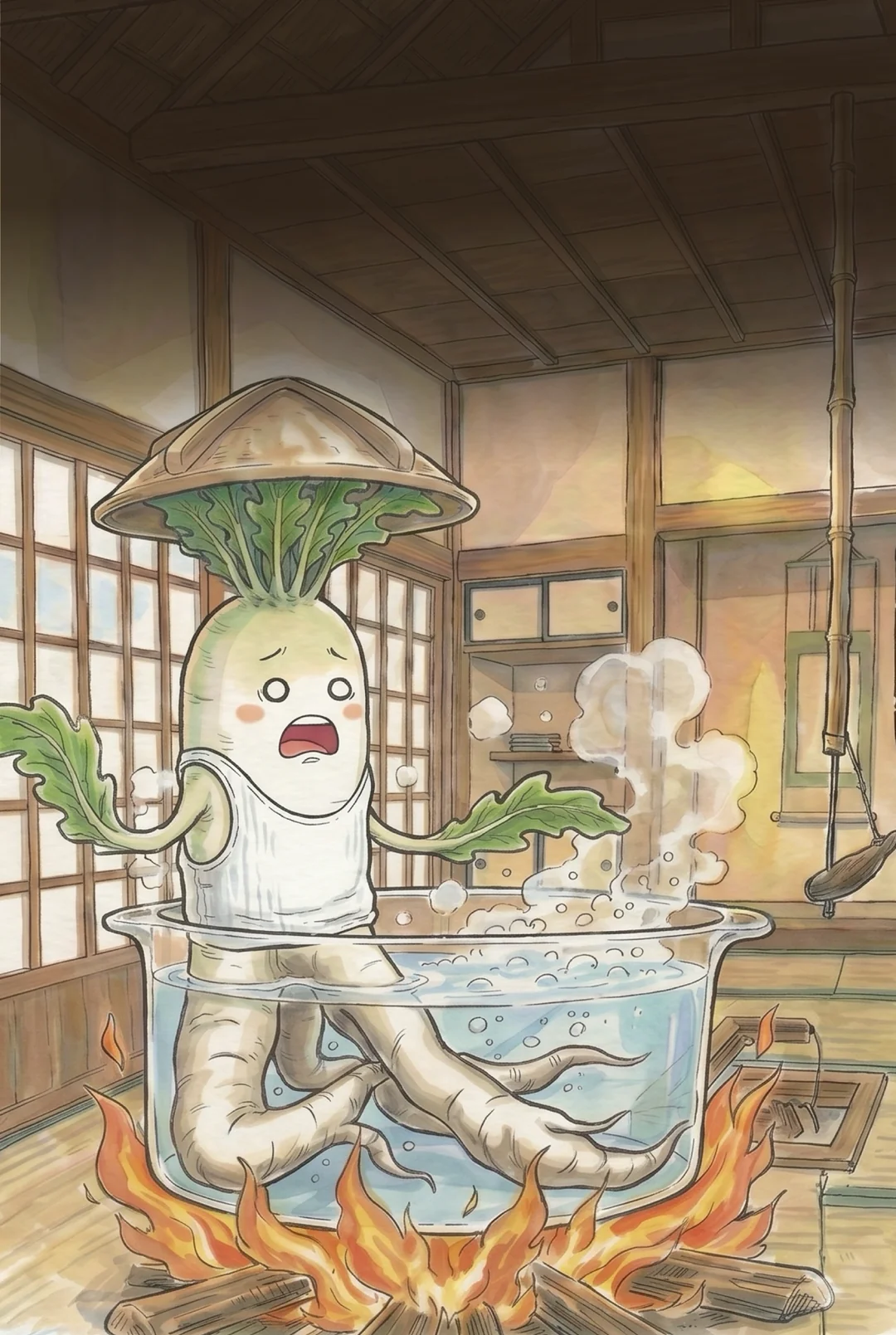
- 食 (Food / Eat — た(べる) taberu / く(う) kuu / しょく shoku): The cool (く ku) daikon in a tank-top (た ta, as in 食べる taberu) is shocked (しょく shoku, as in 食事 shokuji) that he may soon become food!
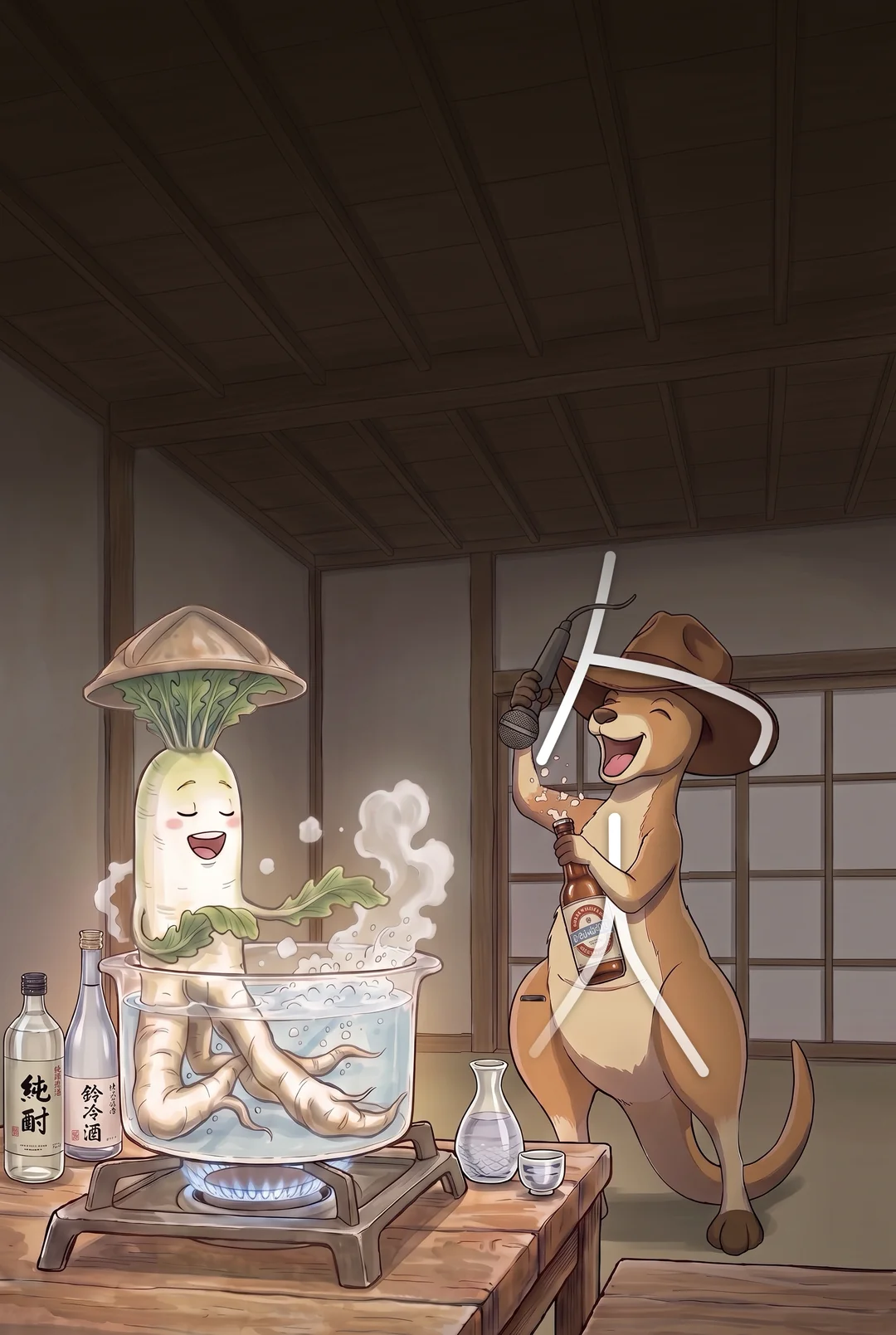
- 飲 (Drink — の(む) nomu / いん in): Food (飠) on the left + open mouth (欠) on the right! If you don't know (の no, as in 飲む nomu) how to play an instrument (いん in, as in 飲料 inryō), just drink and sing while cooking dinner!
3. 飯 (Meal / Cooked Rice — はん / めし) vs. 館 (Building / Hall — かん)
Now keep 食 (Food) on the left and swap the right-hand component:


- 飯 (Meal / Cooked Rice — めし meshi / はん han): Food (飠) + Anti/Counter (反). This year's Hanukkah (はん han, as in ご飯 gohan and 朝ご飯 asagohan) meal will be a giant daikon and some mellow shiitakes (めし meshi)!
- 館 (Building / Hall — かん kan): Food (飠) + Official Roof (官). A perfect building has a canopy (かん kan, as in 図書館 toshokan 'library' and 映画館 eigakan 'movie theater') to sleep under, and some yummy food cooking inside!
4. Bonus Daikon Appearance: 金 (Gold — きん) vs. 銀 (Silver — ぎん)
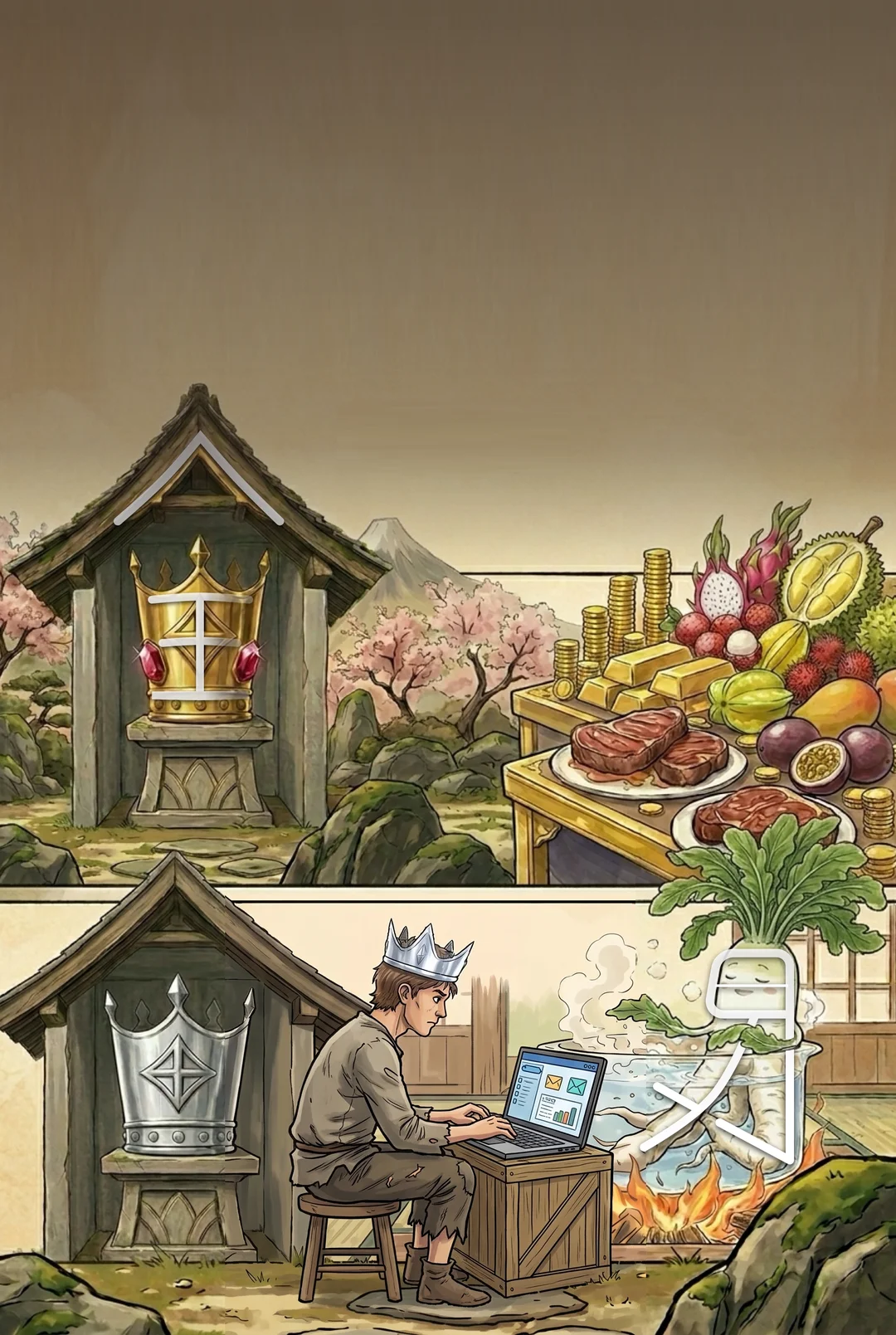
Why does 銀 (Silver — ぎん gin, as in 銀行 ginkō 'bank') have 金 (Gold/Metal) on the left and Mr. Daikon (艮) on the right? Because while the Gold (金) crown gives you all you can dream of, the Silver (銀) crown means you should still log-in (ぎん gin) to work and eat daikons!

Frequently Asked Questions
How do you tell 食 (Food/Eat), 飲 (Drink), and 飯 (Meal) apart?
All three start with Mr. Daikon (良) wearing a roof hat! 食 (Food/Eat — shoku / ta / ku) is Mr. Daikon in a tank-top (た), shocked (しょく) that he is about to become food. 飲 (Drink — in / no) adds the singing mouth radical (欠) on the right: drinking and singing while cooking dinner! 飯 (Meal — han / meshi) adds 反 on the right: a Hanukkah (はん) meal of giant daikon and mellow shiitakes (めし).
Why does 館 (Building / Hall — kan) have the Food radical on the left?
A 館 (kan) was traditionally a guest hall where travelers slept under a canopy (かん) with yummy food (食) cooking inside! Today it appears in 図書館 (toshokan, library), 映画館 (eigakan, movie theater), and 水族館 (suizokukan, aquarium).