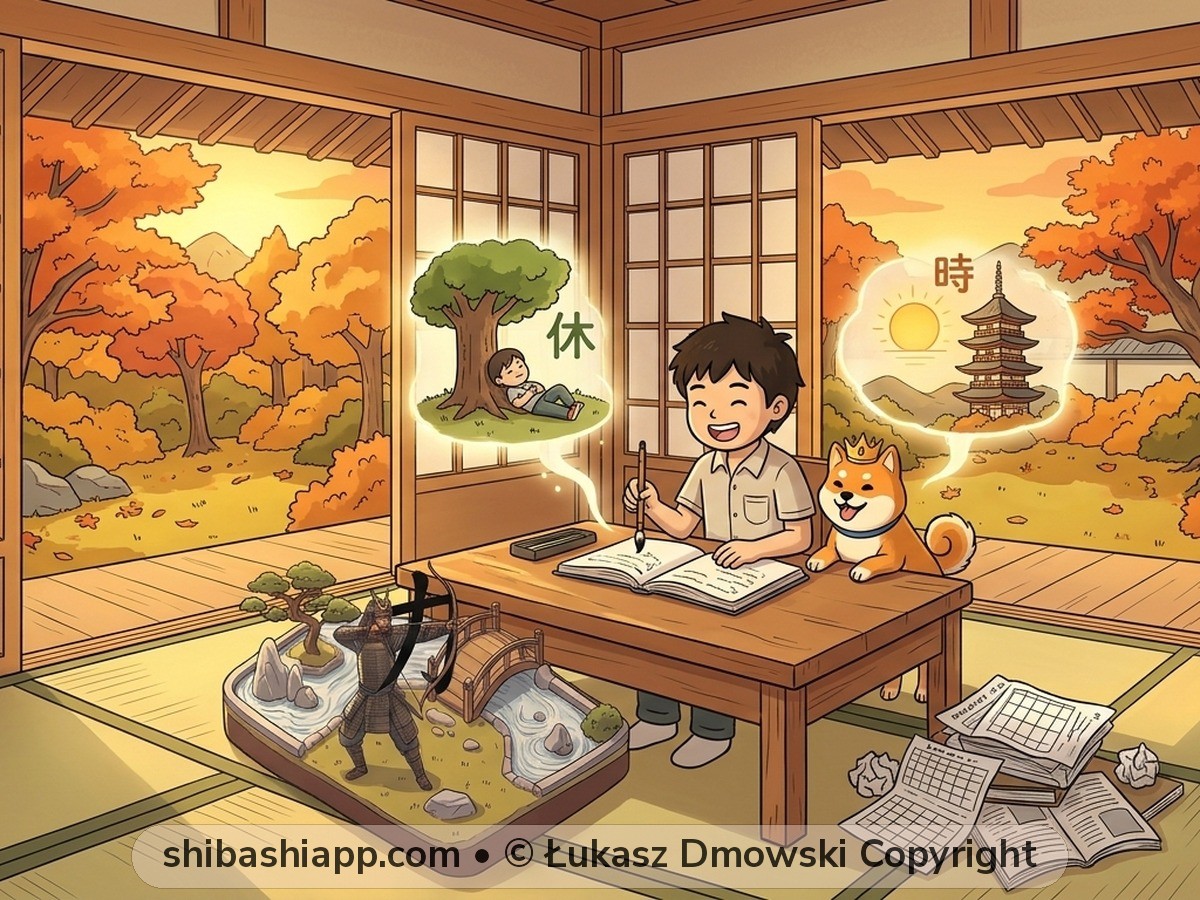
木 (Tree), 本 (Book), 休 (Rest) & 体 (Body): How One Tree Unlocks 4 JLPT N5 Kanji
Once you know the 4-stroke kanji for Tree (木), adding a single root mark or a standing person (亻) on the left immediately unlocks 本 (Book/Origin), 休 (Rest), and 体 (Physical Body)!
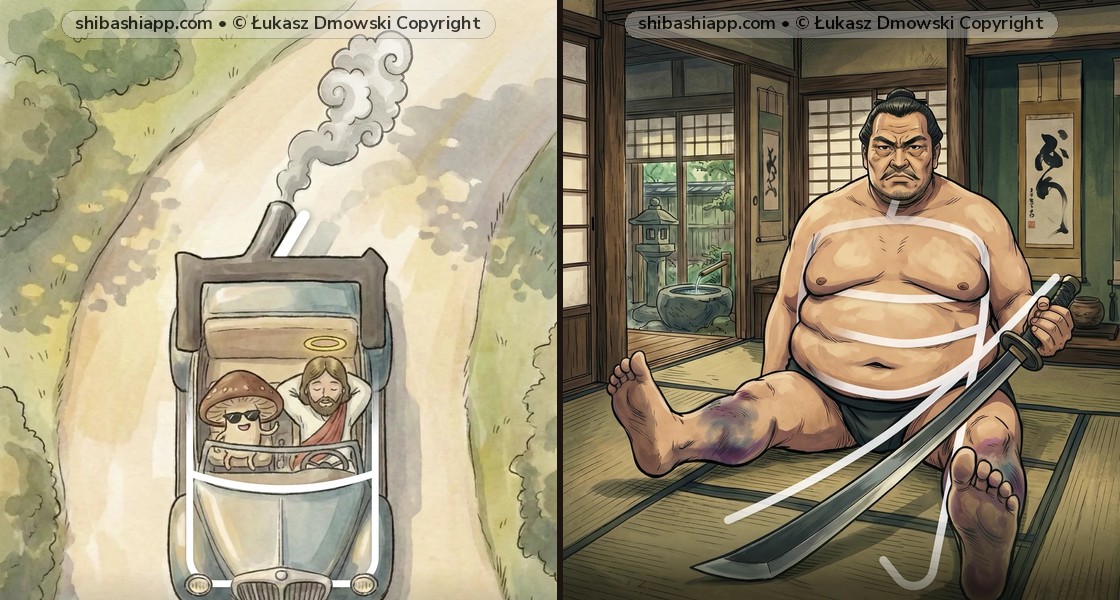
Once you know the 4-stroke kanji for 木 (Tree), you are one stroke away from 本 (Book / Origin), 休 (Rest), and 体 (Physical Body). Yet because 休 and 体 differ only by a tiny horizontal bar at the bottom-right, learners mix them up constantly. Here is how to lock all four into memory.
1. 木 (Tree — き / もく) vs. 本 (Book / Origin — ほん / もと): Mocking Tree vs. Root of the Tree
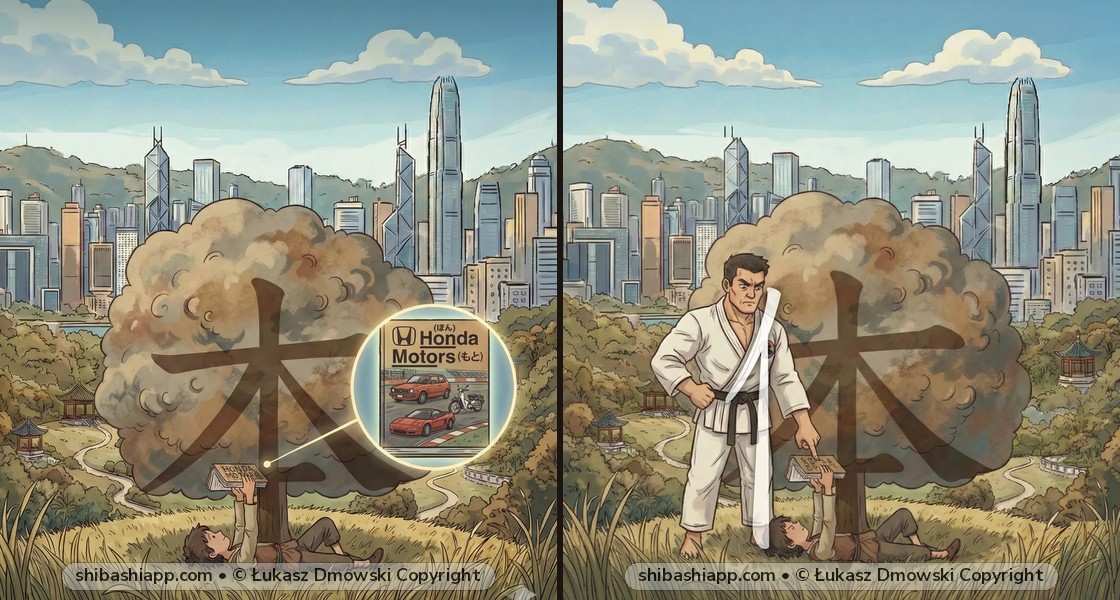
Compare 木 (Tree) and 本 (Book / Root) side-by-side:
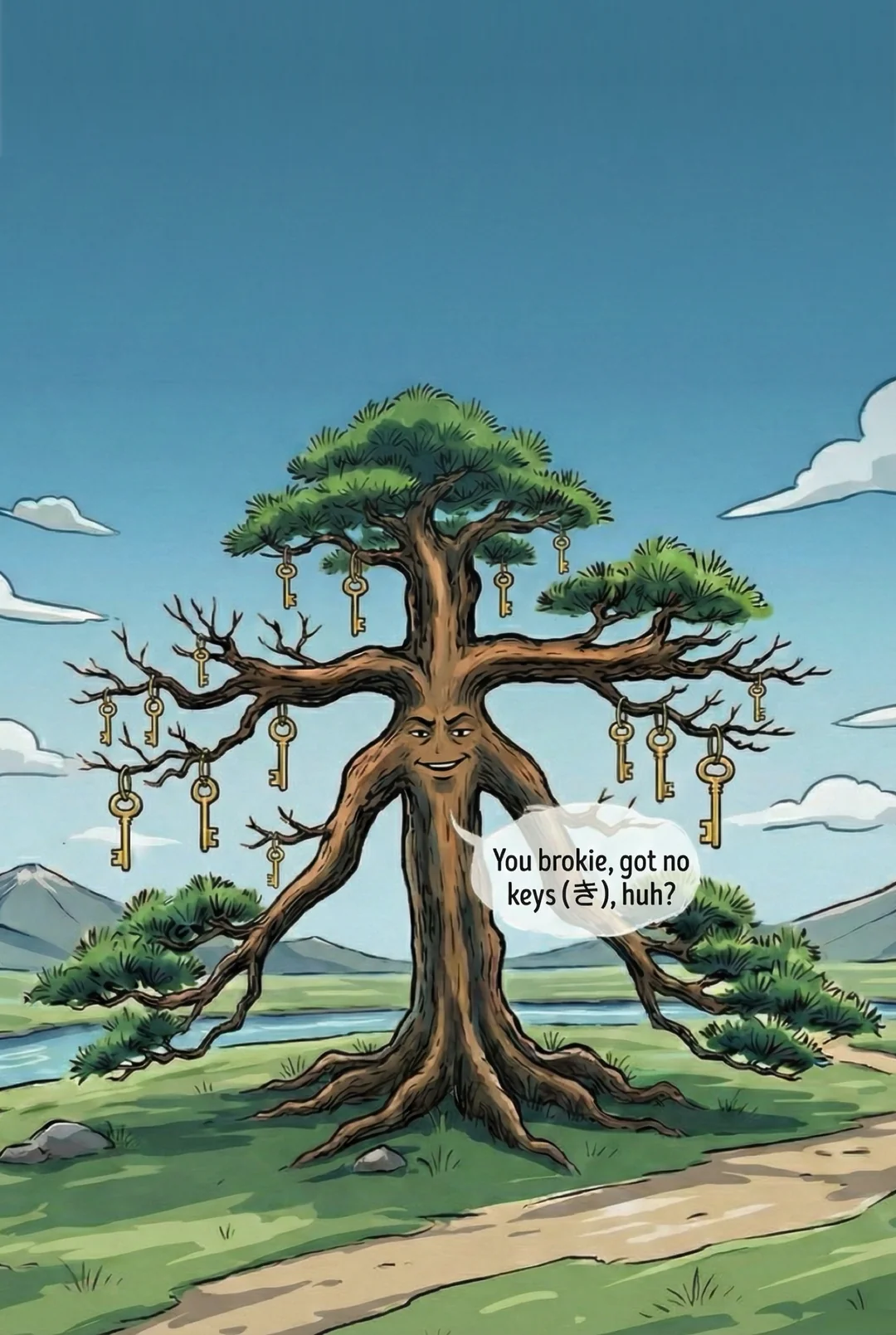
- 木 (Tree — き ki / もく moku): A trunk with branches above and roots sweeping down below. The tree is mocking (もく moku, as in 木曜日 mokuyōbi 'Thursday') us — it knows we got no keys (き ki)!
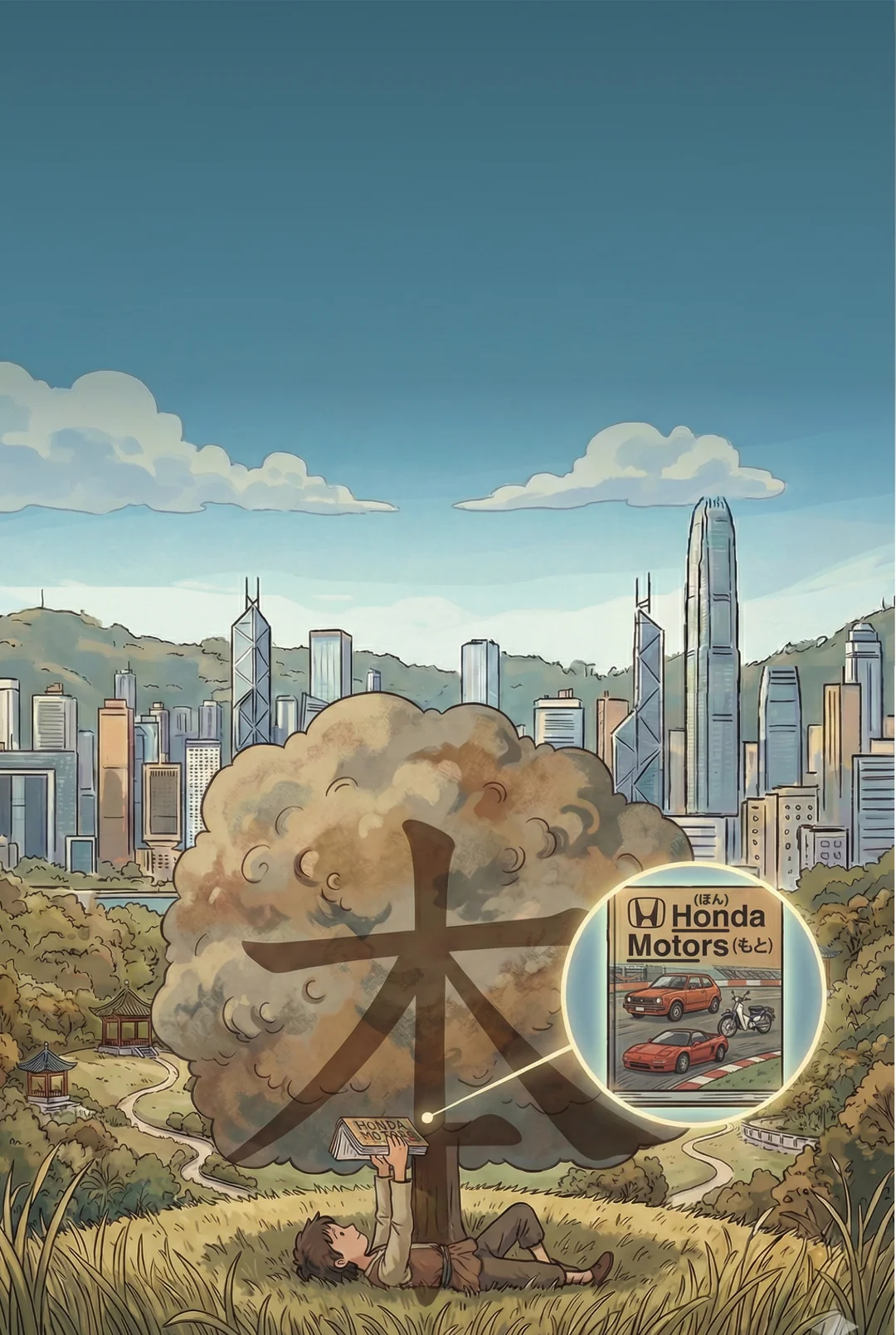
- 本 (Book / Origin — ほん hon / もと moto): Adds a horizontal slice across the lower trunk pointing to the root/origin (and since books are made from wood pulp, it also means Book!). The boy in Hong Kong is reading a book about Honda (ほん hon, as in 日本 Nihon) Motors (もと moto).
2. 休 (Rest — やす / きゅう) vs. 体 (Physical Body — からだ / たい): Cucumber Tree vs. Tyrant Karate Dad
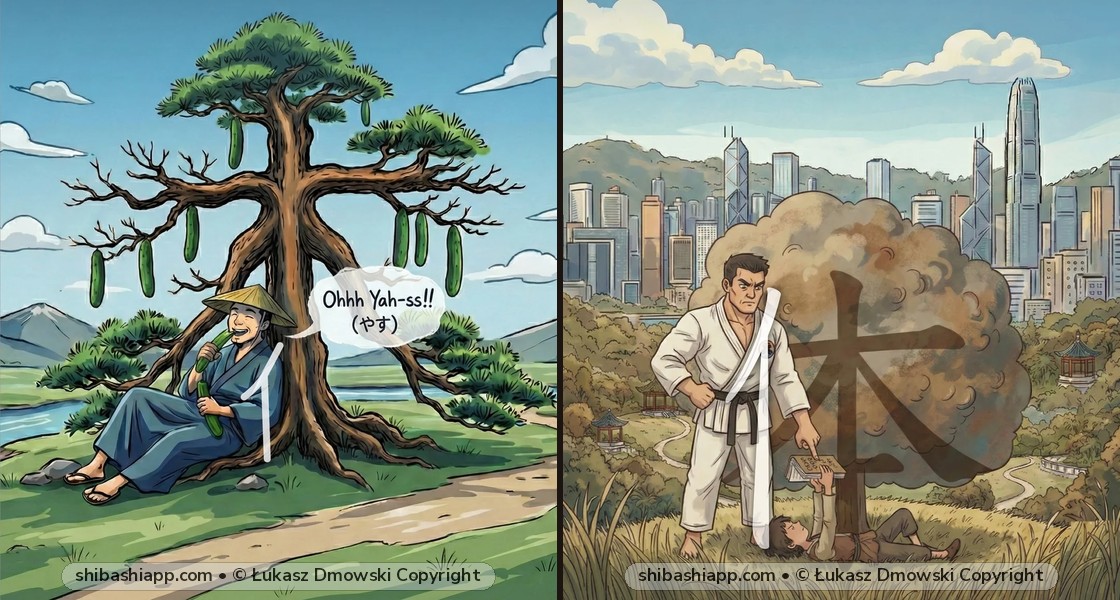
Now place the Person radical (亻) on the left of 木 vs. 本:


- 休 (Rest — やす(む) yasumu / きゅう kyū): Person (亻) + plain Tree (木, no bottom tick). Resting by the cucumber (きゅう kyū, as in 休日 kyūjitsu 'holiday') tree is the best. "Ohh Ya-ss (やす yasu, as in 休む yasumu)!!"
- 体 (Physical Body — からだ karada / たい tai): Person (亻) + Book/Root (本, with the bottom tick). Tyrant (たい tai, as in 体育館 taiikukan 'gym') Karate dad (からだ karada) wants his son to train his physical body, not read books (本)!
Frequently Asked Questions
How do you tell 休 (Rest) and 体 (Physical Body) apart?
Both have the Person radical (亻) on the left and a Tree (木) on the right! 休 (Rest — yasumu / kyū) is a Person leaning against a plain Tree (木) with NO bottom tick (resting by the cucumber tree!). 体 (Physical Body — karada / tai) adds the horizontal tick at the base of the tree (本): Tyrant (たい) Karate dad (からだ) wants his son to train his body, not read books (本)!
Why does 本 (Book / Origin) look like 木 (Tree) with an extra line at the bottom?
The extra horizontal stroke at the bottom of 木 (Tree) points directly to the tree's roots — giving 本 the core meaning of 'root / origin' (もと moto, as in 日本 Nihon, 'origin of the sun') and, since paper comes from trees, 'Book' (ほん hon)!