牛 (Cow) vs. 午 (Noon) vs. 年 (Year): The Horn Trick, Wagyu Sushi & The #1 Goat Shirt
牛 (Cow) and 午 (Noon) differ by just two millimeters of the center vertical stroke — yet mixing them up turns 'beef' (牛肉) into 'morning' (午前)! Here is the horn rule and the #1 Goat Shirt trick.
On every JLPT N5 practice test, learners lose points on the exact same question: telling 牛 (Cow — うし ushi / ぎゅう gyū) apart from 午 (Noon — ご go, as in 午前 AM and 午後 PM). Both have a slanted horn on the top-left and two horizontal bars crossed by a vertical spine. The only difference is whether that vertical spine pokes through the top!
1. 牛 (Cow — ぎゅう / うし) vs. 午 (Noon — ご): Wagyu Sushi vs. Drying the #1 Goat Shirt
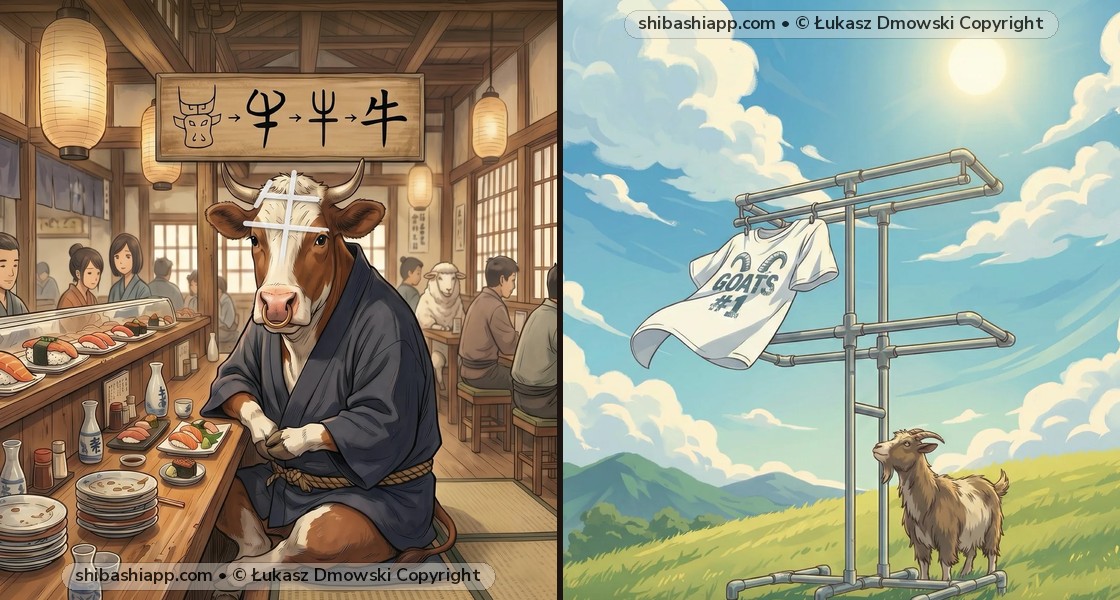
Compare the top of the vertical line in Shibashi's two flashcards below:


- 牛 (Cow — ぎゅう gyū / うし ushi): The center vertical stroke pokes straight through the top like a bull's horn! Japan is all about delicious wagyu (ぎゅう gyū, as in 牛肉 gyūniku 'beef' and 牛乳 gyūnyū 'milk') beef/cows and sushi (うし ushi).
- 午 (Noon — ご go): The top bar stays completely flat like a T-bar clothesline pole! Noon is the perfect time to dry the #1 goat (ご go, as in 午前 gozen 'AM / morning' and 午後 gogo 'PM / afternoon') shirt in the midday sun.
2. Two More Slanted-Horn Siblings: 年 (Year — とし / ねん) & 先 (Previous / Ahead — せん / ま)
Once your eye recognizes that top-left slanted horn stroke (𠂉), you immediately spot it at the top of two more top-20 JLPT N5 kanjis:
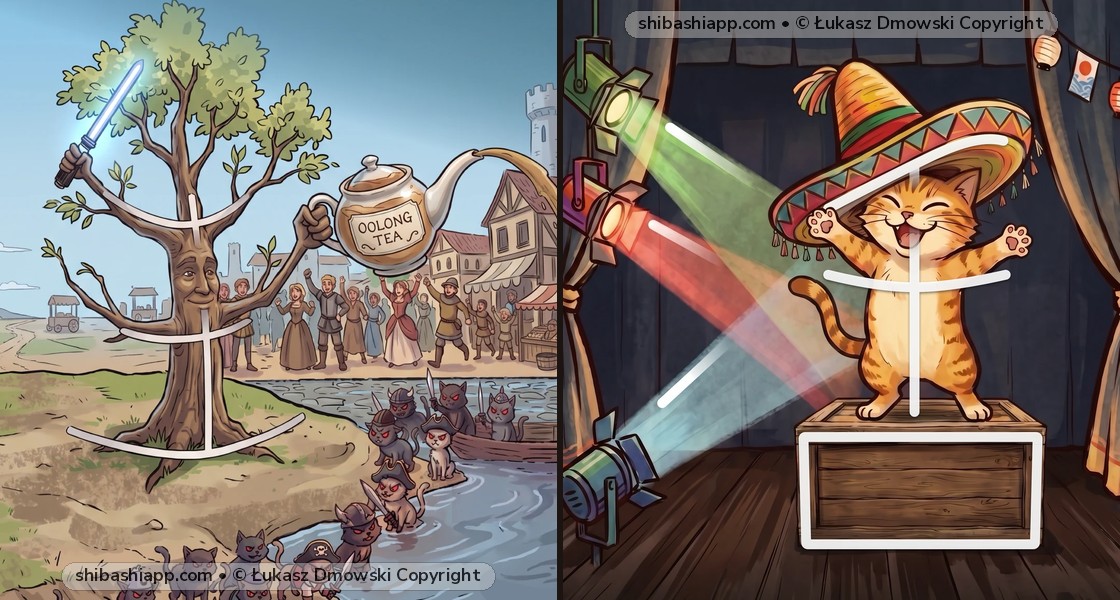
- 年 (Year — とし toshi / ねん nen): Ms. Toe-shi (とし toshi, as in 今年 kotoshi 'this year'), always wearing linen (ねん nen, as in 来年 rainen 'next year'), makes every year fun for us!
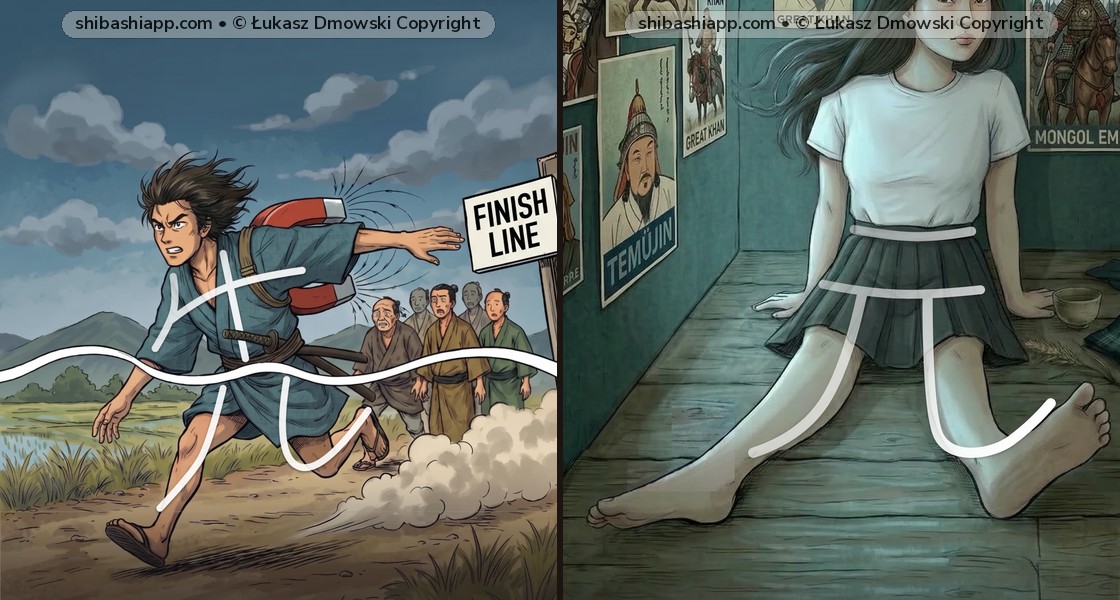
- 先 (Previous / Ahead — せん sen / ま ma): A horn-crested helmet on top of legs (儿)! The magnetic (ま ma, as in まず mazu 'first of all') samurai runs ahead of everyone, sending (せん sen, as in 先生 sensei and 先週 senshū 'last week') his previous life bye-bye!


Frequently Asked Questions
How do you tell 牛 (Cow) and 午 (Noon) apart in Japanese?
Look at the very top of the vertical center line: in 牛 (Cow — ushi / gyū), the vertical line POKES STRAIGHT THROUGH the top bar like a bull's horn! In 午 (Noon — go, as in 午前 gozen AM and 午後 gogo PM), the vertical line stops FLAT against the top bar like a clothesline pole where you dry your #1 goat (ご) shirt at high noon.
How do 年 (Year) and 先 (Previous/Ahead) connect to 牛 and 午?
Both 年 (Year — toshi / nen, where Ms. Toe-shi wears linen all year) and 先 (Previous/Ahead — sen / ma, where the magnetic samurai runs ahead) use that exact same slanted left-horn top structure!