
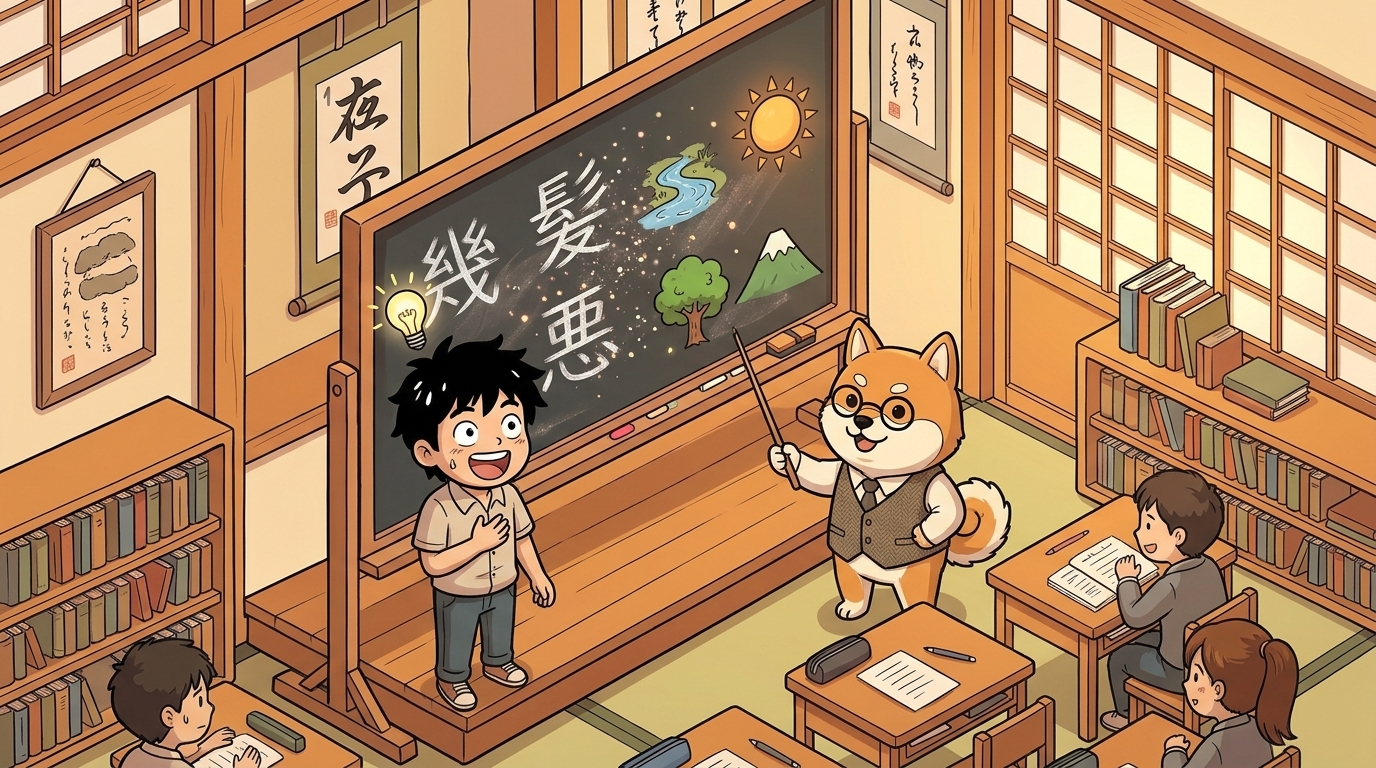
Why Is Kanji So Hard to Remember? The 4 Cognitive Traps Stopping Japanese Learners
If you feel like kanji slides right out of your head five minutes after an SRS review session, your memory isn't broken — your study method is triggering four classic cognitive bottlenecks.
Have you ever reviewed a kanji flashcard, gotten it right, and then failed to recognize that exact same character in a sentence ten minutes later? You aren't bad at languages. Traditional kanji study triggers four well-documented cognitive traps. Here is how to fix every single one.
Trap #1: Visual Overload ("The 14-Stroke Blur")
Human working memory can hold roughly 4±1 chunks of information at once. When you look at a 14-stroke kanji as 14 individual lines, you blow past your working memory limit immediately.
The Fix: Chunk every kanji into 2 or 3 radical building blocks. Instead of 14 strokes, your brain only stores 2 familiar components interacting in a single picture.
Trap #2: Lookalike Interference (The "Wait vs. Hold vs. Time" Trap)
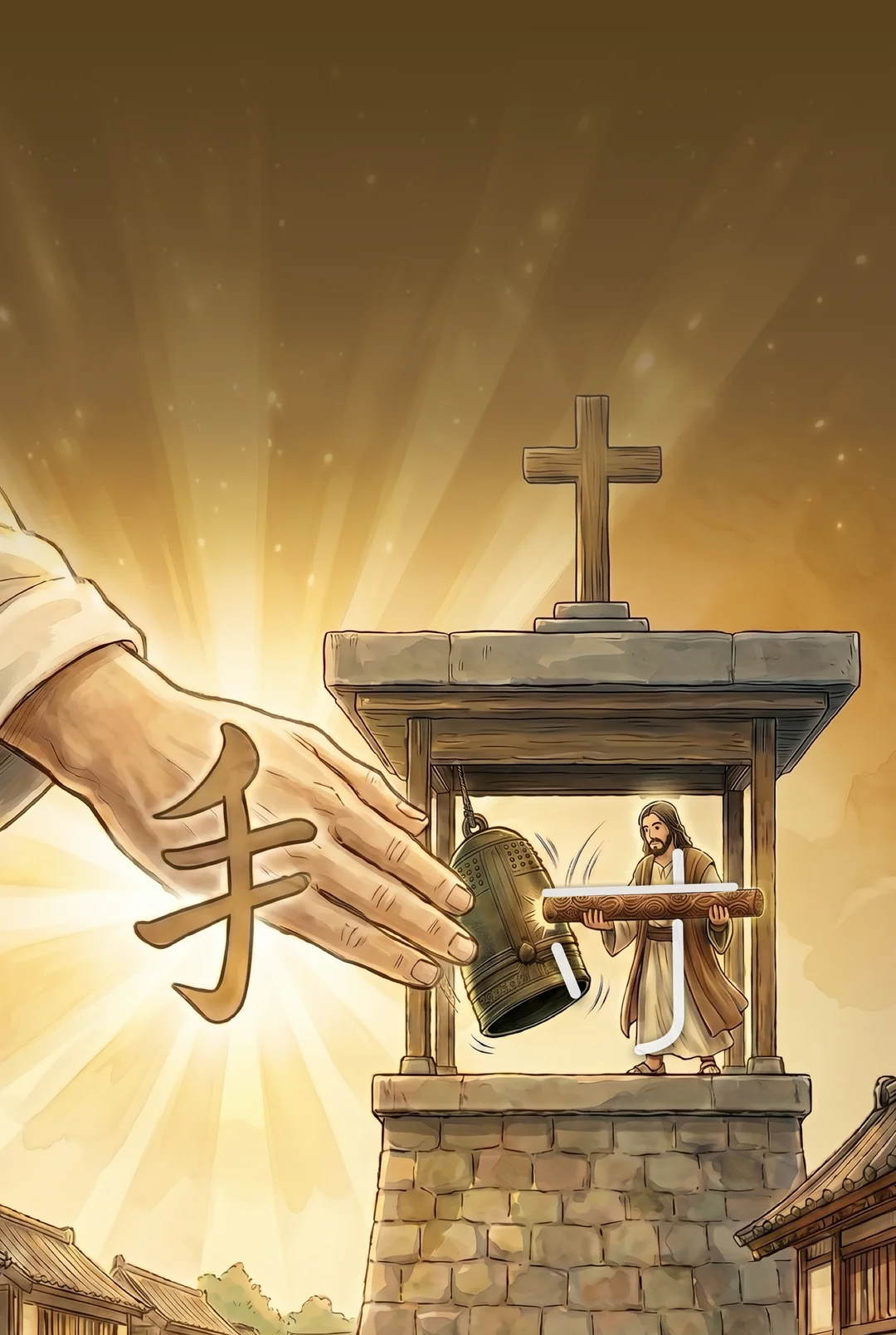
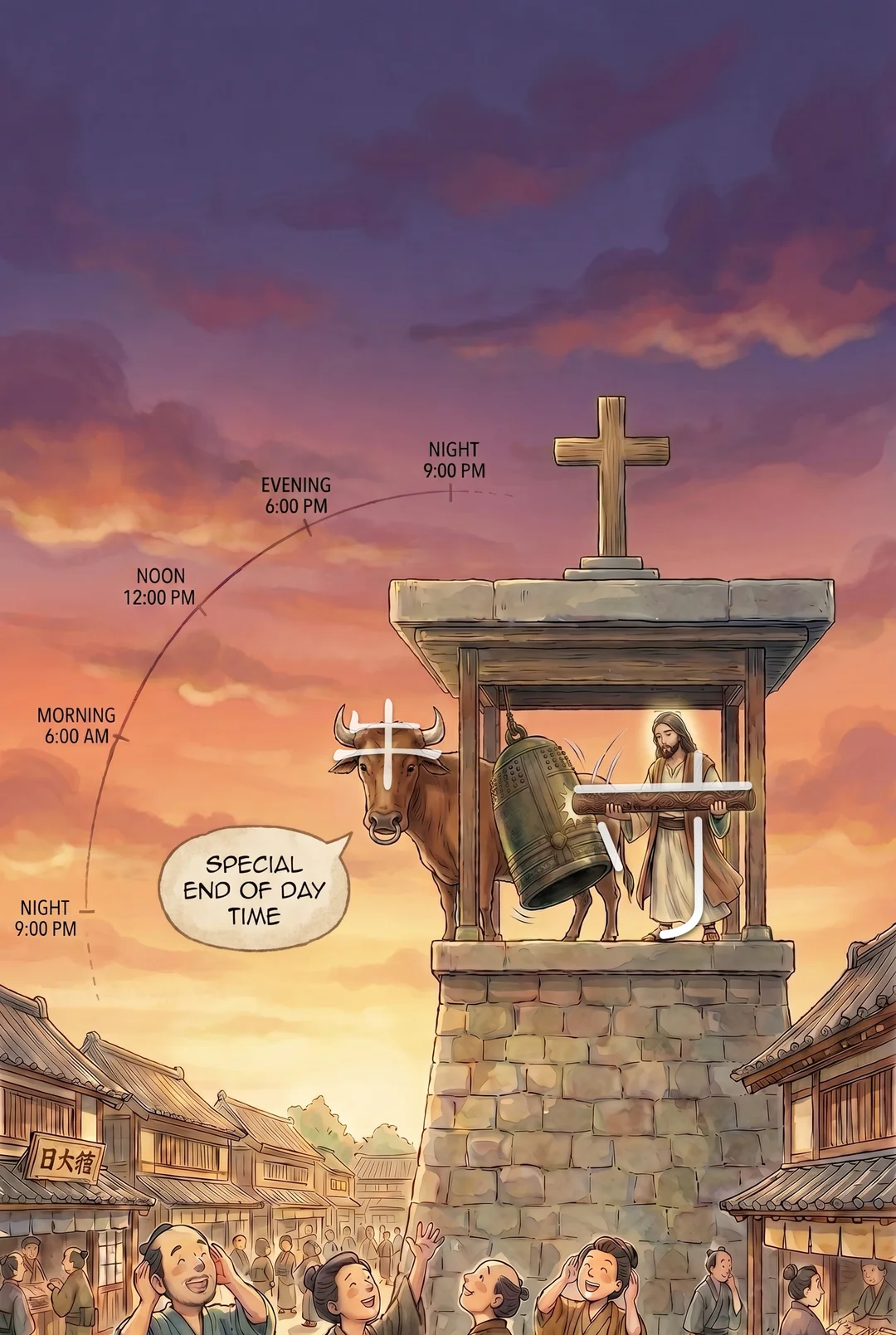
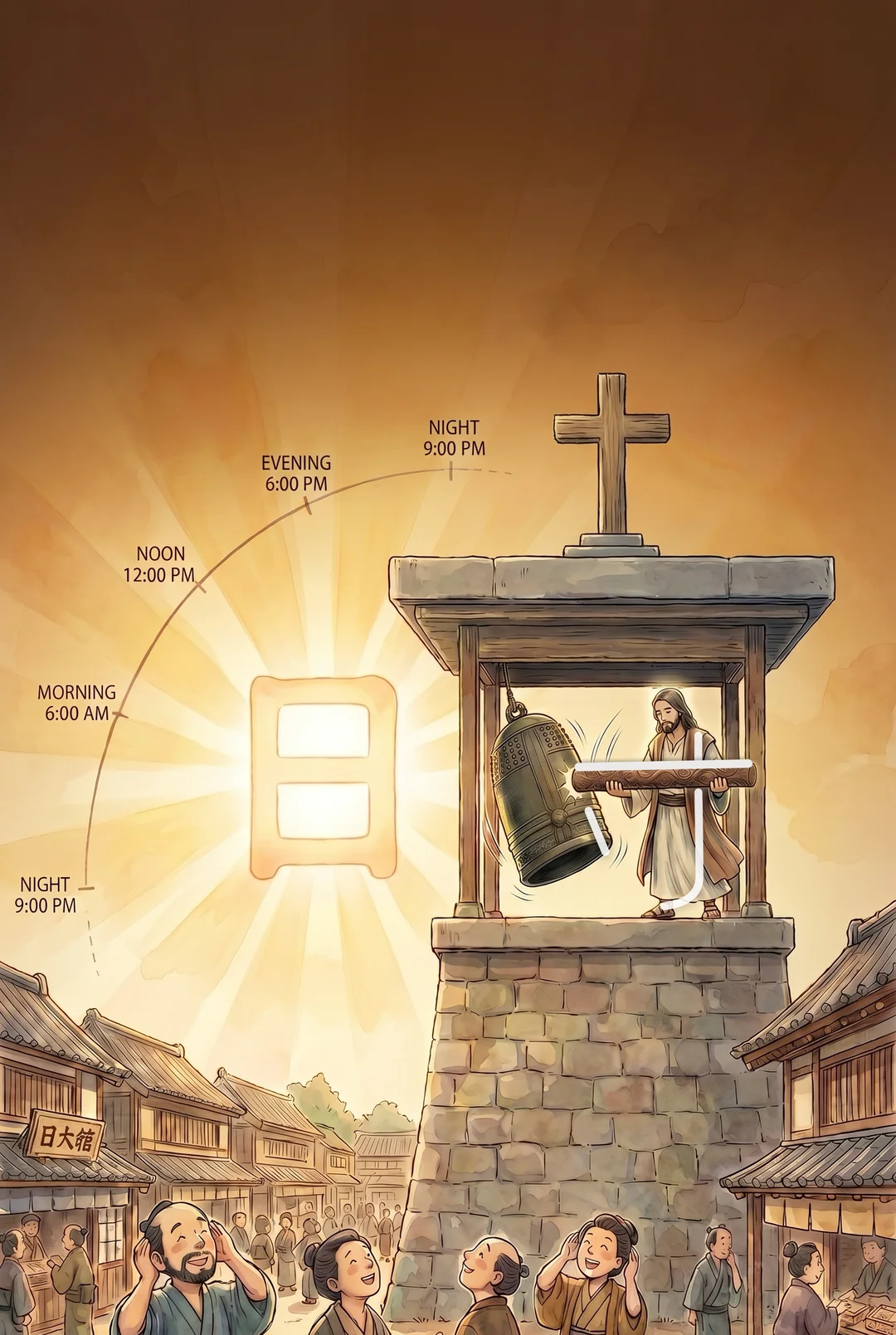
When you learn 待 (Wait) in Month 1, 持 (Hold) in Month 2, and 特 (Special) in Month 3, your brain encodes all three as "that kanji with the Temple 寺 on the right." When tested, you guess randomly.
The Fix: Study lookalike kanjis side-by-side in Visual Radical Families so your brain explicitly contrasts the left-hand radical from Day 1:

Trap #3: Split Mnemonics (Separate Stories for Meaning and Reading)
If an app forces you to read one text story for the meaning and a second text story for the reading, you double your cognitive load.
The Fix: Use unified visual mnemonics where the meaning and the primary Japanese reading live inside the exact same illustrated sentence.
Trap #4: Naked Kanji (Studying Characters Without Compound Words)
Memorizing an isolated kanji without learning the 3 to 5 everyday words it appears in is like memorizing Latin roots without learning any English words. Always review the high-frequency vocabulary compounds immediately after unlocking a kanji.
Common Questions Answered
Why do I keep forgetting kanji even when I use an SRS like Anki?
Spaced Repetition (SRS) only schedules reviews; it does not create the initial memory trace. If you try to brute-force an unanchored black-and-white symbol into an SRS without a visual radical story and audio hook, you will endlessly fail the same leech cards.