Japanese Clothing & Sheep Radical Kanji: 着 (Wear/Arrive), 服 (Clothes), 衣 (Garment), 洋 (Western) & 羊 (Sheep)
Why do both 着 (Wear / Arrive) and 洋 (Western style, as in 洋服 yōfuku 'Western clothes') contain 羊 (Sheep)? And what is the difference between 服 (fuku) and 衣 (koromo / i)?
Notice that both 着 (Wear / Arrive) and 洋 (Ocean / Western) contain the 羊 (Sheep) component! Picture pulling a warm wooly sheep sweater (羊) down over your eyes (目) to remember 着る (kiru — to wear on your upper body).
Quick Comparison: 着 (Wear) vs. 服 (Clothes) vs. 衣 (Clothes) vs. 洋 (Western Style, Ocean)
Compare the five clothing and sheep-radical kanjis in the table below:
| Kanji & Meaning | Primary Readings (Bold = Primary) | Shibashi Visual Mnemonic Hook | Common Compound Word |
|---|---|---|---|
| 着 — Wear | On: ちゃく Kun: き, つ |
羊 (Wooly sheep top) pulled down over 目 (your Eyes) = WEAR clothes (kiru) / ARRIVE on target (tsuku) / chaku. | 着る (きる) — to put on from the should... |
| 服 — Clothes | On: ふく Kun: — |
月 (Body) + 卩又 (fitting cloth to the body) = CLOTHES / GARMENT (fuku). | 洋服 (ようふく) — western-style clothes |
| 衣 — Clothes | On: い, え Kun: — |
亠 (Collar at the neck) over flowing kimono sleeves and hem = GARMENT / CLOTHING / COATING (koromo / i). | 衣服 (いふく) — clothes |
| 洋 — Western Style, Ocean | On: よう Kun: — |
氵 (Water/Ocean) + 羊 (Sheep) = across the ocean = WESTERN STYLE / OCEAN (yō, as in 洋服 yōfuku). | 西洋 (せいよう) — the West, the Occident, W... |
| 羊 — Sheep | On: よう Kun: — |
Two curled ram horns on top + 3 wool bars + vertical spine = SHEEP (hitsuji / yō). | — |
Side-by-Side Illustrated Kanji Flashcards (Tap Readings for Audio)
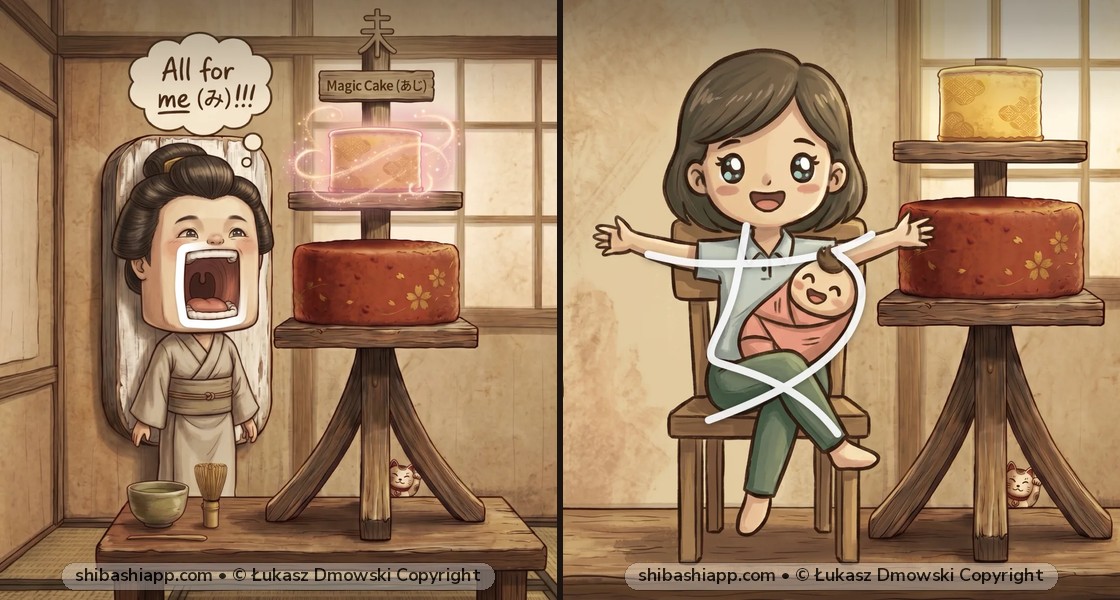
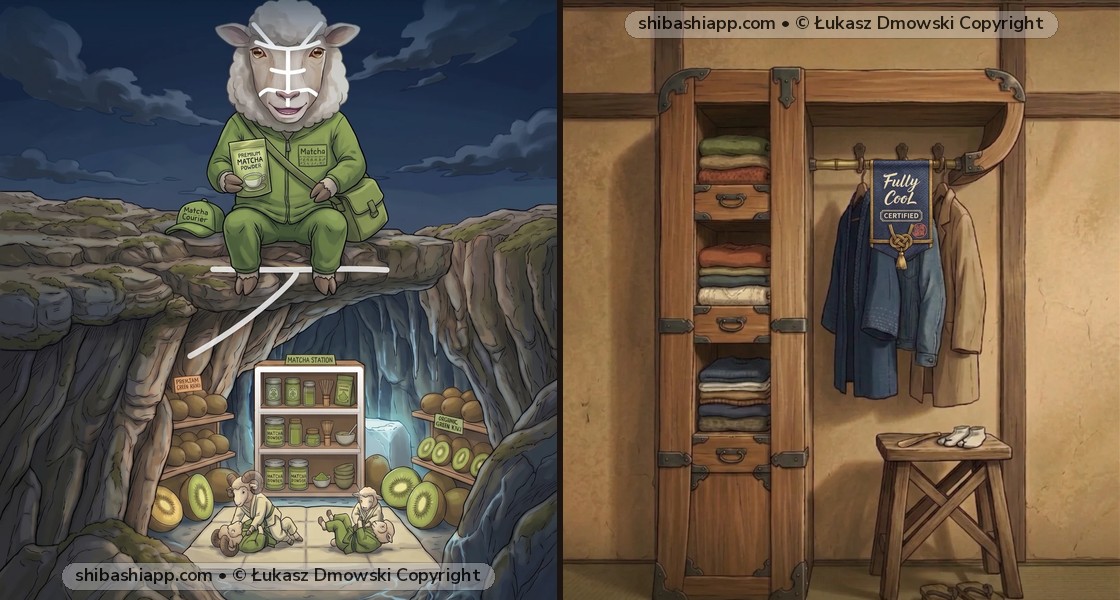
Compare the custom Shibashi artwork for 着 (Wear) and 服 (Clothes) below. Notice how each illustration embeds both the English meaning and the primary Japanese reading directly into the scene, and tap any reading to hear native pronunciation:


Step-by-Step Visual Breakdown & Radical Rules
Look at how the trailing hiragana (okurigana) tells you how to read 着:
1. 着 (Wear) — Mnemonic Story & Readings
On'yomi: ちゃく | Kun'yomi: き, つ
Shibashi Visual Story: “Mr. Sheep (羊) proudly wears his matcha courier (ちゃく) uniform so he can afford jiu-jitsu (つ) for his kids, and giant kiwis (き)...” Key visual distinction: 羊 (Wooly sheep top) pulled down over 目 (your Eyes) = WEAR clothes (kiru) / ARRIVE on target (tsuku) / chaku.
2. 服 (Clothes) — Mnemonic Story & Readings
On'yomi: ふく | Kun'yomi: —
Shibashi Visual Story: “Japanese clothing wardrobes may look funky but are factory-certified fully cool (ふく).” Key visual distinction: 月 (Body) + 卩又 (fitting cloth to the body) = CLOTHES / GARMENT (fuku).
3. 衣 (Clothes) — Mnemonic Story & Readings
On'yomi: い, え | Kun'yomi: —
Shibashi Visual Story: “Each (い) item, every (え) garment is stored separately. What a convenient clothing basket.” Key visual distinction: 亠 (Collar at the neck) over flowing kimono sleeves and hem = GARMENT / CLOTHING / COATING (koromo / i).
- 衣服 (いふく): clothes
4. 洋 (Western Style, Ocean) — Mnemonic Story & Readings
On'yomi: よう | Kun'yomi: —
Shibashi Visual Story: “So the kanji for western style is just a sheep eating yogurt (よう) behind big waves/ocean. Not cool Japan, not cool...” Key visual distinction: 氵 (Water/Ocean) + 羊 (Sheep) = across the ocean = WESTERN STYLE / OCEAN (yō, as in 洋服 yōfuku).
- 西洋 (せいよう): the West, the Occident, Western countries
5. 羊 (Sheep) — Mnemonic Story & Readings
On'yomi: よう | Kun'yomi: —
Shibashi Visual Story: “Apparently all sheep really love yogurt (よう)...” Key visual distinction: Two curled ram horns on top + 3 wool bars + vertical spine = SHEEP (hitsuji / yō).
Essential Japanese Vocabulary Words Using 着 / 服 / 衣 / 洋
Once you can recognize 着 (Wear) and 服 (Clothes) and 衣 (Clothes) individually, lock them into your active reading vocabulary with these high-frequency Japanese words from the Shibashi app:
| Japanese Word | Hiragana Reading | English Meaning | Level |
|---|---|---|---|
| 着る | きる | to put on from the shoulders down | JLPT |
| 着く | つく | to arrive at | JLPT |
| 着物 | きもの | kimono | JLPT |
| 洋服 | ようふく | western-style clothes | JLPT |
| 服 | ふく | clothes | JLPT |
| 衣服 | いふく | clothes | JLPT |
| 西洋 | せいよう | the West, the Occident, Western countries | JLPT |
5-Second Memory Summary: How to Never Mix Up 着 & 服 & 衣 Again
When 着 is followed by る (着る), read it きる (kiru — to wear). When followed by く (着く), read it つく (tsuku — to arrive). Combine 洋 (Western) + 服 (Clothes) = 洋服 (yōfuku — Western-style clothes, as opposed to kimono 着物)!