How to Say 'Thick', 'Big', 'Small' & 'Few' in Japanese: 太い (Futoi) vs. 大きい (Ōkii) & 小さい vs. 少ない
Look at these two twin adjective pairs: 大 (Big) + 1 dot = 太 (Thick / Fat — futoi); 小 (Small) + 1 diagonal slash = 少 (Few / A little — sukunai / sukoshi)!
Ordering ramen in Japan? You will frequently be asked to choose 太麺 (futomen — thick noodles)! Why does Japanese use 太い (futoi) instead of 大きい (ōkii)? Because 太い specifically describes thick round cylinders (noodles, arms, legs, tree trunks) or being plump!
Quick Comparison: 太 (Fat) vs. 大 (Big) vs. 小 (Small) vs. 少 (Few)
Compare 太 (Thick/Fat), 大 (Big), 小 (Small size), and 少 (Few quantity) below:
| Kanji & Meaning | Primary Readings (Bold = Primary) | Shibashi Visual Mnemonic Hook | Common Compound Word |
|---|---|---|---|
| 太 — Fat | On: たい, た Kun: ふと |
大 (Big person) + an extra belly dot at the bottom = FAT / THICK CYLINDER (futoi / tai / ta). | 太い (ふとい) — fat |
| 大 — Big | On: たい, だい Kun: おお |
A person stretching arms and legs wide = BIG / LARGE overall size (ōkii / dai / tai). | 大きな (おおきな) — big |
| 小 — Small | On: しょう Kun: ちい |
A vertical line shaved into tiny side chips = SMALL size (chiisai / shō). | 小さな (ちいさな) — little |
| 少 — Few | On: しょう Kun: すこ, すく |
小 (Small) + a diagonal bottom slash cutting off even more = FEW / A LITTLE quantity (sukunai / sukoshi / shō). | 少し (すこし) — few |
Side-by-Side Illustrated Kanji Flashcards (Tap Readings for Audio)
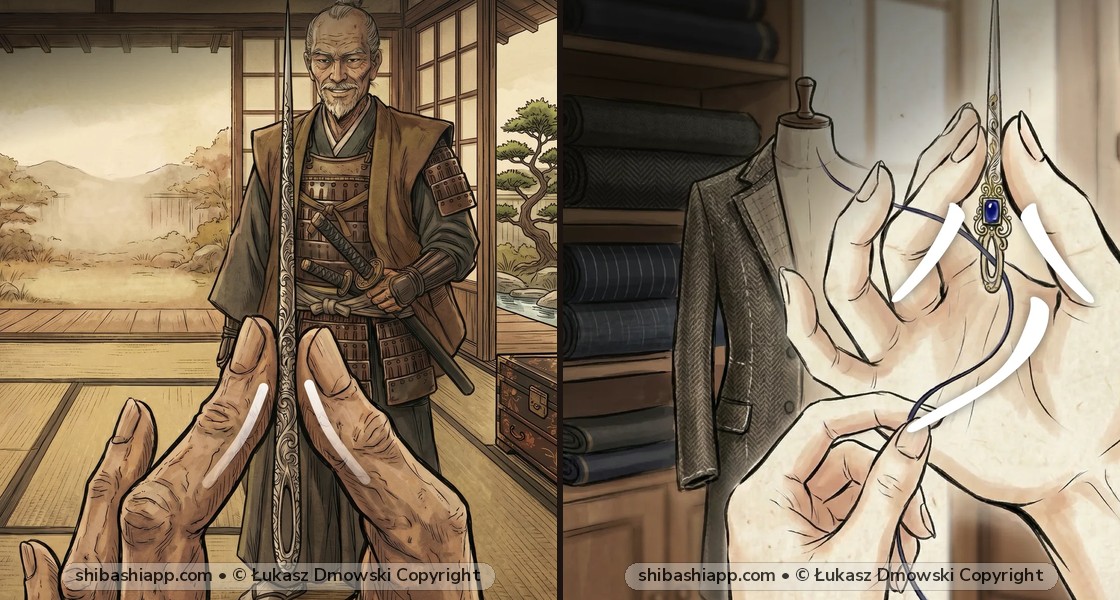
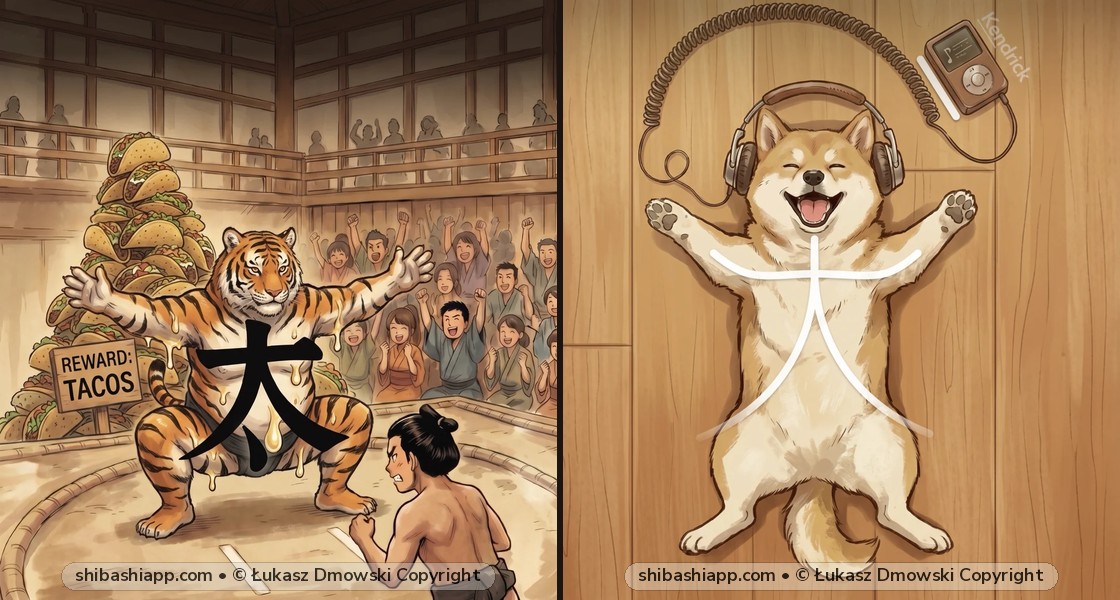
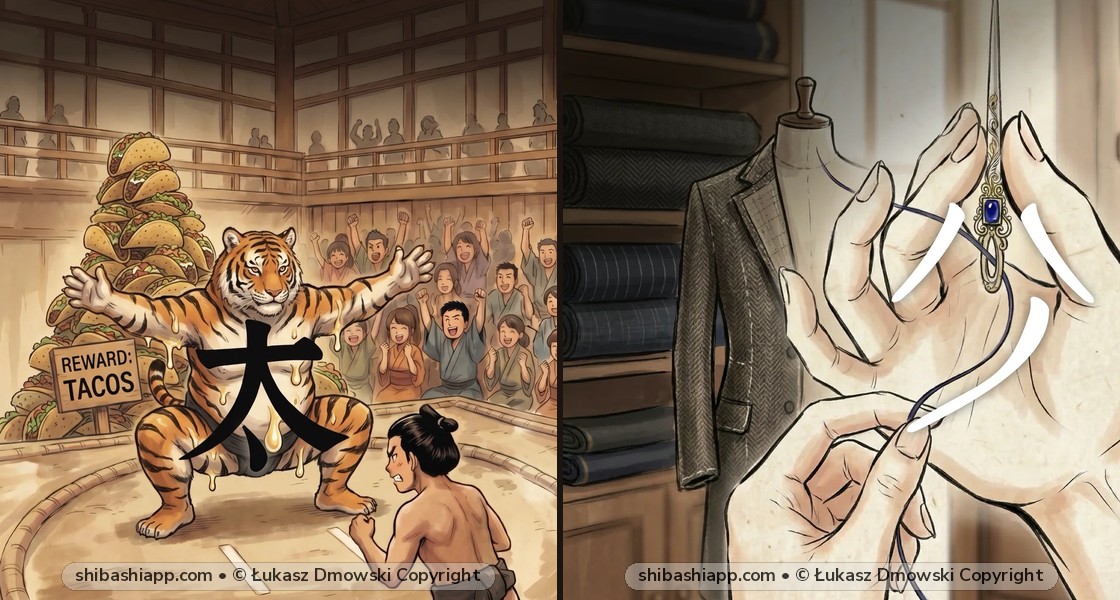
Compare the custom Shibashi artwork for 太 (Fat) and 少 (Few) below. Notice how each illustration embeds both the English meaning and the primary Japanese reading directly into the scene, and tap any reading to hear native pronunciation:


Step-by-Step Visual Breakdown & Radical Rules
See how a single extra stroke transforms both pairs:
1. 太 (Fat) — Mnemonic Story & Readings
On'yomi: たい, た | Kun'yomi: ふと
Shibashi Visual Story: “Fighting a sumo tiger (たい) dripping with fat, is a foolish torture (ふと). Reward? Just tacos! (た)” Key visual distinction: 大 (Big person) + an extra belly dot at the bottom = FAT / THICK CYLINDER (futoi / tai / ta).
2. 大 (Big) — Mnemonic Story & Readings
On'yomi: たい, だい | Kun'yomi: おお
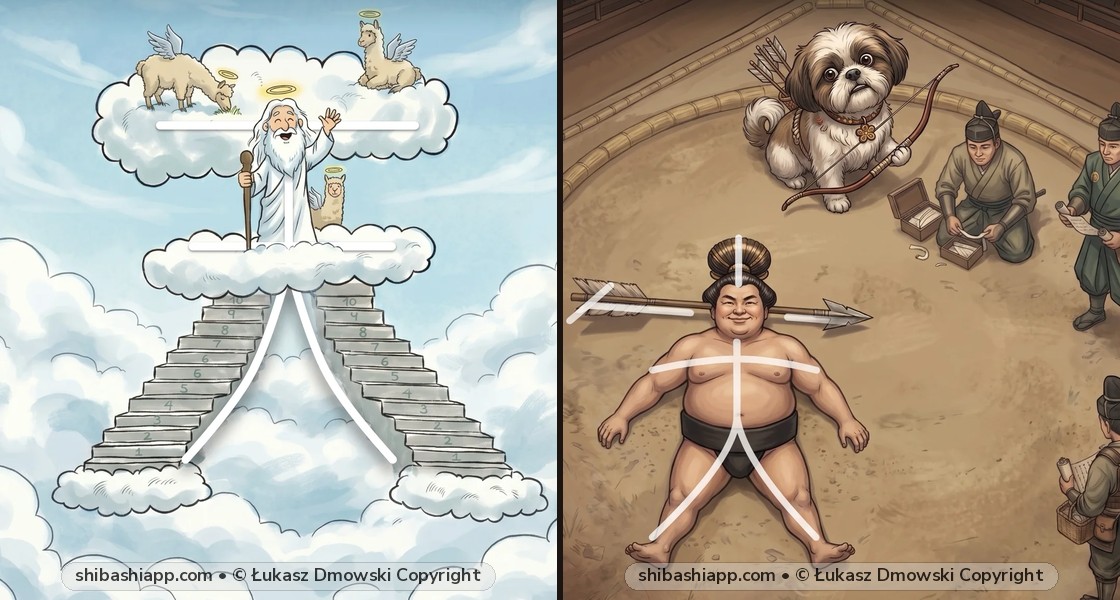
Shibashi Visual Story: ““Ooooo!!” (おお), what a fight! Definitely no tie (たい) today, the big guy will win all the diamonds (だい)...” Key visual distinction: A person stretching arms and legs wide = BIG / LARGE overall size (ōkii / dai / tai).
- 大きな (おおきな): big
- 大学 (だいがく): university
- 大きい (おおきい): big
3. 小 (Small) — Mnemonic Story & Readings
On'yomi: しょう | Kun'yomi: ちい
Shibashi Visual Story: “The Chief (ちい) Shogun (しょう) was impressed with the intricate details on the small needle.” Key visual distinction: A vertical line shaved into tiny side chips = SMALL size (chiisai / shō).
- 小さな (ちいさな): little
- 小さい (ちいさい): little
- 小 (しょう): small
4. 少 (Few) — Mnemonic Story & Readings
On'yomi: しょう | Kun'yomi: すこ, すく
Shibashi Visual Story: “It takes a few fingers to thread a short (しょう) super cool (すく) needle, used for suit coats (すこ).” Key visual distinction: 小 (Small) + a diagonal bottom slash cutting off even more = FEW / A LITTLE quantity (sukunai / sukoshi / shō).
- 少し (すこし): few
- 少ない (すくない): a few
- 少年 (しょうねん): boys, juveniles
Essential Japanese Vocabulary Words Using 太 / 大 / 小 / 少
Once you can recognize 太 (Fat) and 大 (Big) and 小 (Small) individually, lock them into your active reading vocabulary with these high-frequency Japanese words from the Shibashi app:
| Japanese Word | Hiragana Reading | English Meaning | Level |
|---|---|---|---|
| 太い | ふとい | fat | JLPT |
| 太る | ふとる | to become fat | JLPT |
| 大きな | おおきな | big | JLPT |
| 大学 | だいがく | university | JLPT |
| 大きい | おおきい | big | JLPT |
| 小さな | ちいさな | little | JLPT |
| 小さい | ちいさい | little | JLPT |
| 小 | しょう | small | JLPT |
5-Second Memory Summary: How to Never Mix Up 太 & 大 & 小 Again
大 (Big overall size — ōkii) + 1 bottom dot = 太 (Thick cylinder / Fat — 太い futoi). 小 (Small physical size — chiisai) + 1 bottom diagonal slash = 少 (Few in number / A little bit — 少ない sukunai, 少し sukoshi)!