天 (Heaven / Sky) vs. 夫 (Husband): The 1-Millimeter Top-Poke Kanji Difference
Both 天 (Heaven / Sky) and 夫 (Husband) are built by adding a second horizontal bar above 大 (Big Person). The entire difference is whether the person's head stops beneath the top line or pokes right through it!
Compare 牛 (Cow) vs. 午 (Noon) and 夫 (Husband) vs. 天 (Heaven): both pairs use the exact same visual principle — does the vertical center stroke poke through the top ceiling bar or stop flat underneath it?
Quick Comparison: 天 (Heaven) vs. 失 (Fault) vs. 大 (Big) vs. 太 (Fat)
Compare 天, 夫, 大, and 気 in the table below:
| Kanji & Meaning | Primary Readings (Bold = Primary) | Shibashi Visual Mnemonic Hook | Common Compound Word |
|---|---|---|---|
| 天 — Heaven | On: てん Kun: あま |
Center line stops FLAT under the top ceiling bar (nobody is higher than Heaven!) = HEAVEN / SKY (ten / ama). | 天気 (てんき) — weather |
| 失 — Fault | On: しつ Kun: うしな |
Center sweep pokes UP THROUGH the top bar (and right side drops a tick) = LOSE / SLIP (ushinau / shitsu). | 失う (うしなう) — to lose, to part with |
| 大 — Big | On: たい, だい Kun: おお |
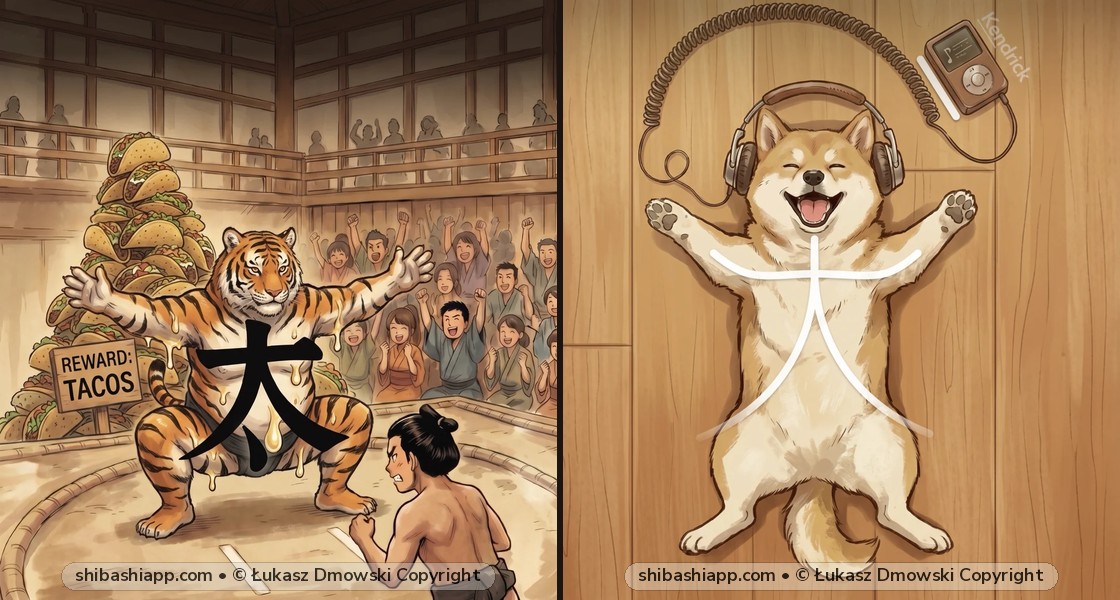
A person stretching arms and legs wide with NO second top bar = BIG (ōkii / dai). | 大きな (おおきな) — big |
| 太 — Fat | On: たい, た Kun: ふと |
大 (Big person) + an extra bottom dot = THICK / FAT (futoi / tai). | 太い (ふとい) — fat |
Side-by-Side Illustrated Kanji Flashcards (Tap Readings for Audio)
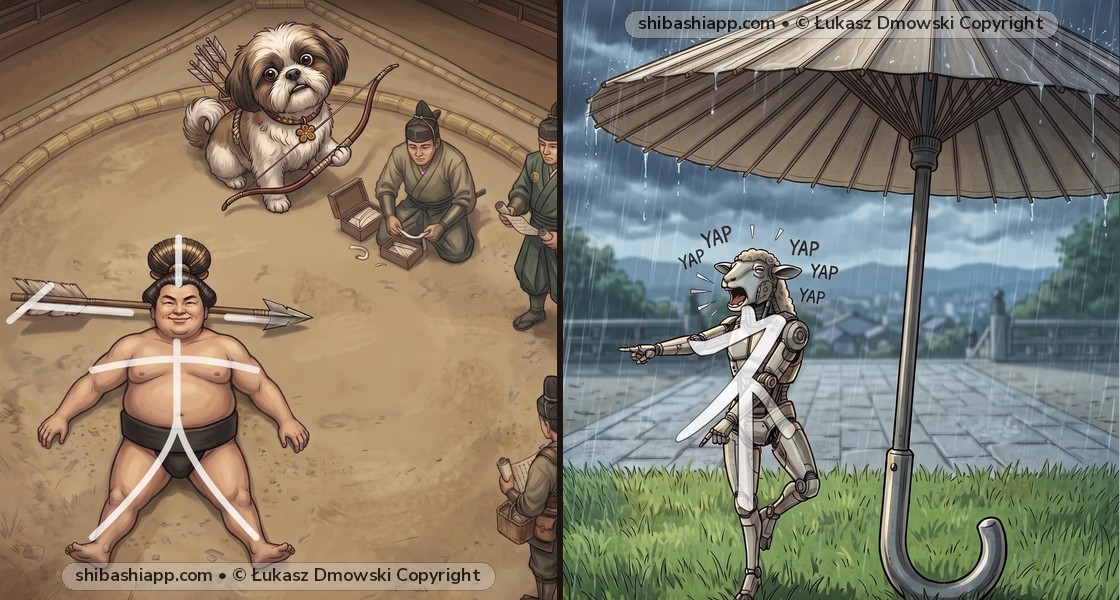
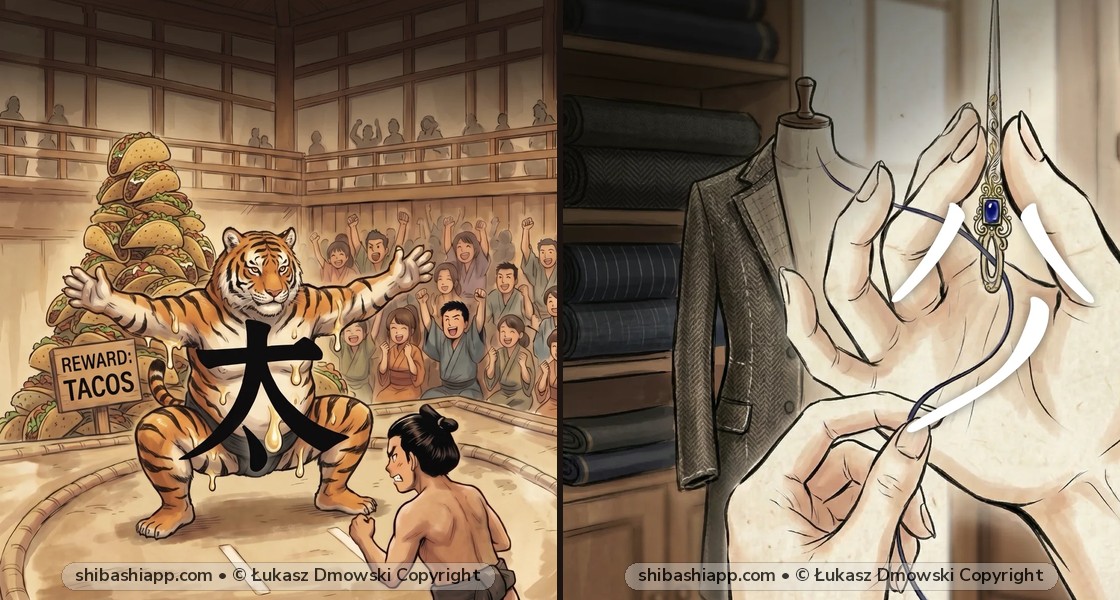
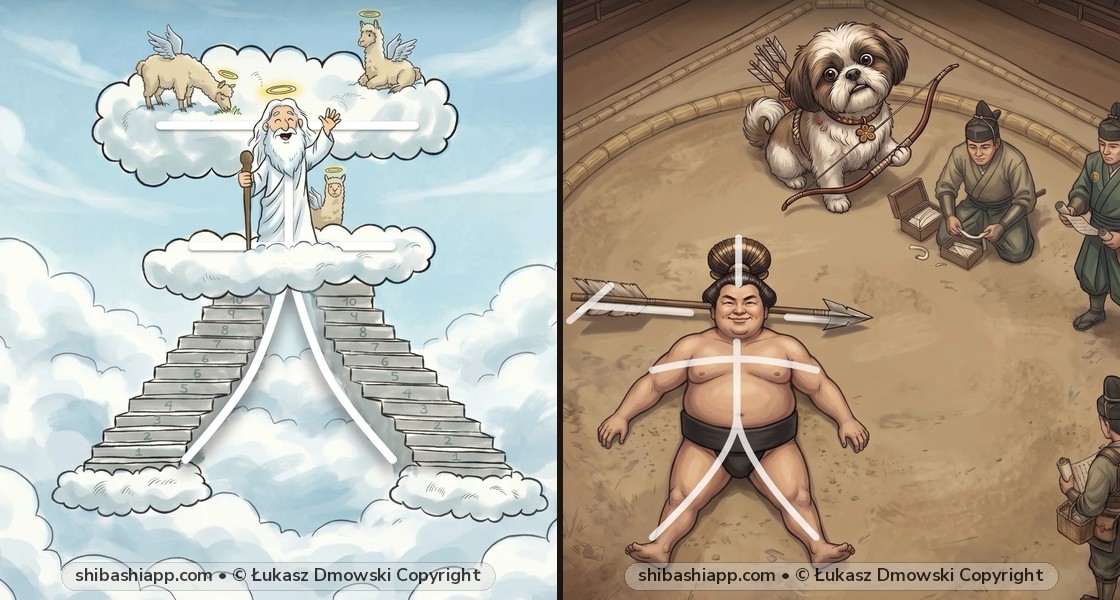
Compare the custom Shibashi artwork for 天 (Heaven) and 失 (Fault) below. Notice how each illustration embeds both the English meaning and the primary Japanese reading directly into the scene, and tap any reading to hear native pronunciation:


Step-by-Step Visual Breakdown & Radical Rules
Here is the historical reason why 夫 (Husband) pokes through the top while 天 (Heaven) does not:
1. 天 (Heaven) — Mnemonic Story & Readings
On'yomi: てん | Kun'yomi: あま
Shibashi Visual Story: “God and his angel llamas (あま) are always waiting on top of the ten (てん) step staircase to heaven.” Key visual distinction: Center line stops FLAT under the top ceiling bar (nobody is higher than Heaven!) = HEAVEN / SKY (ten / ama).
2. 失 (Fault) — Mnemonic Story & Readings
On'yomi: しつ | Kun'yomi: うしな
Shibashi Visual Story: “The little shitzu (しつ ) is at fault for the arrow, but he's pushing a (うしな) narrative that's he's innocent...” Key visual distinction: Center sweep pokes UP THROUGH the top bar (and right side drops a tick) = LOSE / SLIP (ushinau / shitsu).
- 失う (うしなう): to lose, to part with
- 失業 (しつぎょう): unemployment
3. 大 (Big) — Mnemonic Story & Readings
On'yomi: たい, だい | Kun'yomi: おお
Shibashi Visual Story: ““Ooooo!!” (おお), what a fight! Definitely no tie (たい) today, the big guy will win all the diamonds (だい)...” Key visual distinction: A person stretching arms and legs wide with NO second top bar = BIG (ōkii / dai).
- 大きな (おおきな): big
- 大学 (だいがく): university
- 大きい (おおきい): big
4. 太 (Fat) — Mnemonic Story & Readings
On'yomi: たい, た | Kun'yomi: ふと
Shibashi Visual Story: “Fighting a sumo tiger (たい) dripping with fat, is a foolish torture (ふと). Reward? Just tacos! (た)” Key visual distinction: 大 (Big person) + an extra bottom dot = THICK / FAT (futoi / tai).
Essential Japanese Vocabulary Words Using 天 / 失 / 大 / 太
Once you can recognize 天 (Heaven) and 失 (Fault) and 大 (Big) individually, lock them into your active reading vocabulary with these high-frequency Japanese words from the Shibashi app:
| Japanese Word | Hiragana Reading | English Meaning | Level |
|---|---|---|---|
| 天気 | てんき | weather | JLPT |
| 天然 | てんねん | nature, spontaneity | JLPT |
| 失う | うしなう | to lose, to part with | JLPT |
| 失業 | しつぎょう | unemployment | JLPT |
| 大きな | おおきな | big | JLPT |
| 大学 | だいがく | university | JLPT |
| 大きい | おおきい | big | JLPT |
| 太い | ふとい | fat | JLPT |
5-Second Memory Summary: How to Never Mix Up 天 & 失 & 大 Again
Nothing can rise above 天 (Heaven / Sky — 天気 tenki), so its center line stops flat underneath the top bar! In ancient China and Japan, an adult married man wore a hairpin through his topknot, so the head pokes up through the top bar in 夫 (Husband — おっと otto)!