Self & Body in Japanese Kanji: 自 (Jibun — Self), 身 (Mi — Body/Status), 体 (Karada — Body) & 己 (Onore)
Japanese has two main kanjis for 'Self' (自 and 己) and two main kanjis for 'Body' (体 and 身). See how they combine into 自分 (myself), 自己紹介 (self-introduction), and 身体 (body)!
Look at how these four characters pair up in everyday Japanese: 自 (Self) + 分 (Part) = 自分 (jibun — oneself); 自 (Self) + 己 (Oneself) = 自己 (jiko — ego/self, as in 自己紹介 jikoshōkai 'self-introduction'); and 身 (Body) + 体 (Body) = 身体 (shintai / karada — physical body)!
Quick Comparison: 自 (Self) vs. 身 (Self, Body) vs. 体 (Physical Body) vs. 己 (Oneself)
Compare 自, 身, 体, and 己 in the breakdown table below:
| Kanji & Meaning | Primary Readings (Bold = Primary) | Shibashi Visual Mnemonic Hook | Common Compound Word |
|---|---|---|---|
| 自 — Self | On: じ, し Kun: — |
目 (Eye box) + a top nose tick (pointing at your own nose) = SELF / ONESELF (mizukara / ji / shi). | 自身 (じしん) — by oneself, personally |
| 身 — Self, Body | On: しん Kun: み |
A torso with a rounded belly and rib bars = BODY / ONE'S OWN PERSON / STATUS (mi / shin). | 身長 (しんちょう) — height (of body), stature |
| 体 — Physical Body | On: たい Kun: からだ |
亻 (Person) next to 本 (Root/Trunk) = the core trunk of a person = PHYSICAL BODY (karada / tai). | 団体 (だんたい) — organization, association... |
| 己 — Oneself | On: こ, き Kun: — |
A winding snake/thread coiled around itself = ONESELF (onore / ko / ki, as in 自己紹介 jikoshōkai). | — |
Side-by-Side Illustrated Kanji Flashcards (Tap Readings for Audio)
Compare the custom Shibashi artwork for 自 (Self) and 身 (Self, Body) below. Notice how each illustration embeds both the English meaning and the primary Japanese reading directly into the scene, and tap any reading to hear native pronunciation:


Step-by-Step Visual Breakdown & Radical Rules
Here is the nuance between 体 (karada) and 身 (mi):
1. 自 (Self) — Mnemonic Story & Readings
On'yomi: じ, し | Kun'yomi: —
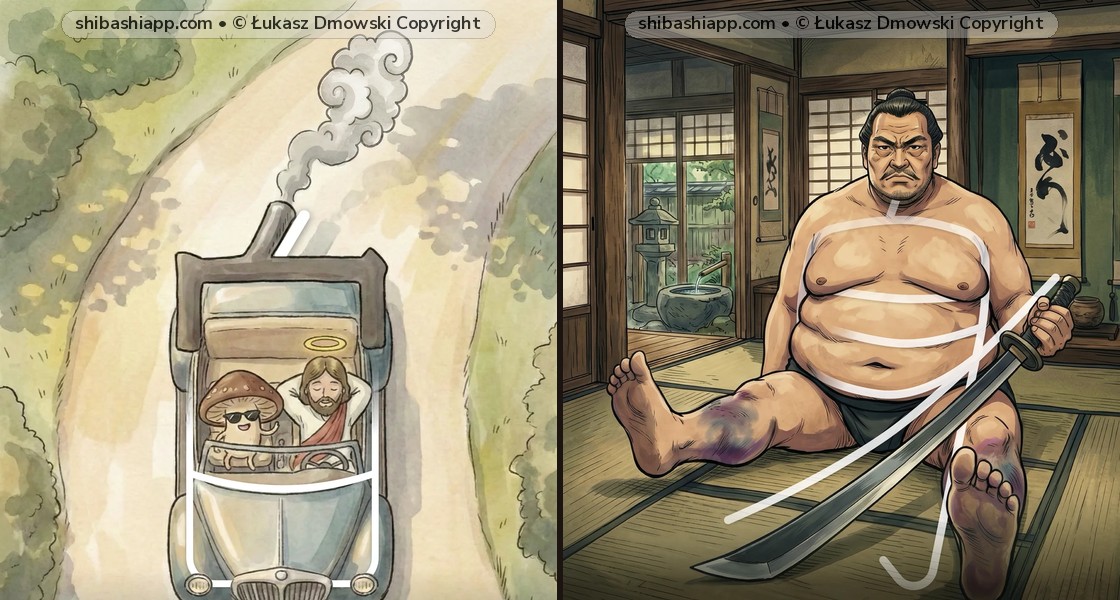
Shibashi Visual Story: “Just Jesus (じ) with his friend Shitake (し) in a self-driving car...” Key visual distinction: 目 (Eye box) + a top nose tick (pointing at your own nose) = SELF / ONESELF (mizukara / ji / shi).
- 自身 (じしん): by oneself, personally
- 自由 (じゆう): freedom, liberty
- 不自由 (ふじゆう): discomfort, inconvenience
2. 身 (Self, Body) — Mnemonic Story & Readings
On'yomi: しん | Kun'yomi: み
Shibashi Visual Story: “The big-body samurai desperately needs some shin (しん) guards, and, well... a mirror (み).” Key visual distinction: A torso with a rounded belly and rib bars = BODY / ONE'S OWN PERSON / STATUS (mi / shin).
- 身長 (しんちょう): height (of body), stature
- 身 (み): body, main part, oneself, sword
3. 体 (Physical Body) — Mnemonic Story & Readings
On'yomi: たい | Kun'yomi: からだ
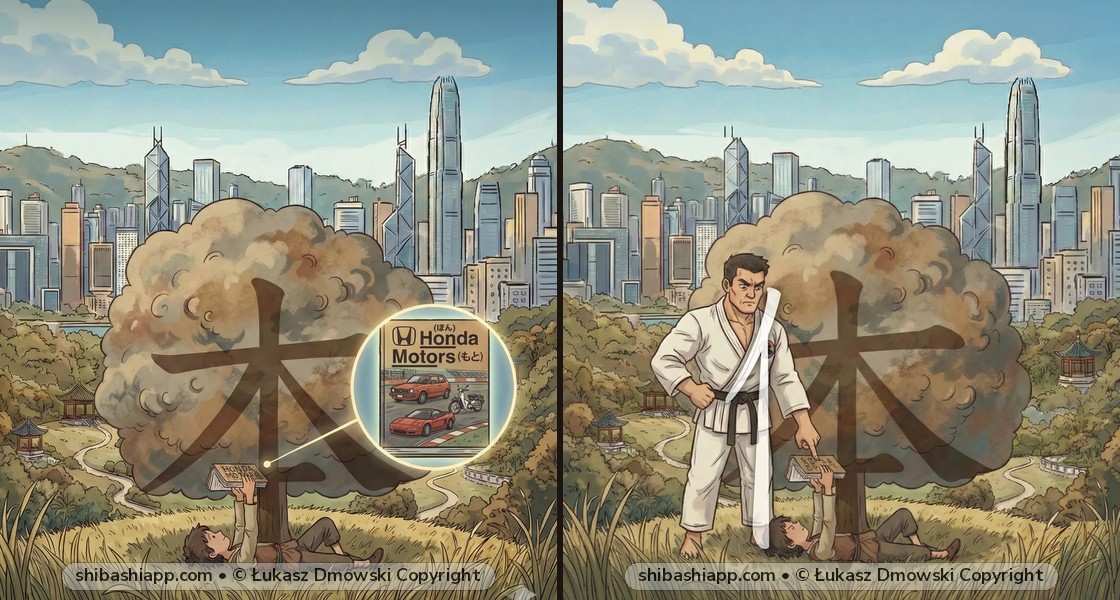
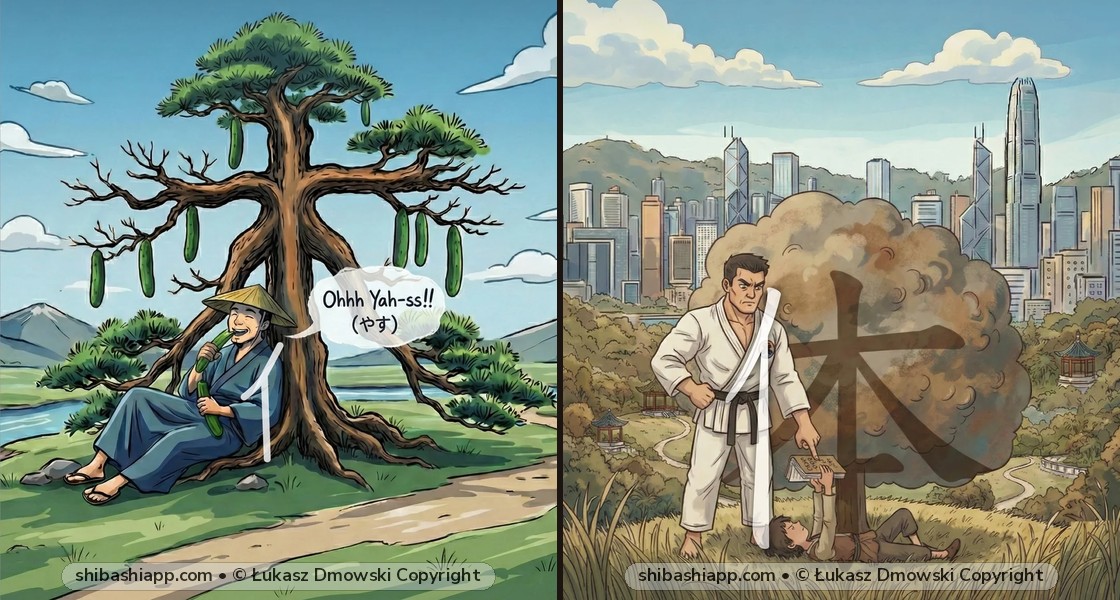
Shibashi Visual Story: “Tyrant (たい) Karate dad (からだ) wants his son to train his body, not read books.” Key visual distinction: 亻 (Person) next to 本 (Root/Trunk) = the core trunk of a person = PHYSICAL BODY (karada / tai).
4. 己 (Oneself) — Mnemonic Story & Readings
On'yomi: こ, き | Kun'yomi: —
Shibashi Visual Story: “To know oneself, the koala (こ) kid (き) must pray for wisdom...” Key visual distinction: A winding snake/thread coiled around itself = ONESELF (onore / ko / ki, as in 自己紹介 jikoshōkai).
Essential Japanese Vocabulary Words Using 自 / 身 / 体 / 己
Once you can recognize 自 (Self) and 身 (Self, Body) and 体 (Physical Body) individually, lock them into your active reading vocabulary with these high-frequency Japanese words from the Shibashi app:
| Japanese Word | Hiragana Reading | English Meaning | Level |
|---|---|---|---|
| 自身 | じしん | by oneself, personally | JLPT |
| 自由 | じゆう | freedom, liberty | JLPT |
| 不自由 | ふじゆう | discomfort, inconvenience | JLPT |
| 身長 | しんちょう | height (of body), stature | JLPT |
| 身 | み | body, main part, oneself, sword | JLPT |
| 団体 | だんたい | organization, association, group | JLPT |
| 体 | からだ | body | JLPT |
| 大体 | だいたい | generally | JLPT |
5-Second Memory Summary: How to Never Mix Up 自 & 身 & 体 Again
体 (karada / tai = 亻 Person + 本 Trunk) is your physical, biological body and health (体にいい karada ni ii 'good for your health'). 身 (mi / shin) is your personal self, lived experience, or meat/filling (自分自身 jibun jishin 'one's very own self', 出身 shusshin 'hometown/origin')!