Why 料理 (Ryōri — Cooking) & 科学 (Kagaku — Science) Share the Measuring Dipper Radical (斗)
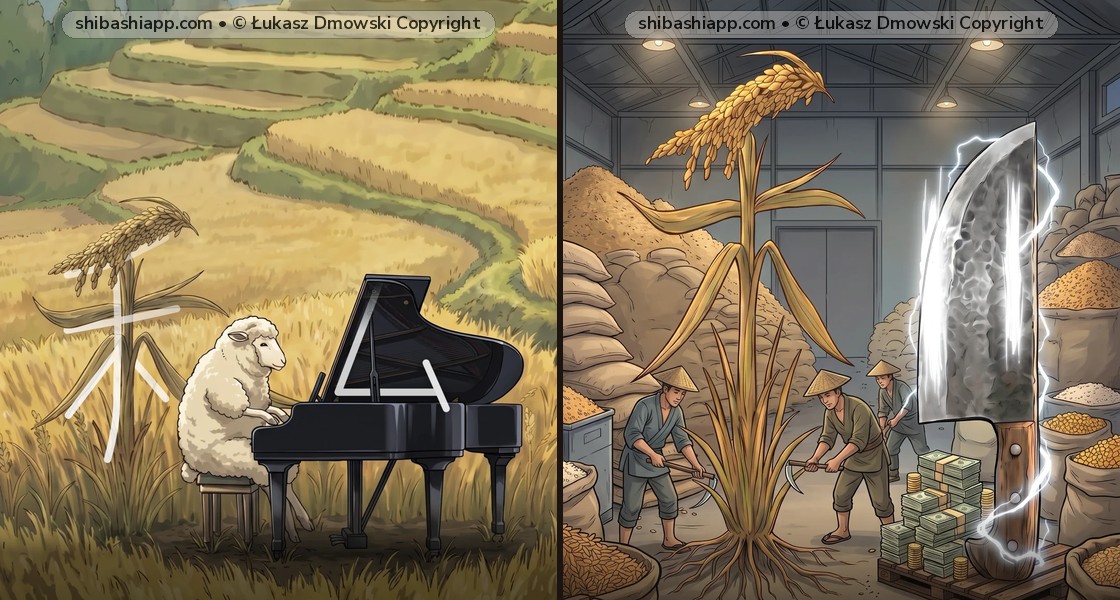
Look at the right side of 科 (Science / Subject) and 料 (Ingredients / Fee): both end with 斗 (a 4-stroke measuring scoop with two grain drops)! Measuring Grain stalks (禾) gives 科, while measuring Rice (米) gives 料!
Look at the twin characters 科 (ka — Department / Science) and 料 (ryō — Fee / Ingredients): both have the exact same 4-stroke Measuring Dipper (斗) on the right! The only difference on the left is 禾 (a standing Grain stalk with a drooping top) in 科 vs. 米 (shelled Rice kernels) in 料!
Quick Comparison: 科 (Science) vs. 理 (Reason) vs. 米 (Rice) vs. 来 (Come)
Compare 科, 理, 米, and 来 in the breakdown table below:
| Kanji & Meaning | Primary Readings (Bold = Primary) | Shibashi Visual Mnemonic Hook | Common Compound Word |
|---|---|---|---|
| 科 — Science | On: か Kun: — |
禾 (Grain stalk with top droop on the left) + 斗 (Measuring ladle on the right) = grading grain into categories = DEPARTMENT / COURSE / SCIENCE (ka, as in 科学 kagaku, 教科書 kyōkasho). | 科学 (かがく) — science |
| 理 — Reason | On: り Kun: — |
王 (Jade jewel on the left) + 里 (Village grid on the right) = polishing the natural veins in jade = REASON / LOGIC / ARRANGE (ri, as in 料理 ryōri). | 無理 (むり) — impossible |
| 米 — Rice | On: べい, まい Kun: こめ |
Spreading stalks with four rice kernels around a cross = RICE / AMERICA (kome / mai / bei). | 米 (こめ) — uncooked rice |
| 来 — Come | On: らい Kun: く, き |
Wheat/grain plant with ears ripening on a stalk = COME / NEXT (kuru / rai). | 来月 (らいげつ) — next month |
Side-by-Side Illustrated Kanji Flashcards (Tap Readings for Audio)
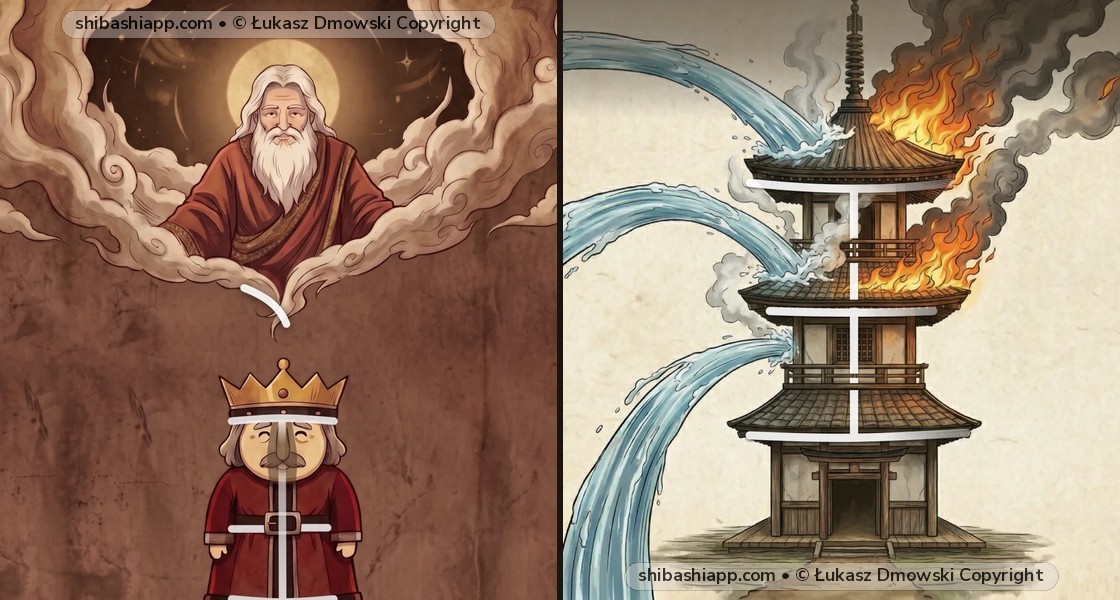
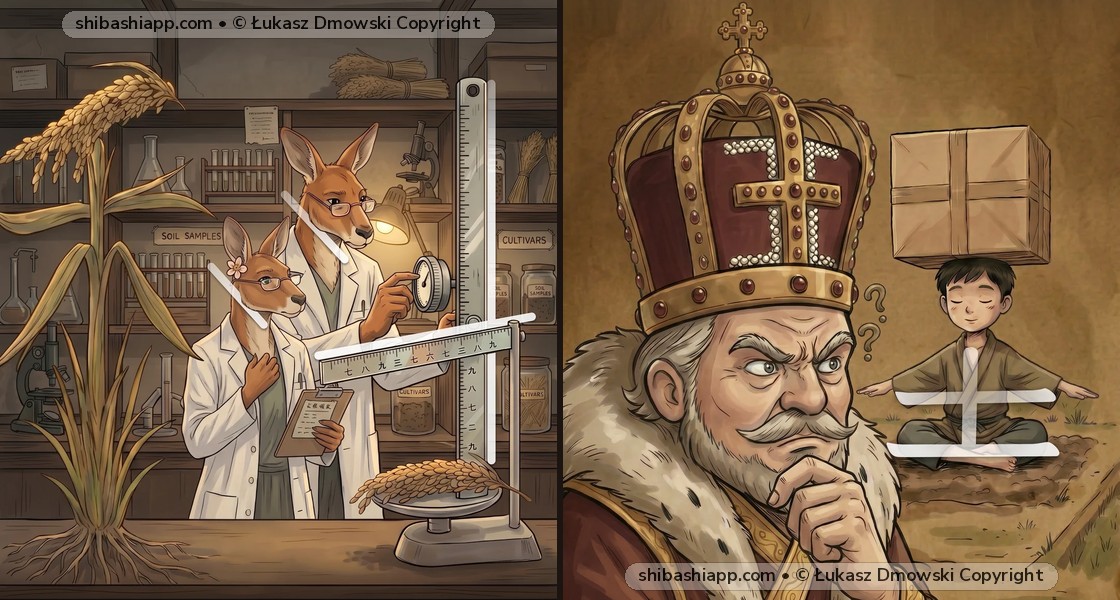
Compare the custom Shibashi artwork for 科 (Science) and 理 (Reason) below. Notice how each illustration embeds both the English meaning and the primary Japanese reading directly into the scene, and tap any reading to hear native pronunciation:


Step-by-Step Visual Breakdown & Radical Rules
See why combining 料 (米 Rice + 斗 Measured Ingredients) + 理 (Logical Preparation) creates 料理 (ryōri — Cooking / Cuisine):
1. 科 (Science) — Mnemonic Story & Readings
On'yomi: か | Kun'yomi: —
Shibashi Visual Story: “Two kangaroos (か) doing science-y things...” Key visual distinction: 禾 (Grain stalk with top droop on the left) + 斗 (Measuring ladle on the right) = grading grain into categories = DEPARTMENT / COURSE / SCIENCE (ka, as in 科学 kagaku, 教科書 kyōkasho).
2. 理 (Reason) — Mnemonic Story & Readings
On'yomi: り | Kun'yomi: —
Shibashi Visual Story: “The king trying to figure out the reason (り) why the boy meditates with a big box on his head...” Key visual distinction: 王 (Jade jewel on the left) + 里 (Village grid on the right) = polishing the natural veins in jade = REASON / LOGIC / ARRANGE (ri, as in 料理 ryōri).
3. 米 (Rice) — Mnemonic Story & Readings
On'yomi: べい, まい | Kun'yomi: こめ
Shibashi Visual Story: “Mr. Rice with his mice (まい ) friend looking at the Baked (べい) Goods and Coffee Menu (こめ)...” Key visual distinction: Spreading stalks with four rice kernels around a cross = RICE / AMERICA (kome / mai / bei).
- 米 (こめ): uncooked rice
4. 来 (Come) — Mnemonic Story & Readings
On'yomi: らい | Kun'yomi: く, き
Shibashi Visual Story: “Cool (く), lucky (き) tourists come from all over Japan, to see the original rice (らい) grain.” Key visual distinction: Wheat/grain plant with ears ripening on a stalk = COME / NEXT (kuru / rai).
Essential Japanese Vocabulary Words Using 科 / 理 / 米 / 来
Once you can recognize 科 (Science) and 理 (Reason) and 米 (Rice) individually, lock them into your active reading vocabulary with these high-frequency Japanese words from the Shibashi app:
| Japanese Word | Hiragana Reading | English Meaning | Level |
|---|---|---|---|
| 科学 | かがく | science | JLPT |
| 科目 | かもく | (school) subject, curriculum, course | JLPT |
| 無理 | むり | impossible | JLPT |
| 地理 | ちり | geography | JLPT |
| 物理 | ぶつり | physics | JLPT |
| 米 | こめ | uncooked rice | JLPT |
| 来月 | らいげつ | next month | JLPT |
| 来る | くる | to come | JLPT |
5-Second Memory Summary: How to Never Mix Up 科 & 理 & 米 Again
禾 (Grain stalk with top hook) + 斗 (Ladle) = 科 (ka — Academic Subject/Science in 科学 kagaku 'science' & 教科書 kyōkasho 'textbook')! 米 (Rice) + 斗 (Ladle) = 料 (ryō — Ingredients in 料理 ryōri 'cooking', OR Fee in 無料 muryō 'free of charge')!