切る (Kiru — Cut) vs. 着る (Kiru — Wear) & the Sword Radical (刀 / 刂): 分, 切, 前 & 別
Why are 'to cut with a knife' (切る) and 'to put on a shirt' (着る) both pronounced きる (kiru)? Look for the curved katana blade (刀) inside 切, 分, 前, and 別!
Meet the Sword / Knife radical: when it sits on the bottom or right as a full component, it looks like a curved blade (刀 — katana, as in 切 Cut and 分 Divide). When squeezed onto the far right edge of a kanji, it stands upright as two vertical knife strokes (刂 — rittō, as in 前 Front and 別 Separate)!
Quick Comparison: 切 (Cut) vs. 分 (Divide) vs. 前 (Front) vs. 別 (Separate)
Compare all four blade-radical kanjis and their readings below:
| Kanji & Meaning | Primary Readings (Bold = Primary) | Shibashi Visual Mnemonic Hook | Common Compound Word |
|---|---|---|---|
| 切 — Cut | On: せつ Kun: き |
七 (Seven) on the left + 刀 (Katana sword blade) on the right = slicing into 7 pieces = CUT / IMPORTANT (kiru / setsu / sai). | 大切 (たいせつ) — important |
| 分 — Divide | On: ぶん, ふん, ぶ Kun: わ |
八 (Split in two) on top + 刀 (Sword blade) on the bottom = cleaving in half = DIVIDE / MINUTE / UNDERSTAND (wakaru / wakeru / fun / bun). | 分かる (わかる) — to be understood |
| 前 — Front | On: ぜん Kun: まえ |
Horns + 月 (Meat) + 刂 (Vertical knife blade on the right) = trimming meat at the butcher counter in FRONT / BEFORE (mae / zen). | 前 (まえ) — before |
| 別 — Separate | On: べつ Kun: わか |
口+力 (Bone/Joint) + 刂 (Vertical knife blade on the right) = carving apart at the joint = SEPARATE / ANOTHER (wakare / betsu). | 別 (べつ) — different |
Side-by-Side Illustrated Kanji Flashcards (Tap Readings for Audio)
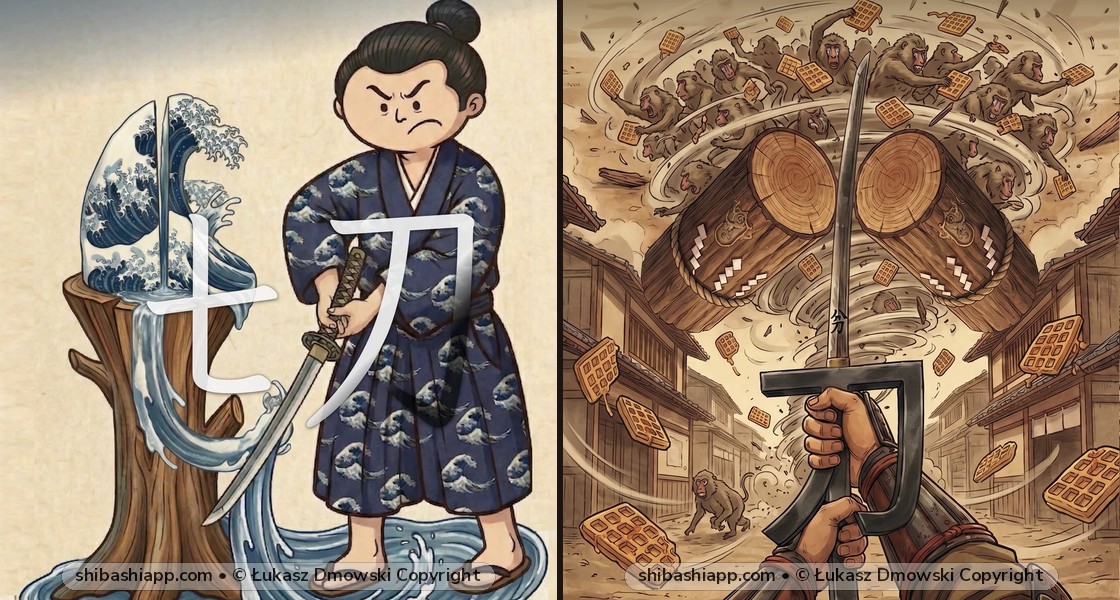
Compare the custom Shibashi artwork for 切 (Cut) and 分 (Divide) below. Notice how each illustration embeds both the English meaning and the primary Japanese reading directly into the scene, and tap any reading to hear native pronunciation:


Step-by-Step Visual Breakdown & Radical Rules
See how the knife blade (刀 / 刂) drives the meaning of each character:
1. 切 (Cut) — Mnemonic Story & Readings
On'yomi: せつ | Kun'yomi: き
Shibashi Visual Story: “Evil kimono (き) warrior, just made a second tsunami (せつ) wave with a simple cut.” Key visual distinction: 七 (Seven) on the left + 刀 (Katana sword blade) on the right = slicing into 7 pieces = CUT / IMPORTANT (kiru / setsu / sai).
2. 分 (Divide) — Mnemonic Story & Readings
On'yomi: ぶん, ふん, ぶ | Kun'yomi: わ
Shibashi Visual Story: “The man divided the sacred log, and the city was hit by a typhoon (ふん) of waffle-throwing (わ) baboons (ぶ or ぶん)” Key visual distinction: 八 (Split in two) on top + 刀 (Sword blade) on the bottom = cleaving in half = DIVIDE / MINUTE / UNDERSTAND (wakaru / wakeru / fun / bun).
3. 前 (Front) — Mnemonic Story & Readings
On'yomi: ぜん | Kun'yomi: まえ
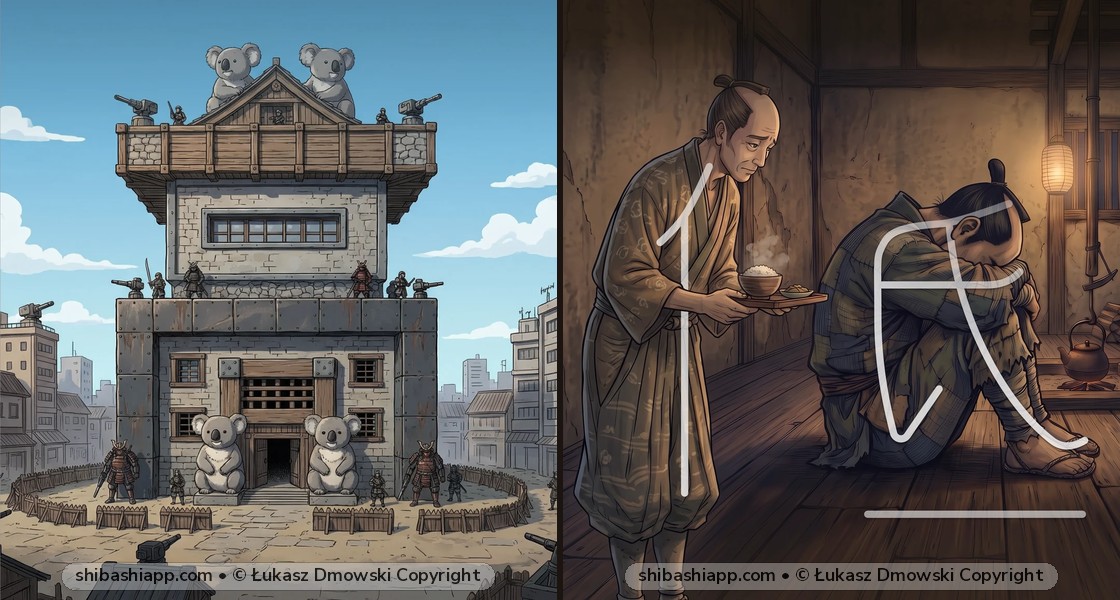
Shibashi Visual Story: “Front row seats for the zen (ぜん) maestro (まえ) performance.” Key visual distinction: Horns + 月 (Meat) + 刂 (Vertical knife blade on the right) = trimming meat at the butcher counter in FRONT / BEFORE (mae / zen).
4. 別 (Separate) — Mnemonic Story & Readings
On'yomi: べつ | Kun'yomi: わか
Shibashi Visual Story: “A wacky (わか) man bet-su (べつ) his friends that he can run through a blade and not get separated in half.” Key visual distinction: 口+力 (Bone/Joint) + 刂 (Vertical knife blade on the right) = carving apart at the joint = SEPARATE / ANOTHER (wakare / betsu).
- 別 (べつ): different
- 特別 (とくべつ): special
- 別れる (わかれる): to separate
Essential Japanese Vocabulary Words Using 切 / 分 / 前 / 別
Once you can recognize 切 (Cut) and 分 (Divide) and 前 (Front) individually, lock them into your active reading vocabulary with these high-frequency Japanese words from the Shibashi app:
| Japanese Word | Hiragana Reading | English Meaning | Level |
|---|---|---|---|
| 大切 | たいせつ | important | JLPT |
| 切る | きる | to cut | JLPT |
| 切手 | きって | postage stamp | JLPT |
| 分かる | わかる | to be understood | JLPT |
| 自分 | じぶん | oneself | JLPT |
| 半分 | はんぶん | half minute | JLPT |
| 前 | まえ | before | JLPT |
| 午前 | ごぜん | morning | JLPT |
5-Second Memory Summary: How to Never Mix Up 切 & 分 & 前 Again
七 (Seven) + 刀 (Blade) = 切 (Cut — 切る kiru, 大切 taisetsu Important). 八 (Split) + 刀 (Blade) = 分 (Divide / Minute / Understand — 分かる wakaru). And whenever you see two vertical lines on the far right (刂), a knife is slicing something in 前 (Front) or 別 (Separate — betsu)!