The 4 Seasons in Japanese Kanji: 春 (Spring), 夏 (Summer), 秋 (Autumn) & 冬 (Winter)
Japan celebrates the four seasons (春夏秋冬 — shunkashūtō) more visibly than almost any country on Earth. Here is how each season's kanji paints a picture of nature at that exact time of year.
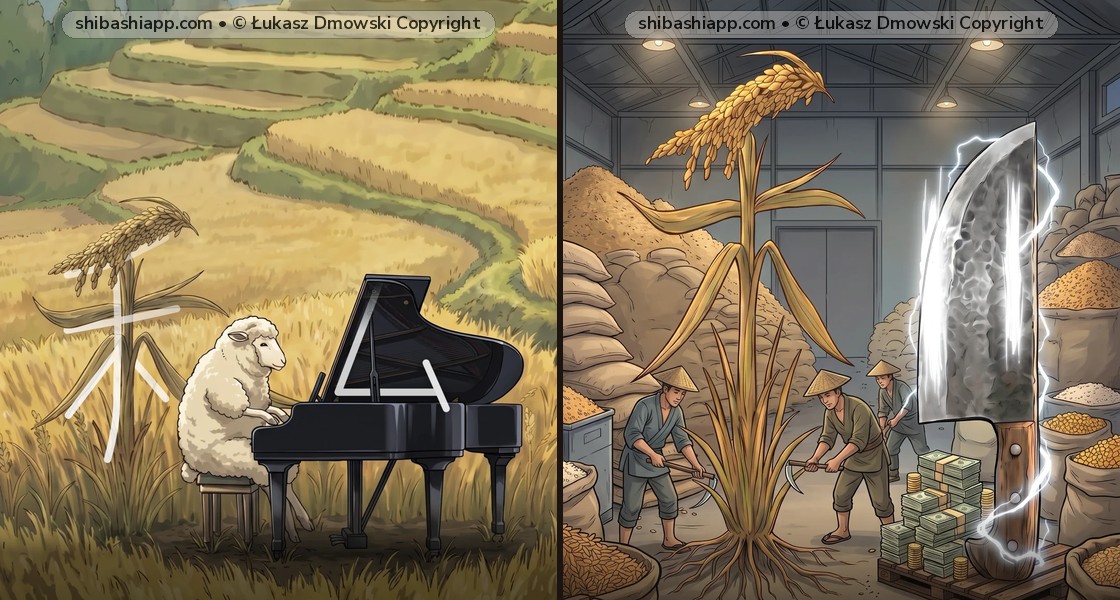
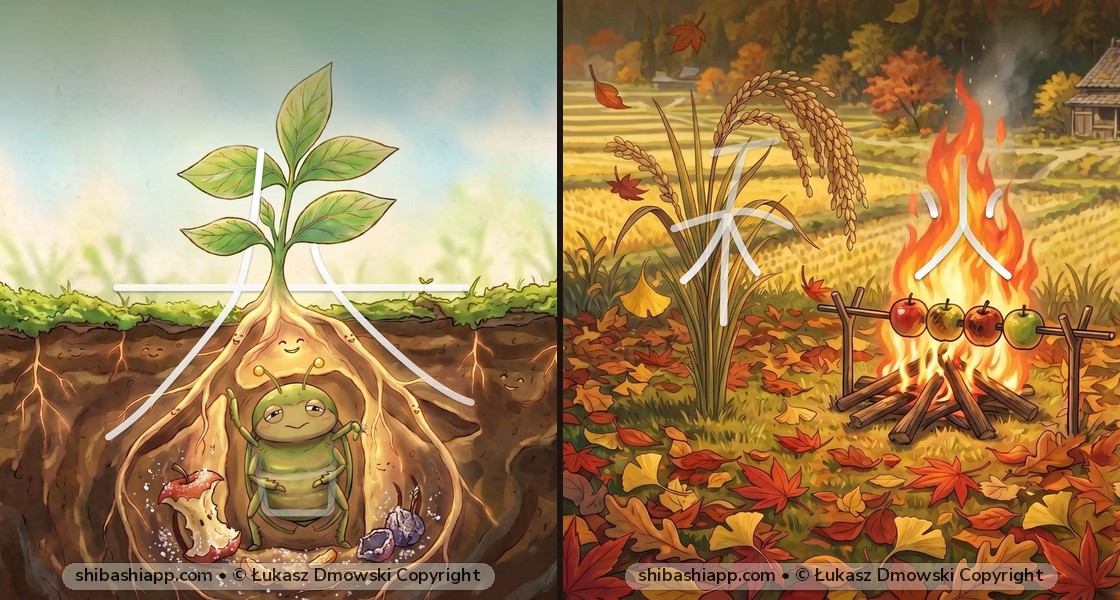
Look at 秋 (Autumn — aki): on the left is a grain stalk/tree (禾), and on the right is 火 (Fire) — literally leaves turning the color of fire in autumn! Every single one of the four season kanjis has a visual story just as vivid.
Quick Comparison: 春 (Spring) vs. 夏 (Summer) vs. 秋 (Autumn) vs. 冬 (Winter)
Compare all four Japanese season kanjis (Kun'yomi for standalone seasons, On'yomi for compounds):
| Kanji & Meaning | Primary Readings (Bold = Primary) | Shibashi Visual Mnemonic Hook | Common Compound Word |
|---|---|---|---|
| 春 — Spring | On: しゅん Kun: はる |
Three sprouting plant layers (三人) warmed by the 日 (Sun) underneath = SPRING (haru / shun). | 春 (はる) — spring |
| 夏 — Summer | On: げ, か, が Kun: なつ |
A big sun-visor mask (頁/自) over walking legs (夂) strolling in the heat = SUMMER (natsu / ka). | 夏 (なつ) — summer |
| 秋 — Autumn | On: しゅう Kun: あき |
禾 (Grain/Tree) on the left + 火 (Fire) on the right = leaves turning fiery red and orange = AUTUMN / FALL (aki / shū). | 秋 (あき) — autumn |
| 冬 — Winter | On: とう Kun: ふゆ |
Walking legs (夂) slipping on two frozen icicle drops (冫) at the bottom = WINTER (fuyu / tō). | 冬 (ふゆ) — winter |
Side-by-Side Illustrated Kanji Flashcards (Tap Readings for Audio)
Compare the custom Shibashi artwork for 春 (Spring) and 秋 (Autumn) below. Notice how each illustration embeds both the English meaning and the primary Japanese reading directly into the scene, and tap any reading to hear native pronunciation:


Step-by-Step Visual Breakdown & Radical Rules
Walk through the calendar from Spring to Winter with these four visual mnemonics:
1. 春 (Spring) — Mnemonic Story & Readings
On'yomi: しゅん | Kun'yomi: はる
Shibashi Visual Story: “Spring is the time when bugs wake up from their autumn sugar-naps (しゅん) and happy roots (はる) sprout to life...” Key visual distinction: Three sprouting plant layers (三人) warmed by the 日 (Sun) underneath = SPRING (haru / shun).
- 春 (はる): spring
2. 夏 (Summer) — Mnemonic Story & Readings
On'yomi: げ, か, が | Kun'yomi: なつ
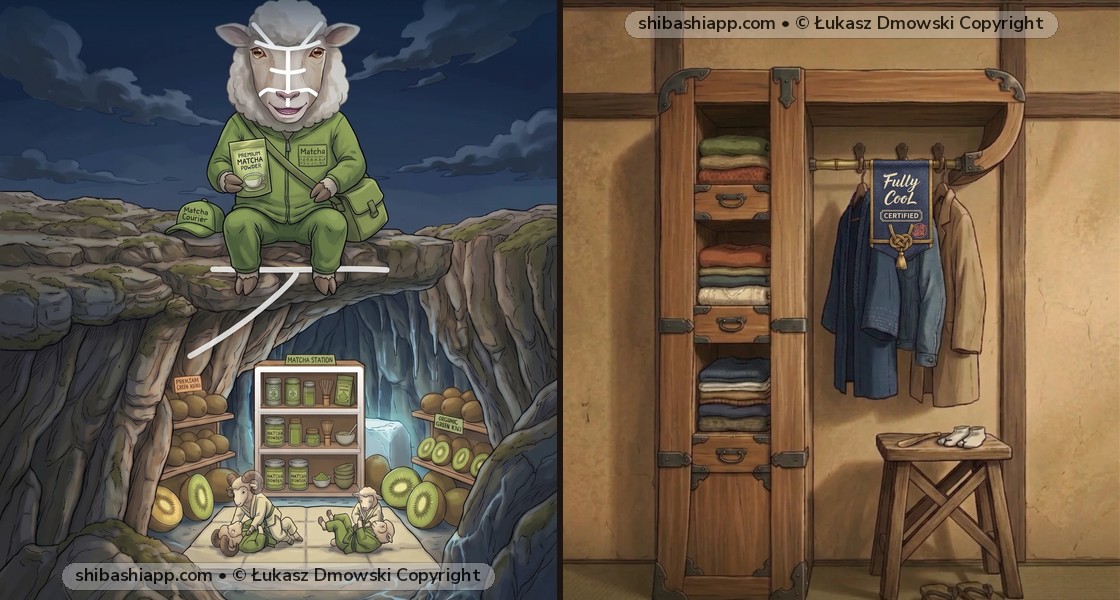
Shibashi Visual Story: “With I000 summer heat, the boy is praying to God (が) to get (げ) natural tsunami (なつ) waves, and a kayak (か)...” Key visual distinction: A big sun-visor mask (頁/自) over walking legs (夂) strolling in the heat = SUMMER (natsu / ka).
- 夏 (なつ): summer
3. 秋 (Autumn) — Mnemonic Story & Readings
On'yomi: しゅう | Kun'yomi: あき
Shibashi Visual Story: “Autumn, the time of harvest and snacky (あき) sugary (しゅう) apple baking...” Key visual distinction: 禾 (Grain/Tree) on the left + 火 (Fire) on the right = leaves turning fiery red and orange = AUTUMN / FALL (aki / shū).
- 秋 (あき): autumn
4. 冬 (Winter) — Mnemonic Story & Readings
On'yomi: とう | Kun'yomi: ふゆ
Shibashi Visual Story: “Mr. snowman toes (とう) are cold in the winter snow. No wonder he keeps screaming fu’yuu! (ふゆ).” Key visual distinction: Walking legs (夂) slipping on two frozen icicle drops (冫) at the bottom = WINTER (fuyu / tō).
Essential Japanese Vocabulary Words Using 春 / 夏 / 秋 / 冬
Once you can recognize 春 (Spring) and 夏 (Summer) and 秋 (Autumn) individually, lock them into your active reading vocabulary with these high-frequency Japanese words from the Shibashi app:
| Japanese Word | Hiragana Reading | English Meaning | Level |
|---|---|---|---|
| 春 | はる | spring | JLPT |
| 夏 | なつ | summer | JLPT |
| 秋 | あき | autumn | JLPT |
| 冬 | ふゆ | winter | JLPT |
| 冬眠 | とうみん | hibernation, winter sleep | JLPT |
5-Second Memory Summary: How to Never Mix Up 春 & 夏 & 秋 Again
春 (Spring — haru) = 3 sprouts warmed by the 日 (Sun). 夏 (Summer — natsu) = big sun-hat mask over walking legs. 秋 (Autumn — aki) = grain/leaves (禾) + 火 (Fire). 冬 (Winter — fuyu) = legs over 2 frozen ice drops at the bottom!