How 化 (Change / -fication) Unlocks 文化 (Culture), 化学 (Chemistry) & 花 (Flower)
Look at the 4 strokes of 化 (Change / Transform — ka): on the left is a person standing upright (亻), and on the right is a person flipped upside-down (匕) doing a somersault! That is how ancient scribes drew 'transformation.'
Notice that 化 (Change) and 花 (Flower) share the exact same On'yomi reading: カ (ka)! When a green plant (艹) transforms (化), it blossoms into a 花 (Flower — hana / ka, as in 花火 hanabi 'fireworks').
Quick Comparison: 化 (Change) vs. 花 (Flower) vs. 文 (Literature) vs. 代 (Substitute)
Compare 化, 花, 文, and 代 in the table below:
| Kanji & Meaning | Primary Readings (Bold = Primary) | Shibashi Visual Mnemonic Hook | Common Compound Word |
|---|---|---|---|
| 化 — Change | On: か, け Kun: ば |
亻 (Upright person) + 匕 (Upside-down person / spoon) = flipping into a new form = CHANGE / TRANSFORM / -FICATION (bakeru / ka / ke). | 文化 (ぶんか) — culture |
| 花 — Flower | On: か, け Kun: はな |
艹 (Grass/Plant crown) over 化 (Change, ka) = a green plant transforming into a colorful blossom = FLOWER (hana / ka). | 花 (はな) — flower |
| 文 — Literature | On: ぶん, もん Kun: ふみ |
Carved pattern/writing = WRITING / LITERATURE (bun, combines with 化 for 文化 bunka 'Culture'). | 注文 (ちゅうもん) — order (for an item) |
| 代 — Substitute | On: だい, たい Kun: — |
亻 (Person) + 弋 (Stake) = standing in for someone = SUBSTITUTE / GENERATION / FEE (kawaru / dai). | 時代 (じだい) — period, epoch, era, age |
Side-by-Side Illustrated Kanji Flashcards (Tap Readings for Audio)
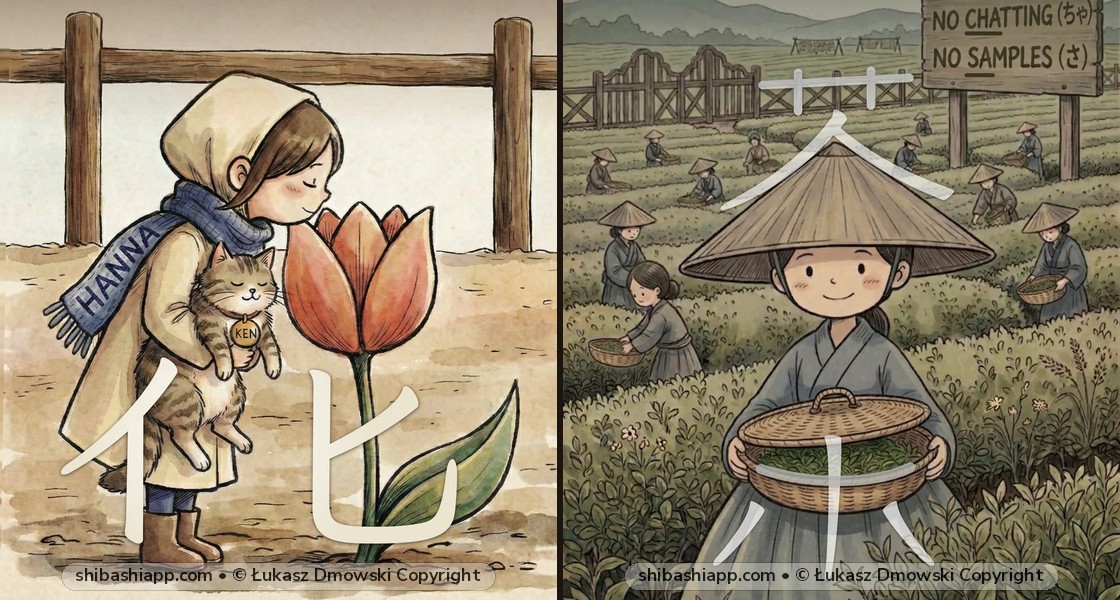
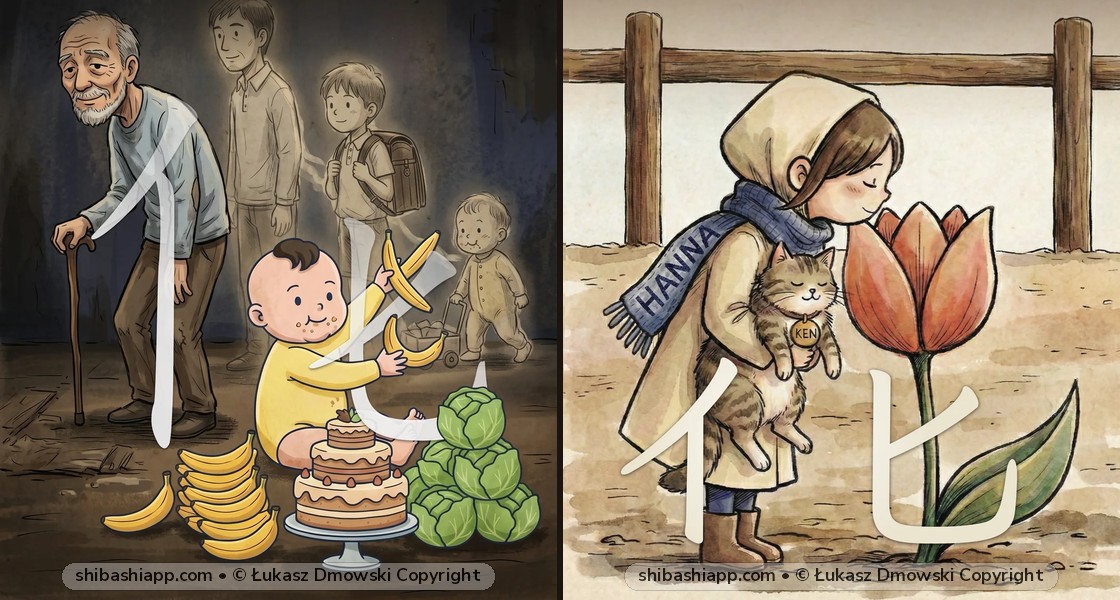
Compare the custom Shibashi artwork for 化 (Change) and 花 (Flower) below. Notice how each illustration embeds both the English meaning and the primary Japanese reading directly into the scene, and tap any reading to hear native pronunciation:


Step-by-Step Visual Breakdown & Radical Rules
See why 化 (ka) is one of the most productive kanjis in modern Japanese:
1. 化 (Change) — Mnemonic Story & Readings
On'yomi: か, け | Kun'yomi: ば
Shibashi Visual Story: “With enough bananas (ば), cake (け), and cabbage (か) a baby changes into an old man...” Key visual distinction: 亻 (Upright person) + 匕 (Upside-down person / spoon) = flipping into a new form = CHANGE / TRANSFORM / -FICATION (bakeru / ka / ke).
2. 花 (Flower) — Mnemonic Story & Readings
On'yomi: か, け | Kun'yomi: はな
Shibashi Visual Story: “Hanna (はな) and her cat (か) Ken (け) love to smell the flowers.” Key visual distinction: 艹 (Grass/Plant crown) over 化 (Change, ka) = a green plant transforming into a colorful blossom = FLOWER (hana / ka).
3. 文 (Literature) — Mnemonic Story & Readings
On'yomi: ぶん, もん | Kun'yomi: ふみ
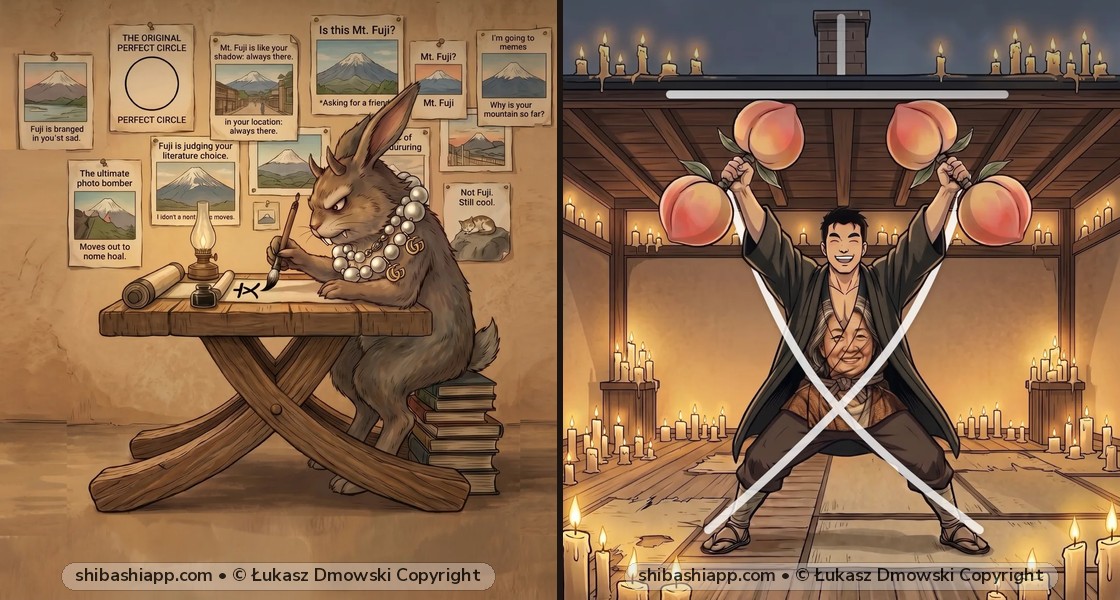
Shibashi Visual Story: “Just a monster (もん) in a bootleg necklace (ぶん) writing literature in his room filled with fuji memes (ふみ)...” Key visual distinction: Carved pattern/writing = WRITING / LITERATURE (bun, combines with 化 for 文化 bunka 'Culture').
- 注文 (ちゅうもん): order (for an item)
- 文 (ぶん): sentence, writing
4. 代 (Substitute) — Mnemonic Story & Readings
On'yomi: だい, たい | Kun'yomi: —
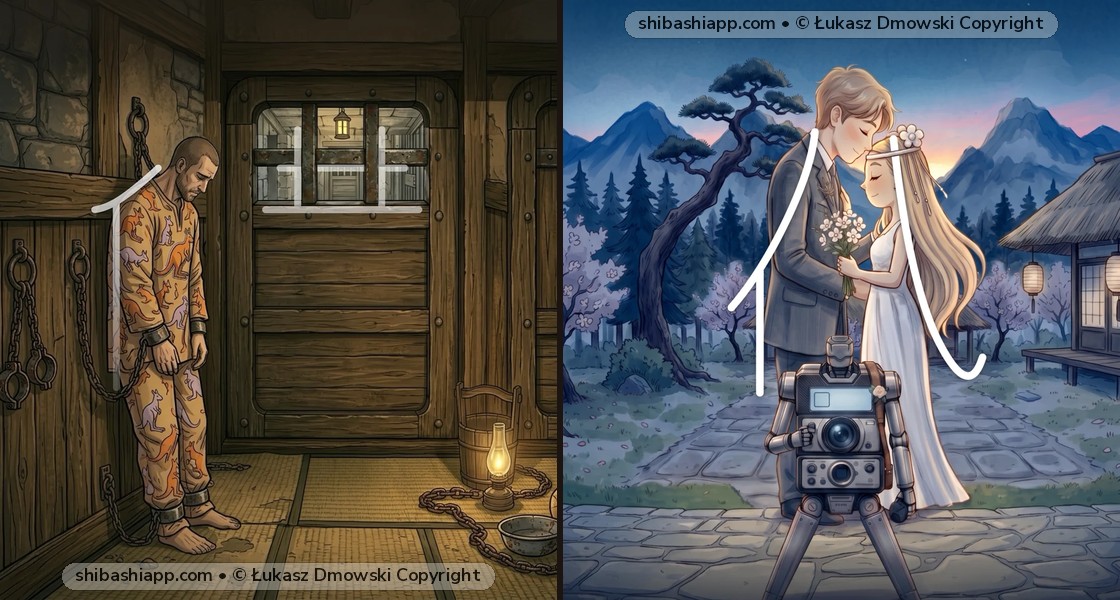
Shibashi Visual Story: “The man gave the girl a diamond (だい) ring and decided to tie (たい) the knot once he realized, there is no substitute...” Key visual distinction: 亻 (Person) + 弋 (Stake) = standing in for someone = SUBSTITUTE / GENERATION / FEE (kawaru / dai).
- 時代 (じだい): period, epoch, era, age
Essential Japanese Vocabulary Words Using 化 / 花 / 文 / 代
Once you can recognize 化 (Change) and 花 (Flower) and 文 (Literature) individually, lock them into your active reading vocabulary with these high-frequency Japanese words from the Shibashi app:
| Japanese Word | Hiragana Reading | English Meaning | Level |
|---|---|---|---|
| 文化 | ぶんか | culture | JLPT |
| 化学 | かがく | chemistry | JLPT |
| 花 | はな | flower | JLPT |
| 花見 | はなみ | cherry-blossom viewing | JLPT |
| 注文 | ちゅうもん | order (for an item) | JLPT |
| 文 | ぶん | sentence, writing | JLPT |
| 時代 | じだい | period, epoch, era, age | JLPT |
5-Second Memory Summary: How to Never Mix Up 化 & 花 & 文 Again
亻 + 匕 = 化 (Change / Transform — カ ka): study of transformation = 化学 (kagaku — Chemistry); how writing/art transforms society = 文化 (bunka — Culture); and a plant (艹) that transforms = 花 (hana / ka — Flower)!