The 氏 (Clan / Surname) Kanji Family: 氏 (Mr./Clan), 紙 (Paper), 低 (Low) & 民 (People/Citizens)
Look at 氏 (Clan / Surname) and 民 (People / Citizens): both share the exact same curved right-hand hook and horizontal crossbars! Add Silk Thread (糸) to 氏 and you get 紙 (Paper — kami / shi).
On Japanese forms and passports, the box for your full name is always labeled 氏名 (shimei — Last Name 氏 + First Name 名). Meanwhile, 国民 (kokumin — citizens) uses 民. How do you tell 氏 and 民 apart at a glance?
Quick Comparison: 氏 (Family Name) vs. 紙 (Paper) vs. 低 (Low) vs. 民 (People)
Compare the four members of the 氏 / 民 visual family below:
| Kanji & Meaning | Primary Readings (Bold = Primary) | Shibashi Visual Mnemonic Hook | Common Compound Word |
|---|---|---|---|
| 氏 — Family Name | On: し Kun: — |
A deep-rooted family blade/banner with an open top-left slope = CLAN / SURNAME / MR. (shi / uji, as in 氏名 shimei). | 氏 (し) — Mr., Ms., family name, clan |
| 紙 — Paper | On: し Kun: かみ |
糸 (Silk fiber thread) on the left + 氏 (flat clan sheet, shi) on the right = pressed fiber sheet = PAPER (kami / shi). | 紙 (かみ) — paper |
| 低 — Low | On: てい Kun: ひく |
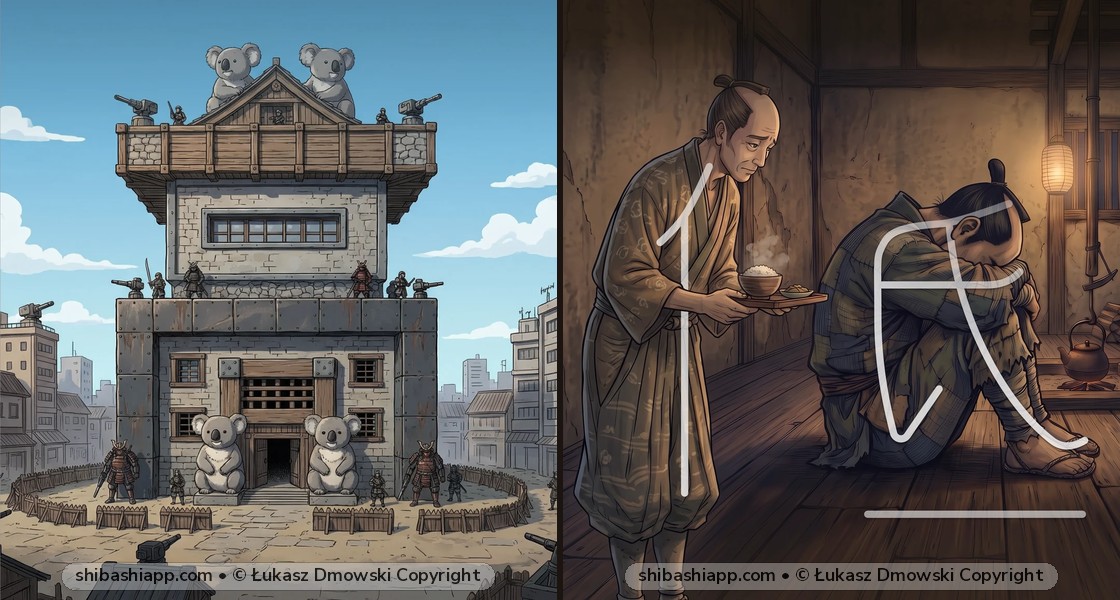
亻 (Person) + 氏 + 一 (bottom ground line) = a person bowing low to the ground = LOW (hikui / tei). | 低い (ひくい) — low, short |
| 民 — People | On: みん Kun: たみ |
Closed rectangular box (口/コ) at the top of the 氏 hook = the common PEOPLE / CITIZENS (tami / min, as in 国民 kokumin). | 市民 (しみん) — citizen |
Side-by-Side Illustrated Kanji Flashcards (Tap Readings for Audio)
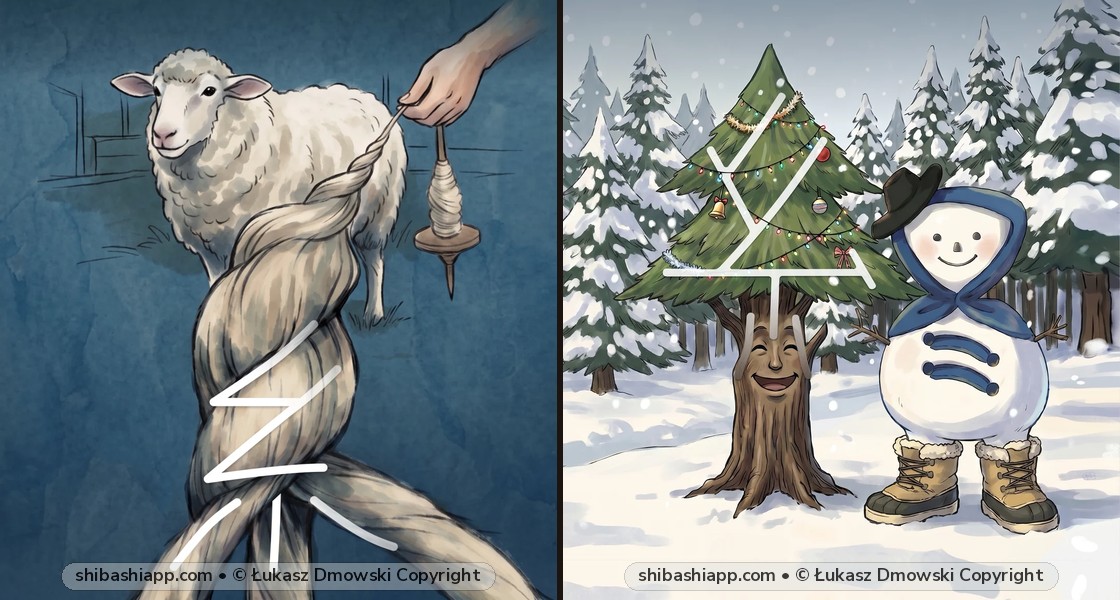
Compare the custom Shibashi artwork for 氏 (Family Name) and 紙 (Paper) below. Notice how each illustration embeds both the English meaning and the primary Japanese reading directly into the scene, and tap any reading to hear native pronunciation:


Step-by-Step Visual Breakdown & Radical Rules
Check the top edge of 氏 versus 民, and see how 氏 builds 紙 (Paper) and 低 (Low):
1. 氏 (Family Name) — Mnemonic Story & Readings
On'yomi: し | Kun'yomi: —
Shibashi Visual Story: “If you sit all day with your head down like a scared sheep (し), your family name will never be known...” Key visual distinction: A deep-rooted family blade/banner with an open top-left slope = CLAN / SURNAME / MR. (shi / uji, as in 氏名 shimei).
2. 紙 (Paper) — Mnemonic Story & Readings
On'yomi: し | Kun'yomi: かみ
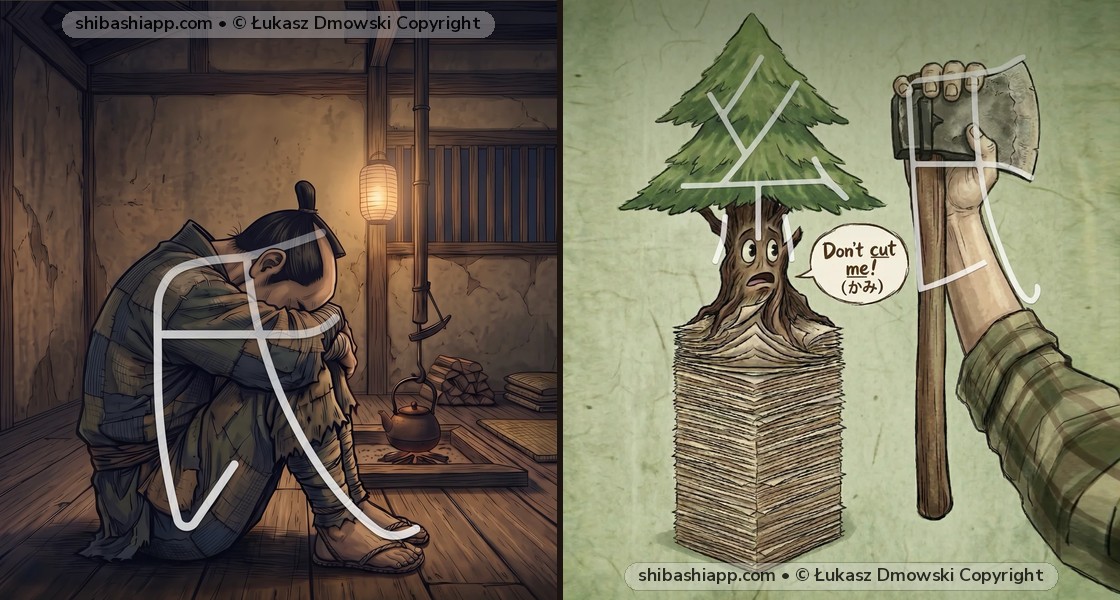
Shibashi Visual Story: “The tree screams “Don’t Cut Me!” (かみ), but if we want sheets (し) of paper, there is no other way...” Key visual distinction: 糸 (Silk fiber thread) on the left + 氏 (flat clan sheet, shi) on the right = pressed fiber sheet = PAPER (kami / shi).
- 紙 (かみ): paper
3. 低 (Low) — Mnemonic Story & Readings
On'yomi: てい | Kun'yomi: ひく
Shibashi Visual Story: “Your dad he cooks (ひく) the best tasting (てい) food, but sitting so low, you can't even try it...” Key visual distinction: 亻 (Person) + 氏 + 一 (bottom ground line) = a person bowing low to the ground = LOW (hikui / tei).
4. 民 (People) — Mnemonic Story & Readings
On'yomi: みん | Kun'yomi: たみ
Shibashi Visual Story: “This man forgot his Minty (みん) Vitamin (たみ) and is now depressed. Sometimes people are weird...” Key visual distinction: Closed rectangular box (口/コ) at the top of the 氏 hook = the common PEOPLE / CITIZENS (tami / min, as in 国民 kokumin).
- 市民 (しみん): citizen
Essential Japanese Vocabulary Words Using 氏 / 紙 / 低 / 民
Once you can recognize 氏 (Family Name) and 紙 (Paper) and 低 (Low) individually, lock them into your active reading vocabulary with these high-frequency Japanese words from the Shibashi app:
| Japanese Word | Hiragana Reading | English Meaning | Level |
|---|---|---|---|
| 氏 | し | Mr., Ms., family name, clan | JLPT |
| 氏名 | しめい | full name, identity | JLPT |
| 氏族 | しぞく | clan, family tribe | JLPT |
| 紙 | かみ | paper | JLPT |
| 低い | ひくい | low, short | JLPT |
| 低下 | ていか | fall, decline, drop | JLPT |
| 最低 | さいてい | lowest, least, worst | JLPT |
| 市民 | しみん | citizen | JLPT |
5-Second Memory Summary: How to Never Mix Up 氏 & 紙 & 低 Again
氏 vs. 民: 氏 (Surname/Clan — shi) has a single slanted top stroke (open on the right), and gives its reading シ (shi) to 紙 (Paper = 糸 Thread + 氏)! 民 (People/Citizens — min) has a closed rectangular cap (コ) across the top!