The Thread Radical (糸 — Itohen): 糸 (Thread), 紙 (Paper), 組 (Group), 終 (End) & 係 (Charge/Connection)
Twisted silk cocoons over three dangling tassels: that is 糸 (Thread — ito). Whenever 糸 appears in a kanji, think of threads connecting, braiding groups, pressing fiber into paper, or tying off an end!
Look at how 糸 (Thread — ito) connects five high-frequency JLPT kanjis: pressing thread fibers flat (氏) makes 紙 (Paper — kami); braiding threads into layers (且) makes 組 (Group / Class — kumi, 番組 bangumi); and tying off the thread in 冬 (Winter) means 終 (End — 終わる owaru)!
Quick Comparison: 糸 (Thread) vs. 紙 (Paper) vs. 組 (Group) vs. 終 (End)
Compare the five foundational 糸 (Thread) kanjis in the table below:
| Kanji & Meaning | Primary Readings (Bold = Primary) | Shibashi Visual Mnemonic Hook | Common Compound Word |
|---|---|---|---|
| 糸 — Thread | On: し Kun: いと |
Two twisted silk loops (幺) over 小 (three dangling thread fringes) = THREAD / YARN (ito / shi). | 糸 (いと) — thread |
| 紙 — Paper | On: し Kun: かみ |
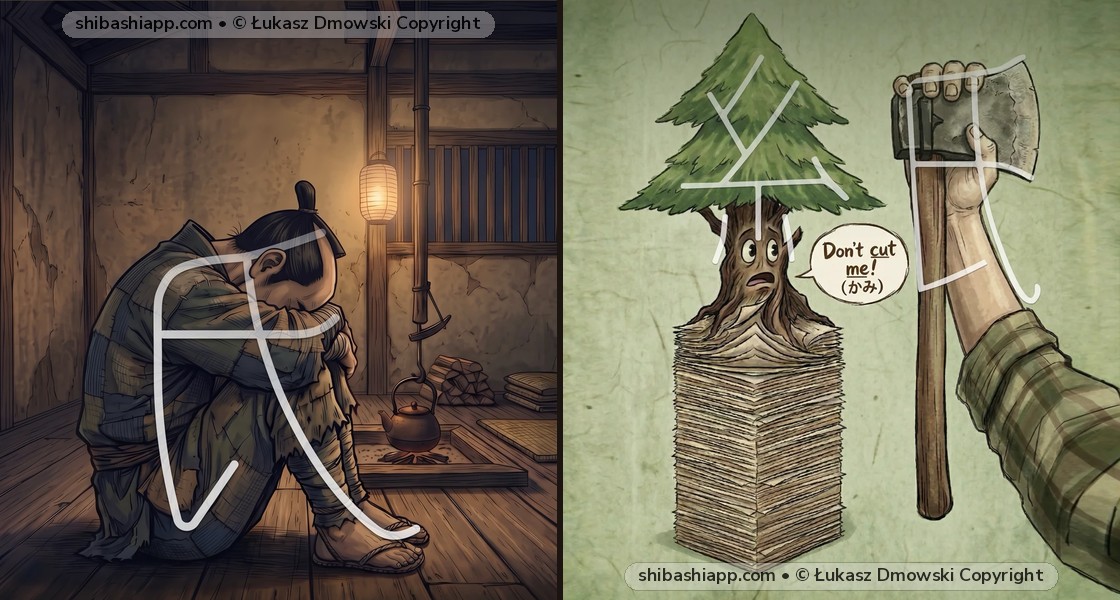
糸 (Silk fiber thread) + 氏 (flat clan sheet, shi) = pressed fiber sheet = PAPER (kami / shi). | 紙 (かみ) — paper |
| 組 — Group | On: そ Kun: くみ |
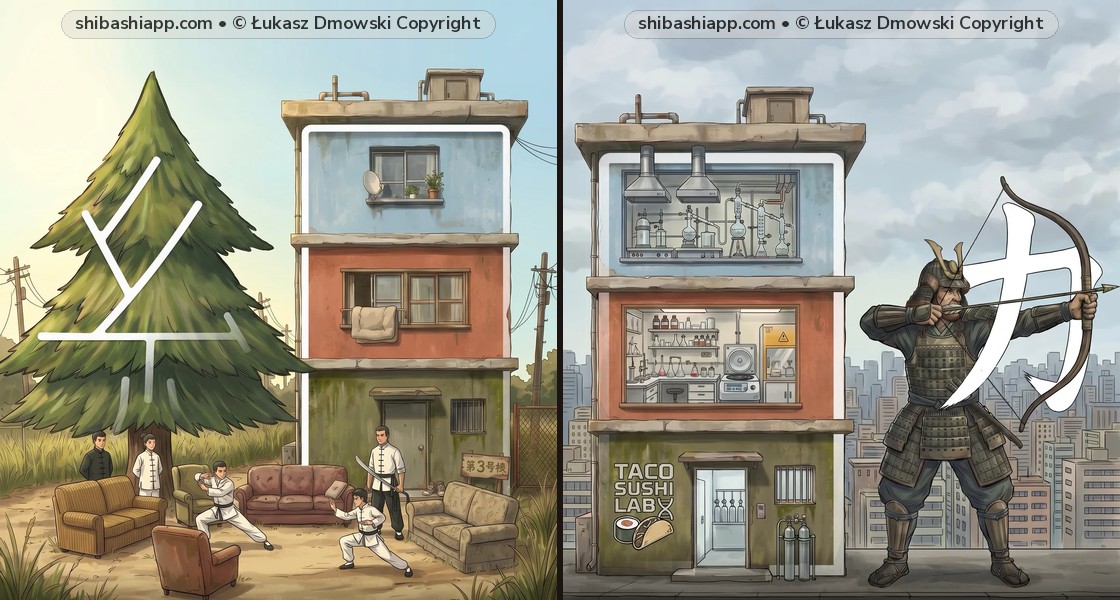
糸 (Threads) + 且 (stacked shelves/layers) = braiding threads together = GROUP / CLASS / ASSEMBLE (kumi / kumu / so). | 組み合わせ (くみあわせ) — combination, set |
| 終 — End | On: しゅう Kun: おわ, お |
糸 (Thread) + 冬 (Winter — the final season of the year) = tying off the thread at winter's end = END / FINISH (owaru / shū). | 最終 (さいしゅう) — last, final, closing |
| 係 — Connection | On: けい Kun: かか, かかり |
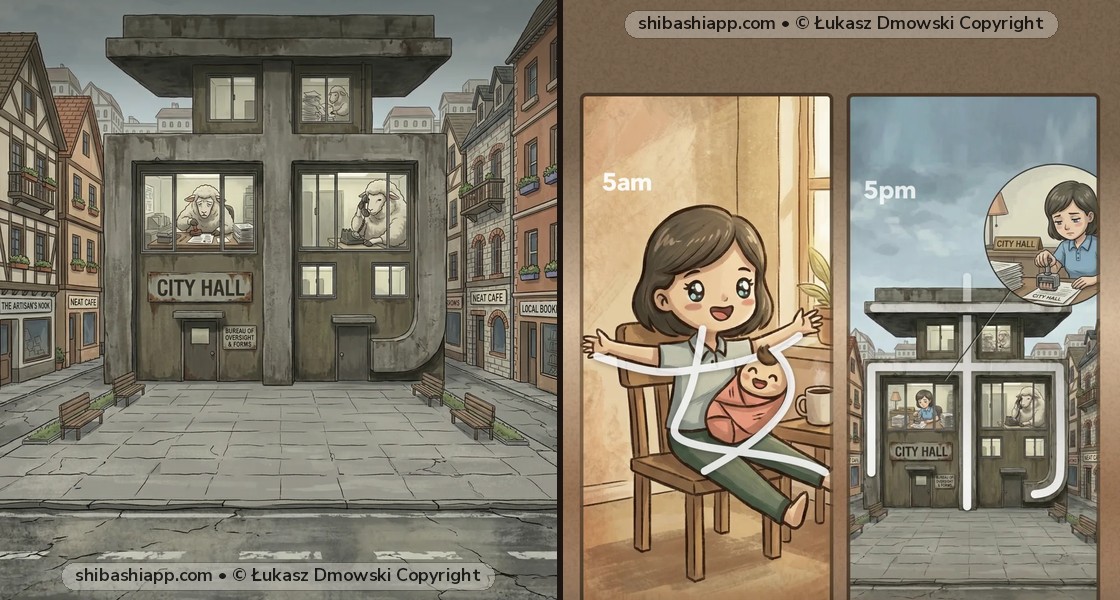
亻 (Person) + 丿 + 糸 (Thread) = a person tied by a thread to a duty = PERSON IN CHARGE / CONNECTION (kakari / kei, as in 関係 kankei). | 係 (かかり) — charge, duty, person in c... |
Side-by-Side Illustrated Kanji Flashcards (Tap Readings for Audio)
Compare the custom Shibashi artwork for 糸 (Thread) and 終 (End) below. Notice how each illustration embeds both the English meaning and the primary Japanese reading directly into the scene, and tap any reading to hear native pronunciation:


Step-by-Step Visual Breakdown & Radical Rules
Trace what each partner component adds to the silk thread (糸):
1. 糸 (Thread) — Mnemonic Story & Readings
On'yomi: し | Kun'yomi: いと
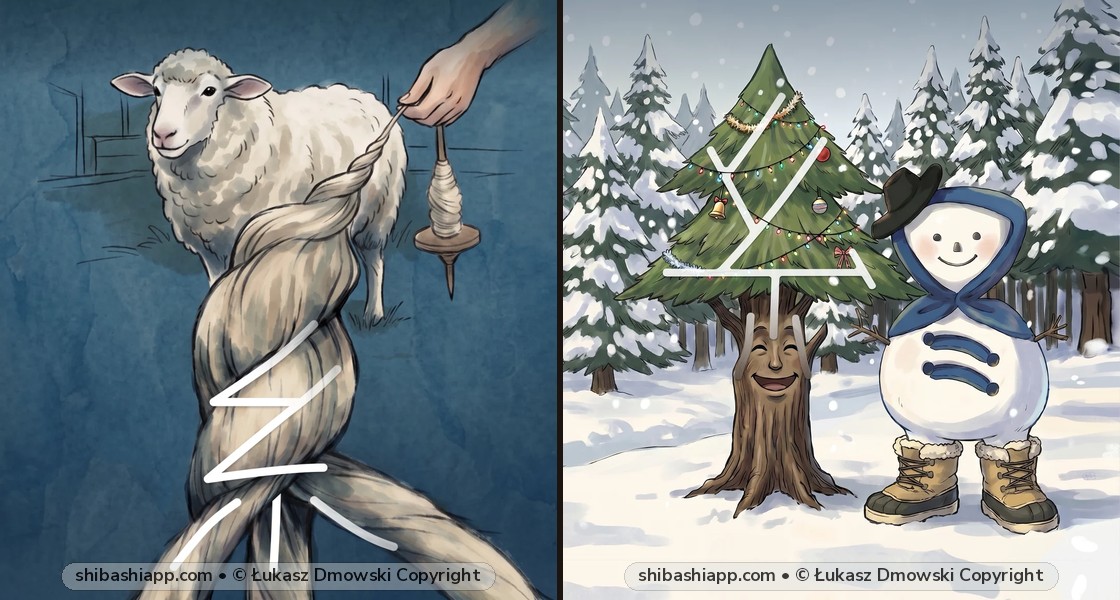
Shibashi Visual Story: “We eat (いと) sheep (し) and make yarn/threads from its hairs twisted together.” Key visual distinction: Two twisted silk loops (幺) over 小 (three dangling thread fringes) = THREAD / YARN (ito / shi).
- 糸 (いと): thread
2. 紙 (Paper) — Mnemonic Story & Readings
On'yomi: し | Kun'yomi: かみ
Shibashi Visual Story: “The tree screams “Don’t Cut Me!” (かみ), but if we want sheets (し) of paper, there is no other way...” Key visual distinction: 糸 (Silk fiber thread) + 氏 (flat clan sheet, shi) = pressed fiber sheet = PAPER (kami / shi).
- 紙 (かみ): paper
3. 組 (Group) — Mnemonic Story & Readings
On'yomi: そ | Kun'yomi: くみ
Shibashi Visual Story: “The martial arts group has its Kung-Fu Meet-ups (くみ) in front of the old building with sofas (そ)...” Key visual distinction: 糸 (Threads) + 且 (stacked shelves/layers) = braiding threads together = GROUP / CLASS / ASSEMBLE (kumi / kumu / so).
- 組み合わせ (くみあわせ): combination, set
4. 終 (End) — Mnemonic Story & Readings
On'yomi: しゅう | Kun'yomi: おわ, お
Shibashi Visual Story: “Ohh wow! (お or おわ) Mr. Snowman in warm shoes (しゅう) and a Christmas tree, it must be the end of the year!!” Key visual distinction: 糸 (Thread) + 冬 (Winter — the final season of the year) = tying off the thread at winter's end = END / FINISH (owaru / shū).
- 最終 (さいしゅう): last, final, closing
- 終わり (おわり): the end
- 終える (おえる): to finish
5. 係 (Connection) — Mnemonic Story & Readings
On'yomi: けい | Kun'yomi: かか, かかり
Shibashi Visual Story: “Khaki kangaroo Ricky (かか or かかり), has a deep connection to his wool workshop in a cave (けい)...” Key visual distinction: 亻 (Person) + 丿 + 糸 (Thread) = a person tied by a thread to a duty = PERSON IN CHARGE / CONNECTION (kakari / kei, as in 関係 kankei).
Essential Japanese Vocabulary Words Using 糸 / 紙 / 組 / 終
Once you can recognize 糸 (Thread) and 紙 (Paper) and 組 (Group) individually, lock them into your active reading vocabulary with these high-frequency Japanese words from the Shibashi app:
| Japanese Word | Hiragana Reading | English Meaning | Level |
|---|---|---|---|
| 糸 | いと | thread | JLPT |
| 紙 | かみ | paper | JLPT |
| 組み合わせ | くみあわせ | combination, set | JLPT |
| 最終 | さいしゅう | last, final, closing | JLPT |
| 終わり | おわり | the end | JLPT |
| 終える | おえる | to finish | JLPT |
| 係 | かかり | charge, duty, person in charge, official, clerk | JLPT |
| 関係 | かんけい | relationship, connection | JLPT |
5-Second Memory Summary: How to Never Mix Up 糸 & 紙 & 組 Again
Spot 糸 (Thread): + 氏 (shi) = 紙 (Paper — kami / shi); + 且 (Shelves) = 組 (Group / Assemble — 番組 bangumi); + 冬 (Winter) = 終 (End — 終わる owaru); + 亻 (Person) = 係 (Person in charge / Connection — 関係 kankei 'relationship')!