同 (Same) vs. 向 (Face/Yonder) vs. 回 (Turn/Times) vs. 困 (Trouble): Box Enclosure Kanji
What is hiding inside the outer box? A tree trapped in a box is in Trouble (困), a box inside a box spins Around (回), a roof with a top chimney faces Yonder (向), and everyone under one monk's hood is the Same (同)!
Enclosed kanjis are some of the fastest characters to memorize in Japanese — as long as you pay attention to whether the outer frame is open at the bottom (冂) or sealed on all four sides (囗).
Quick Comparison: 同 (Same) vs. 向 (To Face) vs. 回 (Times) vs. 困 (Distressed)
Compare the four high-frequency enclosed kanjis in the table below:
| Kanji & Meaning | Primary Readings (Bold = Primary) | Shibashi Visual Mnemonic Hook | Common Compound Word |
|---|---|---|---|
| 同 — Same | On: どう Kun: おな |
Open bottom-frame hood (冂) with 一 (One) over 口 (Mouth) = speaking with ONE mouth under one roof = SAME (onaji / dō). | 同じ (おなじ) — same |
| 向 — To Face | On: こう Kun: む |
A house frame with a slanted roof tick on top and a window (口) inside = FACING / OVER THERE (mukou / muku / kō). | 向こう (むこう) — over there |
| 回 — Times | On: かい Kun: まわ |
A small square口 spinning inside a larger square 囗 = REVOLVE / COUNTER FOR TIMES (kai / mawaru). | 回る (まわる) — to go around |
| 困 — Distressed | On: こん Kun: こま |
A growing 木 (Tree) locked inside a sealed 4-wall box (囗) with no room to grow = TROUBLE / DISTRESS (komaru / kon). | 困る (こまる) — to be worried |
Side-by-Side Illustrated Kanji Flashcards (Tap Readings for Audio)
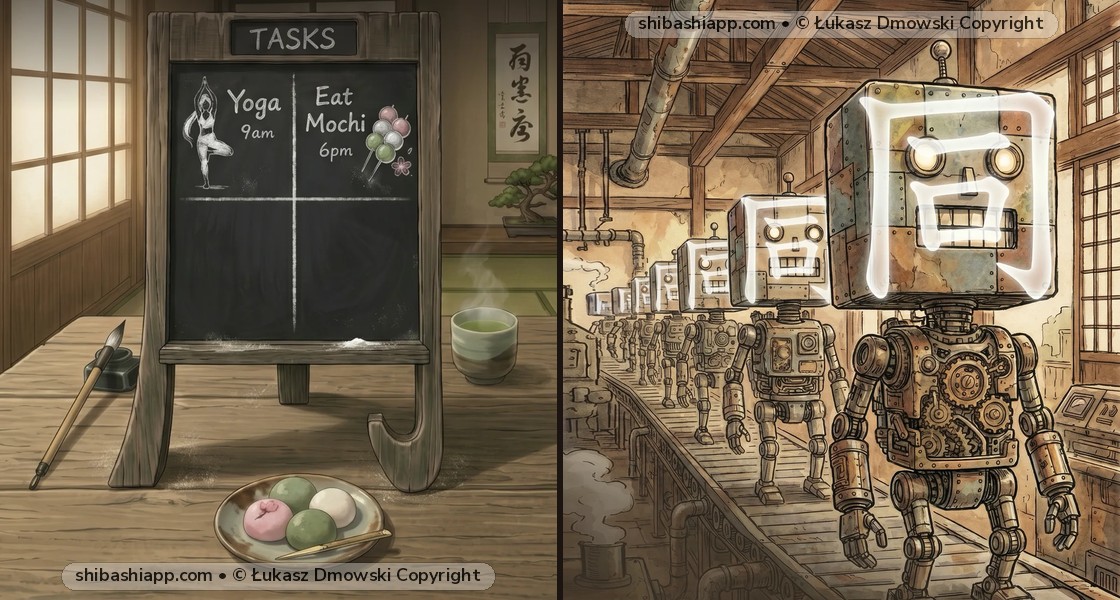
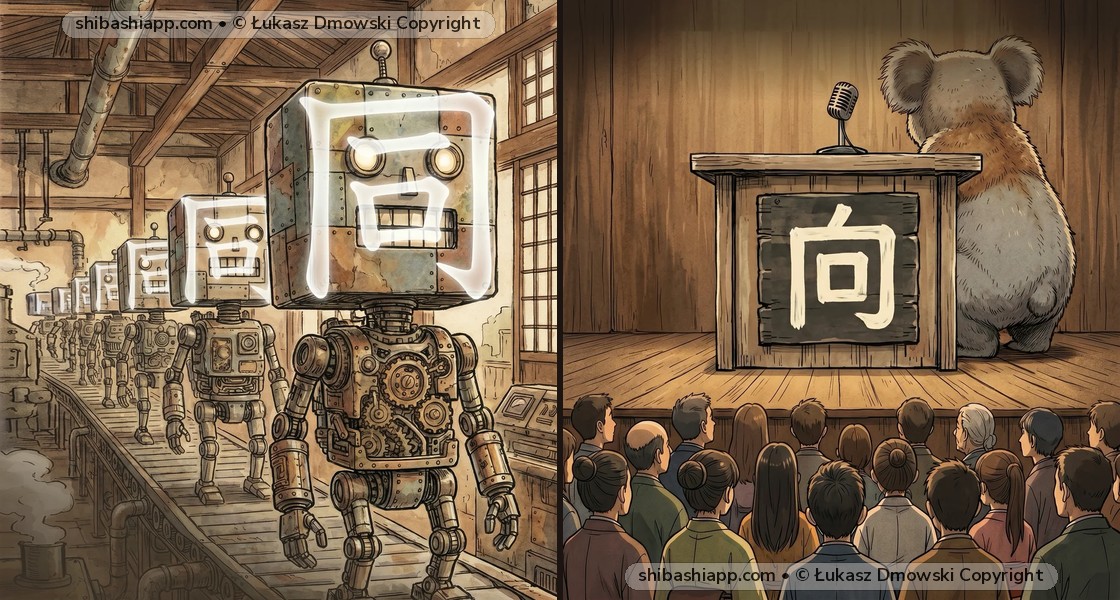
Compare the custom Shibashi artwork for 同 (Same) and 向 (To Face) below. Notice how each illustration embeds both the English meaning and the primary Japanese reading directly into the scene, and tap any reading to hear native pronunciation:


Step-by-Step Visual Breakdown & Radical Rules
Look at the top edge and the inner radical of each box:
1. 同 (Same) — Mnemonic Story & Readings
On'yomi: どう | Kun'yomi: おな
Shibashi Visual Story: “Robots on a (おな) production line are all the same, but still cost a lot of dough (どう).” Key visual distinction: Open bottom-frame hood (冂) with 一 (One) over 口 (Mouth) = speaking with ONE mouth under one roof = SAME (onaji / dō).
- 同じ (おなじ): same
- 同時 (どうじ): simultaneous(ly), concurrent, same time, synchronous
- 同氏 (どうし): the said person, he, she
2. 向 (To Face) — Mnemonic Story & Readings
On'yomi: こう | Kun'yomi: む
Shibashi Visual Story: “The terrified koala (こう) at the podium needs to move (む) and to face the crowd...” Key visual distinction: A house frame with a slanted roof tick on top and a window (口) inside = FACING / OVER THERE (mukou / muku / kō).
3. 回 (Times) — Mnemonic Story & Readings
On'yomi: かい | Kun'yomi: まわ
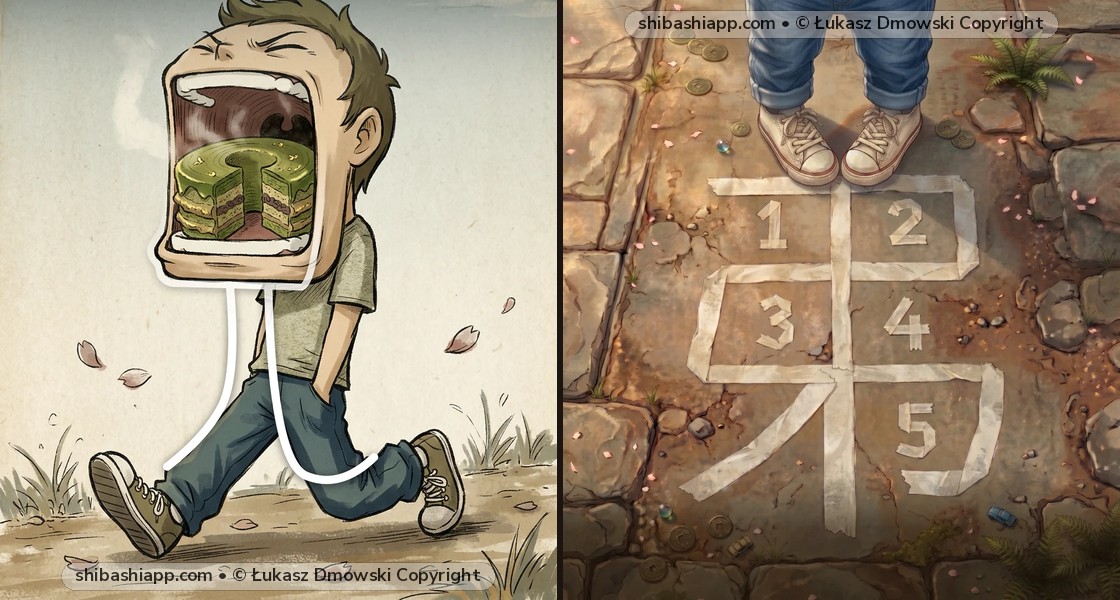
Shibashi Visual Story: “A proud momma watching (まわ) her son practice flying a kite (かい) a few times a day.” Key visual distinction: A small square口 spinning inside a larger square 囗 = REVOLVE / COUNTER FOR TIMES (kai / mawaru).
- 回る (まわる): to go around
- 回す (まわす): to turn, to revolve
- 回り (まわり): circumference, surroundings, circulation
4. 困 (Distressed) — Mnemonic Story & Readings
On'yomi: こん | Kun'yomi: こま
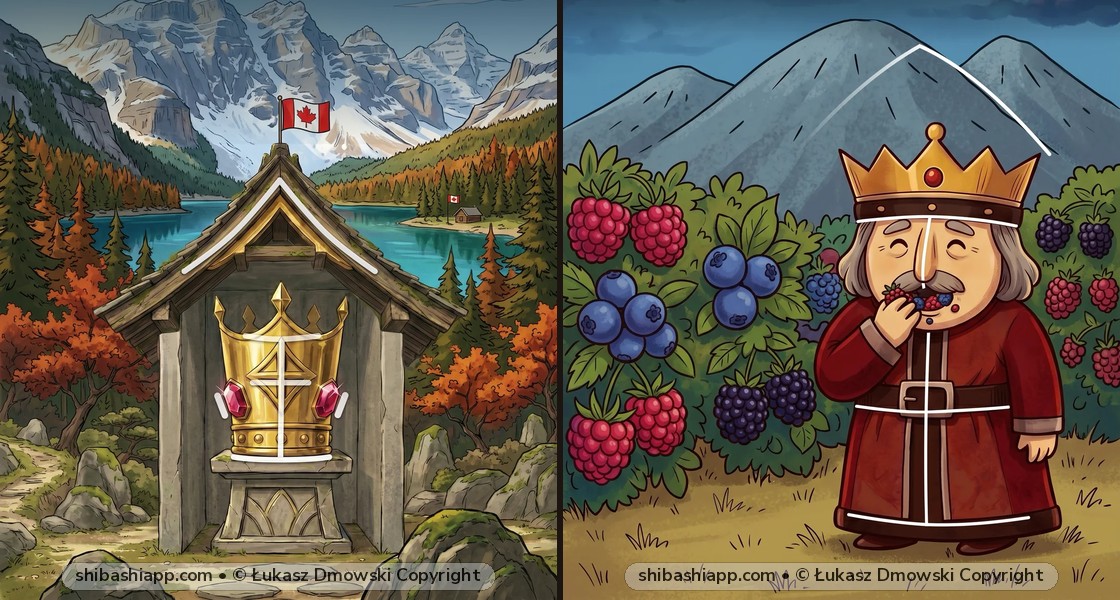
Shibashi Visual Story: “Koala mom (こま) looks really distressed by the size of the park in the concrete (こん) jungle....” Key visual distinction: A growing 木 (Tree) locked inside a sealed 4-wall box (囗) with no room to grow = TROUBLE / DISTRESS (komaru / kon).
- 困る (こまる): to be worried
Essential Japanese Vocabulary Words Using 同 / 向 / 回 / 困
Once you can recognize 同 (Same) and 向 (To Face) and 回 (Times) individually, lock them into your active reading vocabulary with these high-frequency Japanese words from the Shibashi app:
| Japanese Word | Hiragana Reading | English Meaning | Level |
|---|---|---|---|
| 同じ | おなじ | same | JLPT |
| 同時 | どうじ | simultaneous(ly), concurrent, same time, synchronous | JLPT |
| 同氏 | どうし | the said person, he, she | JLPT |
| 向こう | むこう | over there | JLPT |
| 向かう | むかう | to face | JLPT |
| 向ける | むける | to turn towards, to point | JLPT |
| 回る | まわる | to go around | JLPT |
| 回す | まわす | to turn, to revolve | JLPT |
5-Second Memory Summary: How to Never Mix Up 同 & 向 & 回 Again
Flat top + 一 (One) + 口 (Mouth) = 同 (Same — onaji). Slanted top tick + window = 向 (Facing / Over there — mukou). Box inside a box = 回 (Revolve / ~Times — kai). A 木 (Tree) trapped in a box = 困 (Trouble — komaru)!