苦 (Bitter / Suffering — Kurushii / Nigai) vs. 若 (Young — Wakai) & 古 (Old): Grass-Crown Kanji Secrets
Look closely at 苦 (Bitter / Suffering — nigai / kurushii): it is simply 艹 (Grass/Herb) stacked directly on top of 古 (Old)! Chewing old, dried medicinal herbs is bitter — and that unlocks every reading of 苦.
Look at how 苦 works in three of the most common expressions in conversational Japanese: 苦い (nigai — bitter taste, like black coffee), 苦しい (kurushii — physically or emotionally painful/grueling), and 苦手 (nigate — 'bitter hand' = bad at / not fond of something)!
Quick Comparison: 苦 (Suffering) vs. 古 (Old) vs. 英 (England) vs. 草 (Grass)
Compare 苦, 古, 英, and 草 in the table below:
| Kanji & Meaning | Primary Readings (Bold = Primary) | Shibashi Visual Mnemonic Hook | Common Compound Word |
|---|---|---|---|
| 苦 — Suffering | On: く Kun: くる, にが |
艹 (Herbs/Plants) over 古 (Old/withered) = chewing old, dried medicinal herbs = BITTER / PAINFUL / SUFFER (kurushii / nigai / ku). | 苦い (にがい) — bitter |
| 古 — Old | On: こ Kun: ふる |
十 (Ten generations) over 口 (Mouth) = passed down for 10 generations = OLD (furui / ko). | 中古 (ちゅうこ) — used, second-hand, old |
| 英 — England | On: えい Kun: — |
艹 (Flower) over 央 (Center) = a prize blossom in the center = ENGLAND / ENGLISH / EXCELLENT (ei, as in 英語 eigo). | 英語 (えいご) — English (language) |
| 草 — Grass | On: そう Kun: くさ |
艹 (Grass) over 早 (Early sun) = GRASS (kusa / sō). | 草 (くさ) — grass |
Side-by-Side Illustrated Kanji Flashcards (Tap Readings for Audio)
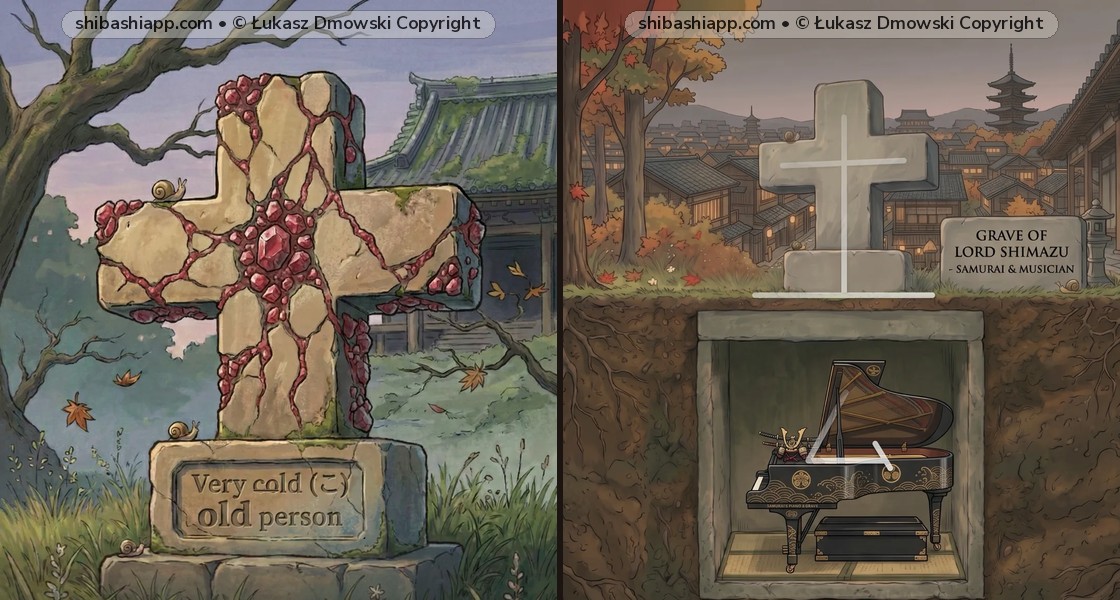
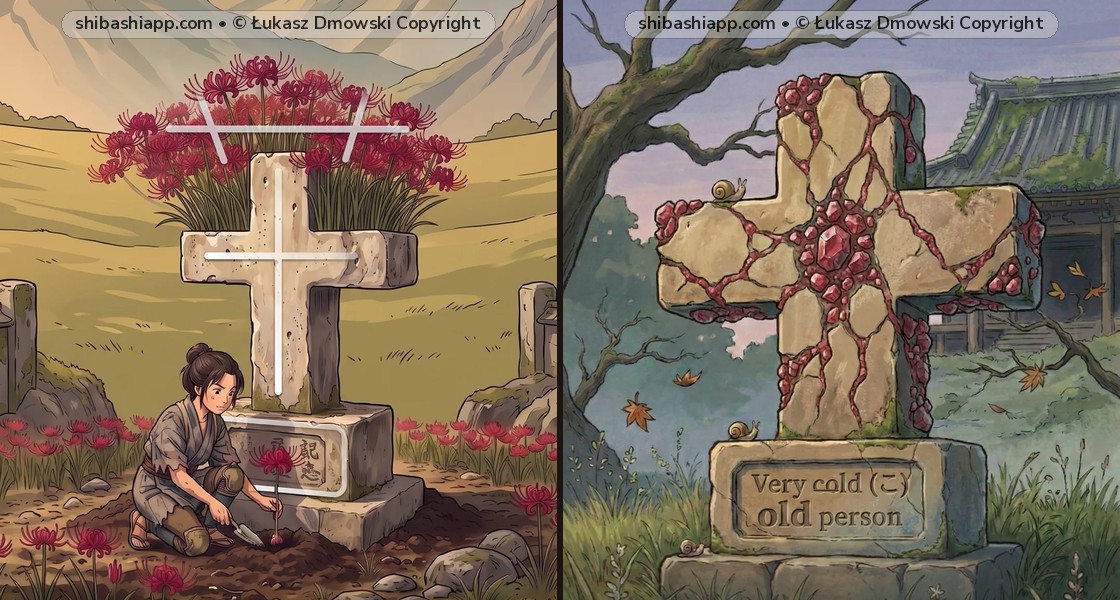
Compare the custom Shibashi artwork for 苦 (Suffering) and 古 (Old) below. Notice how each illustration embeds both the English meaning and the primary Japanese reading directly into the scene, and tap any reading to hear native pronunciation:


Step-by-Step Visual Breakdown & Radical Rules
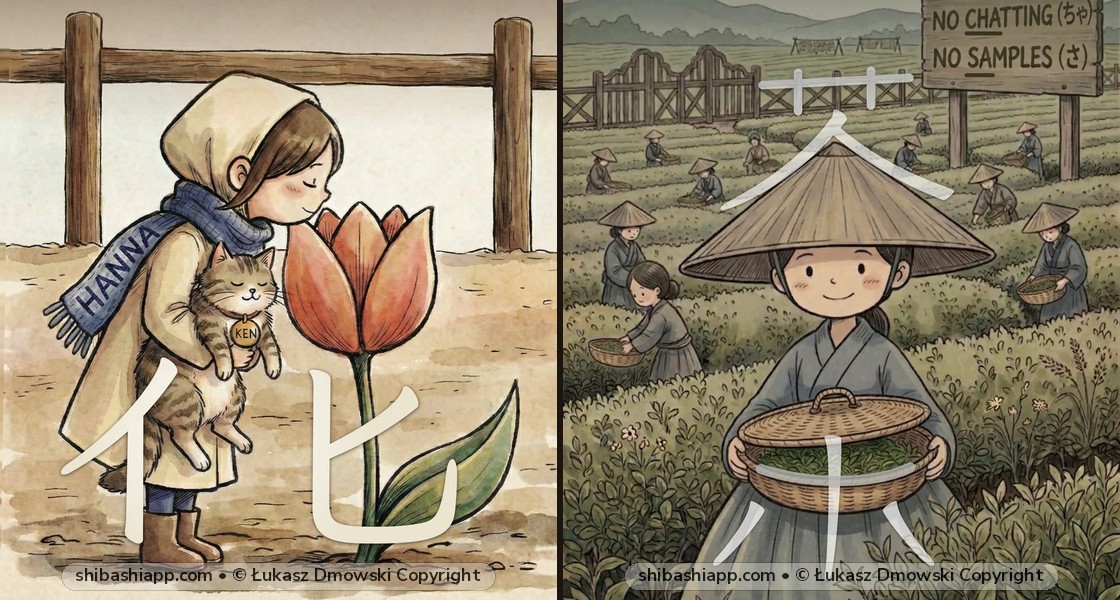
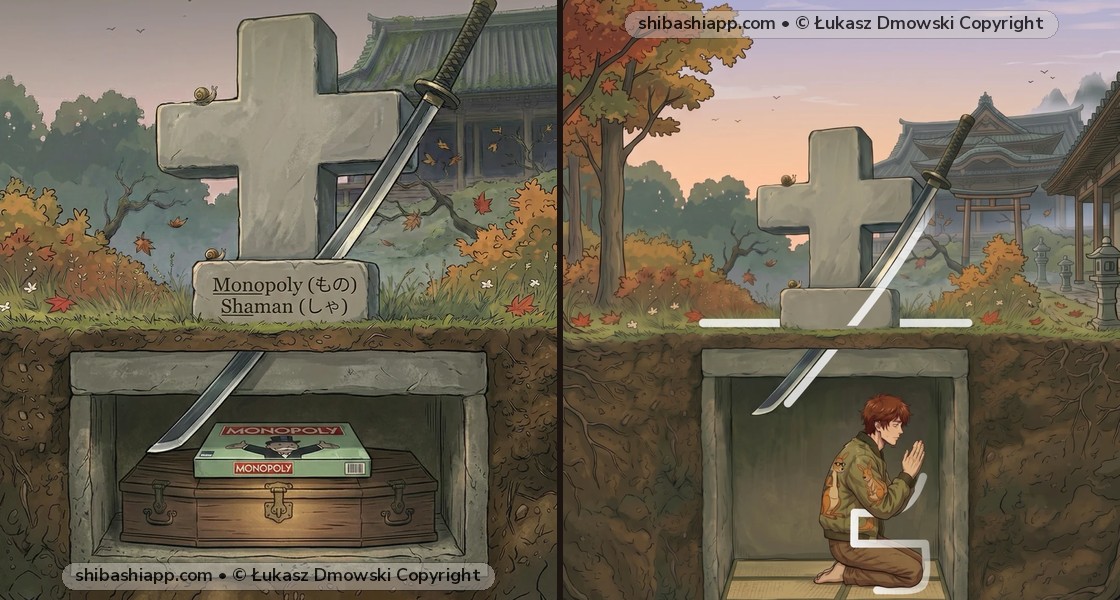
Plus, see how to tell 苦 (Bitter = 艹 + 古 Old) apart from its lookalike twin 若 (Young = 艹 + 右 Right):
1. 苦 (Suffering) — Mnemonic Story & Readings
On'yomi: く | Kun'yomi: くる, にが
Shibashi Visual Story: “Even with cool ruby (く or くる) flowers planted by a lady with knee guards (にが), if there is a grave, there is suffering...” Key visual distinction: 艹 (Herbs/Plants) over 古 (Old/withered) = chewing old, dried medicinal herbs = BITTER / PAINFUL / SUFFER (kurushii / nigai / ku).
- 苦い (にがい): bitter
- 苦手 (にがて): poor (at), weak (in), dislike (of)
- 苦しむ (くるしむ): to suffer, to groan, to be worried
2. 古 (Old) — Mnemonic Story & Readings
On'yomi: こ | Kun'yomi: ふる
Shibashi Visual Story: “For some reason, this old tombstone of a very cold (こ) person is full of rubies (ふる).” Key visual distinction: 十 (Ten generations) over 口 (Mouth) = passed down for 10 generations = OLD (furui / ko).
3. 英 (England) — Mnemonic Story & Readings
On'yomi: えい | Kun'yomi: —
Shibashi Visual Story: “England really loves soccer. If you don’t... you are automatically considered an alien... (えい)” Key visual distinction: 艹 (Flower) over 央 (Center) = a prize blossom in the center = ENGLAND / ENGLISH / EXCELLENT (ei, as in 英語 eigo).
- 英語 (えいご): English (language)
4. 草 (Grass) — Mnemonic Story & Readings
On'yomi: そう | Kun'yomi: くさ
Shibashi Visual Story: “The Yakuza (くさ) sun with his spiky grass hair is obsessed with soap (そう)...” Key visual distinction: 艹 (Grass) over 早 (Early sun) = GRASS (kusa / sō).
- 草 (くさ): grass
Essential Japanese Vocabulary Words Using 苦 / 古 / 英 / 草
Once you can recognize 苦 (Suffering) and 古 (Old) and 英 (England) individually, lock them into your active reading vocabulary with these high-frequency Japanese words from the Shibashi app:
| Japanese Word | Hiragana Reading | English Meaning | Level |
|---|---|---|---|
| 苦い | にがい | bitter | JLPT |
| 苦手 | にがて | poor (at), weak (in), dislike (of) | JLPT |
| 苦しむ | くるしむ | to suffer, to groan, to be worried | JLPT |
| 中古 | ちゅうこ | used, second-hand, old | JLPT |
| 古い | ふるい | old (not used for people) | JLPT |
| 英語 | えいご | English (language) | JLPT |
| 草 | くさ | grass | JLPT |
5-Second Memory Summary: How to Never Mix Up 苦 & 古 & 英 Again
艹 (Plant) + 古 (Old = 十+口) = 苦 (Old bitter herbs — 苦い nigai 'bitter', 苦しい kurushii 'painful/hard', 苦手 nigate 'weak at')! Meanwhile, if the bottom under 艹 is 右 (Right hand) instead of 古, it's 若い (wakai — Young)!