The 免 (Excuse / Escape) Kanji Family: How 免 Unlocks 勉 (Hard Work 勉強) & 晩 (Evening 今晩)
Once you recognize the 8-stroke shape of 免 (Excuse / Escape), you immediately unlock two of the most common kanjis in JLPT N5 and N4: 勉 (Effort, as in 勉強 benkyō 'study') and 晩 (Evening, as in 晩ご飯 'dinner')!
Every beginner learns the word 勉強 (benkyō — study) in Week 1, yet most learners struggle to write 勉 and constantly confuse it with 晩 (ban — evening). Why? Because both are built directly from 免 (men — Excuse / Escape)!
Quick Comparison: 免 (Excuse) vs. 勉 (Hard Work, Effort) vs. 晩 (Late Evening) vs. 強 (Strong)
Look at the table below: notice how the readings メン (men), ベン (ben), and バン (ban) all rhyme!
| Kanji & Meaning | Primary Readings (Bold = Primary) | Shibashi Visual Mnemonic Hook | Common Compound Word |
|---|---|---|---|
| 免 — Excuse | On: めん Kun: まぬか |
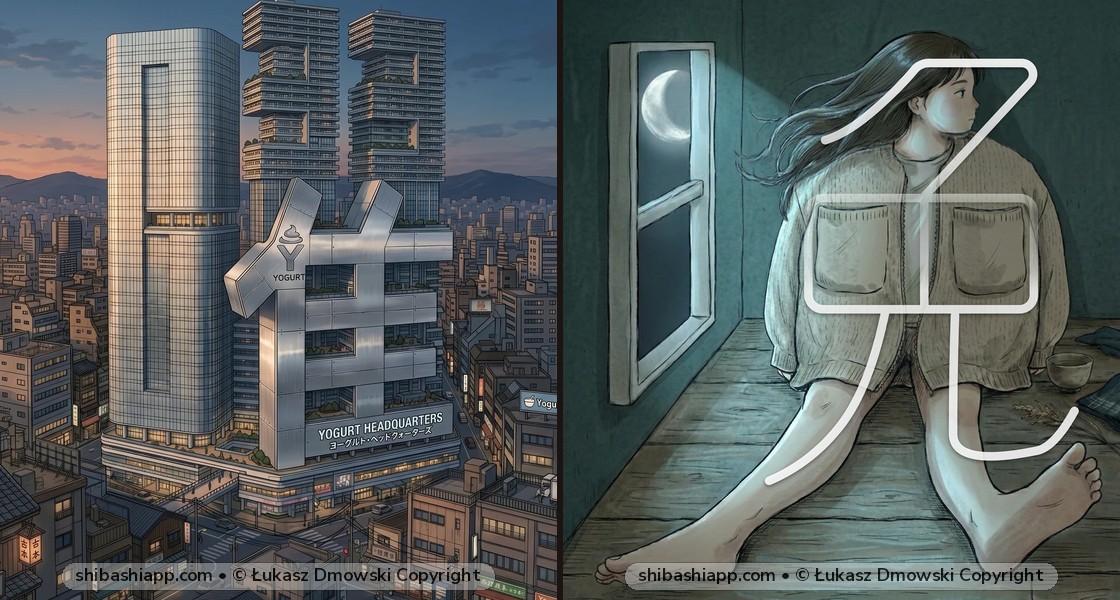
A person/rabbit ducking out of a box on curved legs (儿) = EXCUSE / ESCAPE / EXEMPT (men). | 免れる (まぬがれる) — to escape; to avoid; to b... |
| 勉 — Hard Work, Effort | On: べん Kun: — |
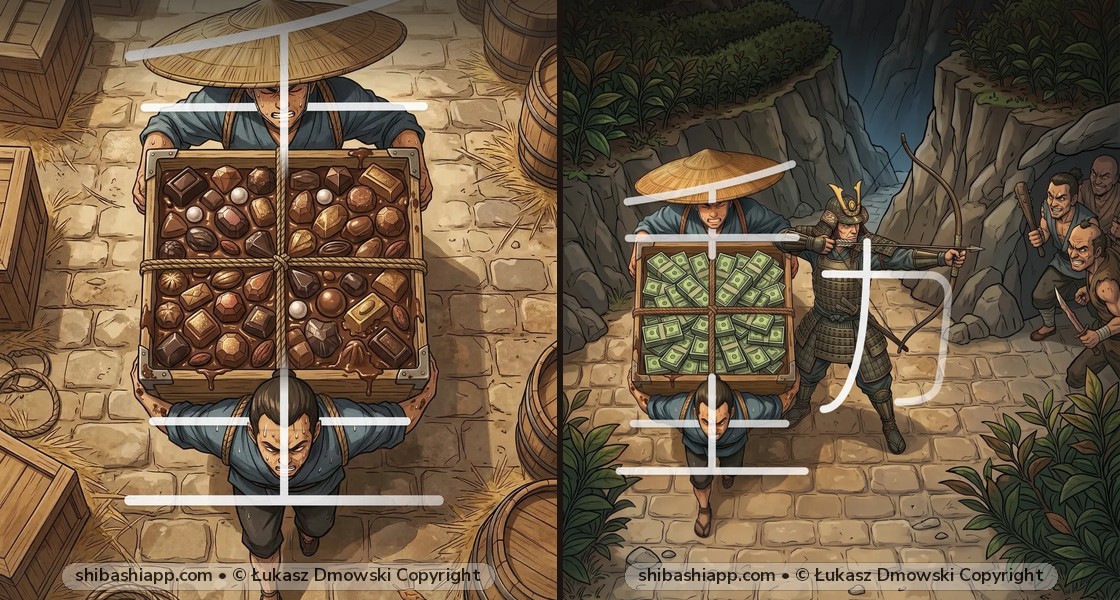
免 (wrapping L-sweep) + 力 (Power tucked inside) = exerting all your power without excuses = HARD WORK / EFFORT (ben, as in 勉強 benkyō). | 勉強 (べんきょう) — study |
| 晩 — Late Evening | On: ばん Kun: — |
日 (Sun) on the left + 免 (Escape) on the right = when the sun escapes below the horizon = LATE EVENING / NIGHT (ban, as in 今晩 konban). | 晩 (ばん) — evening |
| 強 — Strong | On: きょう, ごう Kun: つよ |
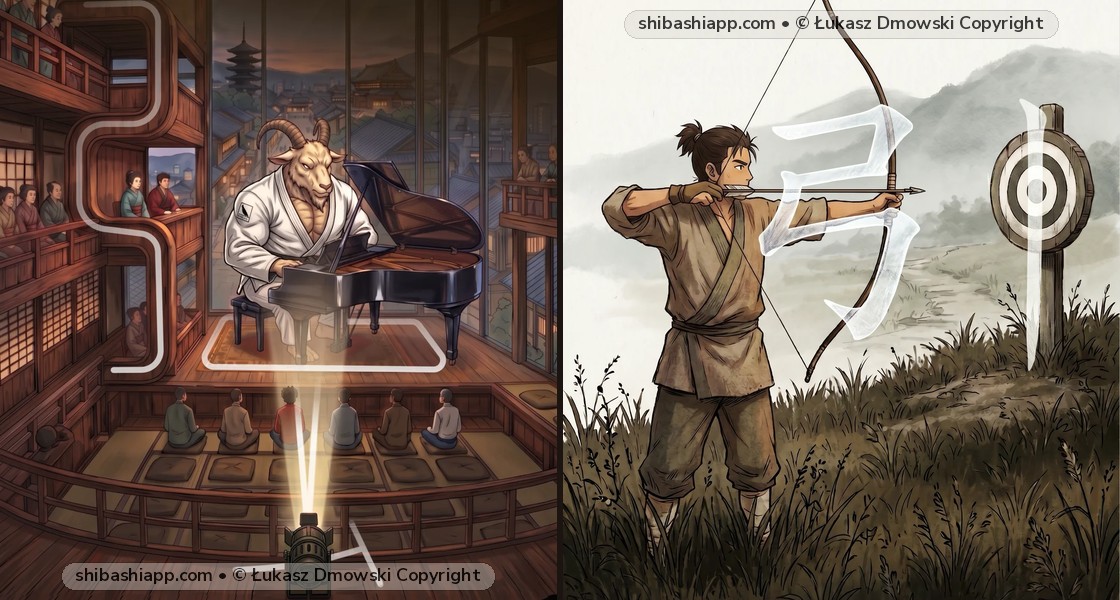
弓 (Bow) + 厶+虫 (Beetle) = STRONG (tsuyoi / kyō, combines with 勉 for 勉強 benkyō 'Study'). | 勉強する (べんきょうする) — to study |
Side-by-Side Illustrated Kanji Flashcards (Tap Readings for Audio)
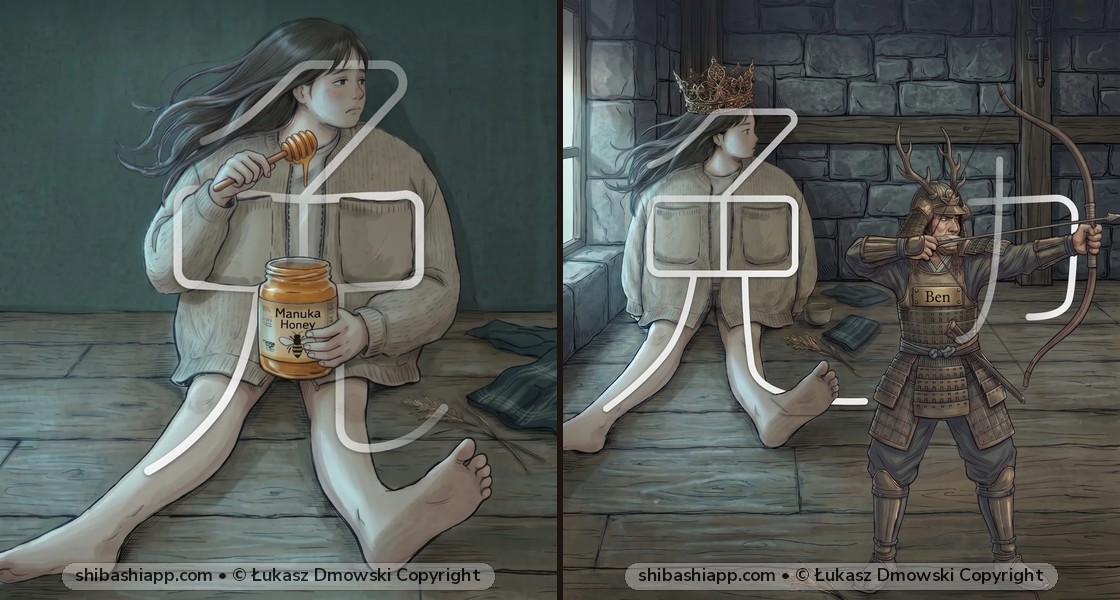
Compare the custom Shibashi artwork for 免 (Excuse) and 勉 (Hard Work, Effort) below. Notice how each illustration embeds both the English meaning and the primary Japanese reading directly into the scene, and tap any reading to hear native pronunciation:


Step-by-Step Visual Breakdown & Radical Rules
Here is how each partner radical transforms 免:
1. 免 (Excuse) — Mnemonic Story & Readings
On'yomi: めん | Kun'yomi: まぬか
Shibashi Visual Story: “The girl uses her bad mental (めん) state as an excuse for binging on manuka (まぬか) honey...” Key visual distinction: A person/rabbit ducking out of a box on curved legs (儿) = EXCUSE / ESCAPE / EXEMPT (men).
- 免れる (まぬがれる): to escape; to avoid; to be exempted from
- ご免 (ごめん): I'm sorry; excuse me; pardon
- ご免ください (ごめんください): may I come in?; excuse me
2. 勉 (Hard Work, Effort) — Mnemonic Story & Readings
On'yomi: べん | Kun'yomi: —
Shibashi Visual Story: “After a day of hard work the exhausted queen is protected by her powerful guard Ben (べん).” Key visual distinction: 免 (wrapping L-sweep) + 力 (Power tucked inside) = exerting all your power without excuses = HARD WORK / EFFORT (ben, as in 勉強 benkyō).
- 勉強 (べんきょう): study
3. 晩 (Late Evening) — Mnemonic Story & Readings
On'yomi: ばん | Kun'yomi: —
Shibashi Visual Story: “Ever since the girl got banned (ばん), she just sits at home all evening, staring into the wall.” Key visual distinction: 日 (Sun) on the left + 免 (Escape) on the right = when the sun escapes below the horizon = LATE EVENING / NIGHT (ban, as in 今晩 konban).
4. 強 (Strong) — Mnemonic Story & Readings
On'yomi: きょう, ごう | Kun'yomi: つよ
Shibashi Visual Story: “A very strong goat (ごう), performing in Kyoto (きょう) wearing his jiu-jitsu-yoga (つよ) kimono.” Key visual distinction: 弓 (Bow) + 厶+虫 (Beetle) = STRONG (tsuyoi / kyō, combines with 勉 for 勉強 benkyō 'Study').
- 勉強する (べんきょうする): to study
- 強い (つよい): powerful
- 強調 (きょうちょう): emphasis, stress, stressed point
Essential Japanese Vocabulary Words Using 免 / 勉 / 晩 / 強
Once you can recognize 免 (Excuse) and 勉 (Hard Work, Effort) and 晩 (Late Evening) individually, lock them into your active reading vocabulary with these high-frequency Japanese words from the Shibashi app:
| Japanese Word | Hiragana Reading | English Meaning | Level |
|---|---|---|---|
| 免れる | まぬがれる | to escape; to avoid; to be exempted from | JLPT |
| ご免 | ごめん | I'm sorry; excuse me; pardon | JLPT |
| ご免ください | ごめんください | may I come in?; excuse me | JLPT |
| 勉強 | べんきょう | study | JLPT |
| 晩 | ばん | evening | JLPT |
| 今晩 | こんばん | this evening | JLPT |
| 毎晩 | まいばん | every night | JLPT |
| 勉強する | べんきょうする | to study | JLPT |
5-Second Memory Summary: How to Never Mix Up 免 & 勉 & 晩 Again
Standalone 免 (men) = Excuse / Exempt. Tuck 力 (Power) into its bottom-right curve to get 勉 (Effort — 勉強 benkyō 'study'). Put 日 (Sun) on its left to get 晩 (Evening — 今晩 konban, 毎晩 maiban, 晩ご飯 bangohan)!