重 (Heavy) & 力 (Power): How 重 + 力 Builds 動 (Move — Ugoku) and Unlocks 働く (Work — Hataraku)
Here is one of the best visual kanji ladders in Japanese: 1) 重 (Heavy) -> 2) Add 力 (Power) to move something heavy = 動 (Move) -> 3) Add a Person (亻) moving = 働 (Work)!
Look at 動 (Move — ugoku / dō): at 11 strokes, beginners think it looks crowded. Yet once you see that it is simply 重 (Heavy — omoi) on the left + 力 (Power — chikara) on the right, you memorize both characters effortlessly!
Quick Comparison: 重 (Heavy) vs. 力 (Power) vs. 動 (Move) vs. 勉 (Hard Work, Effort)
Follow the 重 + 力 = 動 visual chain in the comparison table below:
| Kanji & Meaning | Primary Readings (Bold = Primary) | Shibashi Visual Mnemonic Hook | Common Compound Word |
|---|---|---|---|
| 重 — Heavy | On: じゅう, ちょう Kun: おも, え |
千 (Thousand) stacked over 里 (Village weight) on a vertical barbell spine = HEAVY / IMPORTANT (omoi / jū / chō). | 重い (おもい) — heavy |
| 力 — Power | On: りょく, りき Kun: — |
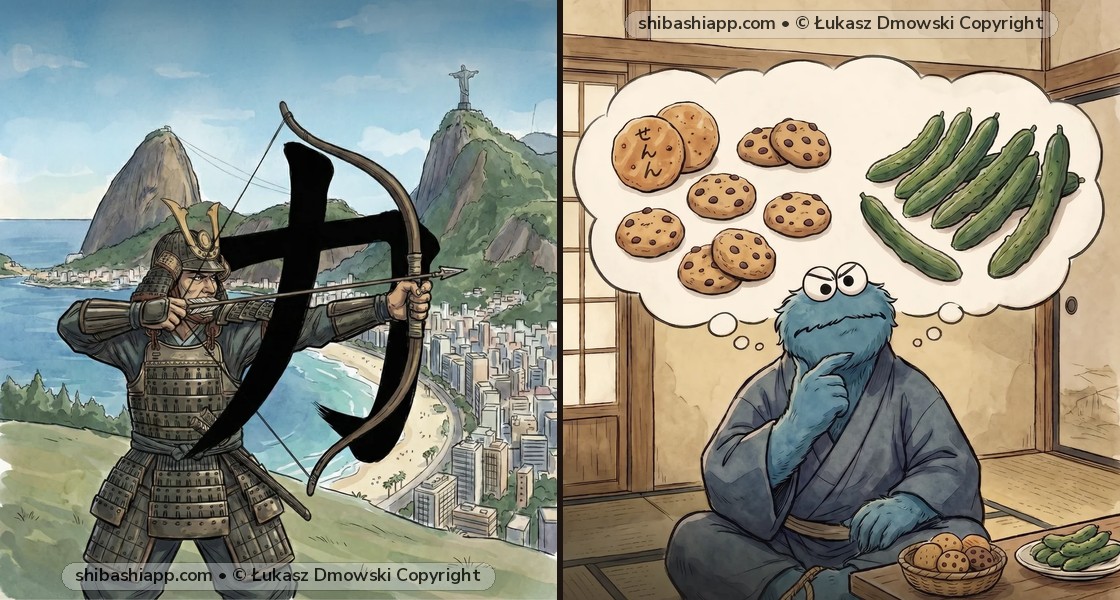
A flexed bicep muscle = POWER / STRENGTH (chikara / ryoku / riki). | 能力 (のうりょく) — ability, faculty |
| 動 — Move | On: どう Kun: うご |
重 (Heavy) on the left + 力 (Power) on the right = applying power to a heavy object = MOVE (ugoku / dō). | 動物 (どうぶつ) — animal |
| 勉 — Hard Work, Effort | On: べん Kun: — |
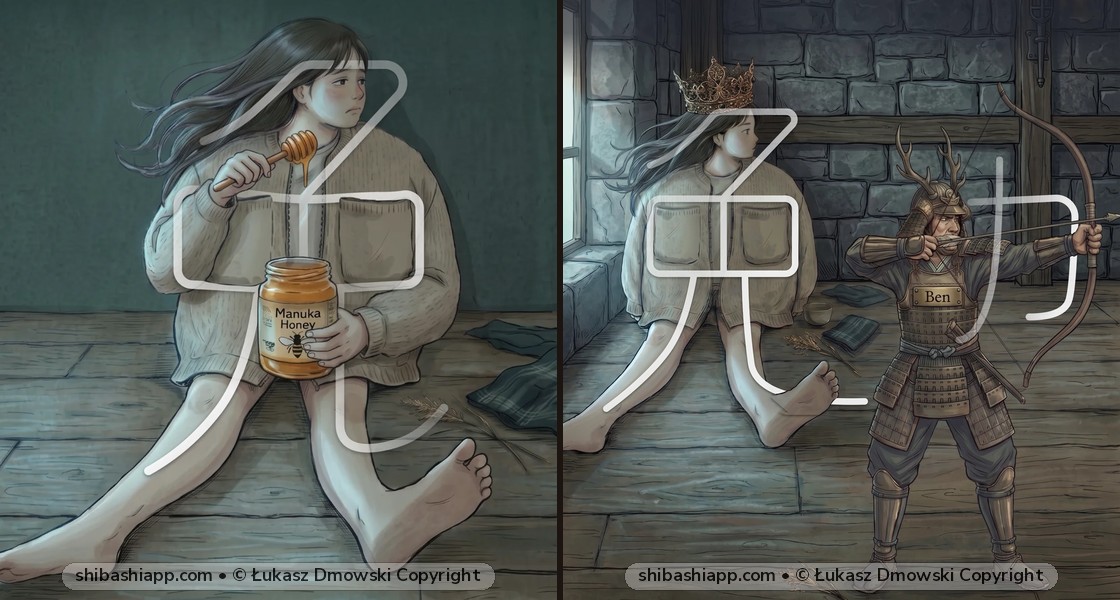
免 + 力 (Power) = exerting strength and effort = EXERT / STUDY (ben, as in 勉強 benkyō). | 勉強 (べんきょう) — study |
Side-by-Side Illustrated Kanji Flashcards (Tap Readings for Audio)
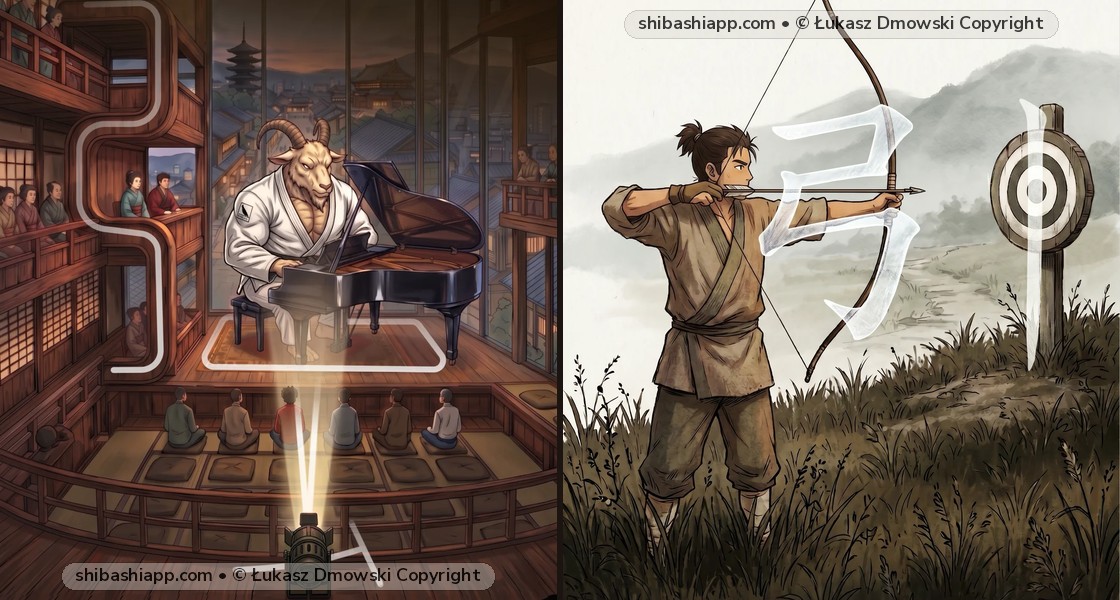
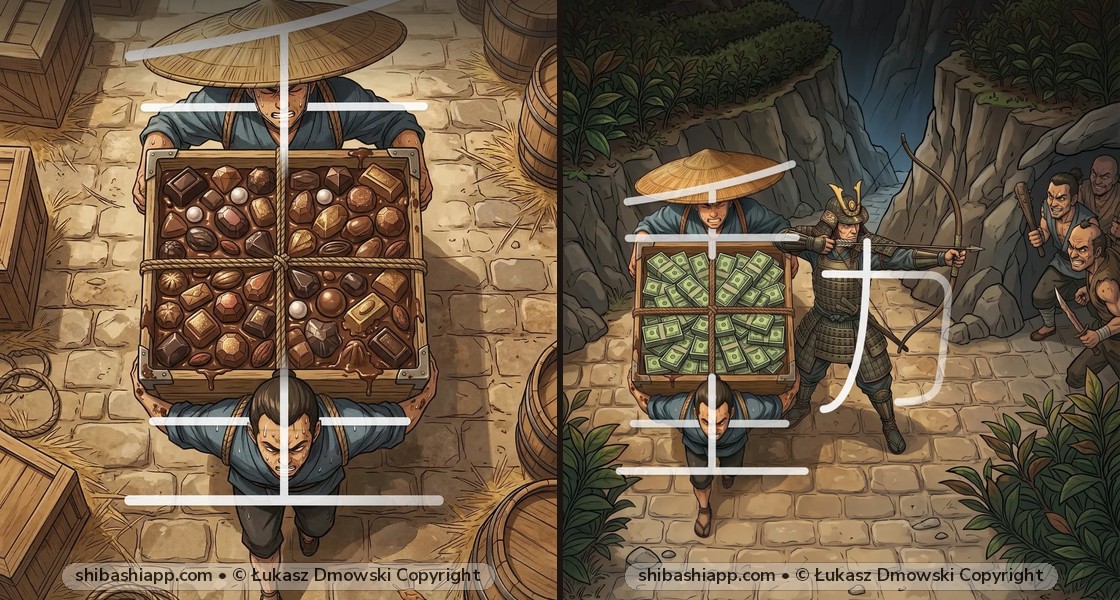
Compare the custom Shibashi artwork for 重 (Heavy) and 動 (Move) below. Notice how each illustration embeds both the English meaning and the primary Japanese reading directly into the scene, and tap any reading to hear native pronunciation:


Step-by-Step Visual Breakdown & Radical Rules
Plus, notice how adding a Person (亻) to the left of 動 (Move, dō) creates 働 (Work — hataraku / dō):
1. 重 (Heavy) — Mnemonic Story & Readings
On'yomi: じゅう, ちょう | Kun'yomi: おも, え
Shibashi Visual Story: “Two men at peak effort (え), carrying a heavy box of open, modern (おも) chocolate (ちょう) jewels (じゅう).” Key visual distinction: 千 (Thousand) stacked over 里 (Village weight) on a vertical barbell spine = HEAVY / IMPORTANT (omoi / jū / chō).
- 重い (おもい): heavy
- 重大 (じゅうだい): serious, important, grave, weighty
2. 力 (Power) — Mnemonic Story & Readings
On'yomi: りょく, りき | Kun'yomi: —
Shibashi Visual Story: “Rio’s cool (りょく), but shooting your power-ful bow there may be tricky (りき)...” Key visual distinction: A flexed bicep muscle = POWER / STRENGTH (chikara / ryoku / riki).
- 能力 (のうりょく): ability, faculty
- 強力 (きょうりょく): herculean strength, mountain carrier-guide
3. 動 (Move) — Mnemonic Story & Readings
On'yomi: どう | Kun'yomi: うご
Shibashi Visual Story: “To move a heavy box of dough (どう) through an oolong-tea gorge (うご), you need powerful protection...” Key visual distinction: 重 (Heavy) on the left + 力 (Power) on the right = applying power to a heavy object = MOVE (ugoku / dō).
- 動物 (どうぶつ): animal
- 自動車 (じどうしゃ): automobile
- 動く (うごく): to move
4. 勉 (Hard Work, Effort) — Mnemonic Story & Readings
On'yomi: べん | Kun'yomi: —
Shibashi Visual Story: “After a day of hard work the exhausted queen is protected by her powerful guard Ben (べん).” Key visual distinction: 免 + 力 (Power) = exerting strength and effort = EXERT / STUDY (ben, as in 勉強 benkyō).
- 勉強 (べんきょう): study
Essential Japanese Vocabulary Words Using 重 / 力 / 動 / 勉
Once you can recognize 重 (Heavy) and 力 (Power) and 動 (Move) individually, lock them into your active reading vocabulary with these high-frequency Japanese words from the Shibashi app:
| Japanese Word | Hiragana Reading | English Meaning | Level |
|---|---|---|---|
| 重い | おもい | heavy | JLPT |
| 重大 | じゅうだい | serious, important, grave, weighty | JLPT |
| 能力 | のうりょく | ability, faculty | JLPT |
| 強力 | きょうりょく | herculean strength, mountain carrier-guide | JLPT |
| 動物 | どうぶつ | animal | JLPT |
| 自動車 | じどうしゃ | automobile | JLPT |
| 動く | うごく | to move | JLPT |
| 勉強 | べんきょう | study | JLPT |
5-Second Memory Summary: How to Never Mix Up 重 & 力 & 動 Again
重 (Heavy — omoi) + 力 (Power) = 動 (Move — 動く ugoku, 動物 dōbutsu Animal, 自動車 jidōsha Car). And whenever you see 亻 (Person) + 動 (Move), a person moving to earn a living is 働く (hataraku — Work)!